The hopelessness of the voluntary

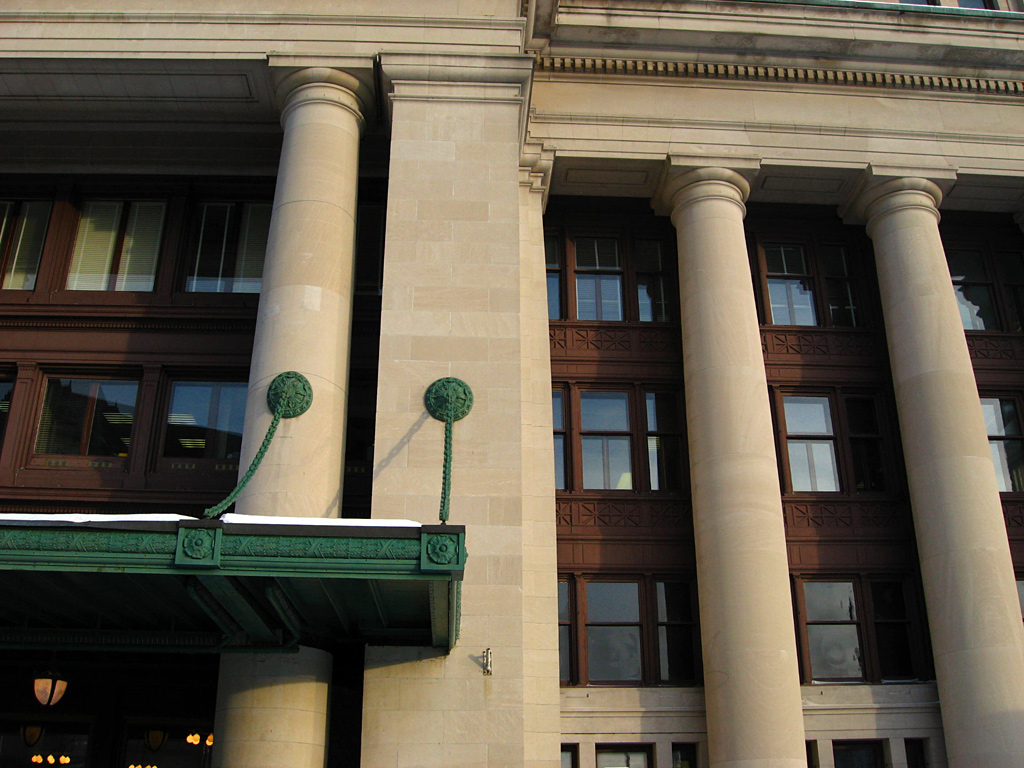
Old train station, Ottawa

Energy Saving Day in the United Kingdom has produced no measurable results. While this is a blow to the “everyone recycle your used Coke cans and we will be fine” form of environmentalism, it is less surprising to people who have a sense of the scale of the climate issue and an awareness of the (in)effectiveness of past voluntary efforts.

Even if the day had been successful, it would have been more about displacement than reduction. Consider the much touted ‘Buy Nothing Day‘ espoused by certain rejectors of the dominant consumerist culture. Even among those who observe the occasion scrupulously, it is plausible that overall consumption doesn’t fall at all: it just gets displaced to the days before and after. Overall, the idea that serious societal issues can be tackled through 24 hours of voluntary abstinence by a handful of devotees is profoundly flawed.

What is the alternative? Price carbon and de-carbonize infrastructure.
Contraction and convergence

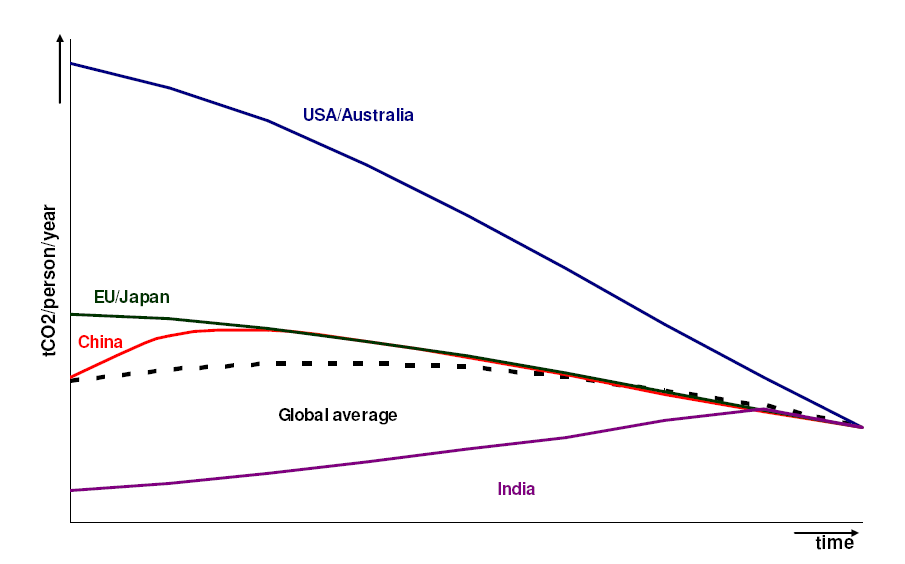
The interim version of the Garnaut Review (mentioned earlier) includes a numberless graph illustrating what the principle of contraction and convergence in per capita greenhouse gas emissions would resemble:

Contraction and convergence graph from the Garnaut Review

A few features are especially notable. The first is the relative trajectories in the opening years. States with very high per capita emissions, like Australia and Canada, would have to reduce emissions sharply right from the outset. Rapidly growing poor states like China would be allowed to grow until per capita emissions are comparable to those in relatively low emission developed states, such as the EU. Gradually, everybody’s per capita emissions become lower and more similar.

This approach becomes a lot more politically feasible when you take these lines to represent emission allocations rather than actual emissions. Developing states would have a choice about how to use the extra space allocated for their development. They could opt to use the allocation for their own emissions, allowing the growth of GHG emitting industry; alternatively, they could sell the allocations to more developed states at a globally established market price. That way, poverty reduction and development goals could be served at the same time as total GHG emissions trend towards a sustainable level. The big advantage of allowing global trading is that it should equalize the international marginal cost of abatement. In simple terms, that means that it will ensure that the emissions that can be avoided at the lowest cost will be addressed first, minimizing the overall cost of mitigation.

The Garnaut Review rightly highlights that it would be incredibly politically difficult to establish such an international regime. At the same time, it is probably also right to say that a general approach that embraces contraction and convergence has the best chance of stabilizing global greenhouse gas emissions at a level that avoids dangerous anthropogenic interference in the climate system, and does so in a way that minimizes total costs and manages the distribution of costs and benefits in an acceptably fair manner.

Seed vault opening

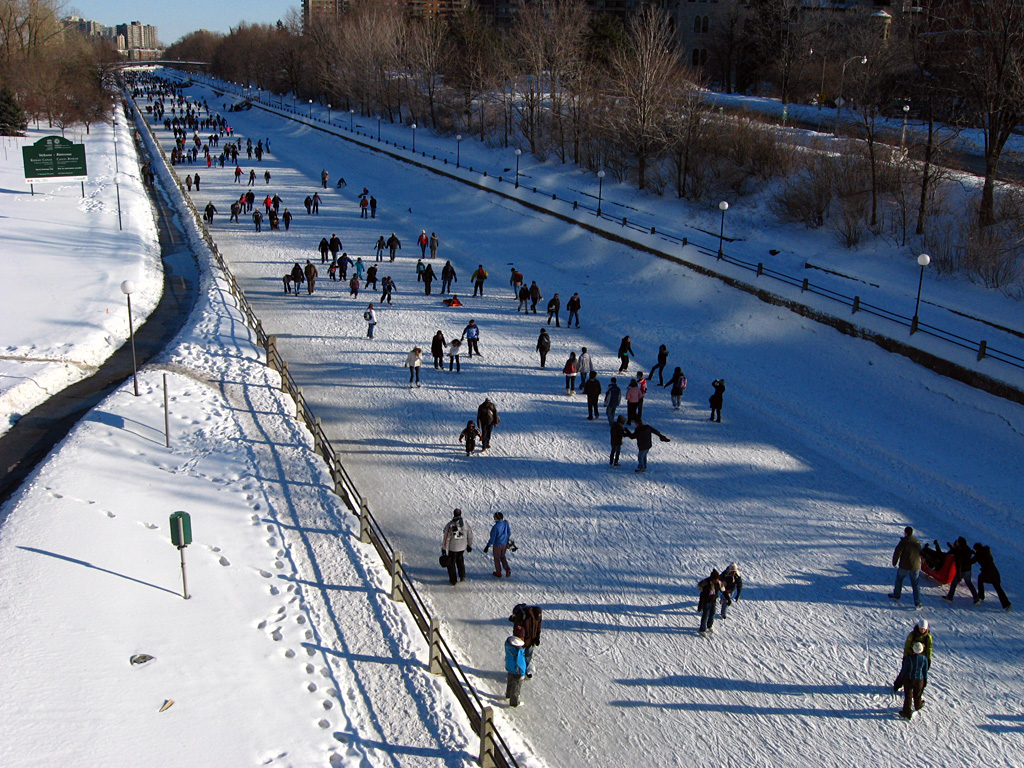
Skaters on the Rideau Canal

A particularly tangible sort of insurance policy is being initiated today, with the opening of the Svalbard Global Seed Vault. The underground facility is intended to protect the genetic diversity of plant species, in recognition of the risk that other seeds could be destroyed by a worldwide disaster. Eventually, the vault is meant to contain 4.5 million seed samples, deposited by governments from around the world.

The vault is buried 120m inside a sandstone mountain selected for remoteness, persistent cold, and lack of tectonic activity. The selection of a site 130m above sea level ensures that, even if all the world’s ice melts, it will not be submerged. The seeds will be kept at a temperature of -20 to -30 degrees Celsius using electrical power. In the event of a failure of refrigeration, several weeks would elapse before temperatures rose to the -3 degree temperature of the surrounding rock. The packaging of the seeds – along with their natural durability – should make at least some viable for long periods of time, even in the absence of refrigeration.

The $9.1 million project was financed by the Global Crop Diversity Trust. While there is no particular reason to believe that the world’s 1400 or so other seed banks would be universally unable to survive something like a nuclear war or a comet or asteroid impact, $9.1 million is probably a sensible expenditure when so many potentially vital species are to be protected. Less sensational disasters are also being insured against: from the destruction of national seedbanks through conflicts or errors to administrative blunders or localized natural disasters.

An interactive tour of the facility is accessible online.

New UNEP report: ‘In Dead Water’

This blog has documented a number of the most important threats facing fisheries and marine ecosystems, including over-exploitation, ocean acidification, harmful fish farming practices, invasive species, and climate change. A new report (PDF) put out by the United Nations Environment Program does a good job of summarizing all of these, as well as providing a good overall picture.

Major conclusions of the report make for sober reading:

  1. Half the World catch is caught in less than 10% of the ocean
  2. With climate change, more than 80% of the World’s coral reefs may die within decades
  3. Ocean acidification will also severely damage cold-water coral reefs and affect negatively other shell-forming organisms
  4. Coastal development is increasing rapidly and is projected to impact 91% of all inhabited coasts by 2050 and will contribute to more than 80% of all marine pollution
  5. Climate change may slow down ocean thermohaline circulation and continental shelf “flushing and cleaning” mechanisms crucial to coastal water quality and nutrient cycling and deep-water production in more than 75% of the World’s fishing grounds
  6. Increased development, coastal pollution and climate change impacts on ocean currents will accelerate the spreading of marine dead zones, many around or in primary fishing grounds
  7. Over-harvesting and bottom trawling are degrading fish habitats and threatening the entire productivity of ocean biodiversity hotspots, making them more vulnerable to climate change
  8. Primary fishing grounds are likely to become increasingly infested by invasive species, many introduced from ship ballast water
  9. The worst concentration of cumulative impacts of climate change with existing pressures of over-harvest, bottom trawling, invasive species, coastal development and pollution appear to be concentrated in 10–15% of the oceans concurrent with today’s most important fishing grounds
  10. A lack of good marine data, poor funding for ocean observations and an ‘out of sight – out of mind’ mentality may have led to greater environmental degradation in the sea than would have been allowed on land
  11. Substantial resources need to be allocated to reducing climate and non-climate pressures. Priority needs to be given to protecting substantial areas of the continental shelves. These initiatives are required to build resilience against climate change and to ensure that further collapses in fish stocks are avoided in coming decades

There is still some debate about which generation will experience the first reeling blows from climate change. It is increasingly clear that the young people of today will be alive to see the collapse of the world’s fisheries and coastal ocean ecosystems.

And the coming wind did roar more loud / And the sails did sigh like sedge

A while ago, I wrote a post on the SkySails system, intended to reduce the fuel use of cargo ships through the use of a massive kite. Today, Neal put a post on MetaFilter on the possible resurgence of sail.

A return to sail does have both ecological and romantic appeal. Forcing the fishing industry to use equipment from the 18th or 19th century (with better safety gear) might even maintain employment without utterly ravishing the sea as rapidly as we are doing now. It could spur the re-emergence of a wooden sailing ship industry, and it would probably attract some tourists as well.

97-day West Antarctic expedition

Fire escape and red bricks

Not content with data from satellites, a group of British researchers made the trek to the remote Pine Island Glacier in order to gauge whether climate change is accelerating its flow into the sea. The team is only the second group of humans to ever visit the area, following a brief visit by American scientists in 1961.

The Pine Island Glacier comprises about 10% of the West Antarctic Ice Sheet which, along with Greenland, represents the largest plausible contributor to sea level rise. The total melting of this one glacier would raise global sea levels by 25cm. The melting of the entire region of West Antarctica where it is located would contribute 1.5m.

Experiments performed included an examination of the ice structure using towed RADAR and the use of small explosions and geophones to identify soft sediments that might be lubricating the flow of the glacier. GPS receivers have been left behind to perform additional precise tracking. Their central conclusion is a significant acceleration of the glacial flow, compared with the 1% flow rate that satellite measurements tracked during the 1990s:

“The measurements from last season seem to show an incredible acceleration, a rate of up to 7%. That is far greater than the accelerations they were getting excited about in the 1990s.”

Since air temperatures in Antarctica have not risen significantly (as predicted by all General Circulation Models), it is plausible that the acceleration is the result of warmer sea currents.

Some component of the melting could be the result of geothermal activity. If so, it would continue to some extent even after global greenhouse gas concentrations were stabilized and their full consequences have been manifest through the climate system. Of course, the lower that concentration, the greater the chance that West Antarctica’s glaciers will be able to endure.

Nicholas Stern video

Emily kindly sent me a link to the video of Sir Nicholas Stern’s presentation in the Examination Schools at Oxford in February of 2007. I was lucky enough to attend in person; I even got to speak with him at the exclusive reception afterwards. My notes are on the wiki. This is your chance to compare a verbatim record of the talk with my notes and thus determine my particular strengths and failings as a note taker.

The talk is well worth watching, not least because Stern is obviously very well informed and quite a capable speaker. His report is fully deserving of its status as the seminal discussion of the economics of climate change.

Garnaut Review interim report

The Stern Review – released in October 2006 by the British Government – is generally considered the most authoritative source on the economics of climate change. Among other things, it concludes that the cost of reducing global emissions is significantly less than the probable costs associated with letting climate change continue on its present course. Now, Australia has released a similar assessment, in the form of the Garnaut Climate Change Review.

Only the interim report is available so far, but it’s likely to make interesting reading for Canadians concerned about climate change. In many ways, the Canadian economy is more similar to that of Australia than it is to that of England. As such, this report may offer some especially useful insights.

P.S. I have some notes from a lecture Stern gave in Oxford.

British Columbia carbon tax

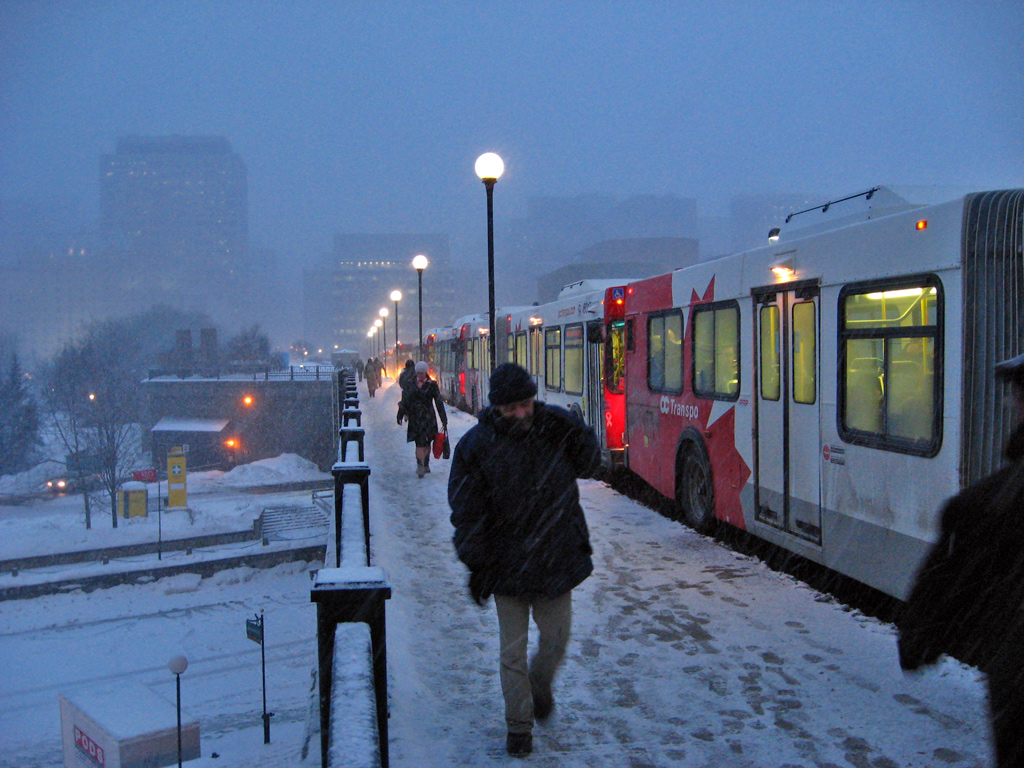
Buses at the Rideau Centre, Ottawa

In a relatively big announcement today, British Columbia has announced a new carbon tax on gasoline, diesel, natural gas, coal, propane and home-heating fuel. Canada-wide, the combustion of fossil fuels represents about 70% of total emissions, with the remainder consisting of things like industrial process emissions and those associated with landfills. The B.C. tax takes effect on July 1st, starting at $10 a tonne and rising to $30 a tonne by 2012.

Like many proposed carbon taxes, the British Columbian scheme aims to be revenue neutral, with the funds collected being primarily redistributed back to consumers through reductions in other taxes and increased grants to low-income individuals. This somewhat reduces the environmental effectiveness of the tax, since some of the refunded money will be used to continue doing emissions intensive things, but it makes it easier to defuse claims that this is an excessive new burden on low income people. The projected emissions reduction for the next three years is 1 Mt per year – just 1.5% of the B.C. total, but a start. At present, British Columbia is in the middle of the pack when it comes to emissions among Canadian provinces: approximately on par with Quebec and Saskatchewan, but significantly behind Alberta and Ontario.

B.C. is also part of a regional climatic organization called the Western Climate Initiative, which aims to launch a cap-and-trade scheme for greenhouse gasses. With luck, such provincial and regional systems will yield both absolute reductions in emissions and useful lessons in policy design.

Costly delays at Yucca Mountain

Mosque and power lines

Persistent delays at Yucca Mountain – the Congressionally appointed future home for American nuclear waste – could prove very expensive to taxpayers. Under an agreement between nuclear power utilities and the Department of Energy, firms are charged 1/10th of a cent per kilowatt hour for waste disposal. Yucca Mountain was meant to be open and accepting fuel in 1998.

So far, the delay has cost the American Treasury $342 million in rebates so far, and is projected to cost $11 billion if the facility doesn’t open before 2020. Given the tooth-and-nail resistance from the Nevada government, and the history of lengthy lawsuits in the United States, it’s not impossible that such a delay will occur. Meanwhile, wastes continue to be stored in relatively expensive and high-maintenance cooling ponds and dry storage casks. In the whole mess, consumers lose out twice. The costs for eventual disposal imposed on utilities were passed on to them; as taxpayers, they will also end up paying most of the cost for Yucca Mountain or whatever alternative long-term disposal facility is eventually used.

The situation could be even worse than it seems. Both Clinton and Obama have announced their opposition to the project. Presumably, having one of them win the presidency would return the whole process to the preliminary site selection phase, back where it was thirty years ago. Regardless of one’s position on nuclear power, the need to store the wastes that exist in a safe, economically viable, and long-term way is inescapable. Keeping the waste in a large number of small sites increases both costs and risks.

Canada also lacks a facility for the long-term storage of radioactive wastes.