
Today’s best biofuel: Brazilian ethanol

Montreal graffiti

Many people see biofuels as a promising replacement for oil in transportation applications. Indeed, being able to replace the oil that contributes to climate change and must often be imported from nasty regimes with carbon-neutral fuels from domestic crops has a great deal of intuitive appeal. For this process to be worthwhile, however, there is a need to consider both life-cycle energy usage and net carbon emissions.

A study conducted in 2004 by Isaias de Carvalho Macedo at the University of Brazil focused on the production of ethanol from Brazilian sugarcane. This is considered by the majority of commentators to be the most energy efficient source of biofuel currently available. This is because most Brazilian sugarcane requires no irrigation and must only be ploughed up and replanted once every five years. The Macedo study found that producing a tonne of sugarcane requires 250,000 kilojoules of energy. This represents the need for tractors, fertilizers, and other elements of modern mechanical farming. The ethanol from one tonne of sugarcane contained 2,000,000 kilojoules of energy. Furthermore, the plants that produce it burn bagasse (the pulp left over when sugarcane has the sugar squeezed out) and can contribute net electricity to the grid. Corn ethanol (the kind being heavily subsidized in the United States) takes about as much energy to grow as is ultimately contained in the fuel.

In terms of net carbon emissions, cane ethanol is also fairly good. Using one tonne of ethanol instead of the amount of gasoline with the same energy content produces 220.5 fewer kilograms of carbon dioxide, when all aspects of production and usage are considered. Burning one litre of gasoline produces about 640 grams of carbon dioxide. Since ethanol has about 25% less energy than gasoline, the relevant comparison is between 1,000 kilograms of ethanol and 750 kilos of gasoline. The gasoline would emit 460 kilos of carbon dioxide, while the ethanol would emit 259.5 kilos.

This is an improvement over the direct use of fossil fuels, but not a massive one. The Macedo study concludes that widespread ethanol use reduces Brazilian emissions by 25.8 million tonnes of carbon dioxide equivalent per year. Their total carbon emissions from fossil fuels are about 92 million tonnes per year – a figure that increases substantially if deforestation is included.

The conclusion to be drawn from all of this is that ethanol – even when produced in the most efficient way – is not a long-term solution. Producing 259.5 kilos of carbon is more sustainable than producing 460, but it isn’t an adequate reduction in a world that has to cut from about 27 gigatonnes of carbon dioxide equivalent to five. Bioethanol may become more viable with the development of cellulosic technology (a subject for another post), but is certainly no panacea at this time.

References:

[Update: 8:54am] The above numbers on carbon dioxide emissions produced by gasoline per kilometre are disputed. If someone has an authoritative source on the matter, please pipe up.

Carbon pricing and GHG stabilization

Montreal graffiti

Virtually everyone acknowledges that the best way to reduce greenhouse gas emissions is to create a price for their production that someone has to pay. It doesn’t matter, in theory, whether that is the final consumer (the person who buys the iPod manufactured and shipped across the world), the manufacturer, or the companies that produced the raw materials. Wherever in the chain the cost is imposed, it will be addressed through the economic system just like any other cost. When one factor of consumption rises in price, people generally switch to substitutes or cut back usage.

This all makes good sense for the transition from a world where carbon has no price at all and the atmosphere is treated as a greenhouse gas trash heap. What might become problematic is the economics of the situation when greenhouse gas emissions start to approach the point of stabilization. If we get 5 gigatonnes collectively, that means a global population of 11 billion will get about half a tonne of carbon each.

Consider two things: Right now, Canadian emissions per person are about 24.3 tonnes of CO2 equivalent. Cutting to about 0.5 is a major change. While it may be possible to cut a large amount for a low price (carbon taxes or permits at up to $150 a tonne have been discussed), it makes sense that people will be willing to pay ever-more to avoid each marginal decrease in their carbon budget. Moving from 24.3 tonnes to 20 might mean carrying out some efficiency improvements. Moving from 20 to 10 might require a re-jigging of the national energy and transportation infrastructures, carbon sequestration, and other techniques. Moving from 10 to 0.5 may inevitably require considerable personal sacrifice. It certainly rules out air travel.

The next factor to consider if the effect of economic inequality on all this. We can imagine many kinds of tax and trading systems. Some might be confined to individual states, and others to regions. It is possible that such a scheme would eventually be global. With a global scheme, however, you need to consider the willingness of the relatively affluent to pay thousands or tens of thousands of dollars to maintain elements of their carbon-intensive lifestyles. This could mean that people of lesser means get squeezed even more aggressively. It could also create an intractable problem of fraud. A global system that transfers thousands of dollars on the basis of largely unmeasured changes in lifestyle could be a very challenging thing to authenticate.

These kinds of problems lie in the relatively distant future. Moving to a national economy characterized by a meaningful carbon price is likely to take a decade. Moving to a world of integrated carbon trading may take even longer. All that admitted, the problems of increasing marginal value of carbon and the importance of economic inequality are elements that those pondering such pricing schemes should begin to contemplate.

Mosul Dam

The Mosul Dam is one element of Iraq’s infrastructure that has survived the war so far, but which is apparently seriously threatened. Because was built on gypsum, which dissolves in water, it threatens to fail catastrophically as the result of small initial problems. A report from the US Army Corps of Engineers warned that the dam’s failure would drown Mosul under nearly 20m of water and parts of Baghdad under 4.5m. The 2006 report explained that:

In terms of internal erosion potential of the foundation, Mosul Dam is the most dangerous dam in the world. If a small problem [at] Mosul Dam occurs, failure is likely.

According to the BBC, the US Special Inspector General for Iraq Reconstruction (SIGIR) has stated that the dam’s foundations could give away at any moment. The report from the Corps of Engineers states that the dam’s failure could cause 500,000 civilian deaths. General David Petraeus and the American Ambassador to Iraq have both written to the Iraqi government expressing their severe concern.

The dam is 2,100m across and contains 12 billion cubic metres of water. It generates about 320 MW of electricity. Previous attempts at addressing the gypsum issue seem to have been botched. According to the Washington Post “little of the reconstruction effort led by the U.S. Embassy has succeeded in improving the dam.” Stuart Bowen, the special inspector general reviewing the efforts has said that “[t]he expenditures of the money have yielded no benefit yet.”

Today, the Iraq government has officially stated that concerns about a possible collapse are misplaced and that the dam is constantly monitored. Ongoing actions include reducing the amount of water in the reservoir and pumping grout into the foundation (a liquefied mixture of cement and other additives). Work is meant to begin next year on wrapping the foundations in concrete to make them more secure.

Obviously, a catastrophic dam collapse is the last thing Iraq needs. Hopefully, the dam will hold until a sensible refit can be carried out, and it will not find any wayward coalition munitions or insurgent bombs helping it towards disintegration.

Index of climate posts

Fruit bar

For the last while, my aim on this blog has been both to entertain readers and to provide some discussion of all important aspects of the climate change problem. To facilitate the latter aim, I have established an index of posts on major climate change issues. Registered users of my blog can help to update it. Alternatively, people can use comments here to suggest sections that should be added or other changes.

The index currently contains all posts since I arrived in Ottawa. I should soon expand it to cover the entire span for which this blog has existed.

Geoengineering: wise to have a fallback option

Sailing ship graffiti

Over at RealClimate they are talking about geoengineering: that’s the intentional manipulation of the global climatic system with the intent to counteract the effects of greenhouse gasses. Generally, it consists of efforts to either reflect more solar energy back into space or enhance the activity of biological carbon sinks. It has been mentioned here before.

The fundamental problem with all geoengineering schemes (from sulfite injections to plankton tubes to giant mirrors) is that they risk creating unexpected and negative side-effects. That said, it does seem intelligent to investigate them as a last resort. Nobody knows at what point critical physical and biological systems might tip into a cycle of self-reinforcing warming. Plausible examples include permafrost melting in the Arctic, releasing methane that heats the atmosphere still more, or the large-scale burning of tropical rainforests, both producing emissions and reducing the capacity of carbon sinks. If physical or biological systems became net emitters of greenhouse gasses, cutting human emissions to zero would not be sufficient to stop warming; it would simply continue until the planet reached a new equilibrium.

Given linear projections of climate change damages, we would probably be wisest to heed the Stern Review and spend adequately on mitigation. Given the danger of strong positive feedbacks, it makes sense to develop some fallback options for use in desperate times. It seems to me that various forms of geoengineering should be among them. Let us hope they never need to be used.

Problems with fusion ITER means to solve

Building in Old Montreal

The fundamental problem with nuclear fusion as a mode of energy production is establishing a system that produces more power than it consumes. Heating and containing large volumes of tritium-deuterium plasma is an energy intensive business. As such, the sheer size of the planned International Thermonuclear Experimental Reactor is a big advantage. Just like it is easier to keep a huge cooler full of drinks cold than to keep a single can that way, a larger volume of plasma has less surface area relative to its total energy. As such, bigger reactors have a better chance of producing net power.

The other big problems that scientists and engineers anticipate are as follows:

  1. No previous reactor has sustained fusion for very long. The JT-60 reactors in Japan holds the record, at 24 seconds. Because ITER is meant to operate for between 7 and fifteen minutes, it will produce a higher volume of very hot hydrogen (the product of the tritium-deuterium fusion). That hydrogen could interfere with the fusing plasma. As such, it needs to be removed from the reactor somehow. ITER plans to use a carbon-coated structure called a diverter, at the bottom of the reactor, to try to do this. It is not known how problematic the helium will be, nor how effective the diverter will prove.
  2. Both the diverter and the blanket that surrounds the reactor will need to be able to resist temperatures of 100 million degrees centigrade. They will also need to be able to survive the presence of large amount of radiation. It is uncertain whether the planned beryllium coatings will be adequate to deal with the latter. Prior to ITER’s construction, there are plans to test the planned materials using a specially built particle accelerator at a new facility, probably to be built in Japan. THis test facility could cost about $2.6 billion – one quarter of the total planned cost of ITER itself.
  3. Probably the least significant problem is converting the heat energy from the fusion reaction into electrical power. This is presumably just a matter of putting pipes carrying a fluid into the blanket, then using the expansion of that fluid to drive turbines. While this should be a relatively basic change, it is worth noting that ITER will have no capacity to generate power, and will thus need to dissipate its planned output of about 500 megawatts by other means.

None of these issues undermine the case for building ITER. Indeed, they are the primary justification for building the facility. If we already knew how to deal with these problems, we could proceed directly to building DEMO: the planned electricity-generating demonstration plant that is intended to be ITER’s successor.

Studies backing successive IPCC reports

While it is obvious that the 2007 Fourth Assessment Report (4AR) of the Intergovernmental Panel on Climate Change (IPCC) was going to be more comprehensive than the 2001 Third Assessment Report (TAR), I was surprised to see the extent and the breakdown:

Sector – Studies assessed in TAR – Studies assessed in 4AR
Cryosphere: 23 – 59
Hydrology and water resources: 23 – 49
Coastal processes and zones: 4 – 56
Aquatic biological systems: 14 – 117
Terrestrial biological systems: 46 – 178
Agriculture and forestry: 5 – 49
Human health: 5 – 51
Disasters and hazards: 3 – 18

Total: 95 – 577

While it is simplistic to equate the number of studies examined with the overall quality of the conclusions drawn, the large increase is certainly reflective of the amount of research being devoted to climate change issues, as well as the level of resources it has been deemed appropriate to spend examining that body of scientific work.

These figures come from Cynthia Rosenzweig, a research scientist at NASA and member of the IPCC’s second working group.

A kiwi by any other name

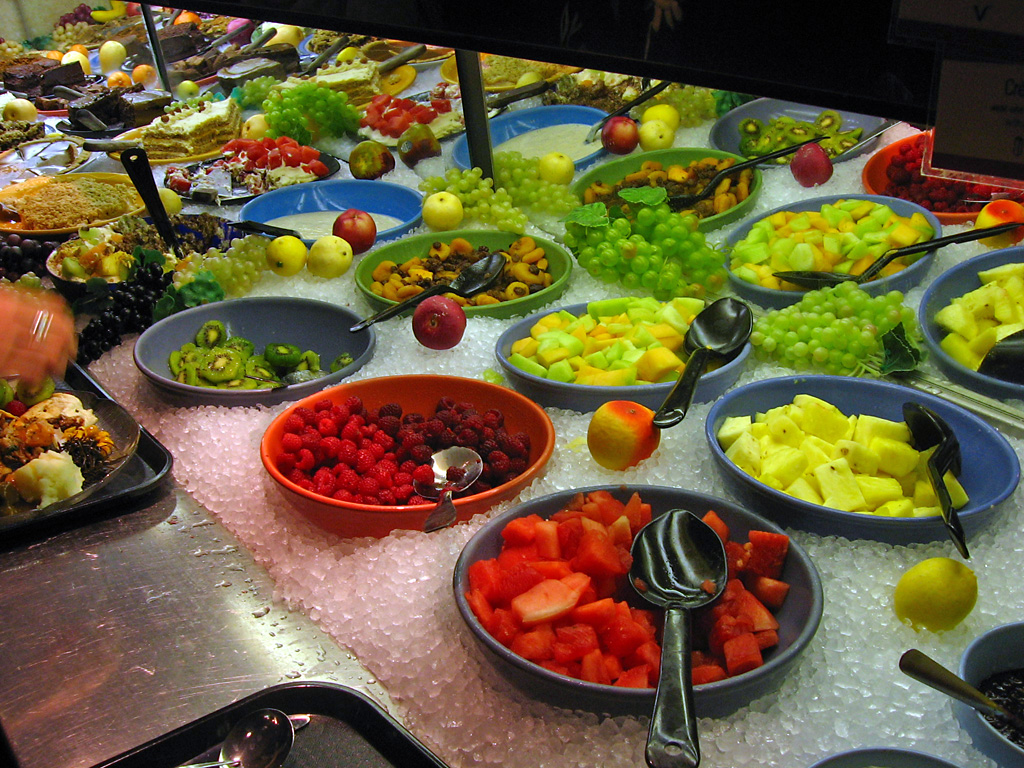
Some people will be surprised to learn that the kiwi fruit (produced by a hybrid of Actinidia deliciosa and other species of that genus) was named after the somewhat similar looking bird of that name (Apterygidae Apteryx) in 1959 as a marketing ploy. Apparently, the fruit had previously been called a ‘Chinese gooseberry’ but that name was seen as overly political during the Cold War. The alternative name ‘melonette’ was problematic because melons faced high import tariffs. The solution dreamt up by the produce company Turners and Growers was thus to brand the fruit with the name of the bird it supposedly resembles. The general association between the bird, the word ‘kiwi,’ and people from New Zealand extends back before 1899. The kiwi bird has been part of the regimental signs of New Zealand Regimentas since the Second Boer War.

The whole thing is reminiscent of the re-branding of Patagonian Toothfish (Dissostichus eleginoides) as ‘Chilean Sea Bass.’ The intention to alter consumer perceptions of products by changing their names isn’t reserved for agricultural or fishery organizations trying to optimize their sales; some environmentalists are trying to re-brand ‘biodiesel’ with the moniker ‘industrial agrodiesel‘ in order to alter perceptions that this is a green or sustainable fuel.

Cleaner coal

Coal is a witches’ brew of chemicals including hydrocarbons, sulphur, and other elements and molecules. Burning it is a dirty business, producing toxic and carcinogenic emissions including arsenic, selenium, cyanide, nitrous oxides, particulate matter, and volatile organic compounds. Coal plants also produce large amounts of carbon dioxide, thus contributing to climate change. That said, some coal plant designs can reduce both toxic and climatically relevant emissions to a considerable extent. Given concerns about energy security – coupled with the vast coal reserves in the United States, United Kingdom, China, and elsewhere – giving some serious thought to cleaner coal technology is sensible.

Integrated Gasification Combined Cycle (IGCC) plants are the best existing option for a number of reasons. Rather than burning coal directly, they use heat to convert it into syngas, which is then burned. Such plants can also produce syngas from heavy petroleum residues (think of the oil sands) or biomass. One advantage of this approach is that it simplifies the use of carbon capture and storage (CCS) technologies, which seek to bury carbon emissions in stable geological formations. This is because the carbon can be removed from the syngas prior to combustion, rather than having to be separated from hot flue gases before they go out the smokestack.

The problems with IGCC include a higher cost (perhaps $3,593 per kilowatt, compared with less than $1,290 for conventional coal) and lower reliability than simpler designs (this diagram reveals the complexity of IGCC systems). In the absence of effective carbon sequestration, such plants will also continue to emit very high levels of greenhouse gasses. If carbon pricing policies emerge in states that make extensive use of coal for energy, both of these problems may be reduced to some extent. In the first place, having to pay for carbon emissions would reduce the relative cost of lower-emissions technologies. In the second place, such pricing would induce the development and deployment of CCS.

One way or another, it will eventually be necessary to leave virtually all of the carbon that is currently trapped in coal in the ground, rather than letting it accumulate in the atmosphere. Whether that is done by leaving the coal itself underground or simply returning the carbon once the energy has been extracted is not necessarily a matter of huge environmental importance (though coal mining is a hazardous business that produces lots of contamination). That said, CCS remains a somewhat speculative and unproven technology. ‘Clean coal’ advocates will be on much stronger ground if a single electricity generating, economically viable, carbon sequestering power plant can be constructed.