Cameron Hepburn on climate economics

Dr. Cameron Hepburn gave an informative presentation in the Merton MCR this evening on the economics of climate change. While it was largely a reflection of the emerging conventional wisdom, it was very professionally done and kept the audience in the packed Merton MCR asking questions right until it became necessary to disband for dinner. Dr. Hepburn, incidentally, is my friend Jennifer Helgeson’s supervisor.

My notes are on the wiki.

PS. When I imagined Oxford before coming here, the kind of rooms I imagined were more like the Merton MCR than most of the places I have actually seen. That probably derives from having my expectations defined by The Golden Compass and The Line of Beauty.

An urban world

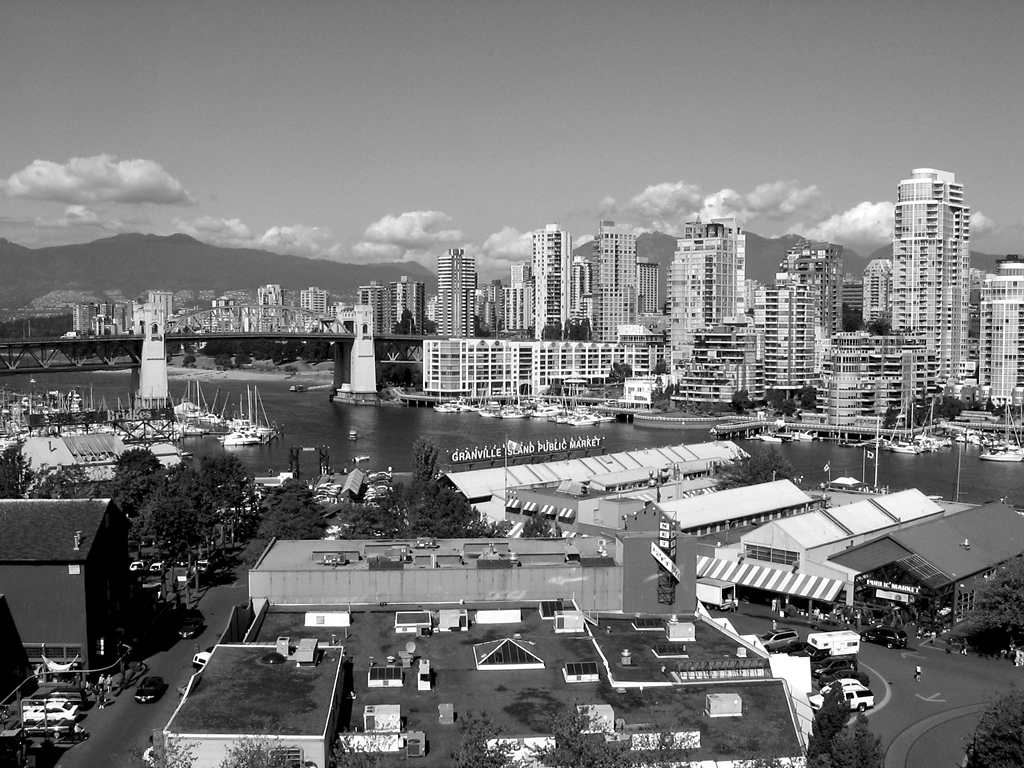
Downtown Vancouver

In recognition of how half the global population now lives in cities, this week’s issue of The Economist has a survey on urbanization. Much of it makes for fascinating reading. For instance, they allege that the Kibera slum in Nairobi exists more for reasons of corruption than of poverty. The provision of private services and the need for constant bribery make its continued existence profitable, just as the pool of cheap labour it provides plays an important economic role.

As always, they come up with some interesting statistics, as well. Vancouver is ranked as the most livable city in the world, and one is reminded that Tokyo has a larger population than all of Canada. Delhi has the world’s dirtiest air, as measured by particulates, followed by Cairo and Calcutta. More than 70% of all urban dwellers in sub-Saharran Africa live in slums. In Ethiopia, Malawi, and Uganda that figure is over 90%.

The United Nations envisions human population growth as a phenomenon that will eventually slow, leaving the world with a population of about eleven billion. By then, more than 60% of people will be living in cities, dependent upon agricultural productivity elsewhere to be able to sustain themselves. Hopefully, climate change and other ecological phenomena will not make that overly challenging.

Buying compliance?

Washing machines

Unusually, this week’s roster of environment related presentations at Oxford included something on the Stockholm Convention. Specifically, Dr. Veerle Heyvaert from the LSE spoke to the Socio-Legal Dimensions of Environmental Law and Regulation seminar series about ‘buying compliance’ within the Stockholm framework.

The central part of her presentation addressed the relationship between the two major kinds of state involved in Stockholm. Essentially, there are rich developed states that had already sharply restricted or banned most persistent organic pollutants (POPs) covered by Stockholm before negotiations even began. Then, there are developing states that either still used some of the pesticides restricted or produced large amounts of unwanted by-products such as dioxins or furans. The differences between the two are largely centered around ongoing behaviour, financial resources, and institutional capabilities.

Dr. Heyvaert suggested that the major contribution of the rich states is to help pay for the costs of POP abatement in the poor states. She expressed concern that while the latter is seen as binding, the former is somehow seen as voluntary or charitable. While the Stockholm Convention lacks any official mechanism to ensure compliance, it seems more likely that pressure will be put on poor states to stop emitting than on rich states to help pay for it.

Clearly, there are issues of equity involved. From the perspective of international law, however, it seems to me that there is a more fundamental issue at hand. Cases like the Trail Smelter Arbitration of 1937 have helped to make explicit the norm in international customary law that states do not have the right to pollute the territory of their neighbours. As such, states that have already cut back are not in violation, whereas those that continue to emit are. While this may be a neatly expressed legal situation, it doesn’t conform too well with the reality of who can pay and what actions individuals are likely to take. As such, mechanisms such as those in the Stockholm Convention that allow richer states to assist with the costs of cleaning up industrial and agricultural processes in poor states seem to make both equitable and legal sense.

The question is how to apply such arrangements to more demanding cases. Nobody with a choice is going to pump out large volumes of Mirex or Toxaphene. They are among the nastiest chemicals humans have ever dreamed up. As such, there is a limited incentive to free ride on a system that seeks to limit their production and usage, especially when there are effective channels for financial and technical assistance in doing so.

At the base of all this, there is the question of what goes into the equity calculation. You might choose to consider past emissions when deciding who pays what, or you might look only at present practice. You might consider overall wealth or not do so; require states to pay equal amounts, equal percentages of GDP, or use some other formula. What kind of balance you adopt is the stuff of political deal-making, which I suppose is where most international considerations of equity are ultimately addressed in a meaningful way.

The IPCC and the cost of mitigation

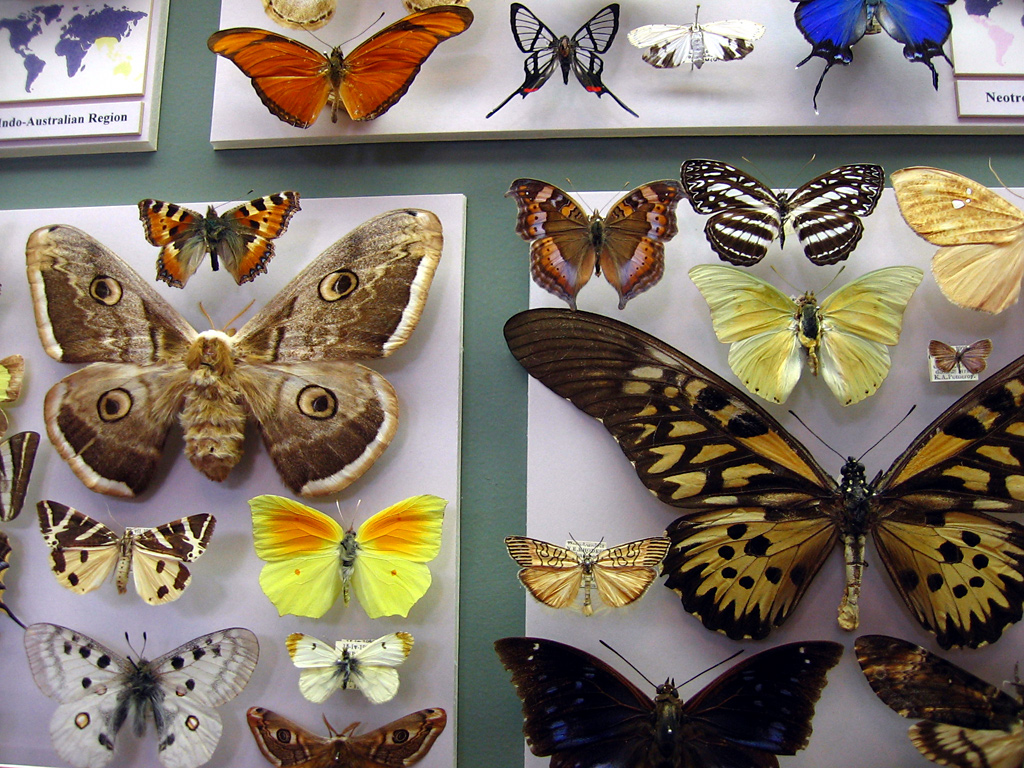
Butterflies and moths

The second half of the IPCC’s Fourth Assessment Report has now been released (PDF). Much like the earlier Stern Review, it was intended to assess possibilities for mitigating climate change and the costs associated with them. As with the Stern Review, the conclusion is that the problem can be dealt with at a fairly modest cost. Certainly, the sums in question are much smaller than the costs that would arise if the worst possible consequences of global warming were realized: from large-scale migration, to problems with C3 crops, to widespread agricultural failures (see this article on the ongoing Australian drought). The Economist is calling it “a bargain.”

That the Stern findings and those of the IPCC broadly agree is not at all surprising. After all, the Stern Review was based almost entirely upon the scientific conclusions of previous IPCC reports. Even so, such agreement can only help to foster increased political consensus, both within and between states, that climate change should be and can be dealt with. More than ever, it seems as though we are witnessing the start of a serious progression towards a low-carbon society.

Dealing the the problem of climate change will require unprecedented foresight and cooperation. As such, it is not unreasonable to think that the emergence of the kind of international regime that would be necessary to address it will foster cooperation in other areas. Something like global fisheries management does not have the same level of importance as addressing climate change, but the tools that will need to be developed to sort out the latter may advance our ability to behave more appropriately in relation to the former.

Nash equilibria and the environment

Panda with guns

While A Beautiful Mind had a good deal to recommend it as a film, the explanation of the Nash Equilibrium that was included leaves a good bit to be desired. The film explained that in a situation with multiple players, a most desirable objective, and many less desirable objectives, it is rational for each player to pursue the less desirable goals. This is because everyone going after the same thing will probably lead to nobody getting it. The strategy of pursuing the less desirable but more plentiful option therefore maximizes the chances of getting some level of payoff, even though it may not be the highest payoff possible in the game.

The essential characteristic of the Nash Equilibrium is similar to that of Pareto Optimality. Basically, both describe situations in which players do not want to change their behaviours unilaterally. Pareto optimality can be most easily be explained by considering a large group of people with items to trade voluntarily. Eventually, they will trade to the point where no more voluntary exchanges will occur. The arrangement may not generate the maximum possible level of utility that could be achieved with the goods in question; for instance, a person with a large stock of insulin would not transfer any to a diabetic who had nothing to trade for it.1 In a Nash Equilibrium, no player would want to change the strategy they are employing, given that no other players are going to change their own strategies. For the equilibrium to exist, this must be true independently from any information they might receive about the strategies of the other players. For instance, learning that other players have certain thresholds beyond which they will behave quite differently might provide an incentive for any one player to alter their strategy.

While Pareto Optimality is mostly a thought experiment, the Nash Equilibrium is directly applicable to many situations in which there are problems of coordination. For example, it can be applied to climate change policy. Assuming that the policy of each state is set independently, there is no incentive for a single state to unilaterally cap emissions. The effect of one country doing so would be small, while the cost in that country would be high. Hence, inaction is a Nash Equilibrium. It is only through the development of a system that changes the strategies of many actors that a low-carbon outcome can be achieved.

The absence of a Nash Equilibrium can also be problematic, when addressing environmental problems. Imagine a conservation regime based around an international ban on the sale of tiger products. From the perspective of any one state, there is an incentive to violate the ban, provided everyone else will maintain their strategy of conservation. The lack of a Nash Equilibrium threatens to make the regime unstable.

While elements can be built directly into such games to encourage cooperation and discourage defection, they always seem likely to encounter these two kinds of problem. As such, it may be that the only way to establish stable environmental regimes that require sacrifice for the common good is to embed them in a larger super-game. Here, defection on one issue threatens the ability of the defecting state to achieve its aims in other areas. States that continue to emit large amounts of greenhouse gas or who undermine conservation regimes might find themselves unable to enter preferential trade arrangements and the like. In a general way, the perception of a state as being a responsible or irresponsible member of the international community imposes some such pressure. To do so more formally requires the prioritization of environmental issues by all governments involved, as well as a certain strength of will in following up such threats. Despite that, it seems more plausible that such a combined approach could yield desirable outcomes, as opposed to one that focuses on narrow issue areas.

[1] This assumes that the participants derive utility only from the objects being traded, and not from higher order phenomena such as the perception that the distribution that exists is desirable or fair. Agents that place some value upon the happiness of the other agents might generate outcomes quite different from the kind envisioned in neoclassical economics.


Wadham climate change discussion

Today’s Wadham Research Forum on climate change was very interesting, despite how all the ideas expressed were fairly familiar. The extent to which the points highlighted are the same as those in my thesis is both encouraging and dispiriting. It suggests that I have not missed the mark completely, but also that I may not have contributed anything terrible novel. Of course, there is a good chance that the key issues to be considered are obvious enough, and that it is the approaches taken that generate the value of a particular assessment.

Earth Day

As I learned from Google’s altered logo, today is the 37th Earth Day. I suppose some kind of celebration is in order. Perhaps that is most true because of how notable today is not. Back in 1970, it might have been a politically important act to recognize the importance of the environment. Now, it seems daft to think otherwise. Of course, that doesn’t mean that heightened environmental awareness has always translated into good environmental policy. Our society is far from sustainable, but the business of changing that is probably not the spectacular fare of street demonstrations and activist announcements.

When it comes to fairly localized environmental problems – like particulate emissions – it does seem to be a matter of societies becoming rich enough that they can afford to prioritize that instead of more pressing matters like food or security. Japan’s re-development after the Second World War is probably the most clearcut example. The first Earth Day certainly had something to do with the progession towards investing more resources in conservation and environmental management in the United States: helping to spawn the Clean Air, Clean Water, and Endangered Species Acts. It seems reasonable to hope that a similar progression will occur in newly developed places in coming decades. Of course, that leaves the diffuse and difficult problems like climate change and fisheries management to be tackled multilaterally somehow. That may well require a progression in politics akin to what transpired 37 years ago.

This thesis is carbon neutral

Thanks to a gift from my mother, I have been able to add the following to the opening section of my thesis:

This thesis, which generated about six tonnes of carbon dioxide from flights, paper production, printing, heating, and electricity usage has been carbon-neutralized through NativeEnergy. This was done by capturing methane from an American farm.

Six tonnes should cover my personal energy usage, as well as flights to and from Vancouver and emissions associated with printing the thesis. I have also included an estimate for my share of the power used by the server hosting this site. Methane is twenty-one times more potent a greenhouse gas than CO2 and livestock agriculture produces about 18% of global emissions (discussed earlier).

The majority of NativeEnergy is owned by the The Intertribal Council On Utility Policy: a not-for-profit council of federally recognized Indian tribes in North and South Dakota, Nebraska and Iowa, with affiliates throughout the northern Great Plains. The gift is much appreciated.

While I realize that carbon offsets are not a viable mechanism to deal with the whole problem of climate change, they are a good way to make a statement about the issue, as well as avoid charges of hypocrisy when expending energy on climate research or advocacy. They have been discussed here before.

Connections

Plant in wall

One thing about studying climate change is that you never know where you will find new information. Have a look at this segment from James Burke’s Connections. He is talking about the Little Ice Age, which began in the 16th century. Much of what he says about adaptation is relevant, in an indirect way, to the kind of climate change being experienced now. I remember being terribly disappointed when his column vanished from the back of Scientific American – my staple reading before shifting to The Economist. Here is another short clip from Burke, also relevant to my thesis project. Here is yet another.

Note that Wikipedia has an entry on the Little Ice Age, the Medieval Warm Period, and the IPCC. It is badly in need of being improved.

Minimum temperatures

Door bolt

Most of the climate change discussion has centred on global mean temperatures, but it is also important to consider minimum temperatures. The degree to which winters are properly cold has important effects: notably, on the distributions of pests and disease. The temperature a species can tolerate serves as a limit to its expansion, so warm winters can help undesirable creatures to spread into new areas. This is akin to how it is important for a course of antibiotics to kill 100% of the target bacteria. If it does not, a fullblown new infection is likely, once the drugs are discontinued.

The ranges of ants and bees have been extending northward in Europe and North America. Likewise, the populations of ticks carrying Lyme Disease and malarial mosquitoes have been shifting northward, along with those carrying Dengue Fever and Japanese encephalitis. This is part of a general trend in which species being displaced by climatic changes (See: Thomas Lovejoy notes). The fact that whole ecosystems do not move northwards and to higher altitudes at the same rate causes further problems, as predation relationships are disrupted.

These kinds of higher level effects are likely to become better understood as further research is carried out. The depth of information has already increased a great deal: the fourth IPCC report, which is in the process of being released, is based upon a review of more than 1,000 academic studies. The Third Assessment Report, in 2001, was based on about 100.

PS. The trio of WordPress sites have been upgraded to version 2.1.3. If you spot any problems, please let me know.