Reading about ten hours a day

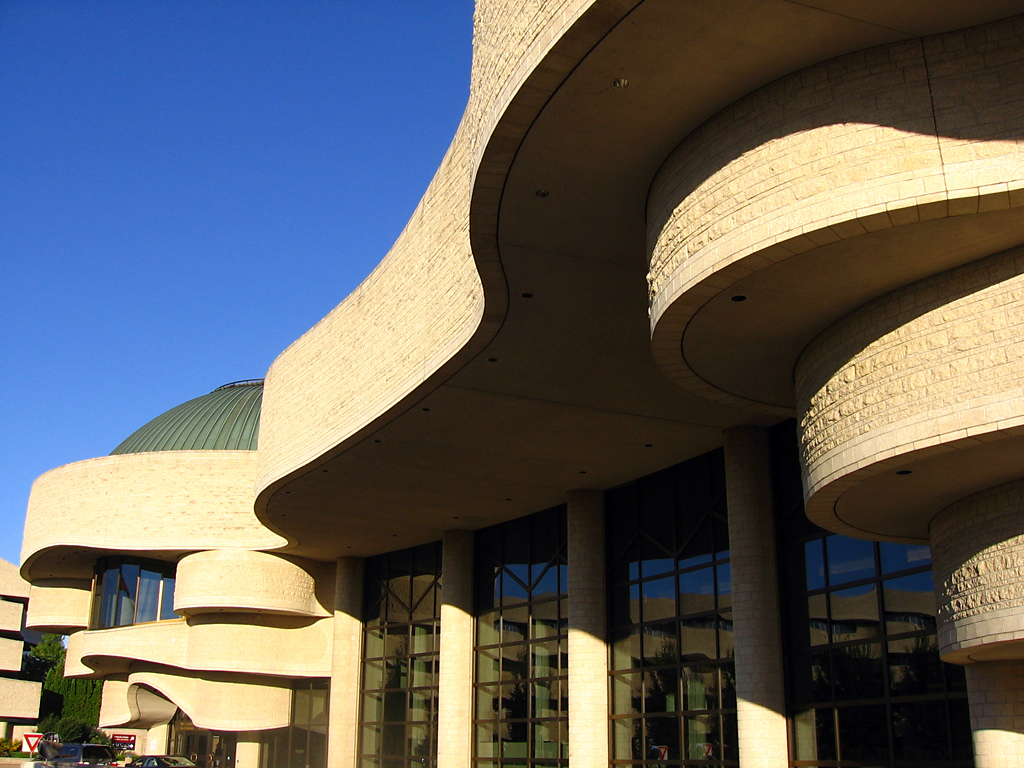
Museum of Civilizations

In addition to all the reading I have been doing for my first big project at work, I am finding myself well-immersed in interesting personal reading. Aside from the stack of fiction that has been oscillating in size for about a year, I am reading George Monbiot’s Heat: How to Stop the Planet from Burning and Harold Coward and Andrew J. Weaver’s book Hard Choices: Climate Change in Canada. Simon Singh’s The Code Book is catering to a less immediately work-related interest, as is the Simon Blackburn book Antonia gave me.

It can be tough to maintain an appetite for the written word that exceeds the immediate requirements of work and the secondary need to keep up to date on current events. Of course, it is essential in order to become and remain an informed member of society.

Unrelated: Emily introduced me to a new web comic: The Perry Bible Fellowship. It is pretty random, but also quite funny at times.

Responses to climate change scepticism

Thanks to a tip off from a new friend, I found this comprehensive collection of rebuttals written by Coby Beck and featured on the Grist website, which is itself well worth a look. The articles are sorted as follows:

  • Stages of Denial
  • Scientific Topics
  • Types of Argument
  • Levels of Sophistication

Whatever your beliefs, and whatever the case you want to make, you will find some points to engage with here.

Britain inundated

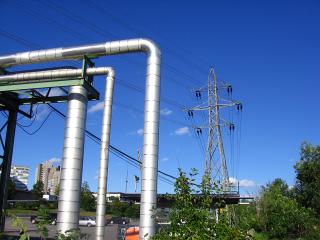
Ottawa construction

For those who haven’t been keeping abreast of the flooding in the United Kingdom, it is apparently extremely severe. Brize Norton, the airbase near Oxford, recorded 127mm of rain on July 20th. Normally, soggy Oxfordshire gets that much in two months.

Thankfully, relatively few people have died, though the British firefighting services are apparently describing this as the largest peacetime rescue operation in their history. Hopefully, the waters will soon abate.

Horizontally linked

I am trying to develop some informal connections with other people in North American who are working on climate change policy or research. In particular, I would like to get in contact with anyone studying feedback effects or policies that cities are adopting. Also, I would like to get in touch with people working within Canadian federal departments other than Environment, as well as people at the US Environmental Protection Agency.

PS. Harold Coward and Andrew J. Weaver’s book Hard Choices: Climate Change in Canada is worthwhile reading for those interested in Canadian climate change policy.

Life, the universe, and everything

During off hours, I have been watching the spectacular BBC series Planet Earth. Just seeing an episode is almost sufficient to make a person turn to a life of nature videography. Whether other viewers feel the same compulsion or not, it does seem reasonable to call the series mandatory viewing for human beings. It is both awe inspiring, insofar as it demonstrates the enduring richness of truly wild places, and chastening, insofar as it demonstrates their wholesale slaughter.

A book I am reading captures it well:

Being will be here.
Beauty will be here.
But this beauty that visits us now will be gone.

Curious, how powerful and helpless we seem to be, in the end.

Green glass

Apparently, the United Kingdom is the world’s largest importer of green glass. This is for the simple reason that the UK is the world’s largest importer of wine, bringing in over one billion litres a year and producing almost none. As such, the green glass piles up. There is so much of it that it can only be recycled in inefficient ways, such as grinding it up to use in road surfaces. Doing this uses more energy and resources than making the roads out of other materials and putting the green glass into landfills.

The easiest answer is to make wine bottles out of clear glass that can be recycled into a wider variety of things. Since that doesn’t seem to suit people’s tastes, wineries have come up with an alternative system. They import the wine in 24,000 litre containers (which saves on shipping costs as well) and then use it to fill up the bottles responsible Britons have been leaving at their curbsides for years. If you are curious what a tank of that size resembles, have a look at this page.

Something to consider, next time you are enjoying a bottle of your favourite vintage.

Climate change and the G8 meeting

All Souls, Oxford

Who would have thought – three or four years ago – that climate change would become the central focus of a G8 meeting? While the situation certainly demonstrates the problems that remain to be overcome (both American unwillingness to accept emission caps and the need to incorporate large and rapidly developing economies like India and China into such a system), the level of attention being directed at the problem is very welcome.

The sad fact is that Canada has the worst record of any G8 state, when it comes to the gap between our Kyoto commitment and our present level of emissions. For a state that prides itself on being a responsible global citizen, this is hardly a position that is tenable in the long term.

When Canada ratified Kyoto, we committed ourselves to emissions 6% below the 1990 level, achieved by 2012. At present, Canadian emissions are about 26% over. The United States, by contrast, is only about 16% above 1990 levels. The only G8 state on track to meet its commitment because of policy efforts is Britain. Germany has cut emissions, but not yet by as much as they pledged. Russia has much lower emissions, but it is on account of the collapse of their economy after 1989, rather than any self-restraint. Indeed, Russia ends up in the odd position of being able to sell credits for emissions that would never have occurred anyhow (the so-called ‘hot air’).

Global emissions continue to grow at a rate even higher than the most pessimistic option modeled by the IPCC. Indian and Chinese emissions are each up by about 100% since 1990. Everyone need to do better. Hopefully, the ongoing gathering of political energy will make that come to pass.

[Update: 7 June 2007] Unsurprisingly, the G8 seem to be developing a fairly toothless joint statement on climate change.

How risky is climate change?

Milan’s watch and iBook

On his blog, Lee Jones posted a link to this book review. Basically, the argument is that people are (a) exaggerating the dangers of climate change and (b) using climate change as an excuse to pursue other ends. I would not deny either claim. The Intuitor review of The Day After Tomorrow is evidence of the first, and more can be found in many places. Of course, their review of An Inconvenient Truth suggests that not everyone is guilty of misrepresentation. As for smuggling your own agenda into discussions about climate change, I suspect that is equally inevitable. The question of how to behave justly in response to climate change is fundamentally connected to the history of economic development.

In an unprecedented move, I feel compelled to quote my own thesis:

While the IPCC has generated some highly educated guesses, the ultimate scale of the climate change problem remains unknown. On account of the singular nature of the earth, it is also somewhat unknowable. Even with improvements to science, the full character of alternative historical progressions remains outside the possible boundaries of knowledge. As such, in a century or so humanity will find itself in one of the following situations:

  1. Knowing that climate change was a severe problem, about which we have done too little
  2. Believing that climate change was a potentially severe problem, about which we seem to have done enough
  3. Believing that climate change was a fairly modest problem, to which we probably responded overly aggressively
  4. Observing that, having done very little about climate change, we have nonetheless suffered no serious consequences.

Without assigning probabilities to these outcomes, we can nonetheless rank them by desirability. A plausible sequence would be 4 (gamble and win), 2 (caution rewarded), and then 1 and 3 (each a variety of gamble and lose). Naturally, given the probable variation in experiences with climate change in different states, differing conclusions may well be reached by different groups.

As such, what it means to make informed choices about climate change has as much to do with our patterns of risk assessment as it does with the quality of our science. Exactly how it will all be hashed out is one of the great contemporary problems of global politics.

Climate change and responsible global citizenship

Old Library, Wadham College, Oxford

During my second-to-last high table dinner in Wadham tonight, I got into a long conversation about Canada and climate change. The man with whom I was speaking asserted that (a) Canada would benefit directly from moderate warming and (b) Canada would benefit from activities that encourage global warming, such as the exploitation of the tar sands. Neither of these claims is unassailable on a factual basis, but the normative implications are more interesting to consider at the moment.

Let’s say that both claims are true. Should Canada act to combat climate change? To me, it seems the answer is an unambiguous yes. If I live uphill from a farm and have the opportunity to benefit from cutting down all the trees on my land, the fact that erosion will harm my downhill neighbour is not external from the consideration of what ought to be done. Depending on your conception of ethics, it may or may not be ethically appropriate for my neighbour to pay me not to cut down the trees. Regardless, the ethically optimal solution is generally to avoid impoverishing one’s neighbours to enrich oneself. This is especially true when you are much richer than those likely to be most immediately and significantly harmed. Being a mugger may be a personally advantageous course of action, but we have obligations to others that preclude it from being an acceptable choice for a member of society. Among a society of nations, there is likewise an obligation to behave with consideration for others, even if it diminishes one’s own prospects. Of course, such noble sentiments are hard to embed in policy.

Tragedy of the commons

As a discipline, International Relations is packed with parables. Sometimes, they are hypothetical stories and sometimes they are interpretations of historical events. In each case, they are meant to demonstrate something important about how world politics works. Almost without exception, some aspect of their validity can be questioned on either historical or logical grounds.

When it comes to global environmental politics, perhaps the most well-known such parable is the ‘tragedy of the commons.’ Garrett Hardin is generally credited with coming up with the idea in a paper published in 1968. That said, the same idea was expressed in Michael Graham’s 1948 book The Fish Gate, in which he described how fisheries where access is unlimited will inevitably become unprofitable and fail. The logic of an individual who cannot control the entirety of a resource grabbing as much as possible before its inevitable destruction is the key feature of both analyses.

Personally, I would rather give the credit for the idea to Graham, rather than to Hardin (though it probably far precedes either of them). After all, the latter thinker went on to write such logically and ethically dubious documents as Lifeboat Ethics: the Case Against Helping the Poor. In an illustrative passage, Hardin says:

A wise and competent government saves out of the production of the good years in anticipation of bad years to come. Joseph taught this policy to Pharaoh in Egypt more than 2,000 years ago. Yet the great majority of the governments in the world today do not follow such a policy. They lack either the wisdom or the competence, or both. Should those nations that do manage to put something aside be forced to come to the rescue each time an emergency occurs among the poor nations?

His assertion that affluent societies are such because their leaders have set aside a surplus in times of plenty, whereas the leaders of poor societies have not, represents a massively myopic and superficial understanding of the processes of wealth accumulation, as well as the interactions between historically dominant and historically oppressed states. Explaining patterns of development in such a simplistic way obscures important elements of world economic history. Going on to justify a cold-hearted ethic of indifference to suffering and injustice outside the rich world likewise represents inappropriate extrapolation and faulty thinking.