Climate change all over the news

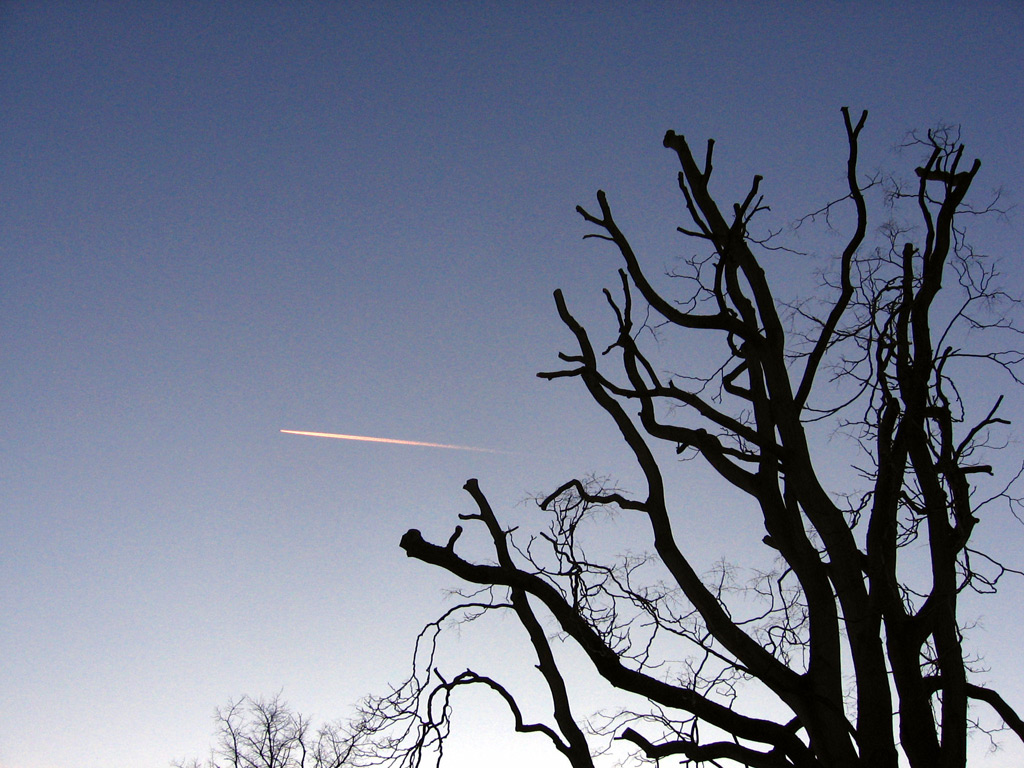
Jet contrail and pruned tree

Sorry to be less esoteric and entertaining in my writing recently, but I have been focused by necessity on issues pertinent to ongoing projects. The process distorts one’s perception of the world. I cannot really judge, for instance, the extent to which the apparent increase in coverage of climate change issues in the media is (a) the product of my increased focus on those stories, (b) the result of cyclical phenomena, like the release of IPCC reports, or (c) a demonstration of increased awareness – or at least increased newsworthiness – of the climate change situation. With that caveat stated, it certainly seems as though climate change related stories are getting top billing in the media to an increasing degree.

The front page of today’s Globe and Mail site features four articles on climate change. One is on climate change and Parliamentary politics, another deals with the proper role of scientists. There is a question and answer session, and finally an article on the impact of rising sea levels on Indonesia. Many organizations, including the BBC, now have dedicated portions on their websites to cover climate change news.

Even President Bush has acknowledged the need to take action. It’s enough to make one hope that a massive shift from talk to action might take place within the next few years, going beyond Kyoto and into the realm of mechanisms to substantially reduce greenhouse gas emissions and move into a post fossil fuel economy.

From the perspective of a concerned citizen, this all seems like good news. It is very important to reach as good an understanding about the likely costs and benefits of climate change as possible. Also essential is the development of political consensus to take action to prevent climate change and mitigate the impact. From the perspective of a graduate student working partially on climate change, it is all quite overwhelming. It makes one wonder how relevant one’s research will be in a year or two. Additionally, it makes it seem less likely that one can add anything new to the discussion. My hope is that by drawing together more types of information than most people will be examining, I will be able to develop some insights. The degree to which my thesis will be a real contribution to scholarship largely depends on it.

Excellent BBC nature series

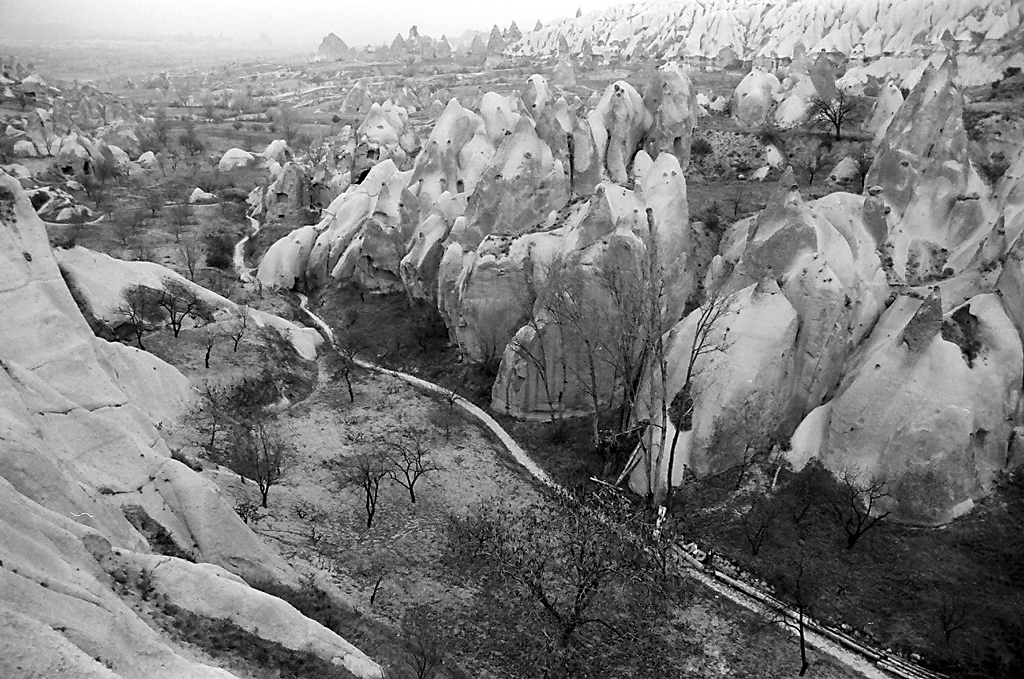
Landscape near Goreme, Turkey

Anyone interested in nature or geography should have a look at the spectacular television series “Planet Earth.” I watched a couple of episodes on Antonia’s very large television and was thoroughly impressed by the quality of the videography and the lengths they went to in order to get amazing imagery. I saw the episode featuring Lechuguilla Cave and another on mountains. Without a doubt, it is the best nature documentary series I have seen since The Blue Planet. Both were made by the BBC, and may constitute the strongest endorsement I have seen for that broadcaster.

I have been tempted many times to buy the DVD set of The Blue Planet, but don’t think it would be wise to buy the European version, which will not play on most North American devices. Both The Blue Planet and Planet Earth also have rather good websites. If you are in the UK, you can even download high resolution video clips. Unfortunately, they are only available as Windows-only DRM-protected Windows Media Player clips: hardly what you would want from a public broadcaster. Mac users will have to be satisfied with an excellent new background image.

America and climate change

In his recent State of the Union Address, President Bush described “the serious challenge of global climate change” and proposed a few measures intended to help deal with it. The development is largely unsurprising. Whether rightly or wrongly, Hurricane Katrina and unusual weather in the last few years have started to convince many Americans that climate change is real. Businesses expect greenhouse gas (GHG) emissions to be regulated eventually, and want the rules set early so they can start investing properly. Also, some groups (those who make biofuels or solar panels, for instance) see the chance to cash in on this opportunity.

The specific changes proposed – efforts to reduce gasoline consumption through ethanol substitution and better fuel economy standards – are not going to amount to much, in terms of reducing GHG emissions. Producing ethanol from corn grown with intensely mechanized and fertilizer dependent farming just shifts emissions around, rather than reducing them a great deal. Likewise, while fuel standards are a good idea, they will hardly be a comprehensive solution either to dependence on foreign oil or climate change.

All that skepticism aside, this may represent the start of a massive political change. Clinton, McCain, and Obama have all expressed support for federal controls on emissions (albeit ones less rigorous than even the lax targets of Kyoto). Business and religious groups, as well as farmers, are starting to weigh in on the side of doing something about the problem. Actually doing so would ultimately require either a carbon tax or a cap-and-trade system for emissions. In either case, the United States and over developed countries would need to lead the charge towards stabilizing and reducing emissions, before poor states like India and China can be expected to make sacrifices to those ends. When that does begin to happen, the rich world retains an obligation to help out, through mechanisms like aid and technology transfer.

Naturally, there is an enormously long way to go and no reason to believe that what looks like momentum today will be sustained. That said, if even an administration that has proven expert at believing what it wants to about the state of the world is expressing concern about climate change, perhaps a genuine consensus behind action is starting to develop.

International law and the environment

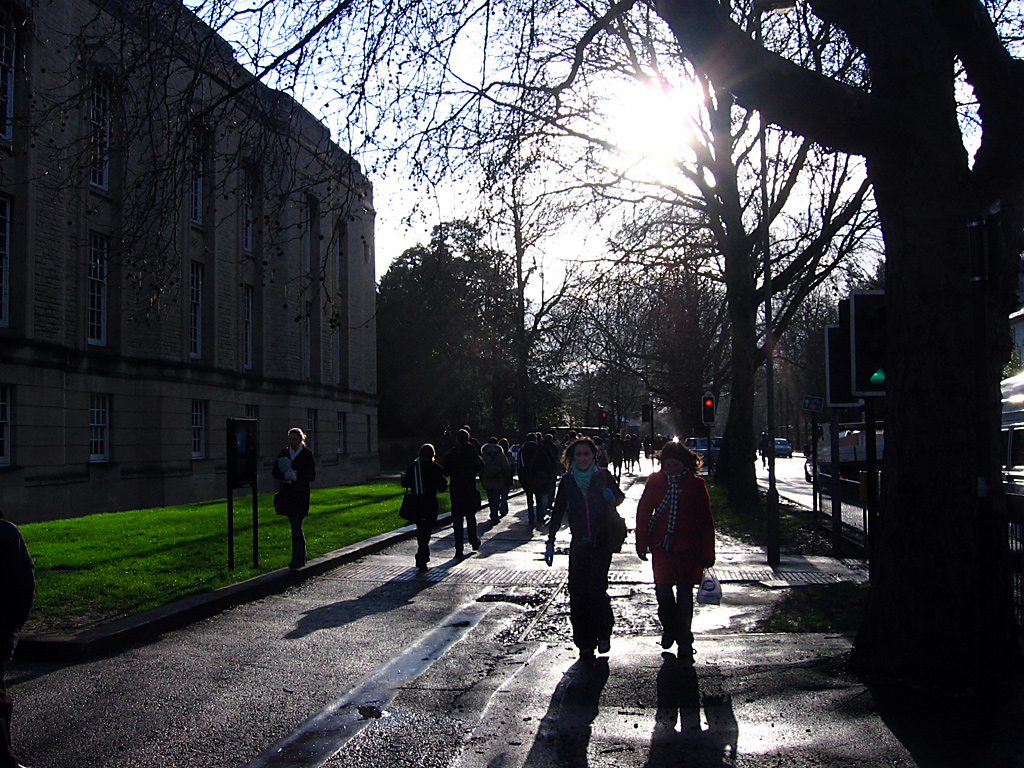
Morning walkers, South Parks Road

Next Wednesday, I have volunteered to give a presentation to my international law seminar on the following questions:

  1. Why has the regulation of CFCs been a success while the Kyoto Protocol has failed?
  2. Should the USA join the Kyoto Protocol, and if so, why?
  3. What roles have been played by Governments, NGOs and international organizations in the development of international environmental law? What is the basis of their authority in this field?

Substitute persistent organic pollutants (POPs) for Chlorofluorocarbons (CFCs), and it is a very good match for my thesis.

To give very short answers:

  1. Because there were substitutes readily available, the science was strong, and the cost of dealing with the problem reasonable, in the case of CFCs. Climate change is more difficult on all counts. (See the paper I wrote on the Stockholm Convention for my First Nations politics class in 4th year.)
  2. Yes, because it is a first step on the way to an agreement or collection of agreements that will stabilize GHG emissions, in the medium term. Ultimately, doing so will be much cheaper than suffering climate change, and will not carry the same terrible social and ecological costs.
  3. Their authority is based on expertise and legitimacy. See my thesis, in 88 days’ time for a more comprehensive answer.

Reading some more of the international law involved should be both interesting and useful. This is probably the first time the environment has been specifically addressed in any course that I have taken at Oxford.

PS. Much as I hate to reveal a fact that I might later win bets with friends about, I feel compelled to tell one that I learned earlier today from Kate. The polar bear (Ursus maritimus), has black skin: a feature that helps it to absorb energy from the sun, and thus keep the bear warm.

Categorizing thesis sources

I am splitting the literature review chapter for my thesis into two sections: the first about general materials relating to the role of science in environmental policy, and the second about the specific case studies. This bit is for the beginning of the general section, intended both to demonstrate the scope of appropriate materials and put them into a kind of comprehensible framework:

Within the realm of the general scholarship about expertise, legitimacy, and the application of science to the development of political solutions to environmental problems, there is a spectrum of discussion. At one end is the work most explicitly and restrictively concerned with questions within science itself. The deliberations of Popper, Kuhn, and their colleagues are frequently of this nature. The next band in the spectrum is work that relates to the social roles of scientists, within a broader social context. Here, the work of Haas on epistemic communities is particularly important. So too are deliberations within the scientific community itself over what it means to be a scientist. At a still-lengthening wavelength are explicit discussions about the political role that scientists should play: how, for instance, they should present their findings to policy makers, and whether it is appropriate to adopt political stances. Next come discussions about the same question, only from the political – rather than the scientific – point of view. How do politicians and political theorists view the process of delegation to scientists and scientific bodies? Finally, there are the most explicitly political and philosophical questions about things like the nature of international justice and the relationship between humanity and nature. In the following extended discussion, I will employ this organizational structure: moving from the high energy, short-wavelength considerations of science from within to the long wave questions of abstract political theory, keeping in mind the reality that these discussions are entangled with one another at many points.

What do you think of the metaphor? Too simplistic for a work of this sort, or useful as a means of categorizing? If I had to place myself on this spectrum, I would probably be in the yellow band: closer to red than to green. Most of the reading I have been doing – and a lot of what interests me most – is in the blue to violet range, though blaring red is not without appeal.

Also, it should be noted that I have far more sources of the first kind (general) than of the second (case study specific). This has a lot to do with how people keep suggesting the former and not the latter. Anyone who knows of any especially good writing on either the Stockholm Convention on POPs or the Kyoto Protocol is strongly encouraged to let me know about it. The library resources at Oxford, especially on Stockholm, are a bit patchy.

Genetically modifying photosynthesis

Dark path in Merton College

The European perspective on the genetic modification of foods generally seems like an unrelentingly negative one. While the dangers inherent to tinkering with nature are real and should be discussed, there are nonetheless a lot of appealing uses for the technology.

One significant example has to do with photosynthesis: the process whereby plants produce sugars from carbon dioxide and sunlight, generating oxygen as a by-product. Some plants use enzymes to turn CO2 into sugars composed of three carbon atoms (these are called C3 plants) while others have an enzyme (PEP Carboxylase) that allows them to produce four carbon sugars (C4 plants). The latter variety are much better at turning solar energy into sugars at temperatures above 25 degrees Celsius. The evolution of the C4 process has apparently taken place more than fifty times, in nineteen families of plant. Helping a few more important plants make the transition seems like it could be very beneficial.

C4 plants can be up to 50% more efficient than C3 ones in hot climates, while also using less water and nitrogen. Maize, a C4 plant, can yield a harvest of 12 tonnes per acre, while rice, a C3 plant, does no better than eight. If we could genetically modify rice to be a G4 plant, we could simultaneously increase crop yields, reduce the water and fertilizer needs of farmers in hot areas, and produce crops that would be less vulnerable to global warming. While there could certainly be some nasty unintended consequence of doing so, that does not seem like sufficient cause not to try.

The idea that the foods we eat now are ‘natural’ is not one that meshes very well with the fact that they have been ceaselessly modified, over thousands of years, through selective breeding. While there may be special dangers involved in mixing genes in the lab rather than out in the fields, there are also special opportunities, like the one listed above. It will be interesting to see if someone manages to pull it off.

Meat, methane, and global warming

Apparently, there is quite a substantial connection between the global meat industry and global warming. A report from the Food and Agriculture Organization concludes that the livestock industry generates 18% of all greenhouse gas (GHG) emissions. The figure includes feed production, the raising of animals themselves, as well as the transport and refrigeration of meat. Collectively, that is a larger share than all transport: cars, planes, etc. That quantity is both highly significant, and disproportionate to how livestock represents only 1.5% of global GDP. The report also describes the contribution of the meat industry to land degradation, water scarcity, and diminishing biodiversity. A summary of the report is also available.

Largely because of farming animals for meat, global concentrations of methane have more than doubled since the pre-industrial period. While those concentrations are still much lower than those of carbon dioxide, methane has 21 times more effect per unit volume. This seems unlikely to slow down any time soon, since global meat consumption has increased five-fold since 1950, and the rising GDP of many populous countries seems destined to perpetuate that trend.

Perhaps public figures hoping to show that they are serious about global warming should embrace vegetarianism or veganism instead of hybrid cars. While it is good that Canada’s Food Guide to Healthy Eating has been changed to list “Meat and Alternatives” as one of the four food groups, perhaps they should be more aggressively promoting a meat-free lifestyle; it is almost certainly healthier, and makes ethical and environmental sense as well.

This sort of reading often makes me feel that I should take the full leap to becoming vegan. That said, almost all the best things I eat involve milk or eggs. Giving up beef and tuna (with rare sashimi exceptions) was difficult enough. Giving up cheese is practically unthinkable.

Climate change game

The BBC has made a free online game, in which you try to manage European policies during the next century so as to deal with climate change, all while maintaining political popularity. It is quite difficult, and perhaps not overly realistic. Dealing with energy is extremely easy (I could never even come close to selling my surplus), whereas food and water require constant management. In reality, I would expect markets to deal with food and water problems fairly easily (especially if the latter were priced intelligently), whereas large scale energy issues require government leadership. More information about the game is here.

Perhaps the greatest flaw of the game is how it deals with the popularity of initiatives. The way in which public opinion is modeled seems badly off-kilter. One would not expect to be able to get a screen at the end that says all of the following:

  • Well done!
  • Europe emitted a very low level of carbon emissions, which is likely to result in global temperatures increasing by 1.4-2.5 degrees Celsius.
  • You left the economy in ruins. Hyper-inflation and joblessness are endemic across Europe. People are starving and crime and lawlessness have taken hold.
  • You were generally liked and seemed to consider public opinion on almost all the decisions you took.

I am not sure what this ‘victory’ screen says about the BBC’s opinion on European voters, but the combination strikes me as supremely implausible. The willingness of the other world leaders to accept binding targets is also rather greater than one would expect.

Uncertainty and morality

Gloucester Green

Speaking with Professor Henry Shue today about some of the normative issues that arise from science based policymaking, uncertainty was an area of particular interest. Specifically, when policy makers are required to make decisions under conditions of uncertainty, what special moral obligations arise as the result. An example of such uncertainty is the magnitude of harm likely to result from climate change.

To me, it seems that two types of duties arise fundamentally from such uncertainty. The first is an investigative duty. This falls upon policy makers directly, in the form of obligations to develop a reasonable understanding of the issues at hand, and it manifests itself through delegation to experts who can conduct more rigorous and comprehensive research. Within this obligation, there are specific rules of procedure embedded: for instance, a willingness to keep an open mind. Without such an approach, evidence will simply be discounted (Kuhn’s SoSR is helping me to refine my thinking about these procedural rules). A more contentious component of this obligation has to do with resources. It seems like more should be devoted to problems that: (a) have a greater potential impact and (b) have a greater effect upon the constituents to whom the policy maker is responsible. The second criterion there has both a moral basis (because of the nature of representative legitimacy) and a practical basis (because it would be a waste of time for the Inuit Circumpolar Conference to focus their resources on desertification in Africa).

The second type of duty is to take preventative action and/or action to mitigate the damage that will be done by what has become inevitable. Deciding how much to allocate in total, as well as how to subdivide it, is tricky both for practical and moral reasons. Both prevention and mitigation have distributive consequences; they also involve arbitration between competing rights. Do people, for instance, have the right to live in areas more likely to flood, due to climate change, or do they just have the right to live in comparable conditions anywhere? Who has the duty to provide the material requirements of satisfying such rights? When it comes to climate change, the idea that people have a right to that which they have simply owned or done for a long time is problematic, not least because many such ‘legacy’ activities contribute to the problem at hand.

While I certainly cannot provide answers to any of these questions here, I can hopefully do so in the thesis. Indeed, the three big areas of moral discussion that keep cropping up are: (a) dealing with uncertainty (b) social roles and (c) the nature of ‘technical’ solutions to environmental problems. All three offer the chance to delve into some of the moral complexities concealed within the idea of science-driven policy.

Note to self: look up Trevor Pinch and Sheila Jasanoff, within the ‘Science, Technology, and Society’ school of research in the United States.

Conciousness raising through free DVDs

There is a website that will supposedly send you a free DVD copy of Al Gore’s An Inconvenient Truth. Some statistics are up, on how many tickets and discs they have given away. I have placed a request, and I will let you know if it actually works. They seem to be overwhelmed with thousands of requests at the moment, so that seems pretty unlikely.

If they do send me one, I will make sure to screen it publicly at least once. The case Gore makes is rigorous and compelling; this is also an interesting demonstration of how science, politics, and advocacy run together. I wrote about the film earlier.