Canada’s rules on charities and political activity

Canadian charities – especially environmental charities – now feel threatened that they will lose their special tax status if they engage in ‘political’ activity. The Canada Revenue Agency website describes the rules:

Registered charities are prohibited from partisan political activity, because supporting or opposing a political party or candidate for public office is not a charitable purpose at law. There are two aspects to the prohibition: the first restricts the involvement of charities with political parties; the second restricts the involvement of charities through the support or opposition to a candidate for public office. Charities engaging in partisan political activities risk being deregistered.

There is also a policy statement that further fleshes out the rules.

This means, for instance, that LGBT organizations cannot support candidates who support equal rights for their members or oppose candidates who want to restrict their rights. Environmental charities, likewise, cannot oppose parties or candidates that believe in the wholesale destruction of the natural world.

I think this overlooks the reality that large-scale social and political change always requires political agitation. Campaigns against child labour, or in favour of the rights of women, could never have succeeded if they did not engage with the political system. If society is going to continue to make progress, it seems sensible to recognize this and allow charities to pursue their aims through political means.

The current restrictions on political activity are especially objectionable in that they risk being selectively applied. Canada’s Conservative government is a strident defender of the oil sands and fossil fuel development generally, frequently advancing the laughable claim that this is an ‘ethical’ source of energy. Cracking down on charities for engaging in political activity is just another way in which the government can tilt the scales in favour of this destructive activity.

The scale of change which we need to achieve if we are to avoid catastrophic climate change is enormous. It requires major political change in countries like Canada. Allowing environmental charities to fund bird sanctuaries, but not to support or oppose parties or candidates, misrepresents the scale and character of our environmental problems. It also misrepresents the proper role of civil society in democratic societies, which does not end where the formal realm of ‘politics’ begins.


Climate change and democratic legitimacy

I have finished my final assignment for the term, the essay for my Global Environmental Politics course. It is about climate change and democratic legitimacy:

Many of these ideas are likely to find their way into my PhD thesis, so I would definitely appreciate feedback.

“Chasing Ice”

I saw “Chasing Ice” with some Toronto350.org people tonight. The film has a lot of visual appeal and contains some useful information. It’s definitely worth seeing.

One interesting thing about it for me is what is suggests about human reasoning. From a scientific standpoint, all this photographic and videographic documentation of melting glaciers is probably less useful than RADAR images shot by satellites. Yet the process of collecting the videos and photos, and the human drama involved in the endeavour, seems to significantly increase the salience of the message for people. After the film ended, most of the people in the theatre were happy to sign the Toronto350.org divestment petition.

Emotional salience may be what we really need at this point. We’re at a moment in history where most people accept that the climate is changing in dangerous ways because of human activity, and that something should probably be done about it. The trick will be getting people, firms, and governments to do enough quickly enough to prevent the worst things that could happen.

The film will be playing at Toronto’s TIFF Lightbox until December 13th.

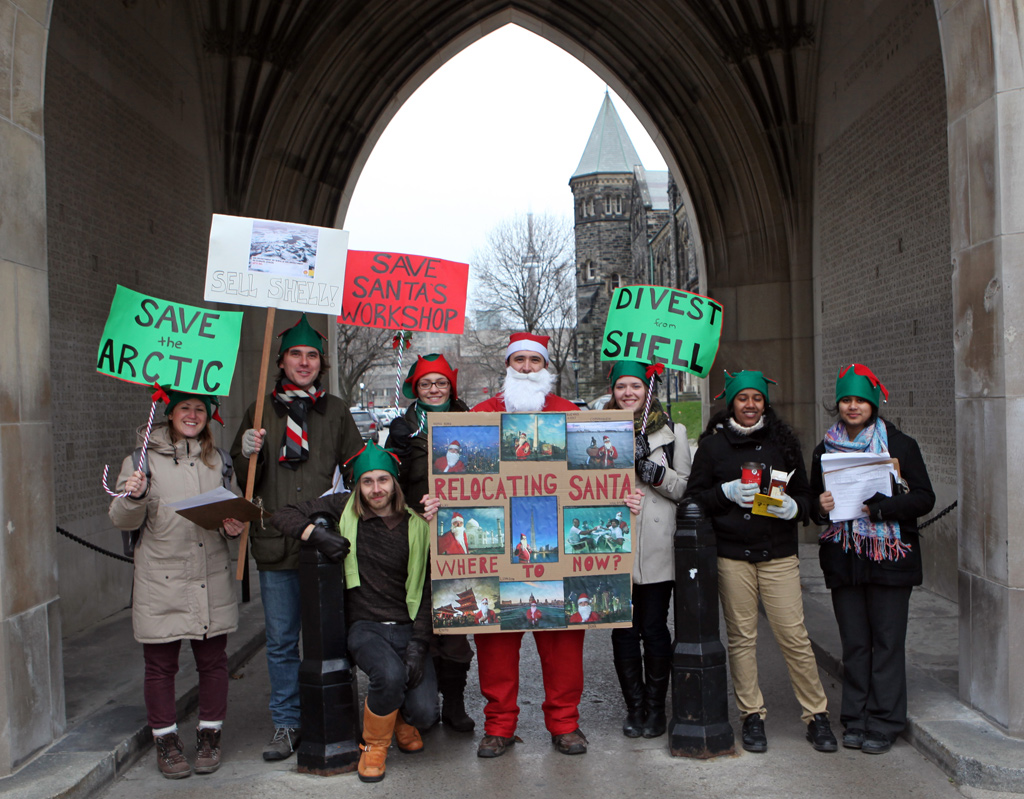
Santa soliciting Shell divestment petition signatures

Today, we collected more than 200 petition signatures calling on the University of Toronto to sell their stock in Shell:

I am thoroughly appreciative to the Toronto 350.org volunteers who organized the whole event and then pulled it off today.

We will be building up our divestment campaign by seeking more signatures, including from campus groups and prominent alumni.

Both those associated with the University of Toronto and outside sympathizers are asked and encouraged to sign our petition. We are hoping to get thousands of names on it before we present it to the president of the university.

Shell ad parody generator

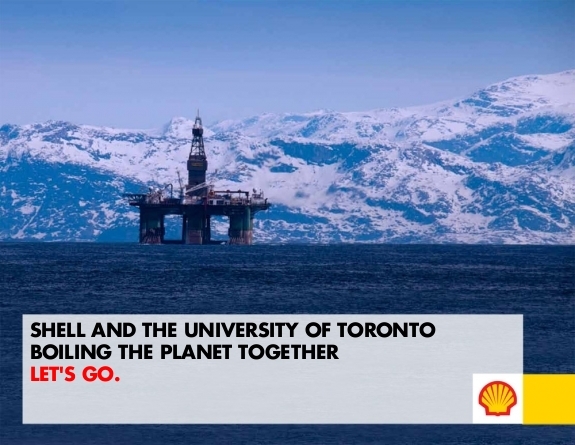
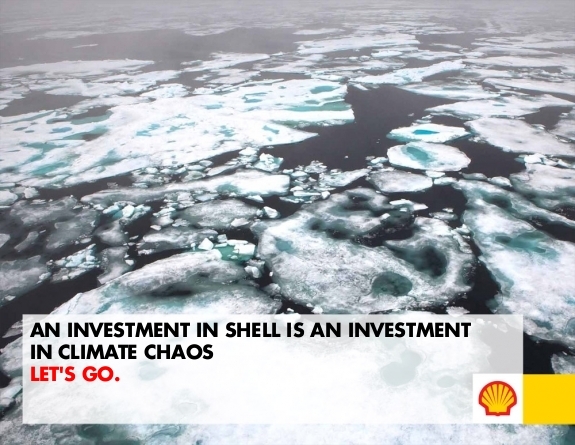
With this website, you can make your own satirical version of Shell’s “Let’s go” ads:

Shell is one of the most enthusiastic companies taking advantage of how climate change is melting the arctic in order to drill for oil there and thus cause even more warming. Shell is also the largest single investment in the portfolio of the University of Toronto.

Toronto 350.org is calling on the University of Toronto to sell its stock in Shell, as a starting point for a general campaign of fossil fuel divestment.

350.org Global Power Shift

This looks rather interesting:

Global Power Shift (GPS) will be a multi-pronged project to scale up our movement and establish a new course, like never before. The basic plan is this:

  • In June of 2013, 500 of us will gather in Turkey — from leaders to engaged community members
  • We’ll train in grassroots and digital organizing, share our stories, and chart a strategy for the coming year
  • Attendees will then return to their home countries in teams to organize mobilizations
  • These national or regional events will be launchpads for new, highly-coordinated campaigns targeting political and corporate levers of power
  • Together, we will truly shift the power and spark the kind of visionary transformation we need to fight the climate crisis

I hesitate to endorse any event that requires so much travel to attend, but this may be a case where the emissions associated with getting there are justifiable.

American unconventional oil and the economic viability of the oil sands

Hydraulic fracturing (“fracking”) of tight and shale oil in the United States may be the biggest economic force determining the future of Canada’s bitumen sands. The Globe and Mail recently printed an interesting article on how the development of unconventional oil in the United States could undermine the business model of the oil sands: “a belief in unfettered access to an insatiably oil-hungry U.S. market has been a central underlying assumption of the great energy expansion under way in Alberta.” If the U.S. can satisfy domestic oil demand with their own unconventional sources, the huge investment that has been made in Canada’s oil sands may never produce a reasonable economic return.

This is one more risk that should be borne in mind when making energy investment decisions. Unfortunately, the climate system doesn’t care about the source of greenhouse gas emissions. America’s newfound bounty of unconventional oil and gas will probably make it even harder to avoid catastrophic climate change.

Related:

Conference on Enbridge Line 9 today

Today I am attending a conference on opposing Enbridge’s plan to reverse their Line 9 pipeline in order to carry diluted bitumen from the oil sands to Montreal.

I will be posting detailed notes on the Toronto 350.org planning forum.

If you are in Toronto and have some time before 5pm, I recommend coming out. It is happening in Sidney Smith Hall at the University of Toronto, at 100 St. George Street. This is a five minute walk from the St. George subway station.

IEA: We can only burn 1/3 of the remaining fossil fuel

The International Energy Agency is now mirroring the claim made by Bill McKibben, James Hansen, and others: we cannot burn all the world’s fossil fuels. In their World Energy Outlook 2012, they claim:

“No more than one-third of proven reserves of fossil fuels can be consumed prior to 2050 if the world is to achieve the 2 °C goal, unless carbon capture and storage (CCS) technology is widely deployed”

Carbon capture and storage is arguably more of a rhetorical device which allows companies and governments to assume fossil fuel use than a real technology capable of reducing emissions. As such, it seems fair to say that we face a stark choice between dangerous climate change and abandoning fossil fuels.

Given that the value of fossil fuel companies is based on the assumption that they will be able to dig up and sell all the reserves they own, now might be an especially appropriate time to start divesting from fossil fuels.

Obama and Romney on fossil fuels

President Barack Obama and Mitt Romney both think their best odds of winning the election arise from a full-throated endorsement of fossil fuels, with no mention of climate change:

Mr Obama’s energy policy goes beyond a new-found enthusiasm for oil and gas. He has even borrowed a phrase from the McCain-Palin campaign—“All of the above” (rather than “Drill, baby, drill”). “Most of the above” is more accurate. And it may hurt him. Clean Air Act rules administered by the Environmental Protection Agency (EPA) are accelerating the retirement of coal-fired power stations while cheap gas eats away at coal’s share of electricity generation. This is the main reason that Kentucky and West Virginia, once states where the Democrats were competitive, have swung firmly to the Republicans. Mr Romney is far friendlier to coal mining, an industry he praises for employing 200,000 people. He wants to develop coal aggressively and roll back the environmental regulations that have battered it.

Hopefully both candidates are lying. That is fairly plausible when it comes to coal, which Mr. Romney also sought to restrict as governor of Massachusetts. The perceived need to pander to the coal industry is revealing. The immediate benefits of coal production – in the form of profits and jobs – completely overpower the reality that coal kills vast numbers of people through air pollution and threatens the entire world through climate change.