Heathrow’s third runway and the carbon price

I have commented before on the incoherence of how the United Kingdom plans to both cut greenhouse gas emissions and increase airport capacity. The December 8th report from the Committee on Climate Change perpetuates this mis-match, saying that the third runway for Heathrow could be compatible with government emission reduction targets, provided the price of carbon reaches £200 per tonne by 2050.

To me, this view is rather perplexing. Why build a runway, then use taxes to choke off the demand for it? Either your taxes won’t prevent the flights, making it harder to reach your carbon targets, or they will and your investment in the runway and supporting facilities will be a waste. The committee also assumes that aircraft engine efficiency will improve by 0.8-1.5% per year, that biofuels that don’t compete with food crops will emerge, and that high speed rail will displace a lot of short-haul flights in Europe. To take advantage of assumptions about the future to defend a dubious current policy is a practice all too common. Rather than pretending they can have it both ways, the UK should acknowledge that achieving its climate change goals will require reducing incredibly emissions-intensive activities like air travel.

Thankfully, the British Conservative Party – which is likely to take power with the next election – continues to oppose construction of the runway, precisely because it clashes with climate change objectives.

Cold: Adventures in the World’s Frozen Places

Dylan Prazak, wide angle

Bill Streever’s book takes a meandering and often macabre journey through various facts and stories about the world’s chilled regions: discussing everything from ground squirrel hibernation to the fatalities that resulted from the Schoolchildren’s Blizzard of 1888. While it contains a lot of highly interesting information, the book’s non-linear structure is distracting and contributes to its repetitiveness. Had Streever stuck to a conventional structure with chapters focused on different topics, the result would probably have been better.

Streever is at his best when discussing the human suffering brought on by cold, and the ingenious ways by which animals have learned to survive in it. The story of the Arctic caterpillars that freeze solid every winter, and take ten years to eat enough to undergo metamorphosis, is a poignant one. So too are Streever’s excellent descriptions of snow and feathers as insulating materials, as well as frostbite and hypothermia as unwanted consequences of extreme cold. The book has an entertaining habit of pointing out odd coincidences. For instance, readers will discover what a certain volcanic eruption has to do with Mary Shelley’s Frankenstein, Mormonism, and the invention of the bicycle.

Cold gives a fairly cursory treatment of climate change: mentioning it fairly often, but not getting into great detail. Streever takes it as a given that human greenhouse gas emissions will forever and substantially alter the world’s frozen places, and does not devote any time or attention to the kind of actions humanity could take if it wished to preserve the polar ice caps, glaciers, etc. The author acknowledges how his own jet-setting lifestyle is contributing to the destruction of the places that interest him so, but never takes time to really contemplate alternative behaviour for himself or humanity as a whole.

All told, Cold is well worth the couple of hours it takes to read. While some judicious editing would have been welcome, Streever’s book does manage to convey an appropriate sense of both curiosity and visceral dread about the importance that cold has played in our warming world.

The climate change denier at the helm of Whole Foods

Disappointingly, it seems that Whole Foods CEO John Mackey maintains the scientifically untenable position that we don’t know what is causing climate change. Furthermore, he thinks that those seeking to regulate the dumping of greenhouse gasses into the atmosphere want to: “raise taxes and increase regulation, and in turn lower our standard of living and lead to an increase in poverty.” This seems in keeping with how people sometimes have absurdly overblown concerns about the degree to which certain things are dangerous (terrorists, kidnappers, genetically modified organisms), while not appreciating the overarching threat to humanity and the planet’s ecosystems that climate change represents.

People need to appreciate that our wastes, being released into the atmosphere, are threatening the future basis for all human welfare. We need to stop obsessing about plastic bags and GM soybeans and begin with the serious work of replacing our energy sources with zero-carbon, renewable options.

May you live in interesting times

Farm country, Bennington Vermont

In Vancouver, I had a conversation with Tristan about some of the major energy and environmental changes we are likely to witness in our lifetimes. These include:

  1. Very significant amounts of climate change, very substantial climate change mitigation efforts, or both.
  2. The probable collapse of most or all commercial fisheries globally.
  3. The peak of global oil production, and progressive subsequent decline.

In some ways, the significance of all three is the same – humanity now has the capability to reshape the planet in very substantial ways and no political or economic arrangement to date has been sufficient to stave off some of our most dangerous and damaging behaviours.

Personally, I think this is a poor time to be bringing children into the world. While the loss of fisheries will be tragic, climate change threatens to undermine the ability of global civilization to feed and support itself, if it continues unchecked. Before I would feel confident that future generations will live reasonably good lives, I will need to see global emissions reach a plateau (very soon, if we are to avoid more than 2°C of warming) and begin the long and determined decline that is necessary to restabilize the climate on human timescales.

Within fifty years, we should have a pretty good idea of whether humanity will put in a solid effort in jumping over the various hurdles before us. Given the feedbacks in the climate system, there is no guarantee that even vigorous effort can prevent abrupt or runaway climate change. That being said, there is a big difference between devoting ourselves to making a real effort to overcome the obstacle and simply ploughing along blindly (accelerating all the while) until we hit it.

Military fuel use and climate

One of the organizations taking possible future fossil fuel scarcity most seriously is the American military. The Air Force is investigating how to make jet fuel from coal or natural gas. Meanwhile, the other branches of the military are looking for ways to reduce their fuel bills and vulnerability to fuel shortages. There is plenty of reason to do so, given that American forces are using about one million gallons of fuel per day each in Afghanistan and Iraq, and the cost per gallon in the most remote locations can run as high as US$400. The average cost for a gallon of fuel at a forward operating base is about US$15.

Some efforts being made include insulating tents, installing ‘smart grids’ on military bases, increasing usage of renewable forms of power, and investigating ways to use wastes for energy. As with other attempts to reduce fossil fuel dependence, there is no guarantee that these efforts will prove to be beneficial overall from a climatic perspective. If the Air Force manages to produce biofuels that are suitable for use in aircraft, have a decent energy return on investment, and do not compete with food crops, they may develop products and processes with considerable civilian applicability, and potential to mitigate greenhouse emissions. If, instead, they just perfect the oil German and Japanese trick of turning coal into liquid fuel, they may end up making the problem much worse. The very last thing humanity needs is another excuse to burn coal, when we really ought to be working out strategies to leave all that planet-warming carbon safely underground.

Of course, militaries are fundamentally hugely wasteful and destructive things. If we do manage to make a global transition to zero-carbon forms of energy, it seems probable that the world’s various armed forces will be the most resistant to accepting any restrictions on their emissions or fuel use. Much will depend on whether we can find energy sources that are actually cheaper and better than fossil fuels, or whether we manage to content ourselves with inferior options that don’t generate the same sort of climatic risks. In the first case, militaries may largely shift to low-carbon technologies on their own accord. In the latter case, prodding them into environmental responsibility may prove extremely difficult, especially if ongoing climate change has helped to make the world a less geopolitically stable place.

Goodbye to Vancouver, again

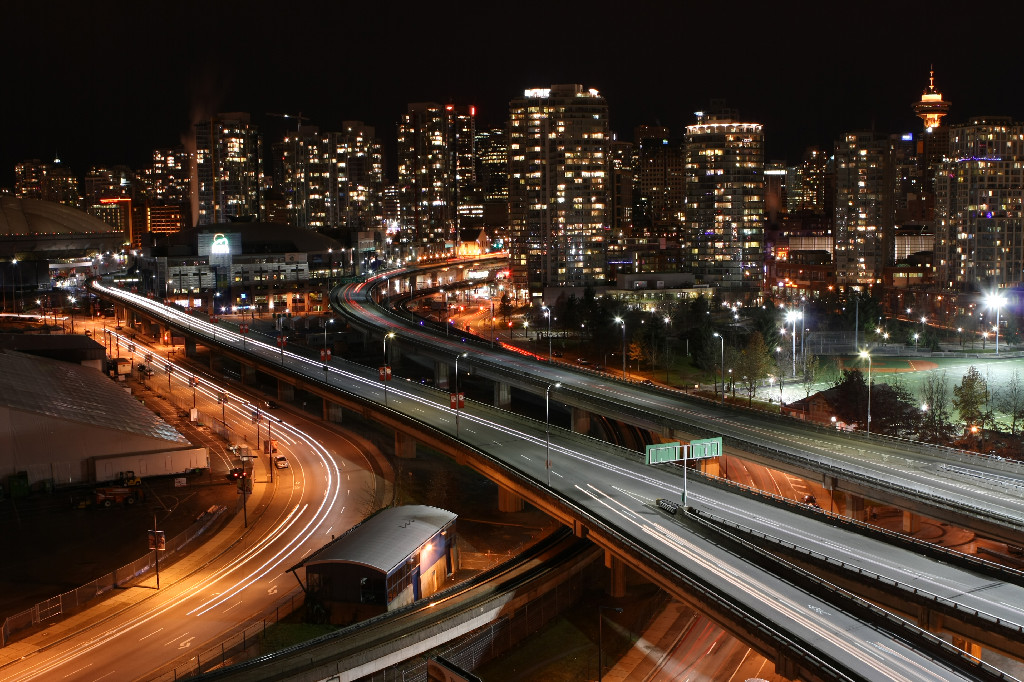
Vancouver skyline, highway, and SkyTrain tracks

My eighteen days in Vancouver were full of wonderful times with family, friends, and Emily. It was certainly worth spending the time on the bus for. As stated before, Vancouver puts Ottawa to shame as a city. It has so much more happening, not just because of the Olympics but because of the size, the location, and the fact that it is a city that has to pull for itself, whereas Ottawa exists to try to organize all the rest. Vancouver is certainly not without problems, but the degree to which it is alive and interesting more than makes up for it in my mind. I will be leaving the city with a lengthy list of appealing activities and places left undone and unvisited, for lack of time.

Given the need to mitigate climate change, I don’t know how often I will be able to visit Vancouver, going forward. While effecting political change is far more important than minimizing our personal emissions, doing the latter does seem necessary for retaining credibility while trying to do the former. That said, it certainly rankles a bit to see people flying halfway across the world for a sunny weekend, while you agonize about whether and how to go see your home city for the first time in two years. An ironic consequence of trying to behave ethically in relation to future generations is that other people raise their expectations of you, without necessarily adopting higher ones for themselves.

My thanks to everyone who helped to make this visit so special and worthwhile. This visit will certainly be a significant data point, while I am trying to solve the puzzle of where and how to spend the next few decades.

The credit crunch and climate change

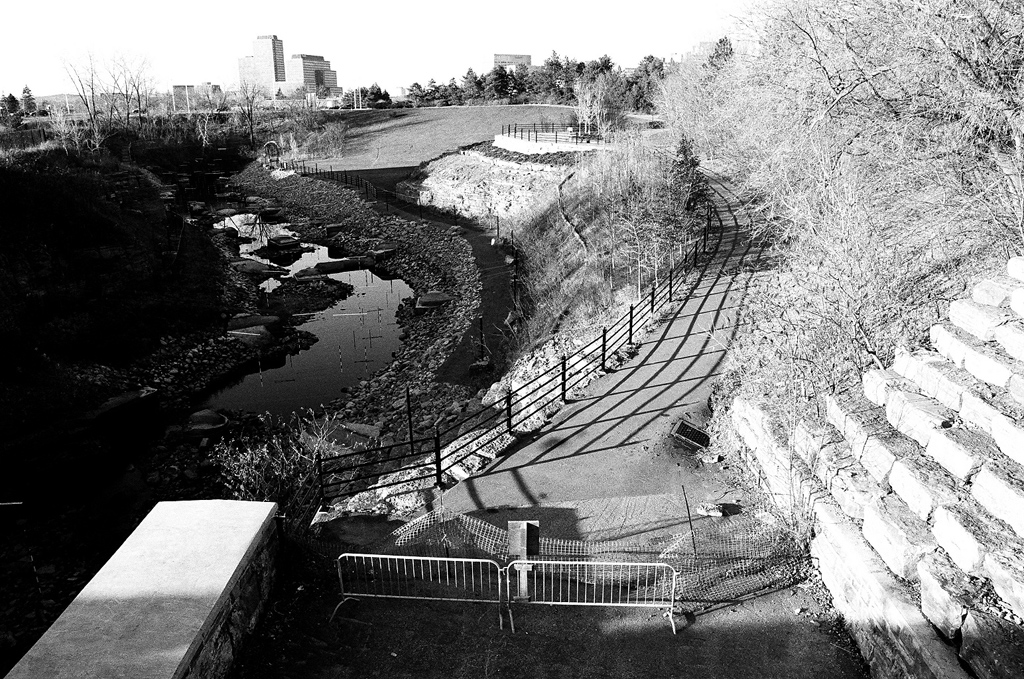
Parkland, LeBreton Flats, Ottawa

The credit crunch reveals at least one important thing about major policy decisions: once they are taken, one way or another, it becomes impossible to fully evaluate what the world would have been like without them.

Plenty of people claim that it was terribly necessary to bail out the banks and car companies, cut interest rates, and wreck the public finances by splashing out on every sort of tax cut and government spending program. They argue that doing so made this into a minor recession compared to a decade-long global recession. Having taken those actions, our ability to know what the world without them would have been like is very limited. The unknowable costs of inaction can always be used to respond to examples of cases where action currently seems unnecessary: “Yes, it was regrettable for the investment bankers to pay themselves off with taxpayer money, but the alternative to all this would have been a terrible global depression!”

The same will eventually be true of climate change mitigation policy. Say we eventually make it a real priority – setting a high price on carbon and really focusing on de-carbonizing our infrastructure. At some point in the distant future, we will look at our efforts and at how much climate change occurred. Provided it was a non-catastrophic amount, we will be in the same situation as we are now in relation to the credit crunch. We will be unable to know how bad things would have gotten if we had not taken action,

That being said, the stakes are enormously higher with climate change than with the credit crunch. While global economic turmoil would hurt, climate change risks destroying or severely degrading the capability of the planet to sustain human life. The risks associated with allowing it to occur to an extreme extent are practically incomparable.

It should also be noted that the credit crunch bailouts served a purpose that we must look on with increasing suspicion: maintaining economic growth. While we should certainly hope that human welfare will continue to improve, it is tautologically the case that we will eventually need to move to an economy in a steady state, when it comes to the resources it extracts from the atmosphere, lithosphere, hydrosphere, and biosphere, and in terms of the wastes it ejects into those places.

Vancouver update, and travel options

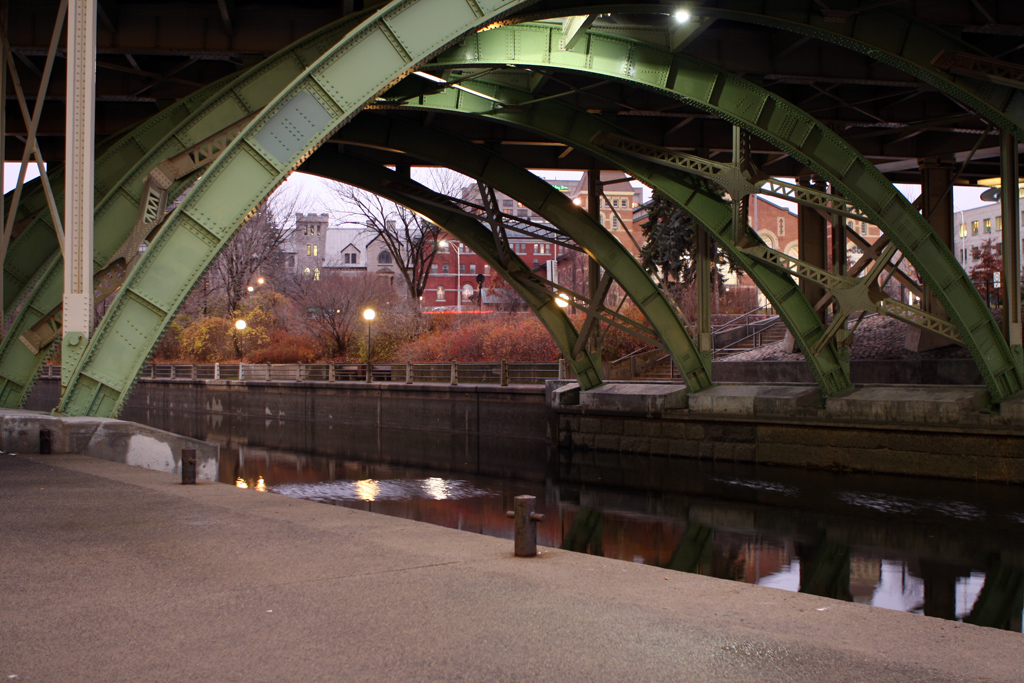
Laurier Avenue Bridge, Ottawa

The last few days of Vancouver downtime have been really enjoyable. It is impossible to disentangle the extent to which the enjoyment is the product of broader and deeper networks of friends here, and the extent to which it arises from characteristics essential to the city.

Tristan is on his way back to Ontario via train. While it seems to be a significantly more carbon-intensive way to travel, it is undeniably infinitely more interesting looking than the bus. He has already provided good photographic evidence of that. In my experience, the bus trip offers virtually nothing worth photographing during short winter days. Perhaps one day we will have low-carbon trains, and thus a way of going cross-country that is both environmentally responsible and tolerably pleasant and interesting.

I have been reading an excellent book and play: Tom Stoppard’s wonderful Arcadia (combining amusing talk of sex and science) and Bill Streever’s Cold: Adventures in the World’s Frozen Places. The latter offers an astonishing contrast between stories of success and failure in extreme cold: caterpillars that freeze every winter and take ten years to achieve metamorphosis, versus the final journal entries of doomed expeditions, documenting how the men died one at a time.

Less than four more days, and I will be back on the bus.

Generation IV nuclear

The Economist has an article summarizing a few possible next-generation fission reactor technologies. They include the Supercritical water-cooled reactor (SCWR), the Very High Temperature Reactor (VHTR), the Sodium-cooled fast reactor (SFR), the Gas-cooled fast reactor (GFR), the Lead-cooled reactor (LFR), and the Molten-salt reactor (MSR). Most promise higher efficiency than conventional pressurized water reactors, largely because they run at a higher temperature. Some are also capable of using more esoteric forms of fuel. For instance, the MSR can use thorium once it has been ‘seeded.’

The article doesn’t give too much consideration to the many challenges facing the nuclear industry: cost, chief among them. Given how opaque the costs of nuclear are, it is hard to know whether existing reactor technologies are really cost-competitive with renewables now, much less untested new variants.

India’s voluntary climate actions

In international climate negotiations, India has been one of the states asserting most forcefully that developing countries should not have mandatory emissions caps applied to them. It argues, quite rightly, that states that are now rich largely became that way on the basis of fossil fuel use, and that it still has high levels of extreme poverty to address. That being said, all global emissions will eventually need to be cut. Approaches like contraction and convergence seek to address these practical and ethical issues, by giving states like India and China a bit of space in which to keep increasing emissions, before theirs peak at a level far below where rich states are now, and eventually fall to zero.

While India isn’t signing on to such schemes now, they are taking some voluntary actions unilaterally: “a proposed $20 billion investment in solar energy; a plan to return a third of its area to forest; and many energy-efficiency measures.” These are the sorts of win-win measures that generate positive secondary effects. Solar power doesn’t cause air pollution, and can help countries reduce their dependence on imported fuels. Reforestation protects watersheds and decreases erosion. Energy efficiency might be the single area where it is most possible to actually save money while reducing emissions.

Eventually, India will need to be brought into a binding global emissions reduction regime. For now, whatever actions that can be taken to drive their development process towards a low-carbon course should be undertaken.