Climate change and drought

Split yellow leaf

There are many reasons to worry about the connections between climate change and drought. As temperatures increase, they change precipitation patterns for several reasons. These include changing the rate of evaporation from rivers and lakes, altering the composition of ecosystems, and other impacts. Forests, in particular, play important roles in the hydrological cycle. Some, like Kenya’s Mau forest, are hydrologically critical for large regions. If climate change makes forests change composition, dry out, and burn, it could have big effects on downstream agriculture.

Another major danger is loss of glaciers and summer snowpack. Both play a moderating role when it comes to river levels: accumulating snow in winter and releasing it as meltwater in summer. When rivers lose this buffer, they expand in wet times and shrivel in dry ones. This is dangerous not only for agriculture, but for electrical generation as well. The Colorado River, host to a slew of dams, may encounter serious problems of this sort in coming decades. Lake Mead, located on the Colorado and serving Las Vegas, is drying up dramatically. So will many others. Himalayan glaciers are especially concerning, given how important they are to the flow patterns of major rivers that serve densely populated areas.

Desalination, as an alternative to fresh water use, has major problems of its own – foremost among them that it uses a lot of energy. If that energy is coming from fossil fuels, the use of desalination may well worsen water problems in the long term, by contributing ever more to the stock of greenhouse gasses in the atmosphere.

Responding to all of this requires more than just climate change mitigation. It also requires more intelligent water policies, such as discouraging the overuse of non-renewable aquifers and ensuring that farmers and industrial users of water pay for it at a level that encourages responsible use. People who argue that ‘water is a human right’ and should therefore be free are ignoring the fundamental problem of scarcity. If we allow heavy users unlimited license to take what they want for next to nothing, we risk depriving other people of the more basic right to the quantities required for basic consumption and sanitation. The alternative is to effectively subsidize drought. States should also be thinking about ways in which they can import ’embedded water’ in the form of crops from wetter regions. Growing wheat in deserts is a folly some states have indulged in so far, but may do well to abandon in a more water-constrained (and riverflow-variable) future.

The Year of the Flood

Electrical warning sign

Margaret Atwood’s The Year of the Flood is a parallel story to her prior novel, Oryx and Crake. Set in two time periods with two narrators, it fills in a bit more of the dystopian world she created: one where the bulk of the horrors presented emerge primarily from the exploitation of genetic engineering and a return to gangsterism and anarchy. Climate change is part of it all, but definitely doesn’t have a prominent role among the causes of human downfall. While the book does expand the reader’s view into that world in interesting ways, it is ultimately less satisfying as a piece of speculative fiction. Nonetheless, it is well worth reading, for those interested in imagining the ways in which humanity might continue to develop.

In some ways, this is a female retelling of the previous story. The two narrators are both women, separated by a generation, and most of the key happenings centre around their treatment as women and engagement with other woman. This world certainly isn’t a pretty one, in that regard, with almost all men as enemies and a terrible lack of personal security for almost anyone. This is a book that will have parents enrolling their daughters in karate lessons and, perhaps, rightly so. Being able to defend yourself is clearly important, when the future is uncertain. At the outset, the two narrators can be somewhat hard to distinguish, but as the book progresses at least one of them develops a distinct and interesting perspective and approach.

The Year of the Flood incorporates many of Atwood’s favourite issues and motifs of late, including sex, debt, religion, corruption, and the nature and corporate manipulation of human desires. Along with being interweaved with Oryx and Crake, this book is connected with Atwood’s recent non-fiction writing on debt. It certainly explores the question of ecological debts and the responsibility of human beings towards nature. In Atwood’s world, humanity has filled the world with splices and custom creatures, while allowing almost all of the planet’s charismatic megafauna – from gorillas to tigers – to become extinct. The God’s Gardeners, the cult the novel focuses on and whose hymns it reproduces, have beautified the environmentalists of the 20th and 21st centuries, despite how their efforts have apparently failed, at least insofar as conserving nature goes. Humanity has certainly been able to endure as an industrial and consumerist society in Atwood’s world, which means they must have learned to be more effective than we are at securing resources sustainably and disposing of wastes likewise.

The novel’s plot involves rather too many improbable meetings – so many as to make Atwood’s fictional world extremely small. People run into members of their small prior groups far too easily, and sometimes make implausible jumps from place to place. In some cases, connections with characters from the previous novel feel trivial and unnecessary. A few of the motivations of the characters are unconvincing. All in all, this book rests against the structure of Oryx and Crake, sometimes adding to it in interesting ways, sometimes stressing the integrity of the amalgamation. The strongest portion of this novel is definitely what it reveals about the dynamics of small community groupings in times of danger. When it comes to broader questions about society and technology, it tends to treat those as already covered or not of enormous interest.

The plausible nature of Atwood’s dystopia remains disturbing. Indeed, it is difficult to imagine some of the elements of these stories not coming to pass within the next few decades. In particular, it seems all but certain that we will use new genetic technologies to go even farther towards exploiting animals, building on the already impressive record modern factory farms have on that front. One prediction I have doubts about – but which is common in science fiction – is the decline of the power and influence of states. Sure, corporations have become powerful; nevertheless, governments push them around easily and frequently when they have a strong reason for doing so. To a considerable extent, corporate power is reflective of the fact that many states find it agreeable to delegate at this time.

Even so, Atwood’s depiction of relative security inside corporate bubbles and relative insecurity outside is one with considerable contemporary relevance, when it comes to the kind of societies and situations in which people find themselves today. The contrast is revealing both in terms of the impact on the lives of those on either side of the divide and in terms of suggesting what kind of political, economic, and military structures exist to maintain the distinctions between outsiders and insiders, safe lives and unsafe ones.

The novel is also disturbing in terms of the acquiescence of aware consumers towards the monstrous things the corporations populating this universe are doing. If people today are mostly happy not to think twice about what is in a Chicken McNugget, would they really go along with the blatant recycling of corpses into food in the future? The degree to which Atwood’s world doesn’t grate too much against our aesthetic expectations is suggestive, in this regard. We now expect corporations to largely get away with whatever they think people will tolerate, and we expect little from one another when it comes to outrage.

All told, the book is an interesting expansion upon Atwood’s previous novel, but it does not match the original in terms of the importance of the message or the crafting of the story. In that sense, it is akin to Orson Scott Card’s Ender’s Shadow: set around the events of his magnificent Ender’s Game, and told from a new perspective. While it provided some pleasing new details for fans of the series, it was an engaging but secondary contribution.


ICESat documents ‘profound polar thinning’

NASAs Ice, Cloud and Land Elevation Satellite (ICESat) generated recently published data showing “that all latitudes of the Greenland ice sheet are affected by dynamic thinning – the loss of ice due to accelerated ice flow to the ocean” as well as evidence of “extensive thinning in Antarctica, affecting the ice sheet far inland.”

This is, of course, bad news when it comes to the magnitude of sea level rise to expect in response to climate change. Most analyses of sea ice focus on area covered, not on the potentially more meaningful figure of total ice volume. In addition to raising concern about sea level rise, melting icesheets produce a positive feedback effect as darker surfaces are exposed to sunlight. They also risk disrupting ocean currents where salinity is an important driver.

More information is in Nature: “Extensive dynamic thinning on the margins of the Greenland and Antarctic ice sheets.”

Regenerative braking

One distinct advantage of electric ground vehicles is that they can reduce their total energy consumption by converting forward kinetic energy back into stored electrical energy: a technique known as regenerative braking. This makes them draw less power per kilometre travelled (especially in stop-start city traffic) and increases the effective range of any particular battery pack. Some existing vehicles reduce their energy consumption by about 15% using this technology.

While flywheels could do something similar in vehicles powered by other means (such as biofuels), regenerative braking doesn’t require much extra hardware. Also, if electric vehicles end up using one motor per wheel, traction control capabilities could be easily incorporated.

A low-tech approach with similar properties is used in some subway systems. Stations are built at a higher level than tracks. As trains leave, they run downhill and gain speed as gravitational potential energy is converted into kinetic energy. As they approach the next station, they go uphill and make the conversion in reverse.

BioBricks and synthetic biology

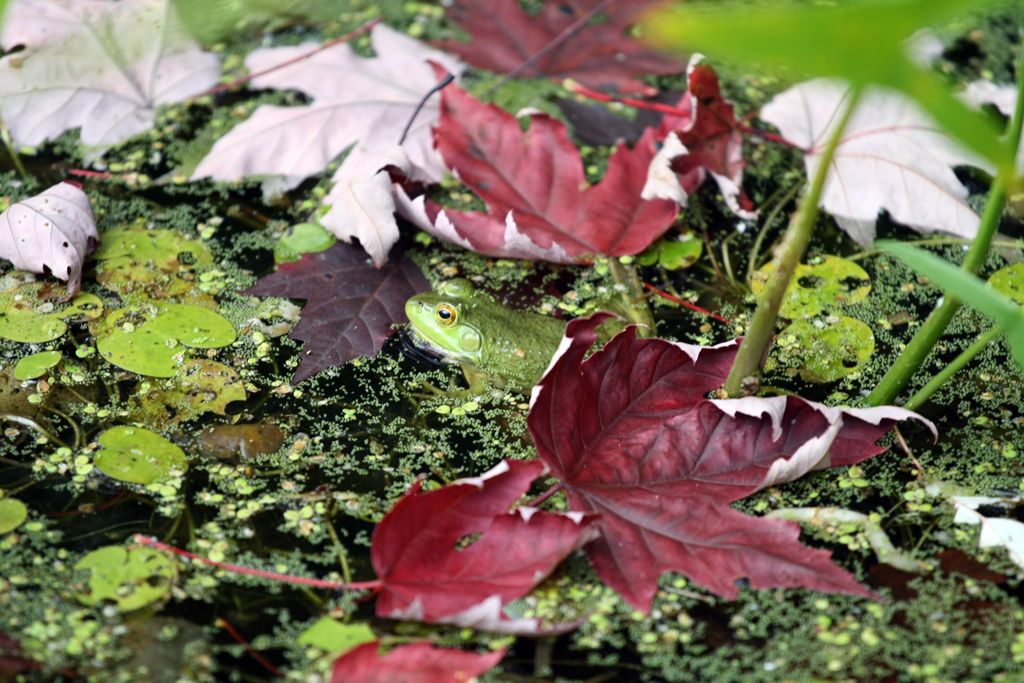
Frog with leaves in Mud Lake

The basic impulse behind synthetic biology is one that human beings have been acting on for thousands of years: the desire to make living things serve our needs and desires better. We’ve domesticated animals, seriously altering their genomes and behaviours in the process, and turned wild crops into agricultural staples. Now, people aspire to use living things for all kinds of purposes: from synthesizing drugs and fuels to performing computations.

One of the most important developments of the Industrial Revolution was standardized parts. Originally used in firearms, having devices comprised of interchangeable components made maintenance and repair far simpler. Instead of having to make a custom widget designed to fit a particular machine, any standard widget of the right sort would do. To some extent, BioBricks are trying to do the same thing for engineered biological systems. Each consists of a DNA sequence held in a circular plasmid, with standard headers and footers. They include sites for enzymes, which allow the bricks to be chained together. Individual BioBrick ‘parts’ contain information such as how to code a particular protein. They are assembled into ‘devices’ that perform basic functions, and ‘systems’ that accomplish higher level tasks. MIT maintains a ‘catalog of parts and devices.’ There is even an iPhone application that allows the “review, annotatation, design, and implemention of standard biological parts.” An assembly kit adequate for 50 reactions can be purchased online for US$235.

One application of synthetic biology has been to make Amorphadiene, a chemical precursor to the ant-malarial drug artemisinin (mentioned here before). Producing the drug from the shrub in which it was discovered is expensive and tricky. As a result, annual demand far exceeds available supply. Producing it in engineered organisms could therefore make treatment more widely available. Amyris Biotechnologies, working with a grant from the Bill and Melinda Gates Foundation, has produced the drug using such an organism, and is hoping to have it on the market by 2012. The company’s founder hopes to eventually be able to synthesize any molecule found in a plant inside an easy-to-grow microbe.

Another mooted application would be engineering photosynthetic algae to produce and release oils, which could be collected and used as fuels. Such a process could be far more efficient than one based on growing conventional algae and then processing them for whatever quantity of oils they contain naturally.

Of course, synthetic biology does raise safety and ethical considerations. While I don’t think tinkering with genetic material is fundamentally morally different from cross-breeding plants or animals, there may be more danger of unanticipated consequences. Weighing the reality of that risk against the promise of what engineered organisms could do isn’t a straightforward task, especially in situations where the groups bearing the risk and receiving the benefits are not one and the same. Regulating the industry, and establishing legal precedents on things like liability, will be an important part of future policy- and law-making.

Sarkozy’s incoming carbon tax

While Canada’s best effort at a carbon tax ended in failure, one worth about $25 a tonne seems likely to be adopted in France. The new tax is intended to be revenue neutral, with corresponding handouts to households (both those that pay tax and those that don’t) and corporations. Some expect the most significant impact to be on liquid fuel prices. Sweden has been rather more ambitious in this regard, having imposed a tax of about $100 per tonne on oil, coal, natural gas, liquefied petroleum gas, petrol, and aviation fuel used in domestic travel.

Like most carbon taxes, the French initiative includes significant loopholes – including for heavy industry and non-nuclear forms of electricity generation. Even so, it represents a bit of good news in the lead-up to the UNFCCC negotiations in Copenhagen this December. Hopefully, it will be progressively expanded to other emitting activities, at the same time as the level of the tax is progressively increased. Here, Sweden sets an encouraging example: when they imposed their carbon tax in 1991, it was at about 1/4 of its present level.

[Update: 23 March 2010] French government backs down on carbon tax plan

Environmentalism and ‘breathing underwater’

Barrymore's on Bank Street, Ottawa

The Walrus recently published an article entitled: “The Age of Breathing Underwater.” Written by Chris Turner, it relates to a number of previous discussions here, such as the recent one about being unimpressed with humanity, when it comes to behaving sensibly about climate change.

It begins with a lengthy discussion about some of the life in coral reefs: one of the ecosystems most profoundly and immediately threatened by climate change. Indeed, even with some pretty aggressive mitigation, most will probably perish during the lifetimes of those reading this, as the result of both rising temperatures and increasing ocean acidity. The article quotes scientist J. E. N. Veron saying that by 2050 “the only corals left alive will be those in refuges on deep outer slopes of reefs. The rest will be unrecognisable — a bacterial slime, devoid of life.”

The article also discusses environmental activism, science fiction, the prospect of geoengineering, the concept of ‘resilience’ in a threatened world, and what it means to be alive in the Anthropocene – the era in human history characterized by the impacts of human beings on physical and biological systems. It makes the strong point that we can somewhat reduce the eventual impact of climate change by working to diminish other stresses; reefs threatened by warm and acidic water don’t need dynamite fishing and oil drilling to help drive them to extinction. The same is surely true of terrestrial ecosystems. Resilience is also something that can be built into human systems – the ability to stretch and change without breaking. From my perspective, that is one huge limitation of the ‘survivalist’ approach to surviving climate change. Your little armed colony might be able to sustain itself under present conditions, but it isn’t necessarily very flexible, when it comes to adapting to whatever the future will bring.

The ‘underwater’ metaphor is an interesting one. The author points out that the human capacity to remain underwater for extended periods depends fundamentally on the whole enterprise of modern industry. The author points out that we’re not really trying to save reefs anymore: we’re trying to save the ability of human beings to do things like SCUBA dive. That ability can only be maintained if we maintain an industrial society, while transforming its energy basis. The article’s conclusion addresses this, but is somewhat underwhelming. While renewable forms of energy are surely a huge part of the solution, putting solar panels on top of buildings won’t be anywhere near adequate. We need comprehensive plans of the sort David MacKay has cooked up. Making the transition from surviving underwater using a set amount of compressed air (akin to fossil fuels) in a tank to living in a self-sustaining colony (akin to renewables) requires appreciation of scale and logistics. A few houseplants are not going to do it.

In any event, the whole article is worth reading and responding to. My thanks to my friend Ann, for pointing it out to me.

Composting in Ottawa

Ottawa is starting up a citywide composting system, with pick ups every two weeks through the winter:

Starting Monday, and for the next 12 weeks, the city will be delivering 240,000 green bins and small, counter-top kitchen-catchers to households across the city.

The chief environmental advantage cited, reducing landfill usage, is not overly compelling. We have plenty of space for landfills, and they are very tightly regulated. I would be interested in knowing what the other effects of the program will be, if any, on factors like air quality, water quality, and greenhouse gas emissions.

It is interesting to note that the service will no accept ‘biodegradable’ plastics, because the term doesn’t have a standard usage and there is a risk that the compost produced would be contaminated.

Would finding extraterrestrial life matter?

Mailbox and Korean lettering

The most plausible explanation for the origin of life on Earth is that physical processes created organic molecules, such as amino acids, and some combination randomly assembled that could make copies of itself. This may have been somewhat akin to the way crystals form as the result of probability and their own chemical characteristics. From there, these ‘replicators’ became more diverse and capable, ultimately branching out into the entirety of life observed on our planet today. Richard Dawkins may have expressed these ideas best, in the opening section of The Selfish Gene:

Was there to be any end to the gradual improvement in the techniques and artifices used by the replicators to ensure their own continuation in the world? There would be plenty of time for their improvement. What weird engines of self-preservation would the millennia bring forth? Four thousand million years on, what was to be the fate of the ancient replicators? They did not die out, for they are the past masters of the survival arts. But do not look for them floating loose in the sea; they gave up that cavalier freedom long ago. Now they swarm in huge colonies, safe inside gigantic lumbering robots, sealed off from the outside world, communicating with it by tortuous indirect routes, manipulating it by remote control. They are in you and me; they created us, body and mind; and their preservation is the ultimate rational for our existence. They have come a long way, those replicators. Now they go by the name of genes, and we are their survival machines.

If this explanation is basically correct, we should expect there to be a lot of life in the universe. There are millions of billions of galaxies out there, comprised of a phenomenal number of stars. We have already observed planets around some, including small rocky planets like the Earth and planets with orbits compatible with liquid water on their surfaces. The Kepler Mission may discover hundreds more. The Drake Equation expresses this idea mathematically, while the Fermi Paradox considers why extraterrestrial civilizations, which we might expect to be common, have not yet been found.

Finding other forms of life would certainly both answer and raise scientific questions (such as how different forms of life can be.) Would actually observing direct evidence of life (probably microbes) elsewhere have any effect on human perspectives or behaviour? It might for religious people who believe life on Earth to have been uniquely created, but that isn’t a terribly interesting consequence to me. Would it have any ethical, political, or moral ramifications for those who already believe that life essentially arose by accident? Would intelligent life have any effect above and beyond that of observing microbes, even if such life was too far away to ever really engage or communicate with? The question may not be such an abstract one. As described well in one chapter of Oliver Morton’s book on photosynthesis, there are several ways through which we might be able to identify unmistakeable signs of life at great distance.

Perversely, life elsewhere might actually somewhat diminish our perception of how important it is to preserve and protect life on Earth. Right now, as far as we know, we are the sole such example in the universe. Finding others might lend even more strength to the psychological pressures that make us favour immediate interests rather than long-term survival. On the other hand, it might help reinforce the point that we are here by accident and that nothing about the nature of the universe is ‘on our side’ when it comes to survival. Such a realization might prompt some serious thinking of what it will mean to endure in a universe that will endure long beyond the comparatively comfortable circumstances in which we emerged as a species.

Fish certified to be sustainable may not be

The Marine Stewardship Council (MSC) was launched in hopes of making it possible for firms and consumers to select sustainably-produced seafood. Unfortunately, recent events have seriously undermined its reputation:

  • Their plan to certify Peruvian anchovy is dubious.
  • The MSC-certified Alaskan Pollock fishery is collapsing.
  • The same goes for the Hoki fishery, off New Zealand.
  • The MSC is considering certifying Pacific Hake, over the objections of Oceana and the Monterey Bay Aquarium.

Jennifer Jacquet, of the Guilty Planet blog, goes so far as to say that “the MSC certification process has been co-opted by industry.”

Those who have been salving their consciences by buying certifiably ‘sustainable’ fish should now give some thought to whether the only truly sustainable option is to abstain from seafood altogether, as both Jennifer and I have reluctantly done.