500 miles by minibus

Google Maps predicts that the drive from Oxford to Shiel Bridge, near the Isle of Skye, will take almost thirteen hours. That seems an excessively long time to traverse less than 550 miles, but they may know things about the character of the roads that I do not. We leave at 8:15am on Thursday.

The weather is predicted to range between highs around 22 degrees Celsius and lows of about 12. Cloudy days are predicted, which is welcome. I much prefer to climb mountains under an overcast sky than under the glare of the sun. I have a spray bottle of 50% DEET to repel midges.

Since the whole trip is only four days, and I don’t need to carry a tent, stove, or sleeping bag, I will just be taking a day pack. Naturally, I will include items necessary if real rain or real cold emerge – Gore-Tex and wool respectively. On the photographic side, I am bringing both my A510 and my EOS Elan 7N (with 28-105mm zoom). On the latter, I will be shooting the roll of Velvia that Tristan sent me. As with so much other gear left behind in Vancouver, I wish I had my 50mm prime lens and my Manfrotto tripod with me for the trip.

While it’s a bit of a shame that we won’t get much chance to see any Scottish cities or towns, it is really the mountains that are drawing me up there. Nice as the countryside around Oxford can be, it has no wildness to it. It’s all marked off and manicured. I expect Scotland to be more vital.

Scotland prep: boots and midges

Whenever I mention the upcoming Scotland hiking trip, talk rapidly turns to the Scottish Highland Midge (Culicoides Impunctatus). From everything I have read, the end of July is definitely high season for midges, and these aggressive creatures can be maddening. Does anyone have experience with dealing with these insects? I plan to equip myself with high DEET spray before I leave, though I am of two minds about the wisdom of purchasing an actual midge net. Supposedly, their concentrations vary a great deal by region. Our plan is as follows:

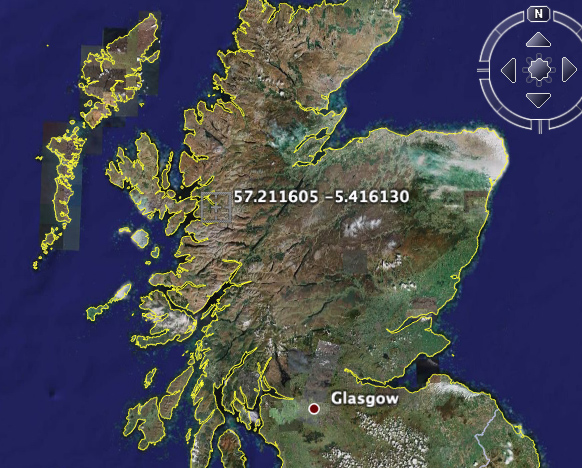
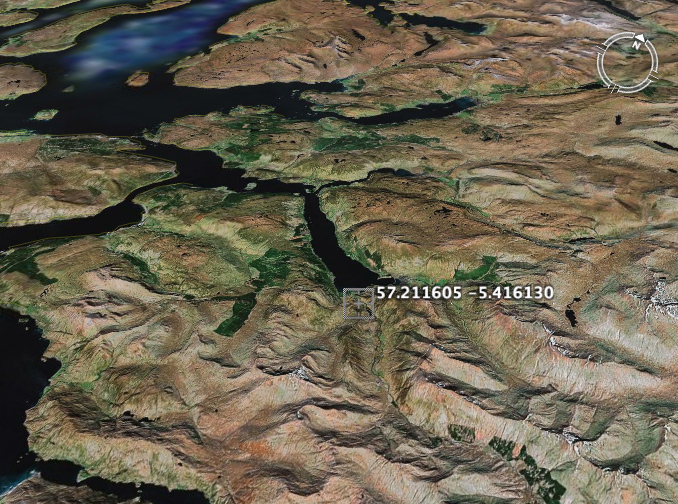
[W]e’re camping at Shiel Bridge (grid reference NG 938 186) (rather than near Invergarry as originally planned). This should be a wonderful base, located between Loch Duich, leading out towards Loch Alsh and the Isle of Skye, and Glen Shiel, site of the Battle of Glen Shiel in 1719. Glen Shiel itself is lined with Munros, including some of the finest hills in the Western Highlands. These include the classic Five Sisters of Kintail and the South Shiel Ridge, so we’ll be spoilt for choice!

In spite of anticipated midge problems, I am very excited about this trip. I’ve been wearing my hiking boots all day, with the aim of re-acclimatizing to them after a year in trainers. A great deal of joy can be extracted from torsional rigidity and ankle support. Despite being ankle-high, my boots are actually cooler feeling than my trainers. The people at MEC knew what they were talking about when they said that Gore-Tex shoes, while good in the wet, become excessively hot fairly easily.

PS. I will post a conversion of the coords above to UTM or DMS as soon as I can find a script that will deal with the UK grid.

[Update]: Converting from UK national grid to anything else is a huge pain. Not only does it have its own zero coordinates and uniquely sized zones, but it is based on a different datum from more familiar coordinate systems. You can read all about it, if you like.

UTM Coords: (30 V) E0337948 N6359854
Deg DeciMin N57.211605 W005.416130
Map and Perspective View

Canalside rolling

Statue at St. Hugh's College, Oxford

I discovered another nice Oxford bike trek today. Begin by reaching the Port Meadow, by any means, then cross the southern portion westwards, move north along the Oxford canal, cross it, then head north and west to The Perch. This is not the time to stop for a drink. From there, turn left (south) and follow the undivided blacktop road (Quicktime!). This runs very pleasingly along pastures and farmland. The surface is especially nice – a situation that forms a marked contrast to other parts of the ride.

At one point, I thought to myself: “I can’t believe there are sheep in the background of this Nine Inch Nails track! The things you learn when you listen with headphones.” Moments later: “Oh, wait. These Apple earbuds let in external noises, and there are about 200 sheep in that pasture right there.”

That road ends in Botley, where you should turn east. About three kilometres away, you should see the green spire of Nuffield College. Very soon, you will reach a bridge across the Isis / Thames. As soon as you cross it, head up the path on the eastern bank. Watch out for the many other people who will be using the path, particularly if you do this in the evening, as I did. This path follows the river in a way that feels much more properly woodsy than most of the canal-side paths, and it ends at the southwest corner of the Port Meadow. From there, if you are feeling adventurous, you can ride right across the Port Meadow to the bridge that ends near The Anchor pu (where a micro geocache is hidden).

One word of warning: riding across the Port Meadow can be a very bumpy business. In my case, so much so that I had to re-align my rear tire afterwards so it wasn’t rubbing against the frame. Using a thin-tired hybrid bike on some of Oxford’s paths is a good way to force yourself to learn in-the-field bike maintenance. I now carry patches, pump, and spanners everywhere. My MEC sling-pack serves the purpose very well, when I don’t have books and things to carry about at the same time.

Marston loop

Handlebars on a wooden path

Today, I came up with a nice ten mile ride primarily through eastern Oxford. Starting at the intersection of Banbury Road and Martson Ferry Road, you ride through a stretch of countryside to Old Marston. Then, carry on straight up the very obvious hill to where the John Radcliffe Hospital (not to be confused with the infirmary in Jericho) is located. Carry on straight from there until you see a turn-off to the right called Parklands Road. Past the end of that road, a path emerges. Following it provides a nice woodland downward track that varies from blacktop to dirt to really broken cement. This descent is the best part of the ride – at least, if you’re already well acquainted with the canal. At the bottom of that descent, you will find yourself outside the steel fence and razorwire-enclosed mosque that Roz and I found ourselves outside at the end of our trek through the fields east of the University Parks on Monday.

From there, take Marston Road (not to be confused with Marston Ferry Road) until you arrive at the corner of Oxford’s South Park. It has always been something of a landmark for me, as it is the first place in Oxford I ever visited, when I attended a Radiohead concert there in the summer of 2001. For good measure, I cycled once around it. On the western side, there is a nice leafy suburban area that winds up a hill and reminds me of Venebles Street, in Vancouver.

Once you’ve gone around the park (this may be a bit more than ten miles, really), head up Saint Clements Street to the Cowley Road roundabout and then across the Magdalen Bridge. Then, head up the high street as far as the County Library, turn right onto Magdalen Street, then left onto George Street. Carry on to the entrance to the path up the Oxford Canal that begins on Park End Street and then follow that path up the canal until you reach the bridge back to Jericho at Walton Well Road. Then, just head up Saint Bernard’s Road to Woodstock, and take Bevington Road back to the Banbury Road.

All told, the ride has a couple of nice hills, as well as a lot of attractive leafy bits. You’re also never terribly far out of Oxford, so the kind of bike troubles I had out near Yarnton are less of a concern – though I always carry spanners, patches, and a pump now. I am taking my bike for the free three-month tune-up from Beeline Cycles tomorrow. The pedals and handlebars haven’t come loose since they were tightened at the one month tune-up. The only concerning thing is how the pedals tend to creak and flex noticeably when striving to push uphill.

That clothe The Weald and reach the sky

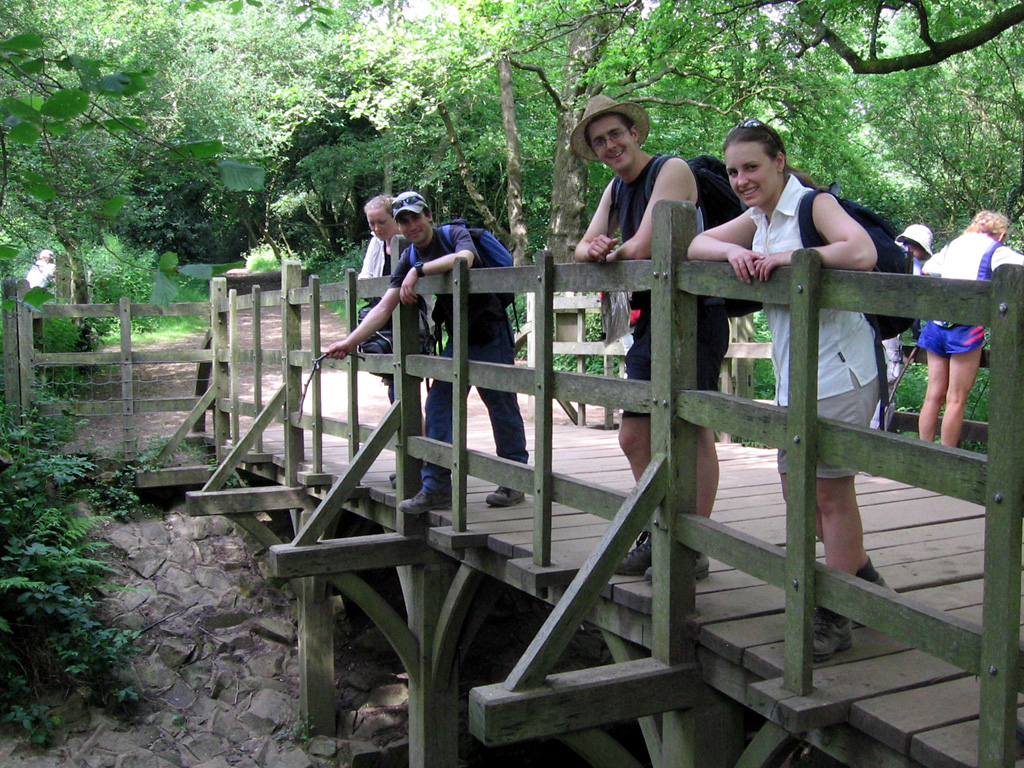
Pooh Sticks Bridge

Like so much else, the walking trip in The Weald was primarily a good mechanism for meeting new people. All told, fourteen people were part of the expedition. Something about rambling seems to attract people of a scientific or technical bent. I had long conversations during the five hour walk about mettalurgy, the GPS system, the manufacture of large organic molecules for pharmaceuticals, computer programming, fisheries, and the HIV fighting potential of a certain molecule that comes from sea fans. It was definitely a group of people I’d like to spend more time with. One even lent me the new Milan Kundera novel: Immortality.

The walk took place in and around the inspiration for A.A. Milne’s 100 Acre Wood, of Winnie the Pooh fame – though the terrain dates back to the establishment of a hunting park following the Norman Conquest. Marked features were low verdant hills, and idyllic stands of deciduous trees around small creeks. Throughout the hike (and the 2.5 hour minibus trips both ways), the sun was intense enough to make me fear that I will rosy tomorrow, despite the use of sunscreen and my wide-brimmed canoeing hat. I have an obvious watch tan.

Particularly appealing is the prospect of doing a trip to the Lake District with this group. I’ve been told that it’s an essential place to see, and to do so with such an obviously qualified and interesting sect is a welcome thing to contemplate. There is much about fit young scientists that appeals to me. Likewise, places of natural beauty that includes mountains.

After three days of devoted walking in the hot sun, followed by little sleep, my muscles are all clenched up and aching. I may allow myself to sleep in a bit tomorrow, before scrambling to come up with an excuse for Dr. Hurrell, explaining why I don’t have a paper for him. Given that we still have an undiscussed one to cover, he shouldn’t be too harsh on me.

PS. While walking to and from the rendezvous for the hike, I gave my first listen-through to Fox Confessor Brings the Flood. Some of the songs I can already tell are superb.

PPS. Being way too busy to read emails or blog posts is a novel and not entirely unwelcome experience. I feel like I’ve had a miniature vacation, right in the middle of an Oxford term.

Northward along canals

Canalside house

By the fading light this evening, I took an unusually interesting ten mile ride. Initially cutting due north, I veered west until I found a canal I’d never seen before: lined with narrowboats and punctuated with weirs and numbered red brick bridges. After about four miles, I found myself at the intersection with the Oxford Canal. I tried an offshoot path labeled ‘River Thames’ but was rapidly foiled when the path narrowed almost immediately, became composed of unstable dirt clods, and proved to be flanked with shoulder-high stinging nettles.

Once you get more than a couple of miles up along the canal, it seems like a completely different world from the residential and commercial parts of Oxford, as well as the kind of roadway-intersected countryside around Kidlington or Cassington. The houses, which vary in frequency along different stretches, have yards opening right out onto the waterway. Cats and children fishing seem to be common, and the general sense of direction that it is easy to maintain on roads falls victim rapidly to the gentle curves of the branching canals.

The light – between about 8:10 and 9:30pm – was that really lovely warm and directed sunset light, though still bright enough to support ISO100 handheld shots at 50mm or so, in the open spaces at least. The only trouble is that the sky is completely blown out in every shot. Perhaps a polarizer would have helped.

Riding on gravel or dirt track takes dramatically more effort than doing so on blacktop: basically constant peddling in my second-lowest gear in order to maintain speed. The feeling is rather more substantial at the end, however.

Since I need to be at Gloucester Green for the bus to London at seven, I should try to get to sleep early. This is unlikely. Being ill the other day (and sleeping fourteen hours) has completely thrown off my sleeping schedule. I find myself waking up ravenous at random times between three and seven in the morning, always a sure sign that it will take a concerted effort to get things on track. That will only be possible once these two upcoming trips have passed.

PS. To anyone considering replicating the ride above, I suggest wearing glasses. The canalside bugs seem particularly drawn to the eyes of cyclists, and a few uncontrolled moments could easily land you among the floating ducks.

PPS. With two days left in this round, please keep voting for Mica’s video.

Recuperated today, productive tomorrow?

Capilano Reservoir

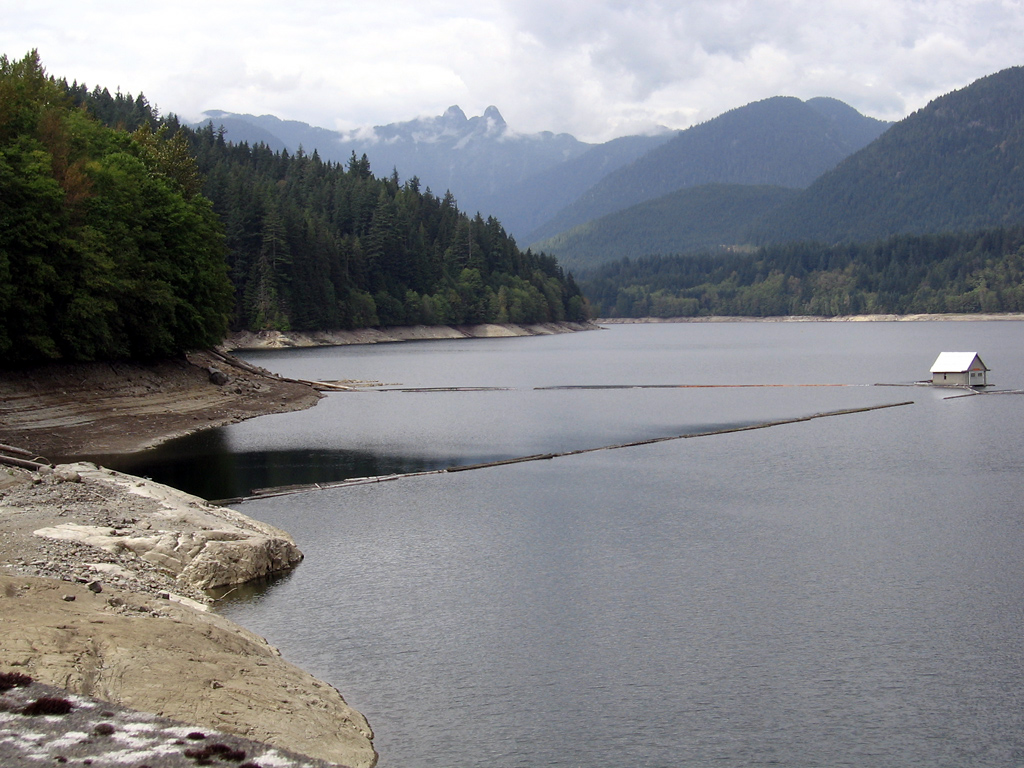
Obviously, today’s photo is not from Oxford. I didn’t take anything good enough to warrant public display, partly because I slept until 1:00pm to purge yesterday’s acute and short-lived illness. The above is a photo of the Capilano Reservoir in North Vancouver: one of the important sources of water for Vancouver, and located about ten minutes’ walk from my high school. Taken during the last week or so of August, you can see how seriously the water level has been depleted by a thirsty summer. The closest mountain, on the right hand side, is Grouse Mountain (with the famous ‘Grind’ hike). The two distinctive peaks close together and farther off at The Lions. How I miss the mountains, the conifers, and the sea…

Today wasn’t really productive, in any standard sense of the word. Even so, it was a day fairly well spent. I recuperated, did laundry, washed linen, got a haircut, and sorted something important out. This evening was that really wonderful combination of the right levels of light, warmth, and humidity to make being outside really wonderful. As such, I just had to take a quick ride out to Kidlington. Now, when I do so, I make sure to at least bring tire irons, a backup tube, and my new pump.

Continuing my experimentation with British cheeses, I went through a block of Sainsbury’s Wensleydale today. It has a consistency similar to Cheshire and a common fondness for breaking into bits. Antonia apty described the taste as somewhere between mozzarella and feta, though quite pleasantly so. I recommend trying it on toasted dark bread, along with either tomato and some black pepper or zucchini slices fried in olive oil.

Please, please hold – ye patches

Getting a bicycle tire puncture while out riding is just bad luck. Doing so miles from home with no repair equipment is the compounding of bad luck and bad planning. Somehow getting four separate punctures – three in one cluster and another halfway around the wheel – seems genuinely malicious. Especially when one is at least 1mm in diameter, so you patch it and put the wheel back on, only to learn that there are three more holes so very tiny that you can’t even see them. It’s even worse when you only find the third whole after going through the whole rigamarole of putting the wheel back together (harder than you might think).

That said, I now have the experience of fixing a puncture three times, as well as a replacement pump for the one that has gone AWOL, and some tire irons, a fresh backup tube, and chain lube just to round the whole thing off. Total cost of new kit: about 20% of the value of the bike.

Now, the plan was originally to speed my twenty minute walk to the department by fixing the bike. After one and a half hours of mucking around with rubber cement, that doesn’t look so viable. Still, my productivity and cardiovascular fitness in coming weeks should both rise given the return of my bike to an operational state.

Provided my inexpertly applied patches hold…

Reminiscing about LIFE

The Duen

Photo from www.thenaturalcoast.com

Since I was feeling vaguely ill all day, I made lunch and dinner stir-fries with large amounts of ginger. I don’t know why, but I’ve always found that ginger helps with nausea and general feelings of being unwell. The captain of the Duen first told me about it, during the first LIFEboat flotilla. A floating sustainability conference which took place on more than a dozen tall ships, the LIFEboat flotilla was one of the best weeks of my life, even though I was ridiculously seasick for much of it, on account of gale force winds and huge waves.

The Duen was a small ship – far smaller than the Pacific Swift, which was my berth for the second Flotilla. When tacking upwind, the boat listed at an angle of about thirty degrees, with me clinging to the upper lip in a borrowed survival suit: lent to me because I had to be on deck in the pouring rain all the time because I was so seasick. For years afterwards, I couldn’t stand the sight, smell, or taste of scones, because that’s what people kept trying to feed me. Despite all that, spending a week traveling through British Columbia’s Gulf Islands in a tall ship is an amazing experience. More so when you’re in a group like the one Jeff Gibbs created and which has been supported by people like David Suzuki and Jane Goodall, who I actually met during the first flotilla.

Leadership Initiative for Earth (LIFE) is a Vancouver based environmental organization that I was involved with for several years. I attended a conference of theirs at a high school with Jonathan. I then took part in two Flotillas, each of which required a large amount of environmentally related community service in order to be eligible. Jonathan and I worked at the Wild Bird Trust in North Vancouver, planting trees and pulling out poles from a frozen swamp. We also had to give presentations and slide shows afterwards. I gave one at the Vancouver Folk Festival, after the second flotilla. It was really excellent, because I got a free Folk Festival pass in the process.

One of the best things about the two flotillas was learning a bit of marine navigation. Because of the complexity of the Gulf Islands and their tides, the importance of maps, navigation, and location there are considerable. There are many passes that can only be used at certain times, because of the tides. During the second flotilla, I got to help with the coordination of the fleet overall: managing where different ships would stop at different times. The flotilla mostly took place on the ships, interacting with the members of your group, but there were also excursions on shore. We visited a sustainably harvested forest and got to touch sea cucumbers brought up by divers.

I wish I had some photos to post, but they are all in Vancouver in non-digital form. The one above wasn’t taken by me, but it does show the ship I was on for the first flotilla, in a place much like many we visited.

The original WildLIFE conference happened in 1995, when I was only twelve. As such, I probably didn’t get as much from it as most participants, nor was I able to contribute very effectively. The Flotillas were in 1997 and 1998, respectively. Since then, I’ve largely lost touch with the organization. The only participant with whom I’ve had any contact is Kevin Millsip, one of the two leaders of my group in 1996. He is now a Trustee on the Vancouver School Board; perhaps Sasha Wiley will meet him one day.

At one point, it seemed that LIFE had changed its name. At other points, I couldn’t seem to find anything about it at all. I am glad to see that they seem to be active at the moment. Apparently, “there have now been five Flotillas, all extraordinary learning adventures for the 750 youth who participated.” I wish I had stayed in contact with members of my two groups. At the time, I think being rather younger than most of the other participants impacted my ability to relate directly with them. Even so, I am incredibly glad to have been involved.

I strongly suspect the whole LIFE experience has impacted on my choice of discipline and sub-field. To be simultaneously exposed to a place as beautifully alive as the Gulf Islands and such a group of committed and motivated people is a powerful combination, as Gibbs must have anticipated. I am sure my fellow participants are also grateful for his imagination and initiative.

Spring deluges

In four consecutive cycles today, I got drenched, hailed upon, and the progressively drier in the period leading up to the next drenching. Between intense downpours of hail and icy rain, the day has been alternatively overcast in the cheerful way or actually sunny. While raining, the sheer volume of water falling in the air around me was enough to make me fear electrocution by the iPod standard headphones I’ve had to fall back upon since my better headphones broke.

Unwilling to get tricked again, I responded in the afternoon in a manner familiar to all Vancouverites: Gore-Tex shoes, pants, and jacket – topped off with a waterproof hat. If you haven’t noticed, I am the sort to occasionally revel in the technical solution of problems. The shoes, I thank my mother for. She was kind enough to equip me with them while she was in the UK. The jacket I’ve had for ages; the pants, I recall testing with Meghan on a particularly stormy day along Wreck and Tower Beaches, on campus at UBC. The hat did sun protection service in Malta, as well as rain protection service on canoeing trips.

Naturally, now that I am thus equipped, the chances of it raining heavily again on the way to or from the Saint Antony’s International Review (STAIR) launch tonight are virtually nil.

PS. My congratulations to the newly-minted Louise Little, B.Sc (Hons), on the completion of her undegraduate degree.

PPS. Stir fries comprising olive oil, dried chillies, ginger, tofu, bell pepper, mushrooms, tomatoes, and black bean sauce are quite delicious. While they take approximately forty times longer to prepare than the caloric equivalent in bagel-cheese form, it’s probably a worthwhile investment, if only because it makes the house smell like black bean sauce.