PickupPal and unhappy bus companies

Is a web-based service that helps those with spare seats hook up with those willing to pay for rides “facilitating the operation of an illegal transportation service?” The Ontario Highway Transport Board has decided that it is, in a case brought against PickupPal by unhappy operators of bus lines.

While I can see how liability issues arise in relation to safety, it doesn’t seem appropriate for the board to fine and try to shut down this service. As someone who travels frequently by Greyhound, I know that bus service in Canada could stand some competition-driven improvement. This sort of decentralized commerce seems like a pretty good way to reduce the environmental impacts of inter-city travel. After all, having a passenger or two travelling along with you does more for your passenger-kilometres per tonne of carbon dioxide emitted than buying a more efficient vehicle probably would.

While I can see the reason for the bus companies’ grievance – after all, they need to pay a fair bit to comply with commercial transport laws – on balance their complaint seems anti-competitive and likely to be environmentally harmful.
Accessing the life of a city

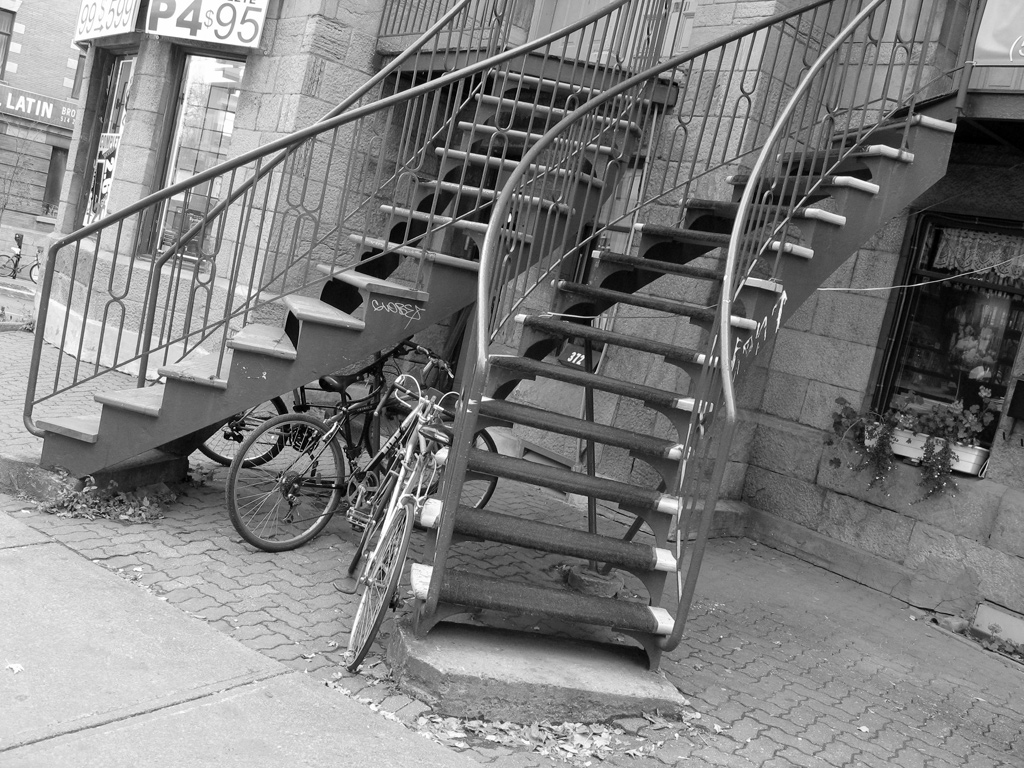
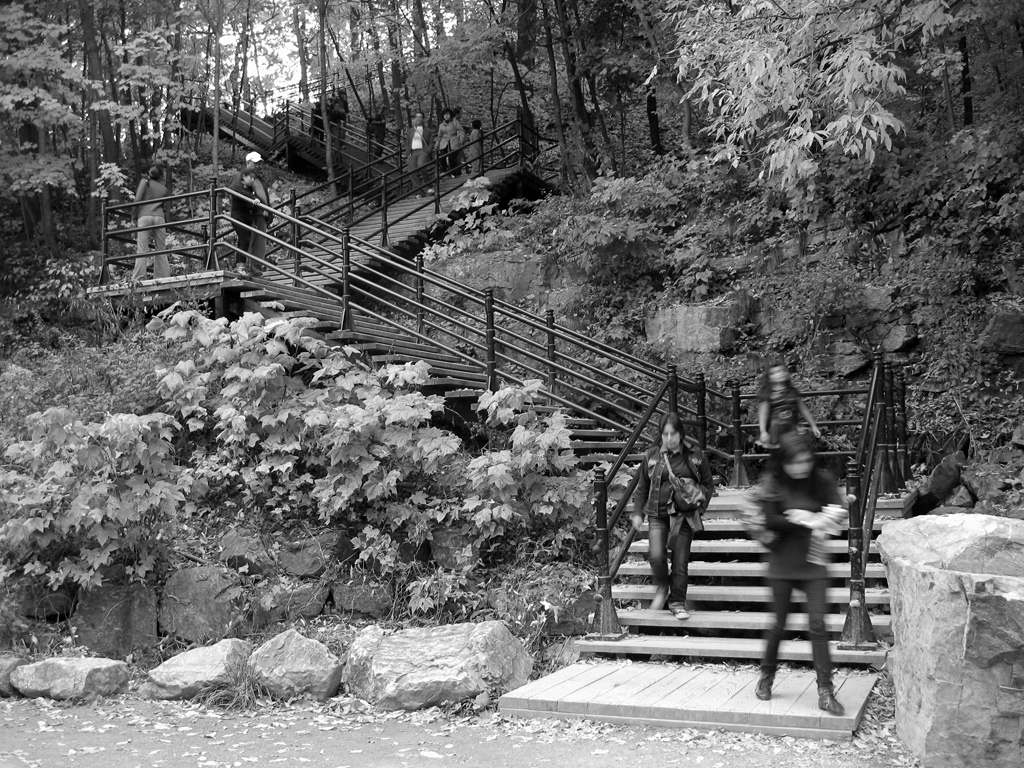
Within a big city, it seems as though it should be possible to satisfy the interests of most people on a regular basis. Those who like art, music, or theatre should be able to find things to their liking often. Likewise, parties, clubs, bars, museums, and the like should be accessible. Clearly, those with exotic tastes will have a tougher time than those with mainstream ones, but it seems as though big cities should cater to most plausible sets of preferences.

When a person lives in a city and has done so for a while, this is usually true. The difficulty arises when one lacks access to local knowledge and people. Then, one becomes a kind of urban refugee: moving between public spaces like coffee shops and tourist spaces like ordinary museum exhibits. It can be quite frustrating to be in an amazing place like New York, London, or Montreal, certain that there are interesting things going on, but being unable to track something down.

How does one go about making the transition from the former to the latter – from engaging with a city like a tourist does to doing so like a local version of yourself would? I am thinking mostly about cities where you speak the language, but advice for situations where there is a further linguistic challenge would also be appreciated.

Montreal hospital experiences

Since Friday night, I have been in Montreal to visit my brother Sasha, who had his appendix removed last week. I will be returning to Ottawa on Tuesday, at which point I will seek to correct any hiccups in blog posts, photos, and comment responses that have accumulated while I have been here.

The latest symptom of my laptop’s continuing decline is a stubborn refusal to get IP addresses from DHCP servers. As such, even when I do find a free wireless network to take advantage of, the actual process of connection is often proving slow or impossible.

I will soon be returned to full internet splendor.

[Update: 10 November 2008] Sasha has also written a post about this.

Three more days in the big T

Until Wednesday evening, I will be in Toronto for a conference. Does anybody know about any interesting plays, shows, art exhibitions, and so forth that are ongoing in the city now or happening during that timespan? Options that are inexpensive and unusual would be preferred.

My days will be full, but the evenings are pretty much completely free. Photos from the expedition will emerge when next I can bring my camera and my main computer into contact with one another.

La Ronde and my return to rez

The weekend in Montreal has been going well. Largely, it has been and interesting opportunity to re-visit undergraduate residence life – at least, the kind that exists when classes are not in session and most people have headed home to be with family. I appreciate the late night gatherings that turn into extended conversations, the excellent views of the city from dorm rooms on one side of the building, and the 3:00am to 11:00am expected sleeping time.

Yesterday, we visited La Ronde: Montreal’s amusement park, on l’Ile St. Helene. I had only been there once previously, when I was living in Montreal in the summer of 2003. Since they were only $2 more than single passes, my brother and I got passes that are good until the end of October, though only on Saturdays and Sundays. If someone would like to borrow one or both (they don’t have named associated with them), you can send a message for me to pass along.

Tonight, we are attending a Thanksgiving dinner with friends of my brother living in the Plateau area. As such, we must head off to find some kind of food and/or drink offering that does not require cooking facilities to prepare.

I hope everyone has a good Thanksgiving.

Graduating from Oxford

Given the following:

  1. I am doing as much as possible to avoid air travel, due to the carbon emissions associated.
  2. If I were going to fly, it would be (a) to deal with some kind of emergency or possibly (b) for an extended visit to a previously unseen part of the world.
  3. You only get one chance to graduate at Oxford, either in person or in absentia.
  4. There is no particular urgency in formally graduating.

Should I apply to have my name read in my absence and receive my diploma in the mail?

May on the train

Kudos to Green Party leader Elizabeth May for using her campaign to draw attention to the unsustainable character of air travel. Rather than fly all over the country to court voters, she has opted for a far less carbon-intensive train based approach. One round-trip journey from Toronto to Vancouver emits about 1,700 kilos of carbon dioxide equivalent. A train journey emits about 730kg: about 60% less. That is not enough of a reduction for trail travel as presently undertaken to be genuinely sustainable, but it is a significant step in the right direction. People would also probably think more about long-distance transport if it took a few days rather than six or seven hours.

The linked CBC article does get one thing wrong, however. It says: “Other observers have pointed out it is probably cheaper than flying, too.” As discussed here before, taking the train seems to be more expensive. At present, a return ticket between Toronto and Vancouver is running for $1,390.20 plus taxes. WestJet provide the round-trip transport for $439.25 after taxes.

Ultra powerful bike lights

Want to make absolutely certain drivers will see your bike in even the worst weather conditions? Dinotte sells LED head and tail lights with up to 600 lumens of brightness. They run for 3.5 to 7.0 hours on lithium-ion rechargeable batteries and cost a hefty $160-$400 a piece.

Still, that is a lot cheaper than the total costs associated with getting hit by a car.

Farewell to Emily

Emily is off today: wisely fleeing the city of Ottawa before the slide towards winter accelerates. Back in May, she was charged with assessing the ‘coolness’ of Ottawa. Her very concise conclusions are now available.

Her departure is much to be regretted, though I would surely choose the same course myself if not bound here by unique employment opportunities. In any case, some photos of the summer are available online: I, II, III, IV, V, VI, VII.