On blog post timing

My current system is to produce two posts a day (sometimes one on weekends or when I am very busy). The first post includes a photo, and is generally the more substantive of the two. One post comes out at a random time between 7:00am and 8:00am Ottawa time. The other, at a random time between 6:00pm and 7:00pm.

Given that almost all the posts are written in advance, these time conventions are arbitrary. Would readers prefer for them to come out at different times? For instance, the first could be released earlier in the morning, for the benefit of those who habitually rise long before me.

Time zones are also a consideration. During the past year, there have been 22,253 visitors from across Canada, 19,789 from the USA, 5,597 from the UK, 1,314 from India, 1,297 from Australia, 642 from Germany, and less than 500 from 165 other states. The times at which posts are released matter most to regular readers, who tend to be in England (GMT), the Toronto-Ottawa area (GMT-5), and the Vancouver area (GMT-8). That means posts come out in Vancouver between 4:00am and 5:00am, as well as between 3:00pm and 4:00pm. In London and Oxford, they come out between noon and 1:00pm, as well as between 11:00pm and midnight.

Also, is the semi-random system preferable to one where they come out at the exact same moment, or would the alternative be better?

The Kindle and electronic books

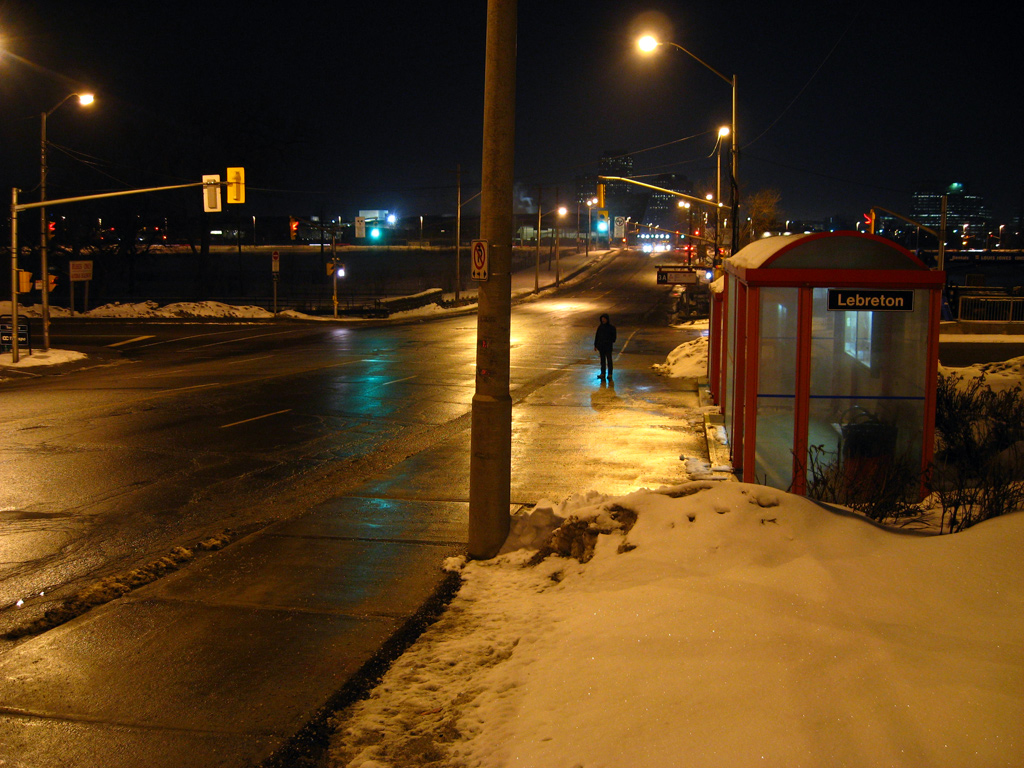
Ottawa bus stop in winter

In a recent article about Amazon’s Kindle e-book reader, The Economist declared that:

It seems likely that, eventually, only books that have value as souvenirs, gifts or artefacts will remain bound in paper.

Despite being a big fan of electronic content delivery systems, I wholeheartedly disagree with this assessment. There are considerable advantages to having a personal library of physical books, and there are big disadvantages to taking your books in electronic format.

Physical books possess the many advantages of immediacy. One can display them and quickly glance through the whole collection. One can take notes in them, mark pages, stack them, pass them to others, and so forth. Collections of books are also physical representations of the reading a person has done. I often find that, when I first find myself in someone’s house, flat, or bedroom, their collection of books is the first thing I scrutinize. There is a reason why the personal libraries of intellectuals and political leaders are objects of interest, and I don’t think they would retain the same importance if they consisted of a bunch of PDF or text files.

Electronic books have the same disadvantages as other electronic media: you can’t be confident that they will be intact and accessible decades from now. Furthermore, they are often hobbled with digital rights management (DRM), which means you can never be sure that you can use them on future devices, or in various ways you might wish to. A library stored on a small device may be easier to transport, but it is a lot less trustworthy, durable, and reliable than one that you need to cart around in a heavy collection of boxes.

Electronic books can certainly complement physical ones. It would, for instance, be very valuable to be able to search electronic copies of books you own. A custom search engine, containing all the books in one’s library and that one has borrowed, would be excellent for tracking down particular passages or conducting general research. Partly for these synergistic reasons, and partly for the reasons listed above, I don’t think physical books are ever likely to become rare.

I do see much more promise for electronic periodicals. Hardly anybody wants to keep physical copies of their newspaper or magazine subscriptions on hand: especially when they are available in an easily searchable form online. If I got a Kindle, it would be for the wireless newspaper and Wikipedia access, not for the $10 book downloads.

Nuclear paper published

The February issue of the St. Antony’s International Review contains my article: “Climate Change, Energy Security, and Nuclear Power.” The article is meant to be an introduction to some of the important issues surrounding nuclear power, energy security, and climate change. It remains an issue that I am agnostic about. It may be that nuclear fission is an important transition technology, useful to smooth the transition to a low-carbon global economy. It may also be that it is a subsidized, dangerous boondoggle and a distraction from superior options.

The full text is available here (PDF). Comments would be appreciated.

Cool Tools on The Deniers

I was disappointed by a recent entry in the Cool Tools blog – a place that normally highlights useful stuff like little tripods. Their post on the 16th, which got re-posted on Boing Boing, was about Lawrence Solomon’s book: The Deniers: The World Renowned Scientists Who Stood Up Against Global Warming Hysteria, Political Persecution, and Fraud – And those who are too fearful to do so. The post argued that since science is advanced by those who question current beliefs, we should encourage those who question the reality of anthropogenic climate change.

It is regrettable that the mistaken impression endures that the key tenets of climatic science are still disputed by the scientific community as a whole. Greenhouse gasses unambiguously cause warming, and humanity is unambiguously releasing those gasses. While we certainly need critical thinking to advance climatic science (there is much left to learn about feedbacks and the internal dynamics of the climate system) the kind of people who deny the existence or seriousness of climate change are not engaged usefully with the scientific discussion. In most cases, they tell stories that contradict one another (it’s not happening, it’s not caused by greenhouse gasses, it is likely to be beneficial, it is all China’s fault, etc). In most cases, I also don’t think they are genuine in their approach: they are united by the desire to avoid government regulation of greenhouse gasses, not by a substantive disagreement about what is happening in the world.

Given the strength of entrenched interests opposed to climate change regulation, people willing to add confusion to the debate will always be able to find financial support. That is, at least, until society as a whole finally appreciates that their arguments are self-serving and wrong.

Legal guide for bloggers

Andrea Simms-Karp winking

For those who are serious about their blogging, or simply concerned about the legal ramifications of the practice, the Electronic Frontier Foundation has a Bloggers’ Legal Guide available.

While it is focused on American law, the general principles and issues discussed are likely to be relevant elsewhere. Issues covered include intellectual property, defamation, the legal status of bloggers as journalists, and more. It also includes a page specifically for students.

People living in countries that have weaker protections for free speech might be better served by the BBC’s guide: How to avoid libel and defamation. On a side note, I certainly hope that British law evolves away from requiring the author to prove their comments were justified and towards requiring the person or organization alleging libel or defamation to prove that such things took place. The current approach encourages frivolous lawsuits and drives journalists to bury or tone down stories without due cause.

Webs of trust in academic publishing

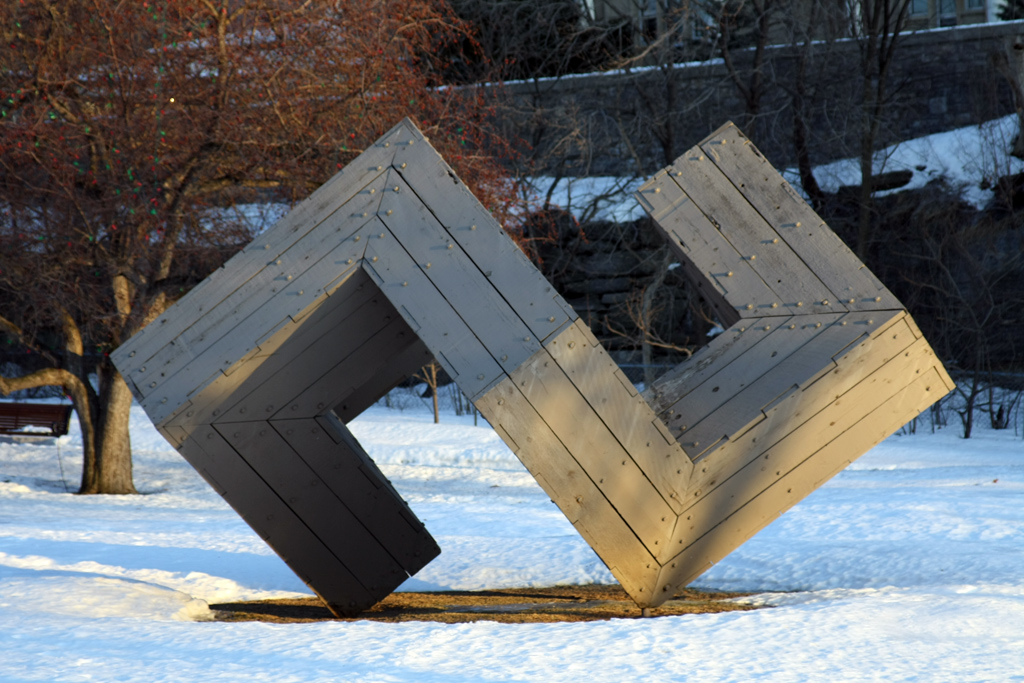
Geometric sculpture

Public key cryptography was a breakthrough because of the many new types of secure communication it suddenly permitted: most importantly, between people who do not have a trusted channel through which to exchage a symmetric key. Instead, it permits each partner to make a public key widely available, as well as use the public keys of others to encrypt messages that only they can decrypt.

One avenue of attack against this kind of system is for an attacker to make a public key available that they pretend belongs to someone else. For instance, you mighy try to impersonate a government or industry figure, then have people send sensitive materials to you inadvertantly. One way to prevent this kind of attack is to use key signing: an approach employed by both the commercial software PGP and the free GPG alternative. With key signing, you produce a web of trust, in which people use their own secret keys to vouch for the validity of public keys posted by others. That way, if I trust Bob and Bob trusts Jim, I can adopt that trust transitively.

GPeerReview is a system intended to extend this trust function to the review of academic work. Reviewers produce comments on documents and sign them with their keys. These comments can include different levels of endorsement for the work being scrutinized.

It is difficult to know whether the level of academic fraud that takes place justifies this sort of cryptographic response, but it seems like a neat idea regardless. Providing secure mechanisms for people to prove who they are and that things are properly attributed to them is increasingly important as technology makes it ever-easier for nefarious individuals to impersonate anyone in front of a wide audience.

Climate change and Australia’s brushfires

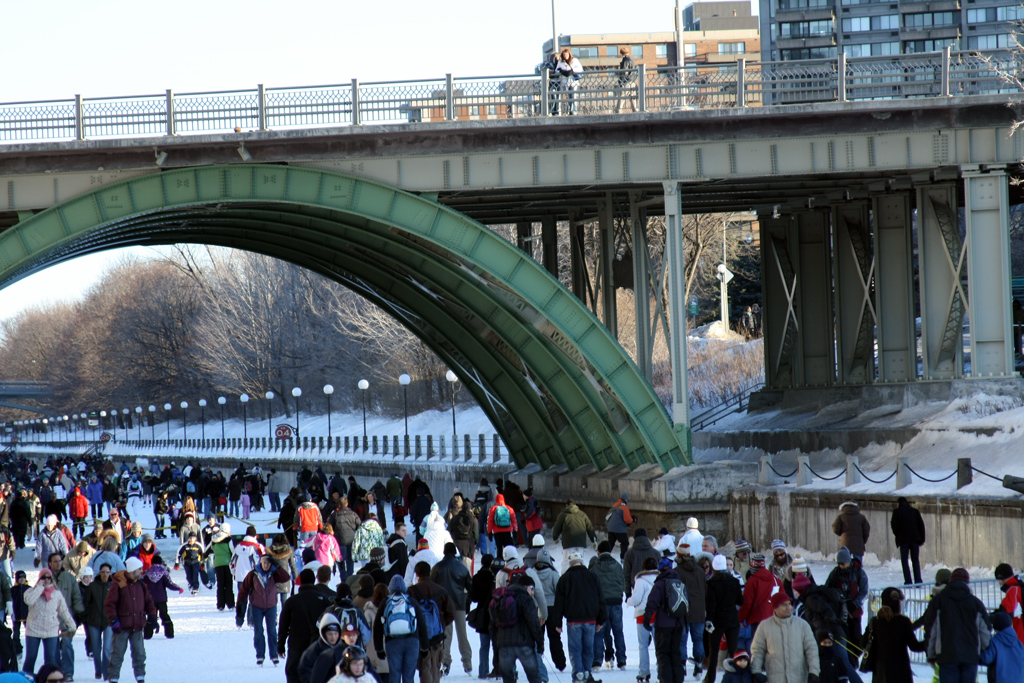
Skating on the Rideau Canal, Ottawa

Scientists frequently condemn journalists for being too quick to assert that particular events either support or call into question anthropogenic climate change. Indeed, reporting responsibly on the issue can be challenging. One the one hand, one cannot ignore the long-term contribution climate change makes to the frequency and severity of events; on the other, one doesn’t want to propagate the false idea that the accuracy or inaccuracy of climatic science hinges on a small number of extreme events of local weather trends.

A recent RealClimate post considers the case of Australia’s terrible recent brushfires. It considers a century worth of evidence on Australian brushfires, examining the importance of maximum temperatures, relative humidity, wind speed, and drought factors. Climate change trends are pushing in the direction of higher average temperatures and reduced rainfall. In the end, it comes to a measured by sobering conclusion:

While it is difficult to separate the influences of climate variability, climate change, and changes in fire management strategies on the observed increases in fire activity, it is clear that climate change is increasing the likelihood of environmental conditions associated with extreme fire danger in south-east Australia and a number of other parts of the world.

That may not be the kind of conclusion that translates easily into a headline for a popular newspaper, but it is the sort that we need to consider when making public policy on both climate change mitigation and adaptation.

The fourth report of the Intergovernmental Panel on Climate Change (IPCC) concluded back in 2007 that:

An increase in fire danger in Australia is likely to be associated with a reduced interval between fires, increased fire intensity, a decrease in fire extinguishments and faster fire spread. In south-east Australia, the frequency of very high and extreme fire danger days is likely to rise 4-25% by 2020 and 15-70% by 2050.

Those fires will naturally contribute to positive feedbacks within the climate system, as heat-induced dryness prompts the fire-induced emission of greenhouse gasses previously bound up in forests and grasslands.

OxBridge and the future

Wasabi covered peas

The two books I am reading most actively right now both make me miss Oxford. They also make me regret the fact that I am not out traveling or working somewhere exciting.

The first book is Simon Winchester’s The Man Who Loved China: The fantastic story of the eccentric scientist who unlocked the mysteries of the Middle Kingdom. I have read several of his books before: one on the Mercator projection, and another on the genesis of the Oxford English Dictionary. While I am only halfway through this latest book, I think it is better than Mercator but worse than OED, though that probably reflects my own interests as much as anything else. In any case, the book conveys a wonderful sense of what was possible for a motivated and intelligent individual in the position of its protagonist: Noel Joseph Terence Montgomery Needham.

The second book is Oliver Morton’s Eating the Sun: How Plants Power the Planet. Evidently, it is largely a study of the nature and history of photosynthesis. The book contains a good summary of early climatic science, with engaging and informative asides on nuclear physics, biochemistry, and much else. It also includes a great many references to life in Cambridge, during the period between the early outbreak and late aftermath of the second world war. It is a period of unusual interest for climatologists, for reasons I described in my barely-remembered thesis. Personally, my impressions of Cambridge are dominated by the music video to Pink Floyd’s “High Hopes” – one of the very few music videos I have ever watched, and one of the handful I have enjoyed.

What they brought to the forefront is that it is possible to be out and doing interesting things (though certainly more challenging if you mean to do it in a low-carbon way). I would certainly be strongly tempted to strike away from Ottawa to more interesting places, once societal dues have been paid. Where or what that would involve, I cannot yet guess.

Three passages from Payback

There are three further elements of Margaret Atwood’s Payback that seem in keeping with the themes of this blog, and the current conversations here. I am not going to comment on them excessively, since I think they provoke enough thinking in themselves.

The first is her list of possible responses to major crises. You can “Protect Yourself, Give Up and Party, Help Others, Blame, Bear Witness, and Go About Your Life.” In the context of climate change, it seems like we are all engaging in a particular combination of these behaviours. It is worth contemplating if it is the right one. She doesn’t really discuss how there is a prisoner’s dilemma at work here. If nobody else addresses problems, protecting yourself or partying are your best options. If you can convince others to cooperate, you can help others and get on with your life.

The second is her description of an international approach to climate change mitigation:

[G]lobal warming has been dealt with at a global summit during which world leaders gave up paranoia, envy, rivalry, power-hunger, greed, and debate over who should start cutting down the carbon footprint first and rolled up their sleeves and got with it.

While that is a very appealing vision for how developed and rapidly developing states might behave, it does seem appropriate to recall that, in many places, the reduction of extreme poverty and insecurity is a more urgent task. Let Canada, China, and the United States learn how to run a zero carbon society, before calling on Sudan or Afghanistan to do so.

The third is a hypothetical response the American president could have given to the September 11th attacks:

We have suffered a grievous loss – a blow has been struck at us that was motivated by an obsessive desire to harm us. We realize that this was the work of a small group of fanatics. Other nations might bomb the stuffing out of the civilian population where those fanatics are at present located, but we recognize the futility of such an action. Nor will we accuse any bystander nation of having been involved. We realize that acts of vengeance recoil upon the heads of the inventors, and we do not wish to perpetuate a chain reaction of revenge. Therefore we will forgive.

The quote is an interesting one. For me, the last sentence somewhat clashes with the rest. It is one thing to say: “We will not take this fight to those who did not start it.” It is quite another to say that we will not respond directly to those who did, while being careful to spare the innocent. While it is on the fringe of what is imaginable that the United States might have responded to Al Qaeda through international cooperation and the vigorous efforts of law enforcement and the courts, it doesn’t seem either moral or believable that they would not respond in some way to those who were directly involved.

Payback: Debt and the Shadow Side of Wealth

Baby hand

This series of lectures, published in book form, shows Margaret Atwood at her lively best. It is reminiscent of James Burke’s series ‘Connections,’ in which he traces a seemingly random path through history, choosing the most interesting and unexpected road at every juncture. In some ways, Atwood’s consideration of debt occurs in an even richer world, since it includes literature, mythology, and religion among the kind of paths that can be followed.

The first section of the book examines debt in a historical and conceptual way: considering different kinds of debt (financial, moral, spiritual, etc) as well as different modes of repayment. It considers the ethics of being a borrower and a lender, as well as the consequences that can arise for those who happen to be near either. Atwood’s examination highlights how lenders can err both in being too harsh on their debtors and in being too stingy with their money – both the vicious loan shark and the penny-pinching miser are culpable. The book discusses revenge as a special form of debt repayment, as well as the complexities that arise when debts are being incurred by states and princes. All this is made quite entertaining by the cleverness of the connections being identified, and the teasing and humorous tone of the narration.

The second section is an exposition of our current state of deep indebtedness, and a recognition that the greatest and most threatening of those debts are ecological. While Atwood’s updated Scrooge story includes asides on the unjustness of the World Bank and IMF, as well as the risks associated with fiat currencies, her primary concern is with the wanton destruction of the natural world that has been accelerating since the industrial revolution. She singles out overfishing, biofuels, deforestation, overpopulation, soil depletion, and climate change as examples, painting a general picture of extreme human recklessness. The redemptive vision is one based around neo-hippie victory: renewable power, an international agreement to stop climate change, and organic food for all.

The concluding story feels a bit trite, really. Any corporate baron paying the slightest bit of attention would already be jaded about the messages from the ghosts Atwood’s Scrooge Nouveau receives. That said, and while the literary merits of the first section exceed those of the second, it is appealing that this is a book of action as well as contemplation. It is hard not to agree with the thrust of Atwood’s argument. By all means, let’s increase the fairness of the global financial system and curb humanity’s self-destructive ways. This book contributes to that project by provoking a great deal of thought about the symbolism and meanings of debt. We will need to look beyond it for concrete ideas about how to overthrow or convert those who favour the status quo and thus bring about a sustainable (appropriately indebted) new order.

I say ‘appropriately indebted’ because the book makes a strong case that we can never really be out of debt. As social entities, there are always tallies of obligation between us, and nobody can ever be said to be sitting perfectly at the balance point of these transactions. Indeed, given the way they are denominated in different currencies (honour, favours, wealth), seeking such an outcome is hopeless. What we can attain is the position of borrowing and lending rightly, with forgiveness and an awareness and concern about the consequences for those around us and the wider world.

In any case, the book is highly topical, informative, and makes for a quick and rewarding read. It is telling that, while other books have been sitting around my apartment for months, I received this one in the mail yesterday and finished it today.