Thoughts on my PhD in 2022
Amid all the struggle with trying to get my dissertation done, I have frequently thought about the sunk cost fallacy: basically the idea that because you have invested a lot in something, you need to keep going. It’s called a fallacy because we can’t change the past and need to decide whether any undertaking is worthwhile at every moment in time. Just because you have devoted time, money, or resources to something in the past doesn’t mean you should continue to do so if the additional commitment needed isn’t justified by the outcome you get.
I probably didn’t get into a PhD program for a terribly good reason. I was never aspiring to be an academic, which is the one career where you actually need one (and arguably the only one where you wouldn’t be better off with the same number of years of job experience). I had determined that it would be impossible for me to stay in the federal government, condemned to helping implement disastrous climate change policies and prohibited under their view of professional ethics from engaging in the public conversation on how to get out of this mess. While trying to find a way out that would allow me to do something positive and meaningful on climate change, I applied for a slew of jobs and didn’t get interviewed for any. Then, with Rebeka applying to master’s programs, we came up with an idea to apply to the same places and hopefully end up studying at the same school. She went to Yale, I went to U of T, essentially for lack of better options at the time.
I think if I could send what I know now about how the PhD program has gone so far back in time to myself in 2011 or 2012, that version of me would choose to do something else. At the same time, I feel like these years have been some of the most important and productive in my life, albeit not particularly in the academic sense. One reason grad school was appealing was as a platform to do activist work that I wasn’t allowed to in government. While both helping establish and run Toronto350.org and the U of T divestment campaign involved a lot of suffering, frustration, despair, and heartache, they also made me learn a great deal about activism and clarify my own thinking about how to drive political change to avoid catastrophic climate change.
The chance to be part of the Massey College community, as a resident for three years and subsequently as a non-resident and alumnus, has undoubtedly been a major boon of these past ten years. People joke that “youth is wasted on the young” and in some ways the positives of being at university are wasted on those who haven’t been in the working world. All through my time at Massey, and through the PhD generally, I have felt fortunate for being able to appreciate the contrast between employment and education and the rich social and intellectual life at universities. If people ever ask me now about whether to do a PhD, I tell them that the only reason to do it is because you enjoy being in university so much that you are willing to sacrifice a great deal of lifetime income, career progression, and retirement security to have the chance to spend more time in school. I haven’t the slightest idea where the rest of my life will take me, but at least I did cherish and value my extended exposure to the scholarly environment, even though my actual PhD work was often frustrating and less rewarding. The photography I did at Massey has also undoubtedly been the most extensive and successful project I have undertaken in that craft.
The academic progression from undergrad to M.Phil to PhD is based on the idea that a high degree of academic success in the prior program demonstrates your suitability for the latter. At no stage does the application and acceptance program consider your personal and emotional maturity, and thus ability to endure in something as lonely and unforgiving as a PhD. In retrospect, I definitely didn’t have the emotional skills to thrive as a PhD student in 2012 — just as I didn’t have the emotional security and skills to make a real success of my M.Phil thesis in 2007. I didn’t have the self-assurance to push through the ego defence reflex to criticism of my work, and therefore I couldn’t really be helped to make it better. To a lesser degree I still don’t, which is doubtless part of why writing up has been so painful.
I don’t want to get into the details here, but I feel at this point that the most valuable thing that has happened to me during the PhD program has been the way exposure to the acute and intolerable suffering of others — and my powerlessness to intervene and stop it — has forced me to take responsibility for my own life as the only thing I can control. Again I don’t want to get into details, but there have been immature forms of self-destructive behaviour that exposure to that suffering has burned away for me, and I think that will endure for the rest of my life. Metaphorically, I feel like I will never need a tattoo because my scars are already all the permanent and individualized marking I need. As assessed by my present-day self, achieving that (though it was totally impossible to predict beforehand) is itself sufficient to justify everything that I have put into this doctorate.
There are still three big reasons I want to finish my dissertation and the program. I think that I have collected information and analysis which would be of value to both the academic and activist community, and it will get more credibility and attention as a successfully defended PhD thesis than as anything I publish independently or elsewhere. The only real benefit I could promise to my research participants is that they would get to see the results, so I feel an obligation to them to get this material out into the world. Even if I am totally wrong, I will hopefully give others something productive to argue against. Finally, even though it has taken ten years I feel like it will be a whole lot easier for the rest of my life to explain to potential employers how I had a long and difficult, but ultimately successful, experience in the PhD, as opposed to one that ended after so much time and effort with no degree. There may be elements of sunk cost fallacy in that, but it doesn’t seem irrational to me.
P.S. In another example of how hard it is to judge whether an outcome is good or bad at the time it happens, I am now glad that I wasn’t accepted to any of the top-tier US schools where I applied, though it felt a bitter blow then. With the Trump election and its terrifying consequences, I’m very hesitant about the idea of even visiting the US and glad that I spent these years building up knowledge and personal connections within Canada.
Wall climbers
Bay du Nord
The Trudeau government’s latest climate change betrayal: Federal government approves controversial Bay du Nord oil project
Whatever policy tools you’re using, the measure of success or failure is whether we are deepening or escaping from our fossil fuel dependence. Once again, the Trudeau Liberals are throwing gasoline on the fire.
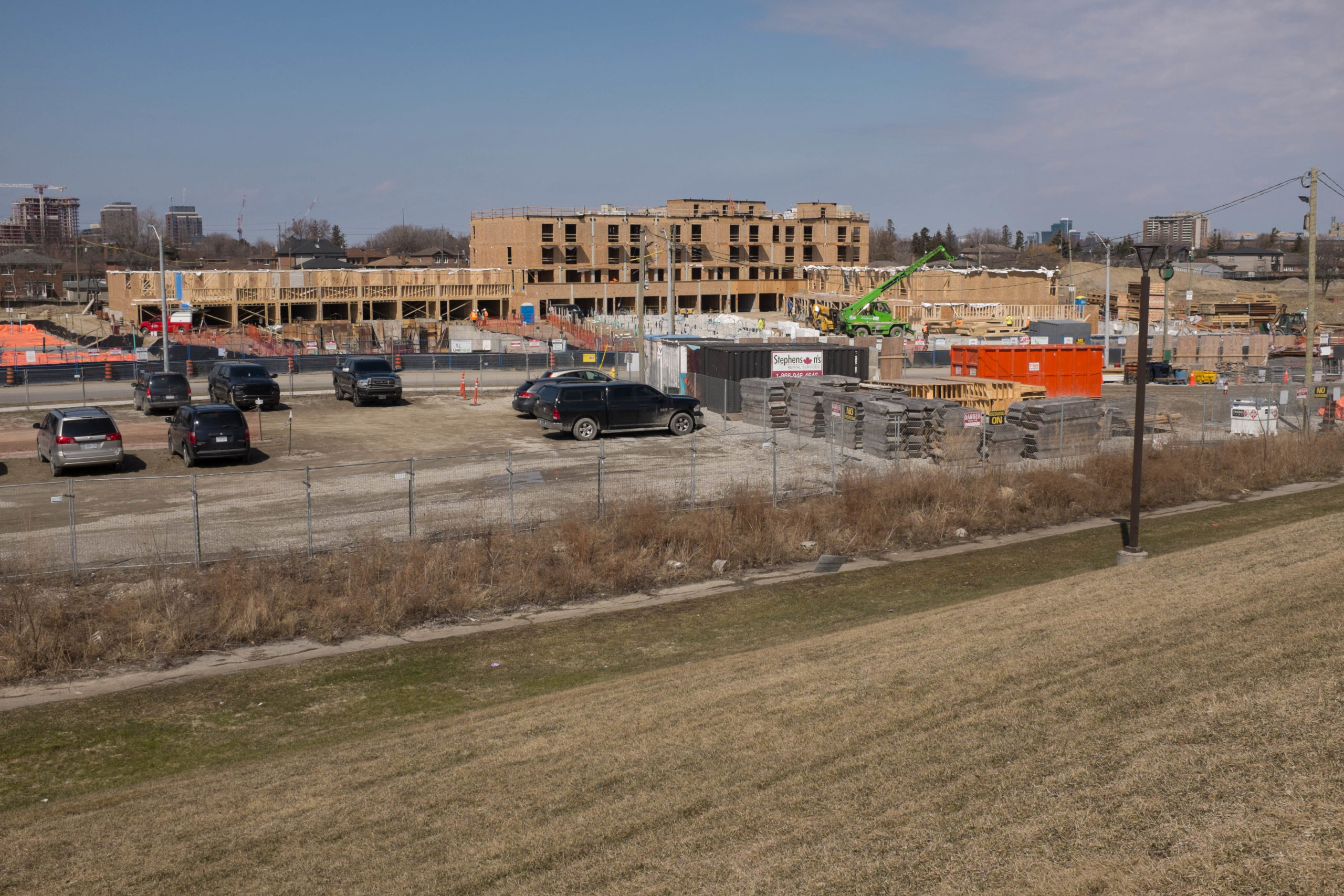
Construction on the former Cather Crescent / Varna Drive
Guterres on additional fossil fuel production and stranded assets
United Nations secretary general’s remarks on the ongoing release of the IPCC’s sixth assessment report are remarkable for their directness and candour:
“Climate activists are sometimes depicted as dangerous radicals,” said UN Secretary-General António Guterres during the Intergovernmental Panel on Climate Change (IPCC) news conference on Monday. “But the truly dangerous radicals are the countries that are increasing the production of fossil fuels.”
“Investing in new fossil fuel infrastructure is moral and economic madness,” UN Secretary General Antonio Guterres said at the report’s release Monday. “Such investments will soon be stranded assets, a blot on the landscape, and a blight on investment portfolios.”
Canada’s government, despite taking more action on the issue than its predecessors, remains firmly on the side of the production-increasing radicals. In part that is from how emission statistics treat the GHGs from fuels we export as someone else’s responsibility, along with the GHGs embodied in what we import. Avoiding climatic catastrophe requires an end to such numerical evasions and a firm commitment to fossil fuel abolition, with production falling by a significant percentage every year until the world no longer runs on coal, oil, and gas.
You can blame the government for their inadequacy, but at some level that becomes like blaming corporations for emissions rather than the consumers of their products. By continuing to select governments that misrepresent what the consequences of their climate change plans will be while dodging the question of ending production, Canadians are ensuring that they will be lied to. When both the Liberals and Conservatives promise that climatic stability and a growing fossil fuel sector can be compatible, they perpetuate the cycle where we sacrifice the welfare of all future generations and non-human nature for the sake of our short-term comfort and the temporary perpetuation of unsustainable ways of life.
Related:
Truck v. car

Dissertation extract: structural barriers to climate change action
Today I saw a Twitter post with some text that governments cut from the Summary for Policymakers from the 6th Assessment Report (AR6) of the Intergovernmental Panel on Climate Change (IPCC):
B6.4. Factors limiting ambitious transformation include structural barriers, an incremental rather than systemic approach, lack of coordination, inertia, lock-in to infrastructure and assets, and lock-in as a consequence of vested interests, regulatory inertia, and lack of technological capabilities and human resources. (high confidence) {1.5, 2.8, 5.5, 6.7, 13.8}
This accords with the section on structural barriers to climate action in my in-progress dissertation.
In response, I have released a draft section from my dissertation on the structural barriers that make controlling climate change so challenging. The barriers are essential for understanding why growing scientific alarm has not translated into adequate policy responses. It also raises questions for environmentalists working to control the problem, since part of the issue is their own opposition to fossil fuel alternatives.
Université de Montréal divesting
Students who were occupying the Roger-Gaudry Pavilion at the Universite de Montréal say the university has committed to divest from fossil fuels by 2025.
The development was first announced on Facebook, and I haven’t yet seen a formal release from the school.
Alley between self-storage and rail tracks