Electric buses and a turn-of-the-century villain

Czech Embassy plaque, Ottawa

Back when new technologies were just beginning to threaten the horse in urban transportation, a scam unrelated to the underlying technology may have set back electric vehicles, relative to their internal combustion counterparts. So posits this article in The Economist’s Technology Quarterly, in any case.

Between 1907 and 1909, electric buses traversed the streets of London. The company that built them was eventually driven to bankrupcy by the machinations of Edward Lehwess: “a German lawyer and serial con-artist with a taste for fast cars and expensive champagne.” After destroying the ability of the company to raise capital, he bought eight of the twenty electric buses for £800, then sold them to Brighton for £3,500.

At the very least, this demonstrates the ability of non-technological factors to significantly affect the fate of new innovations. At the most, it makes one wonder whether a more sustainable form of public transport could have gained dominance over the last century, to the benefit of the climate and those breating urban air.

Unpiloted drone to investigate ice caps

Melting sea ice was mentioned here recently. According to the MIT Technology Review, a team at the University of Kansas is building an unpiloted airplane designed to conduct detailed RADAR surveys of the Arctic and Antarctic ice sheets. In particular, the plane will look to see whether water has collected between glaciers and bedrock – a situation that can lead to their very rapid disintegration.

If things go according to plan the vehicle – dubbed ‘Meridian’ – should conduct its first survey next summer. Given the potential importance of melting ice for climatic feedback loops, anything that improves the quality of data available should be applauded.

Pikaia gracilens and the vertebrates

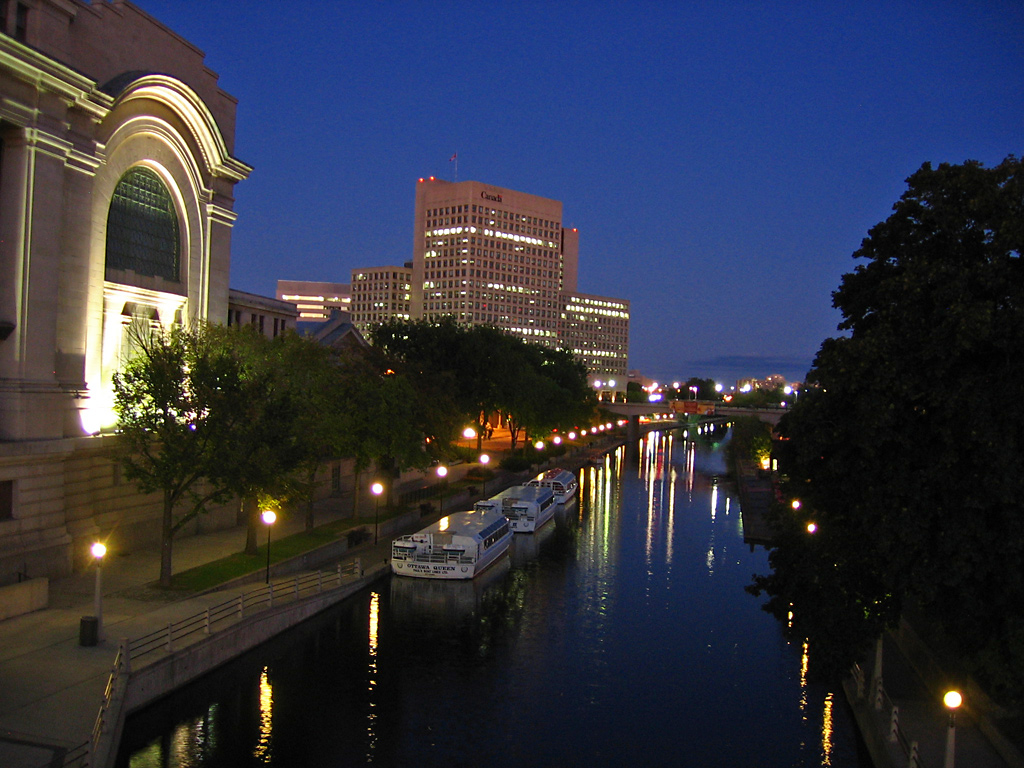
Rideau Canal and buildings

In the most common system of taxonomy, as we should all have learned in high school, human beings are Animalia Chordata Mammalia Primata Hominidae Homo Sapiens. The first bit essentially means that we eat something other than sunlight. The second bit means we are descended – like all other vertebrates – from Pikaia gracilens. This creature lived about 570 million years ago and was part of the Cambrian explosion: so spectacularly displayed in the Burgess shale near the border of British Columbia.

Pikaia was initially mis-categorized as a worm. Now, it seems that the combination of segments, muscles, and a flexible dorsal rod embodied in this little creature may mean that it was the first vertebrate: the template for all those alive today. From the first vertebrate species, all amphibians, reptiles, birds, and mammals evolved. From tuna fish to orangutan, we may all be descendents of Pikaia. Writing about the animal in Wonderful Life, Stephen Jay Gould highlights both its huge evolutionary legacy and the degree to which it arose as the result of many change occurrences. If we could go back all those millions of years and let time unroll again, it is highly likely that we would have a profoundly different world at the end.

You can begin to imagine how staggeringly different the contemporary world would be if this little creature hadn’t survived and spread. The old view of evolution as a linear and predictable progression towards ‘higher’ organisms – a surprisingly common teleological view – is laid to rest by the contemplation of the degree to which chance can nudge history down one or another track.

Geography and the web

While it certainly doesn’t have the best name, the concept behind heywhatsthat.com is a neat one. Using data from Google maps, it generates panoramas as seen from mountaintops and other high places. You can then identify the mountains that you see around you.

The interface definitely needs some work, but the site does suggest ways in which openly accessible storehouses of data – such as the position and altitude information available from Google – can be combined into novel tools.

exploreourpla.net is a similarly badly named but interesting site. It combines geographic data and images related to climate change. You can, for instance, view a satellite map of Western Europe overlaid with luminous dots showing the most significant greenhouse gas emitters.

Big rocks in space

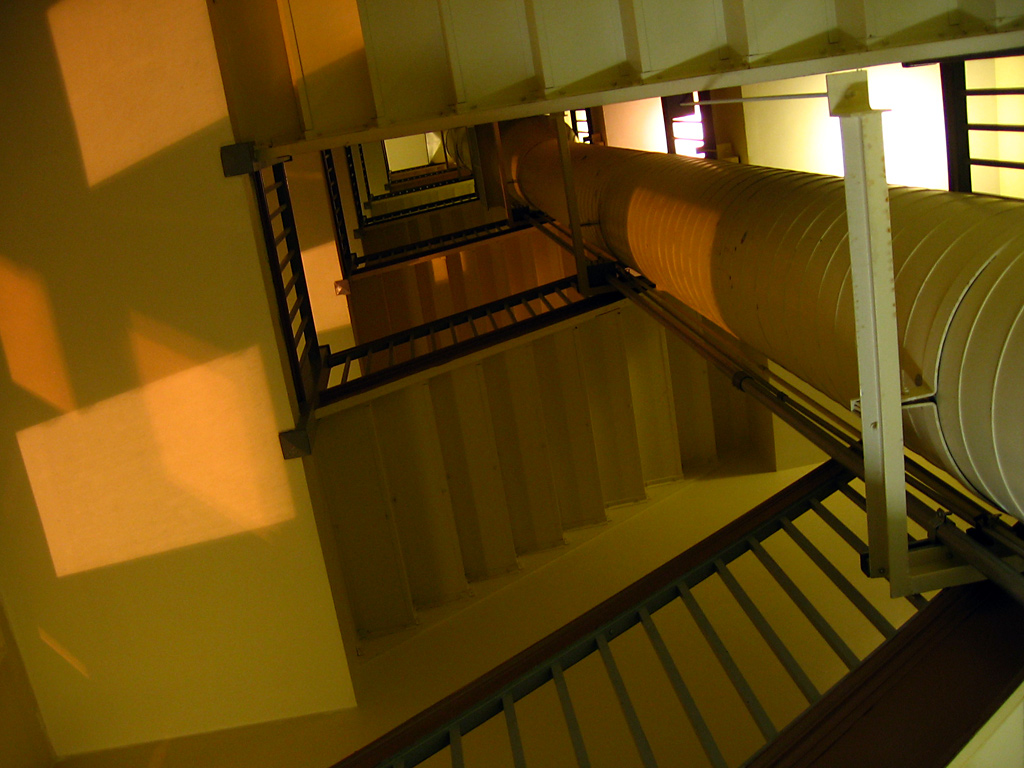
Chateau Laurier stairs

September 26th is the next full moon. That night, I recommend getting hold of a pair of field glasses and having a look at our closest significant stellar neighbour. In particular, note the large impact crater near the moon’s south pole. The Tycho Brahe crater was determined to be about 100 million years old, on the basis of samples collected by the Apollo 17 mission. While such craters soon fall victim to erosion from air and water on Earth, they are well preserved on the airless moon.

Such craters are not just of geological interest. They testify to the reality of impacts from comets and asteroids. A sufficiently large such strike could have devastating effects for humanity. In 2029, we will get a reminder of how close some objects are to hitting us, when the 99942 Apophis asteroid will pass so close to the Earth that it will be between communications satellites in geostationary orbits and us. For a while, this asteroid topped the Torino impact hazard scale. NASA estimates that the impact of Apophis would be equivalent to the explosion of 880 megatonnes of TNT: about 58,000 times the yield of the atomic bomb dropped on Hiroshima.

There is a small but real chance that the close pass of Apophis will alter its course such that it hits us on its next pass, in 2036. In response, a spaceflight subsidiary of EADS called Astrium is proposing a mission to learn more about the asteroid, study its composition, and investigate options for deflecting its orbit, if necessary.

In one sense, we are lucky with Apophis. It was discovered back in 2004 and has since had its orbit accurately tracked. A comet, by contrast, is essentially invisible until proximity to the sun causes it to melt and produce a tail. It is entirely possible that such an object could strike the Earth with little or no warning whatsoever.

Quantum computers and cryptography

Public key cryptography is probably the most significant cryptographic advance since the discovery of the monoalphabetic substitution cipher thousands of years ago. In short, it provides an elegant solution to the problem of key distribution. Normally, two people wishing to exchange encrypted messages must exchange both the message and the key to decrypt it. Sending both over an insecure connection is obviously unsafe and, if you have a safe connection, there is little need for encryption. Based on some fancy math, public key encryption systems let Person A encrypt messages for Person B using only information that Person B can make publicly available (a public key, like mine).

Now, quantum computers running Shor’s algorithm threaten to ruin the party. Two groups claim to have achieved some success. If they manage the trick, the consequences will be very significant, and not just for PGP-using privacy junkies. Public key encryption is also the basis for all the ‘https’ websites where we so happily shop with credit cards. If a fellow in a van outside can sniff the traffic from your wireless network and later decrypt it, buying stuff from eBay and Amazon suddenly becomes a lot less appealing.

Thankfully, quantum computers continue to prove very difficult to build. Of course, some well-funded and sophisticated organization may have been quietly using them for years. After all, the critical WWII codebreaking word at Bletchley Park was only made known publicly 30 years after the war.

For those who want to learn more, I very much recommend Simon Singh’s The Code Book.

Oceanic dumping of CO2

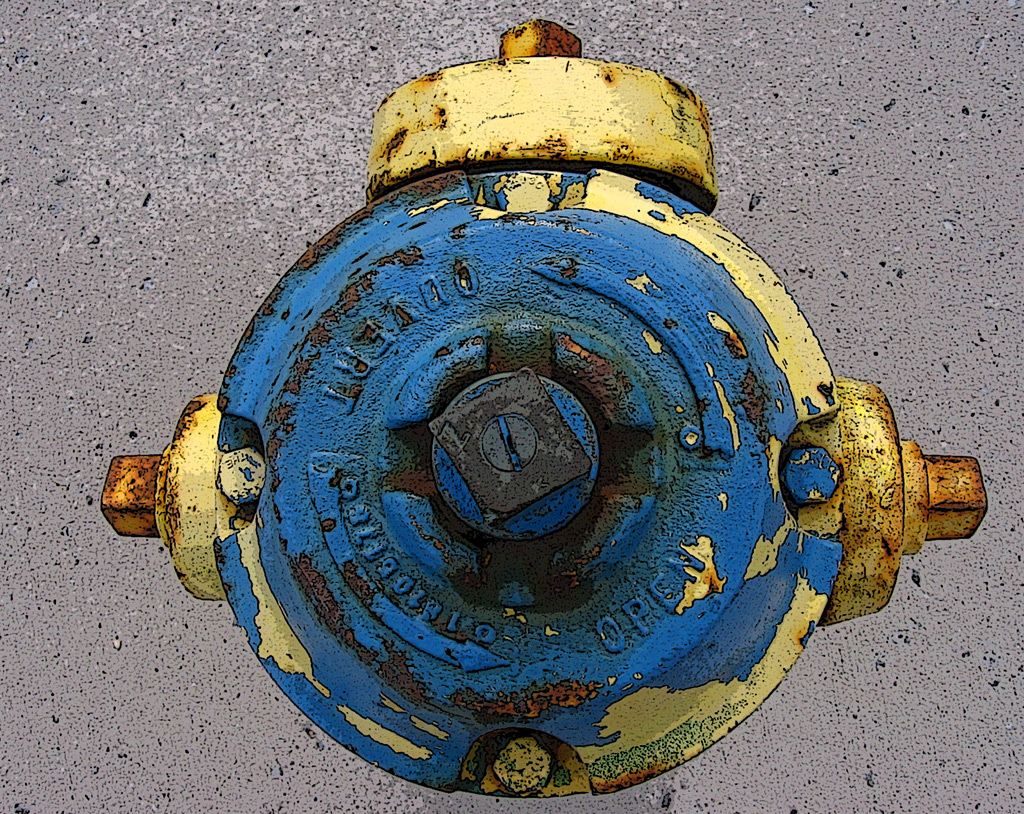
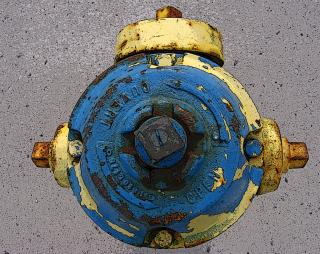
Ottawa fire hydrant

Carbon capture and storage (CCS) is a collection of technologies often mentioned in connection with global warming. Essentially, the idea is to capture the carbon dioxide emitted by things like power plants and then sequester it indefinitely in some sort of geological formation, such as a mined salt dome. While this idea is worthy of discussion in itself, my focus here is a number of approaches often described as CCS, but which do not achieve the same long-term result.

Some people have proposed that, rather than burying carbon underground, we just pump it into the sea. One option I am not going to discuss now is making big pools of liquid carbon dioxide in the very deep ocean. Rather, I will address the idea of using pipelines from shore or trailing from ships to release CO2 about 1000m down. Another alternative with similar effects is to make huge chunks of dry ice and throw them overboard, hoping most of the carbon will sink. Rather than being a type of CCS, these activities migtht be more accurately called ‘oceanic dumping of CO2.’

A matter of equilibrium

The problem here is both fundamental and intuitive. Think about a large plastic bottle of cola. With regards to the carbon dioxide, there is an equilibrium that exists between the amount dissolved in the liquid and the amount that is part of the air at the top of the bottle. As long as the system is closed (the cap is on), the amount of gas in air and water will trend towards that equilibrium point and, once the balance is achieved, stay there. This is what chemists mean when they say that equilibrium states display ‘constant macroscopic properties.’ CO2 from the water is still moving into the air, but it is now doing so at precisely the same rate as CO2 from the air is moving into the water. This is inevitable because if one rate were higher, the relative concentrations would change, and would continue doing so until the equlibrium was reached.

Now imagine that we change the equilibrium. If we take the cap off the bottle, the air inside mixes immediately with the air outside. Since the air inside has more CO2 than the air outside (because some of it has come out of the cola), this mixing causes the concentration of carbon dioxide at the surface of the cola to fall (we are ignoring the effects of atmospheric pressure in this analogy). As a consequence, the cola will start to release CO2, trying to get back to the old equilibrium between cola-dissolved and air-mixed gas. Since there is a lot more air, the equilibrium eventually reached will involve a lot less gas-in-cola. The cola goes flat. In the alternative, if we put a chip of dry ice into the cola and kept the cap on, a new equilibrium would eventually be reached in which both the cola and the air include a higher concentration of CO2.

Consequences

Dumping CO2 in the ocean thereby achieves two first-order effects. Firstly, it carbonates the sea, making it more acidic. Oceanic acidification is worrisome enough without such a helping hand. Secondly, it eventually results in an air-water balance of CO2 that is identical to the one that would have occurred if the CO2 started in the atmosphere. No matter which fluid it begins in, the same amount of CO2 at the same pressure will eventually result in the same balance between air-mixed and water-dissolved gas. It is just a matter of time. This is an important concept to understand, as it is the very heart of physical and chemical equilibria.

One big second order consequence results from this. If we do build such pipelines and do start carbonating the sea, people may decide that very carbon intensive technologies (such as coal generation or, even worse, Coal-to-Liquids) are environmentally acceptable. Using them in combination with oceanic dumping will inevitably have the same long-term atmospheric consequence as dumping the CO2 directly into the air.

Now, there is one reason for which oceanic dumping might be a good idea. Imagine there is some critical threshold for the atmospheric concentration of CO2: stay below it and things are reasonably ok, go above it and things all go wrong. In this scenario, it makes sense to store a bunch of CO2 and release it little by little. Of course, this only makes sense if we (a) only do this with CO2 we were inevitably going to release anyway (no new coal plants) and (b) aggressively cut future emissions so that the slow leak will not make us cross the threshold. Suffice it to say, this isn’t the kind of usage most advocates of CCS have in mind.


Precaution and bats

The ‘precautionary principle’ is frequently invoked in arguments about both security and the environment, but remains enduringly controversial. No matter how it is formulated, it has to do with probabilities and thresholds for action. Sometimes, it is taken to mean that there need not be proof that something is harmful before it is restricted: for instance, in the case of genetically modified foods. Sometimes, it is taken to mean that there need not be proof that something be beneficiail before it is done: for example, with organic foods. Sometimes, it has to do with who gets the benefit of the doubt, in the face of inconclusive or inadequate scientific data.

This article from Orion Magazine provides some interesting discussion of how it pertains to health threats generally, with an anecdote about rabid bats as an illustrative example.

I am not sure if there is all that much of a take home message – other than that people behave inconsistently when presented with risks that might seem similar in simple cost-benefit terms – but the article is an interesting one.

Immersed in a foreign election

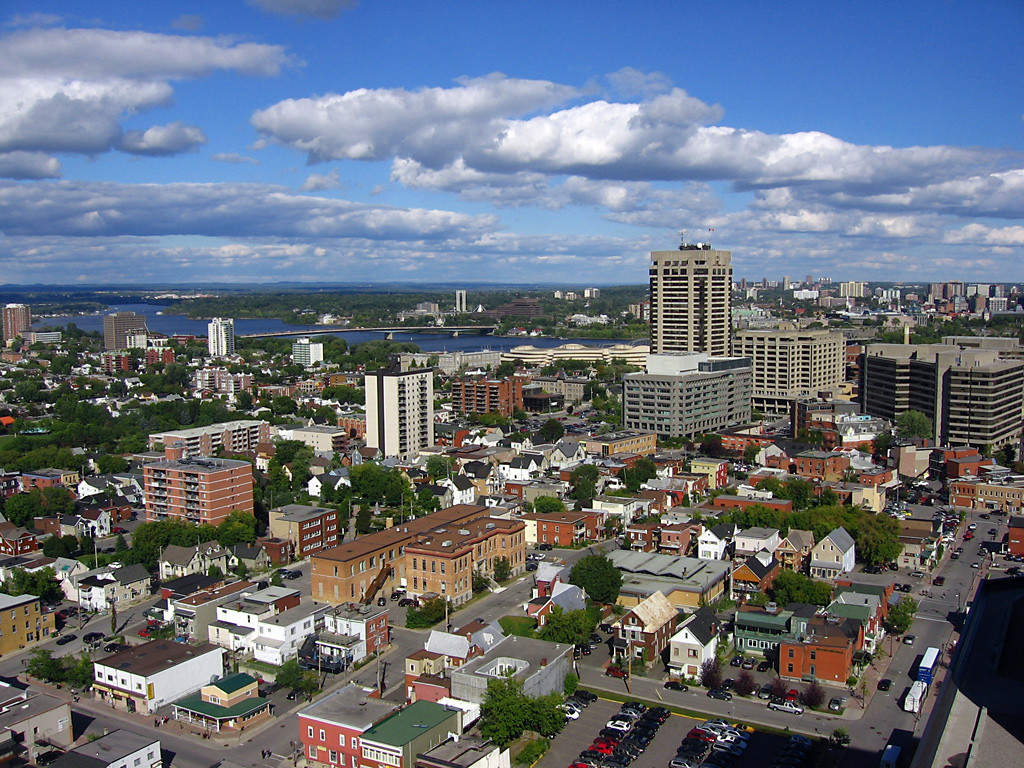
Gatineau and Ottawa

Today, mixed in among the advertisements and angry letters to people who used to live in my flat, I got a bunch of documentation about the upcoming election. I think that I am technically permitted to vote in Ottawa, both in the provincial election and on the related referendum. I think I live in the Ottawa Centre provincial riding, where the incumbent is not running for re-election. That said, I know virtually nothing about Ontario provincial politics and it is a toss-up whether I will be here for the bulk of the time for which the next government will be in office.

For reasons of semi-transience and ignorance, it seems best to abstain.

Truth in advertising

The kind of false environmentalism embodied in the Prius has been panned repeatedly on this site. Now, the government of Norway has decided that automobiles cannot claim to be “green,” “clean” or “environmentally friendly.” Bente Oeverli, a Norweigan official, explains that: “Cars cannot do anything good for the environment except less damage than others.”