Old and new festivals

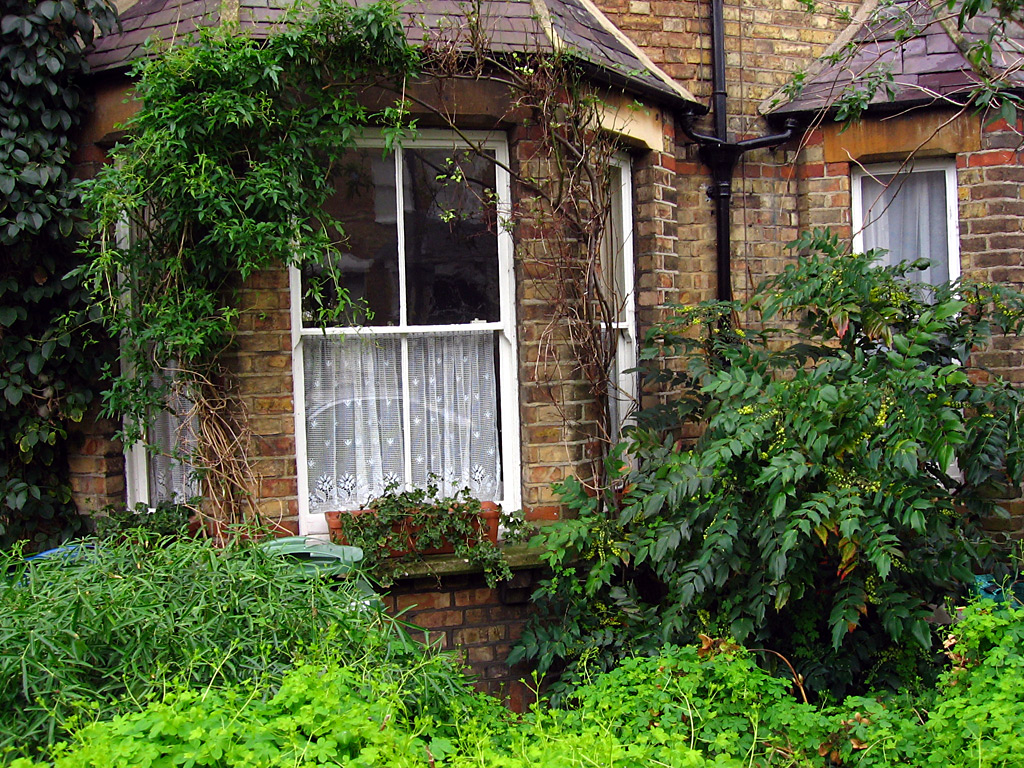
House in Jericho

The month of February is derived from the Latin word februare, meaning ‘to purify,’ and was the last month of the Roman year. The association between February and purification, however, precedes the founding of Rome. On the 15th of that month was a pagan festival called Februatio. Later, it was called Lupercalia, after Lupercus – the cave near Palatine Hill where a female wolf supposedly suckled Romulus and Remus. The festival was meant to purify the settlement where it was held, releasing health and fertility.

William Shakespeare’s play Julius Caesar begins during this festival, one way in which the Shakespearean history of Caesar’s life differs from that of Plutarch. Indeed, the crown with which Antony “thrice presented him” was a symbol of that ancient festival, and Caesar’s refusal to accept it cited in Antony’s comments following his death (III, ii). This goes to show that refusal to participate in public festivities can be dangerous for you, if you are a person of influence. In 494 CE Pope Gelasius I replaced Lupercalia with the feast of the Purification of the Virgin.

By contrast, the association between the feast of the obscure Saint Valentine and romantic love was apparently the work of Geoffrey Chaucer in the 14th century:

For this was on seynt Volantynys day
Whan euery bryd comyth there to chese [chose] his make [mate].

It seems that Hallmark is not entirely to blame, after all, nor is the Christian replacement for the festival of Lupercalia. Those wishing to invoke the spirit of either the new, as opposed to the ancient, celebration may do well to emulate the Squire from The Canterbury Tales:

So hootehotly he lovede that by nyghtertaleat nighttime.
He sleep namoore than dooth a nyghtyngale.

For those not so fortunate, or who prefer to keep February as a time of purification, there a mass of fine, free literature out there. Reading some would be a lot more charitable than sacrificing two goats and a dog to Lupercus, as was traditionally encouraged.

[Update: 11:59pm] Mica has a Valentine’s Day video up. It has his standard lighthearted charm, and may be just the thing for people who face this day with bitterness (provided that it is of the sort that can be assuaged, rather than the kind deeply rooted in your very soul).
Dolphin safe tuna

One of the most reliable ways of locating tuna stocks is by following dolphins. Once you find dolphins feeding on the fish, you set your nets around and catch them. Of course, this method will sometimes lead to you catching dolphins as well. In eighteen years of dolphin set tuna fishing in the United States, 18 dolphins were recorded as caught, along with 34 tonnes of sharks and rays and 295 tons of other fish. Such by-catch is virtually always discarded. In an equivalent period of dolphin safe fishing (where electronic Fish Aggregation Devices are used instead), no dolphins were caught, but 237 tonnes of sharks and rays were, along with 15,500 tonnes of other fish. Again, this was discarded.

Dolphin safe fishing is also disproportionately likely to catch immature tuna, which have not yet reached their full size and which have contributed very little to reproducing the species, since tuna generally take a long time to reach sexual maturity.

This only makes sense if you strongly privilege dolphins over other forms of marine life. Either because:

  1. You think dolphins themselves are bearers of rights
  2. People have much stronger preferences regarding dolphin treatment than that of other elements of marine ecosystems, and those preferences determine what is moral.

Admittedly, each of these is a viable moral position consistent with the ways in which we generally view what kinds of things can bear rights. That said, the trend in ecology is towards recognizing the importance of ecosystem integrity. From this perspective, setting nets around dolphin pods is probably the greenest way of catching tuna. This is especially true since it is possible to design nets that dolphins virtually always escape, but tuna do not.

Of course, now consumers know that to be eco-friendly, they are meant to buy the dolphin safe tuna. Confident in the belief that the problem has been dealt with, not enough people realize that we have probably made things worse.

Intelligence, effort, and success

A couple of articles I came across today may be of interest to fellow students. The first, from New York Magazine, discusses possible perverse effects upon learning that arise due to how people understand intelligence. Specifically, people who believe themselves to be intelligent are more likely to choose easy tasks and less likely to apply themselves. Another article, on the website of the Association for Psychological Science, discusses ‘The Myth of Prodigy.’ It is about Malcolm Gladwell, author of The Tipping Point.

While I cannot really comment on the validity of the experimental results posited, the general idea does have the ring of truth to it. Intelligence, I think, is generally more likely to be a source of insecurity than confidence. It can always be proven hollow, or outdone by someone else. What that seems to happen, the trend is likely to sustain itself. This I have seen in both friends and myself. It may have a lot to do with why I never learned to drive or dance, and am rather hesitant to display my ineptitude at either.

PS. As with so many other items of interest, I first found this on Metafilter. On one hand, I feel bad for just grabbing their content. On the other, I recognize that it is a very efficient way of finding interesting material. Furthermore, I am driving traffic in their direction.

Worcester College

Worcester College

As part of an ongoing initiative to expand the parts of Oxford I have explored, I ventured into the Worcester College gardens today. Open to all students between 2:00pm and 5:00pm, they are really worthy of a wander. I plan to revisit the courtyards and waterside paths once spring has begun to assert itself. Trying to frame photos to exclude the ash-gray sky was challenging.

The college is located at the end of the street that runs west from the martyr’s memorial past the Randolf Hotel and the Ashmolean. Altogether, the grounds are very extensive; they also have a pleasing intricacy to them, unlike the open vastness of the Port Meadow, Christ Church Meadow, or the University Parks.

I may well need to add the gardens to my rotation of places to read and wander, once the cold and dampness of these recent weeks begins to recede. Even with the threat of exams and joblessness at the end, I expect that Trinity Term will be a dream – with the thesis safely behind, and Oxford going through its most attractive season.

Nye and Roberts on democratization

Last night’s talk on democratization by Joseph Nye and Adam Roberts basically encapsulated the most dominant strand of academic thinking on the subject. It was heavily focused on the American role in the Middle East (though Russia’s apparent slide towards autocracy was not entirely ignored) and essentially concluded that the US can and should continue to spread democracy, but must do so in moderate and locally tailored ways, rather than just stomping on people. There was agreement that the next administration (whether Clinton or McCain) would pursue more or less this path.

Both speakers agreed that attacking Iran would be an appalling error: both strategically, given the capacity of that state to cause havoc in the region, and politically, because of how an attack would unify moderates and conservatives in Iran around the present regime. It would also further diminish American credibility in the Muslim world.

Finally, there was some discussion of narratives: the one that Osama bin Laden propagates, that of the United States, and the kind that Europe might fruitfully deploy. As a continent that has managed to come together into peace and prosperity, after an appalling history of war, perhaps the European experience can be illustrative for other regions.

All of these points are sensible and sound, as you would expect from professors from Harvard and Oxford – the latter even knighted. One question that remains sitting on the table is how to deal with allied states that have less than excellent democratic credentials. It certainly damages US soft power to be so reliant upon the House of Saud, as well as people like Pervez Musharraf and Hosni Mubarak. It creates many opportunities to accuse the US of hypocrisy. That said, the generally cautious approach recommended by both speakers suggests a course of constructive engagement, rather than something more aggressive (though not forceful).

On a side note, the St. Antony’s International Review seems to be doing a very good job of publicizing itself. This is very welcome, given Oxford’s notable lack of a quality international relations journal. I should try to get a book review or something into it, before I leave Oxford.

Standard sort of day

Holywell Street

This has been a fairly good day. There was some good news, and some promising silence. I got some thesis reading done, saw some rarely seen friends in Wadham, and attended an interesting lecture. Tomorrow, I shall try to focus on the first of those.

PS. People with phony degrees may well be charlatans, misleading the public, but it seems more than a bit over-dramatic to call one a ‘menace to science‘ on the front page of The Guardian.

‘Able Archer’ and leadership psychology

If you have any interest in nuclear weapons or security and you have never heard of the 1983 NATO exercise called ‘Able Archer’ you should read today’s featured Wikipedia article.

One fascinating thing it demonstrates is the amazing willingness of leaders to assume that their enemies will see actions as benign that, if they had been taken by those same enemies, would be seen as very aggressive. Case in point: the issues America is raising about Iranian intervention in Iraq. If Iran was involved in a major war on America’s doorstep, you can bet that there would be American intervention. This is not to assert any kind of moral equivalency, but simply to state the appallingly obvious.

Briefly out of Oxford

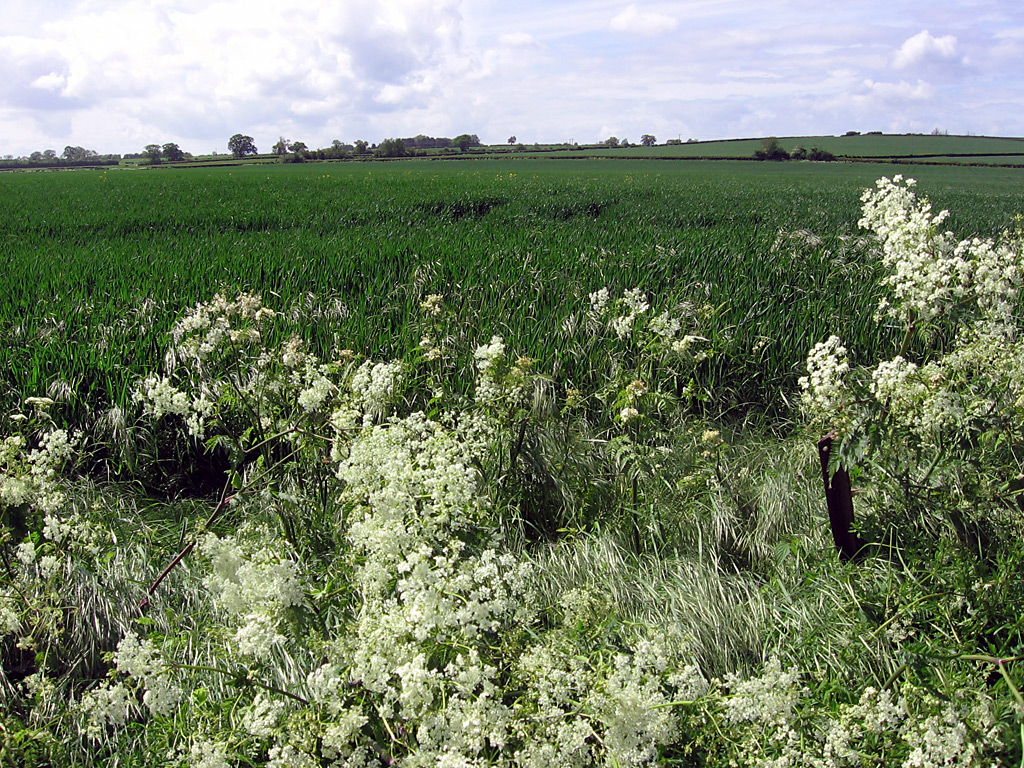
Fields north of Oxford

The light this afternoon and evening was just gorgeous: beginning as the kind of sharp afternoon that contrasts so markedly with the gray days of rain before, then softening with the return of clouds and the approach of sunset. It offered a good chance to head out of Oxford northwards, in the first expedition for the simple purpose of cycling that I can recall having undertaken in many weeks. As the longer, warmer days of spring arrive, I should try to get back into the habit of visiting Woodstock, 13.2km north by northeast of here, through Yarnton. Otherwise, I spent all my time in an area that runs south from our flat to Carfax, sometimes extending eastwards some way along the High Street and Cowley Road: Milan’s Oxford. On this little map, the red line above ‘University of Oxford’ denotes 1km. The blue polygon denotes the zone in which I spend more than 95% of my time.

The most notable thing about this ride was the empty space between towns. During the fading light of the late afternoon, they provided a sense of immensity in one’s surroundings that cannot be attained when there are ugly pinkish-orange streetlights overhead. On the way back, they provided ample demonstration that six volts and 5.2 amps behind a single halogen bulb is hardly sufficient to cut through a rainy English night.

PS. Privately to Maddie and Meaghan: thanks.