Appeal to fellow geeks

Despite much tinkering, Blogger is still being awkward with regard to image uploads. The way it normally works is that you select an image to add and it generates two resized versions in JPG format: one at 1024×768 and the other at 320×240. It then uses the smaller image as an item in your post that links to the larger image. It does all this with a really odd looking block of code:

[a onblur=”try {parent.deselectBloggerImageGracefully();} catch(e) {}” xhref=”http://www.sindark.com/uploaded_images/IMG_BIG.JPG” mce_href=”http://www.sindark.com/uploaded_images/IMG_BIG.JPG” ][img style=”float:left; margin:0 10px 10px 0;cursor:pointer; cursor:hand;” xsrc=”http://www.sindark.com/uploaded_images/IMG_SMALL.JPG” mce_src=”http://www.sindark.com/uploaded_images/IMG_SMALL.JPG” border=”0″ alt=”DESCRIPTION” /][/a]

I’ve tried uploading small and large images of the right sizes and plugging the filenames into that template, but that doesn’t seem to work either, as well as being quite a pain.

I am trying to use the image tool to have it automatically resize and upload pictures to my FTP server. It can upload posts fine and non-image files fine, but it hangs every time I try to upload an image. In Firefox, it does so with “Waiting for photos.blogger.com…” listed at the bottom of the photo upload window. In Opera, it just hangs at the upload screen, without even the animation that usually accompanies the upload process. Safari shows the animation, but it never ends. The same tool is capable of uploading images to my BlogSpot hosted blog without problems.

I can put files in my uploaded images folder via an FTP client and I’ve checked the privileges on that folder. Obviously, the login information is correct. I’ve tried clearing my cache and cookies. I’ve also tried this process in Firefox 1.5, Opera 8.2, and the latest version of Safari. What else could be wrong? Is this a Blogger bug, or am I doing something wrong? Exactly the same setup worked fine three days ago.

NatWest: a very poor bank, indeed

Britain’s position as a global financial services hub is certainly not well reflected in the conduct of the particular bank I chose when I arrived in Oxford. Despite my dissatisfaction, however, the sheer level of hassle involved in switching banks as an international student will probably keep me where I am. I post this as a warning to those who will come after.

I continue to be astonished by how bad the online banking offered by NatWest is. The password system is frustrating and insecure. It’s impossible to pay your NatWest credit card bill online, even when you applied for it at the same time as you created your account. The site doesn’t even let you transfer funds between your chequing and savings accounts, unless you go set it up to do so in person. They also managed to forget to pay interest on my savings account for February. Those considering opening a bank account in the United Kingdom should absolutely avoid this bank.

Part of the problem is how NatWest has two separate divisions: one that runs the branches and knows nothing about the credit cards and web banking, and another that plays the opposite role. Despite the apparently clear delineation of duties, there seem to be serious communication problems between the two. They also have some truly bizarre rules about documents they can only send to your permanent address, even when it’s outside the U.K. and they know that you will not be there. Add to that high service charges (ie. $25 for a bank draft) and low interest (less than the rate of inflation) and you can understand the reasons for my dissatisfaction.

[Update: 20 May 2006] Another really awful thing about NatWest is the way their credit card payments work. At the start of the month, I am automatically billed some random amount between five and twelve Pounds. If I cancel the automatic payment, I get fined – even if I don’t owe any money. Since I almost never use the card now, that means I am building up more and more of a positive balance. Even so, they will ocassionally charge me a Pound or so of interest… seemingly at random and despite the fact that I don’t owe them any money. I’ve tried calling their telephone support line for an explanation, but I was kept on hold for ages and finally turned over to someone who didn’t seem to know anything she wasn’t reading straight off her screen. Completely unacceptable, all in all.

[Update: 12 February 2007] The NatWest Online Banking site now allows me to pay my credit card online. Previously, I couldn’t do anything but move money from my savings account to my chequing account, and not the converse. This is a distinct step forward.

The thesis or gadgetry: one will drive me mad

Bridge beside the Isis

Educational matters

During an animated ninety minutes, Dr. Hurrell and I went over my two most recent papers and a number of ideas for the thesis. I feel like we’ve hit upon something exciting. The idea is less to look at institutional arrangements meant to use science to develop better policy, and more to look at the conceptual linkages between science, politics, and policy.

The most straightforward view, which I identified, is what I call the planning/engineering dichotomy. Planners decide that it might be nice to have a bridge across Burrard Inlet. The engineers work out if it’s possible, what it will cost, and how to do it. A similar model is commonly implicitly applied to the relationship between science and policy. Science identifies problems, and then outlines possible solutions for policy makers to debate and implement. Really poking at that model could be a good starting point for a broader discussion. What is the character of science, as it relates to politics and policy? What does it let us do? Without getting off topic, the question might be expanded still further. For instance, asking what the purpose of the natural world should be, from a policy perspective. Is it simply a matter of working out how much good stuff we can squeeze out of it without destroying it for ourselves or future generations?

The next stage is to read probably a dozen or so books, in order to get a more extensive sense of how science and policy are understood with regards to each other and what it might be interesting and useful to expand upon. I will start with Dr. Hurrell’s own book, as well as Andrew Dobson’s Green Political Thought. It’s also worth re-reading Peter Dauvergne and Jennifer Clapp’s Paths to a Green World. I am excited about the project, in any case, and not just because of the enthusiastic energy that I tend to leave supervisions with an excessive amount of.

Without giving too much away, I will also say that there’s something in the works on the fish paper front.

Damnable contraptions

Due to its increasingly erratic behaviour, iPod the third is going the way of iPod the first and second: back to Shanghai to be replaced. The first one was defective straight upon arrival, pausing automatically at the slightest jolt. The second one had a hard drive that failed while I was driving through Hamilton, Ontario with my cousin and brother. Sasha’s iPod later succumbed to the same fate. Because it is laser etched, it will probably take them three weeks or so. Whereas the first one had the tendency to pause whenever it was bumped the slightest amount, this one is just freezing every ten or fifteen minutes, changing languages once in a while, and refusing to be recognized by a computer that recognizes its brethren with alacrity. Godspeed, little white rectangle.

Apple is quite good, if a bit slow, about fixing things. The lesson is probably that it’s worth spending the extra $60 on a three year Applecare plan. When I can actually manage to tolerate a few weeks without it, the iBook will likewise be going in for service on account of its one defective USB port.


Strange IR theory words:praxis: The practice or exercise of a technical subject or art, as distinct from the theory of it ; Habitual action, accepted practice, custom. ; Action that is entailed by theory or a function that results from a particular structure.reify: The mental conversion of a person or abstract concept into a thing. Also, depersonalization, esp. such as Marx thought was due to capitalist industrialization in which the worker is considered as the quantifiable labour factor in production or as a commodity.PS. One email I’ve been most anxiously awaiting since Saturday night has still not materialized. The only thing for it, for the present moment, is just to keep waiting.

PPS. No word either on the Chevening, ORS, or Armand Bombardier awards. No word is better than a negative response, but I am really crossing my fingers to get at least one yes this time.

During breaks, the real work?

I just discovered that, along with Benedict Kingsbury, my supervisor edited a book in the exact area in which I mean to write my thesis. It is called The International Politics of the Environment. Obviously, I can’t open my mouth in front of him again until I read it. The blurb on the back cover describing it sounds like it could have come out of one of the scholarship proposals I submitted earlier this year: “This book brings together leading specialists to assess the strengths, limitations, and potential of the international political system for global environmental management.” It should make for an interesting read, though it is fourteen years old.

End of term festivities III

St. Antony's Bop

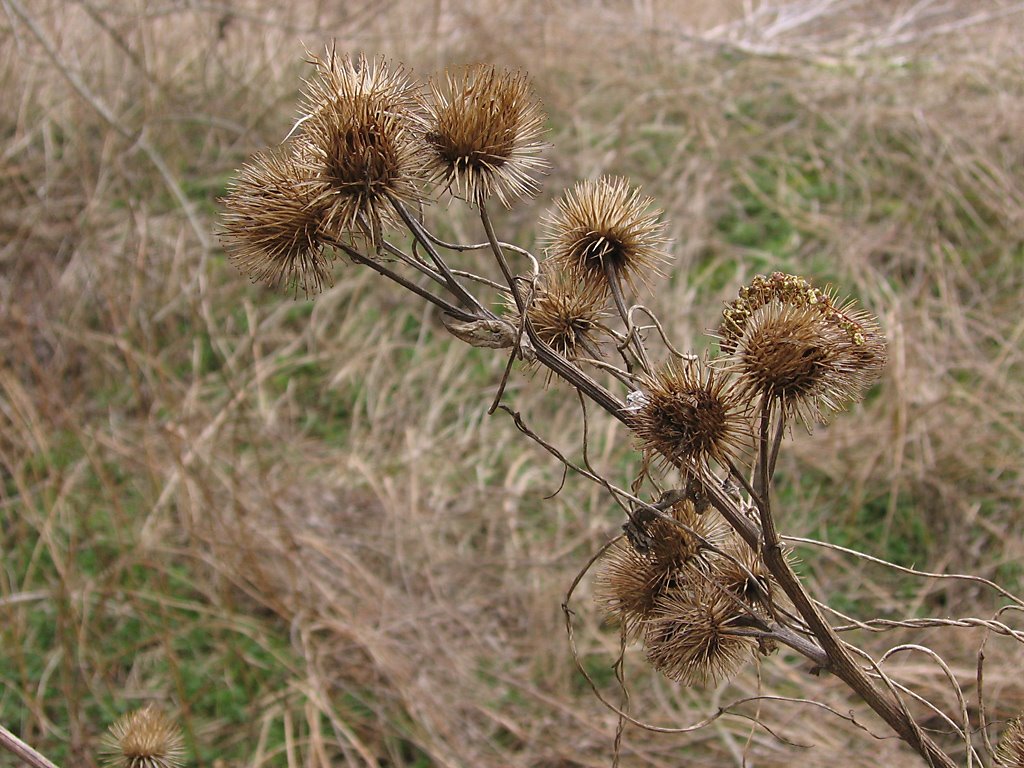
Parallel to Iffley Road, there is a whole collection of sports fields, bounded on the southern edge by burdock and the soggy shoreline of the Isis. This afternoon, after finishing a second draft of my take-home test, I walked a few kilometres along the river. I was in an exceptionally good mood all day, largely because of how enjoyable yesterday was.

One thing I notice about Oxford veterans – those in their third or fourth year here – is that they see the breaks as the time in which they really get work done. I suppose that’s partly a reflection of how directed the coursework can be; it doesn’t leave a lot of space to pursue your specific academic interests. Once thesis writing begins, I imagine that my breaks will be taken up with it. The best approach for now, I think, is to use the break to do a lot of general reading on environmental politics. That way, the thesis can adopt a fairly definite shape within a more thoroughly understood area of conceptual space.

I am going to drop of the test in Marga Lyall’s mailbox tonight, rather than trucking over to Manor Road before 9am tomorrow. It’s strangely empowering to have a 24 hour keycard for the department. It’s one of few things that really make me feel like a grad student.

The development of language

Those interested in the study and emergence of languages should do some reading about a remarkable series of occurrences in Nicaragua during the 1970s. Students at a number of schools for the deaf there, initially staffed by teachers who did not know sign language, invented their own version, which grew in complexity over a period of years.

Ann Senghas, of Columbia University, has studied the signing capabilities of people who left the school at differing times and therefore different stages of the evolution of this language. Users of the early versions of the language, for instance, could not describe whether something was on the left or right side of a photograph; users of later versions could do so.

Perhaps the most interesting questions raised by this situation relate to the nature of human cognition where it comes to language. For instance, it makes one wonder about the degree to which people are instinctually provided with mechanisms for both the comprehension and development of language.

More information is in this Wikipedia entry.

End of term festivities II

Stories untold

Between finishing more than half of the qualitative methods test today and attending two interesting bops tonight, this has been a day well spent. The New College event tonight took place not in their MCR, but in an elegant sort of attic-like structure upstairs, with bare rafters and illumination from Christmas tree lights spread along the walls.

After that, a circuitous route brought us briefly to St. Antony’s College. There, I saw Emily in the process of leaving for Morocco before we scaled the wall (St. Antony’s simply will not let you out at night) and went to respective homes.

The day has certainly been indicative of the manner in which Oxford students mark the conclusion of terms. Mine won’t really be over until this take-home exam is submitted and another pair of supervisions take place, but I can still appreciate the spirit.

Milosevic’s death

After five years on trial in The Hague, Slobodan Milosevic died in his cell earlier today. On trial for genocide and war crimes committed in the former Yugoslavia, he is probably the highest profile individual to be put before an international tribunal. Now, despite the thousands of hours in court, the funds expended, and the various difficulties overcome, there will probably never be a verdict.

Of course, it may seem superfluous to deliver one after the death of the man on trial. In this case, however, I don’t think that would be true. It is important to show that these kinds of tribunals are capable of dealing with crimes of the extent Mr. Milosevic is accused of committing. The International Criminal Tribunal for the former Yugoslavia (ICTY) and the equivalent ad hoc tribunal for Rwanda (ICTR) were the precursors to the International Criminal Court (ICC), a body that is in need of establishing itself as an effective mechanism both for deterring crimes against humanity and for punishing those who violate international law in such egregious ways.

There seems to be no evidence, at present, that Mr. Milosevic died of anything other than the high blood pressure and heart condition that had previously served as the justification for an attempt to have him sent to Russia for treatment. It was a request that was not ultimately complied with. Mr. Milosevic died six days after Milan Babic, a fellow Serb prisoner, committed suicide.

Despite the length and expense of these trials, they serve an important documentary role: providing extensive evidence of what took place in Bosnia, Croatia, and Kosovo during the 1990s. They also allow us to look back on choices like the NATO decision to employ a bombing campaign against Serbia with the benefit of better information than we had at the time. To some extent, that uncovering, sorting, and verifying of information has already taken place for the series of wars embodied by the Srebrenica massacre. Hopefully, even without the conviction of Mr. Milosevic, that will serve to make us collectively wiser in the future.

End of term festivities I

The most interesting photo available

Happy Birthday Alison Atkinson

I spent a while at the Wadham MCR party tonight, but it was so absurdly loud that I could only occupy the purlieus. Within ten metres of the speakers, the sound was so distorted as to make even familiar songs seem bizarrely warped. As a consequence of tonight being a guest dinner night, I only recognized about one in ten people there. I fairly quickly adopted the rational strategy of going back to my room to listen to Tracy Chapman, eat tofu sandwiches, and talk with Bryony over MSN.

Today did not involve a great deal of progress on the take-home exam. I’ve decided to whom I will write the hypothetical letter requesting an interview. I can therefore also begin formulating appropriate interview questions. Since I’ve never conducted a formal interview and our course didn’t actually involve any training on what kind of questions to ask, I am essentially on my own in terms of coming up with them. I suppose that if I make them pretty heavily technical, it will seem reasonably impressive to whoever marks it, though it may or may not represent an effective way of getting useful information.

I went to Beeline Cycles today and learned that their two cheapest bikes – both new – are a generic steel framed mountain bike for £80 or a hybrid for £130. They were really pushing the hybrid, saying it’s less likely to get stolen and better suited to Oxford commuting, but I’m not sure it’s worth almost twice the price. I won’t buy anything until my mother brings my D-lock and helmet from Vancouver. To have a bike and neither of those would be to court disaster.

Attempt to spark discussion

Relatively good news this week: The American armed forces have said that they will close the infamous Abu Ghraib prison in Iraq. Of course, with Guantanamo Bay and less well known detention centres in operation, this may be more of an exercise in public relations management than a demonstration of a genuine commitment to human rights.

Relatively bad news: President Bush struck a nuclear deal with India, largely sweeping away the restrictions put in place following its testing of nuclear weapons. The deal is evidence that the period of condemnation following the development of nuclear weapons is relatively short and likely to be truncated for short-term political reasons. Also, like the failure to pursue the reduction of existing weapons stock and experimentation on new designs, the provision of nuclear materials to India violates America’s commitments under the Non-Proliferation Treaty.

South Dakota passed a law criminalizing all forms of abortion in which the life of the mother is not at risk. Through the inevitable series of court challenges, the issue will once again be presented to the Supreme Court, where a danger exists that the legally questionable but highly important precedent of Roe v. Wade will be overturned.

For no particularly good reason, the bid of DP World, a firm from the United Arab Emirates, to buy P&O Ports, owner of six major ports in the United States, has been withdrawn due to political opposition. The Dubai-based company would have been subject to the same security requirements as American firms. This outcome seems to be a reflection of the kind of generalized hostility towards the Muslim world that exists in the Western liberal democracies, despite the efforts of leaders to stress that their objection is to terrorism, not to Islam.