
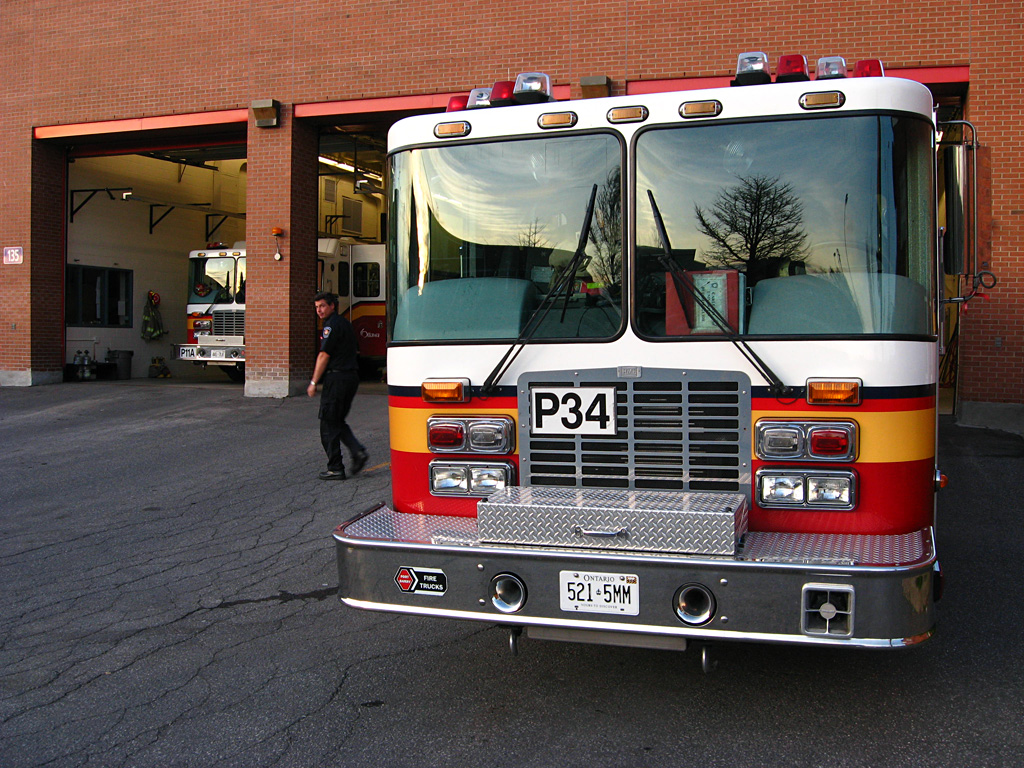
My friend Mark sent me a link to a book in progress about sustainable energy. One of the more interesting sections is on vehicle efficiency. The author stresses that, while some kinds of efficiency gains are physically possible, others are not:
Could we make a new car that consumes 100 times less energy and still goes at 70mph? No. Not if the car has the same shape. The energy is going mainly into making air swirl. Changing the materials the car is made from makes no difference to that. A miraculous improvement to the engine could perhaps boost its efficiency from 25% to 50%. But the energy consumption of a car is still going to be roughly 40 kWh per 100 km.
The story is a familiar one: efficiency can get you a long way, but there are no free rides. Another interesting comment from this chapter is the major design differences between an efficient city car and an efficient highway car. Since the former is always stopping and starting, low weight is really important. Brakes that regenerate energy also make a big difference. For a highway car that avoids major acceleration and deceleration, the most important thing is reducing drag. Weight is comparatively trivial.
One other interesting assertion is that the energy involved in making a car is actually pretty trivial compared to the amount used in driving it around:
The energy cost of making the raw materials for a one tonne car is thus equivalent to about 3000 km of driving; an appreciable cost, but probably only 1% of the lifetime energy-cost of the car’s fuel.
If correct, that makes it seem a lot more reasonable to upgrade from an old and inefficient vehicle to a newer and less gas-thirsty model. It also suggests that government programs to replace inefficient cars with better ones might have strong justification, in terms of climate change mitigation potential.
In order to move to a low carbon society, we need to do a slew of things. We definitely need to increase the energy efficiency of accomplishing most tasks. We definitely need to reduce the quantity of greenhouse gas produced in the process of generating a unit of energy. We probably need to significantly reduce total energy consumption. Finally, we need to take actions that manage the greenhouse gasses that will inevitably be produced by some actions. The protection and enhancement of carbon sinks (mostly forests and soils) are essential for this.
When it comes to reducing total energy usage, the chapter does make one excellent suggestion: “a cyclist at 21 km/h consumes about 30 times less energy per kilometre than a lone car-driver on the motorway: about 2.4 kWh per 100 km.” Those who cycle more slowly are likely to be even more efficient, since doubling the time it takes to travel somewhere apparently reduces energy usage by three quarters.

Planes
“Half of the work done by a plane goes into staying up; the other half goes into keeping going. The fuel efficiency at the optimal speed, expressed as an energy-per-distance-travelled, was found in the force (C.18), and it was simply proportional to the weight of the plane; the constant of proportionality is the drag-to-lift ratio, which is determined by the shape of the plane. So whereas lowering speed-limits for cars would reduce the energy consumed per distance travelled, there is no point in considering speedlimits for planes. Planes that are up in the air have optimal speeds, different for each plane, depending on its weight, and they already go at their optimal speeds. The only way to make a plane consume less fuel is to put it on the ground and stop it. Planes have been fantastically optimized, and there is no prospect of significant improvements in plane efficiency.”
…
“Possible areas for improvement of plane efficiency
‘Laminar flow control’ (cunning trick for reducing drag a little). Flying wings: said to be 25% more fuel efficient. Propfans instead of turbofans? Said to be 12% more efficient for short journeys (less than 3000 km), but not for long journeys. They’re more efficient because the engine efficiency is greater.
Formation flying in the style of geese could give a 10% improvement in fuel efficiency (because the lift-to-drag ratio of the formation is higher than that of a single aircraft), but this trick relies, of course, on the geese wanting to migrate to the same destination at the same time.
Optimizing the hop lengths: long-range planes (designed for a range of say 15 000 km) are not quite as fuel-efficient as shorter-range planes, because they have to carry extra fuel, which makes less space for cargo and passengers. It would be more energy efficient to fly shorter hops in shorter-range planes. The sweet spot is when the hops are about 5000 km long, so typical long-distance journeys would have one or two refuelling stops. Multi-stage long distance flying might be abou”
…
“Earlier in this chapter, however, our cartoon made the assertion that the transport efficiency of any plane is about
0.3 kWh/tonne-km.
According to the cartoon, the only ways in which a plane could significantly improve on this figure are to reduce air resistance (perhaps by some newfangled vacuum-cleaners-in-the-wings trick) or to change the geometry of the plane (making it look more like a glider, with immensely wide wings compared.”
“40 kWh per 100 km”
This strikes me as very high, which seems to be the trend for environmentalists talking about cars, they just don’t seem to know anything about cars so when they come up with these estimates they don’t question them. What is a kwh? 746watts for an hour. Now, it’s a bit strange to talk about kwh per 100km, it would be easier to talk about kw per km/h, and since all I’m doing is taking the “h” and moving it across the equation (it becomes a division), there is no issue. Of course, you can no longer increase the other side of the equation because a cars resistence will go up logrithmically with speed, but then again, it’s impossible to give an “average” kwh per km because the kwh varies so drastically with speed.
For example, a really awful car like the Jaguar XJ-S (don’t worry Benn if you’re reading, I still think it’s pretty), uses about 50 “road horsepower” at 50miles per hour, and 80 “road horsepower” at 70mph. What is a road horsepower? It is the imperial unit equivalent to watts per hour. More accurately, 746 watts per hour.
So what’s 40kw for 100km/h? it would be 40/0.746 road horsepowers at 100km/h. That’s 53 road horsepower. Ok, so, fair enough. Maybe it is a reasonable number.
Still, there are vehicles today which use drastically less road horsepower at that speed. the LOREMO is a good example, its road horsepower figure isn’t quoted, but on the other hand it can achieve 160km/h with 20horsepower, which logically means its road horsepower at 100km/h is less than 10.
http://en.wikipedia.org/wiki/Loremo
We can expect that other cars in the extremely high miles per gallon range to have similar highway figures. The interesting thing about highway mileage is no tricks with batteries and electric motors tacked on can increase mileage – those help only when one is speeding up and slowing down again. Steady state motoring are a fairer test of a cars ability to pass efficiently through the air.
One more thing, “The energy cost of making the raw materials for a one tonne car is thus equivalent to about 3000 km of driving; an appreciable cost, but probably only 1% of the lifetime energy-cost of the car’s fuel.”
How many 1 ton cars do you know run for 300 000 km? 300 000 might be easy for a big family car that’s well maintained, but those weigh at least 1.5 tons. a 1 ton car is a city runabout in our world. The Loremo, however, might be an exception depending on its maintenance costs.
What… is the air speed velocity of an unladen swallow?
R.K.,
Estimating the Airspeed Velocity of an Unladen Swallow
Hashing out the classic question with Strouhal numbers and simplified flight waveforms.
Although a definitive answer would of course require further measurements, published species-wide averages of wing length and body mass, initial Strouhal estimates based on those averages and cross-species comparisons, the Lund wind tunnel study of birds flying at a range of speeds, and revised Strouhal numbers based on that study all lead me to estimate that the average cruising airspeed velocity of an unladen European Swallow is roughly 11 meters per second, or 24 miles an hour.
Tristan,
1. All the calculations are at the beginning of this chapter.
“Now, Ad is the volume of the tube of air swept out from one stop sign to the next. And ρAd is the mass of that tube of air. So we have a very simple situation: energy dissipation is dominated by kinetic-energy-being-dumped-into-the-brakes if the mass of the car is bigger than the mass of the tube of air from one stop sign to the next; and energy dissipation is dominated by making-air-swirl if the mass of the car is smaller”
2. As mentioned above, the book is still in progress. I am sure the author would be happy to correspond with you about such things.
3. One kilowatt-hour (kWh) is actually 1000 watt-hours, or 3,600,000 joules, or 3.6 megajoules.
Some comparative numbers from the book:
Car at 110 km/h: 80 kWh/(100 km)
Bike at 21 km/h: 2.4 kWh/(100 km)
Internal combustion engine train at 200 km/h: 2.9 kWh/(100 seat-km)
Transrapid train at 200 km/h: 2.2 kWh/(100 seat-km)
Airbus A380 at 900 km/h: 27 kWh/(100 seat-km)
Related posts: ground transportation.
The unit KWh per 100km is a bit strange. Why not just express the energy consumption in kilowatts? Why does everything have to be a static unit rather than a variable one?
I do understand what KW hour is, I just prefer to divide out hours and talk in kilowatts.
At the start of his book, he explains that he wants to explain all energy use in the unit most familiar to consumers. Since kilowatts are the only unit of energy we buy directly, it is what was selected.
“Since kilowatts are the only unit of energy we buy directly, it is what was selected.”
No, he is using Kilowatt hours, where he could be using kilowatts. Kilowatts are a power unit, and kiowatt hours are an energy unit. It is much easier to use units of power when we are talking about what it takes to push something along.
“Could we make a new car that consumes 100 times less energy and still goes at 70mph? No. Not if the car has the same shape.”
Anyone who thinks efficient cars are the same shape as non fuel efficient cars probably works for Chrysler and can be safely ignored. It seems to me that this question is deeply flawed. What does it mean for a car to consume 100 times less energy?
A gasoline engine converts the energy in the fuel into mechanical forward thrust with much heat loss – so it is inefficient. A gas turbine engine is much more efficient, but doesn’t adapt well to variable use situations. If we were happy to have slowly accelerating cars with a top speed of only 120km/h, we could run gas turbine engines and have huge increases in efficiency simply because the motor itself burned fuel more efficiently.
An electric engine in the wheel is very efficient at turning electricity into motor force, but batteries are heavy which means there is more car to “motor force” along.
Certainly the only non-nonsense way of interpreting the question is can we make vehicles which can travel along highways at seventy miles per hour while using an amount of energy which we can reasonably forcast to be cheap and plentiful. And to this question the answer seems to be an obvious yes. Cars like the loremo already achieve 5 times the miles per gallon of a normal family car. Thus, they could be operated if fuel prices were 20$ per gallon. Equiped with electric propulsion, the amount that electricity would have to cost to make it expensive to run this machine, would be the state of things only in a world where we used electricity to do almost nothing.
Cars that use around 10 horsepower, or 7kilowatts, to move them at a steady state of 100km/h, should cost 7 times the price of kilowatt hour to run. Currently, a kw/h costs a few cents. Even if it cost 2 dollars, it would cost 14$ to travel 100km. That is very similar to what it costs to run an SUV today (say 12 liters per 100km, at 1.20$ a liter – about 14$ per hundred clicks).
But, what would a world look like where the price of electricity was two dollars per kilowatt hour? Running a home computer, which draws say half a kilowatt, would cost a dollar an hour to run – that’s 12$ a day if it’s off half the time. Of course you can say the computer is effectively free to run because its a heater and its heating the room exactly as efficiently as a 500watt heater and that may be true, but who could afford to heat their house with electricity at this price? No one presumably.
The point of this argument is just to show that with existing technology, the idea that we can be priced out of driving is unfathomable.
More on vehicle fuel efficiency:
Fuel efficiency, climate change, and 2050
March 11, 2009
A prototype fuel-efficiency support tool
Mascha van der Voort, E-mail The Corresponding Author, Mark S. Dougherty and Martin van Maarseveen
An effective way to reduce fuel consumption in the short run is to induce a change in driver behaviour. If drivers are prepared to change their driving habits they can complete the same journeys within similar travel times, but using significantly less fuel. In this paper, a prototype fuel-efficiency support tool is presented which helps drivers make the necessary behavioural adjustments.
The support tool includes a normative model that back-calculates the minimal fuel consumption for manoeuvres carried out. If actual fuel consumption deviates from this optimum, the support tool presents advice to the driver on how to change his or her behaviour. To take account of the temporal nature of the driving task, advice is generated at two levels: tactical and strategic.
Evaluation of the new support tool by means of a driving simulator experiment revealed that drivers were able to reduce overall fuel consumption by 16% compared with ‘normal driving’. The same drivers were only able to achieve a reduction of 9% when asked to drive fuel efficiently without support; thus, the tool gave an additional reduction of 7%. Within a simulated urban environment, the additional reduction yielded by the support tool rose to 14%. The new support tool was also evaluated with regard to secondary effects.
Southwest builds first ‘green plane,’ Ma Earth shows her gratitude
By utilizing recyclable InterfaceFLOR carpet, weight-saving seat covers and life vest pouches, a lighter foam fill in the seats and aluminum (as opposed to plastic) seat rub strips, the newfangled Boeing 737-700 ends up some 472 pounds lighter than a conventional one. The savings? 9,500 gallons of jet fuel per year. We’re not sure when the bird is expected to take her first voyage, but here’s hoping a few others are hatched in the near future.
I think the story above illustrates how challenging it is to make flying and climate change mitigation compatible.
It suggests that a 737 burns 9,500 gallons of jet fuel per 472 pounds of weight per year. While cutting one 472 pound increment is good, the rest of the plane has a maximum takeoff weight of about 140,000 lbs. That’s equivalent to 2.8 million gallons of jet fuel per year, and emissions of about 25,562 tonnes of carbon dioxide per year – as much as about 1000 average Canadians.
(140,000 / 472 * 9,500) * (about 20 lbs of CO2 per gallon of fuel) * (0.453 pounds per kilogram)
Flight management aids aviation emission cuts
The quickest way to cut emissions from aircraft could be better flight management rather than new technology, an Oxford University study has found.
Better air traffic control determining how, when and where planes fly could help quickly achieve significant emission cuts.
These include more direct flight paths to airports and less waiting to land.
These are the “low-hanging fruit” compared to technology improvements and existing biofuels, said Dr Chris Carey.
“And they are measures that governments could make a condition of using their airspace,” said Dr Carey, aviation expert at Oxford’s Smith School of Enterprise and the Environment.
Chris Goater of the Civil Air Navigation Services Organisation (Canso) agrees.
“Air Traffic Management plays an important role in reducing emissions,” he says, pointing out that emissions could be cut by between 5% and 8% as a result of improved logistics.
Other initiatives should help the aviation industry ensure “emissions are reduced to 50% of 2005 levels by 2050”, he said.
“Tyres account for about a fifth of the energy required to power a car. They provide friction, so the vehicle can grip the road, but some of the power supplied to the tyres is lost as heat. Indeed, Michelin, a French tyremaker, estimates that this “rolling resistance” accounts for 4% of the world’s carbon-dioxide emissions. Tyre designers have therefore sought to improve fuel economy by reducing rolling resistance. However, this not only reduces a tyre’s ability to grip, making drivers take corners sideways, it also wears out the tyres more rapidly.
Such disadvantages may now be overcome using chemical engineering and the clever design of new materials made from tiny structures just a millionth of a metre across—dubbed “nanocomposites”—along with “metamaterials” that let engineers build microstructures into tyres. Such innovations could, for example, enable the inner lining of a tyre to have a special coating that helps retain air longer, while the tread would contain a compound that lets it provide the right amount of traction where the rubber meets the road.”
“But two factors have made it hard for Airbus and Boeing to continue sitting on their hands. First and most important are the strides made by engine manufacturers of late, led by Pratt & Whitney. These have made it increasingly difficult for the pair to argue that airlines should be satisfied with the incremental improvements in efficiency of 1-2% a year that they eke out of their existing designs. Last year P&W’s engines powered just 1% of mainstream commercial airliners compared with around 9% a decade ago. In an attempt to force its way back into the market, it is betting everything on its revolutionary “geared turbofan” (GTF) engine (pictured above), which it claims is 10-15% more efficient than conventional jet engines. Airbus conducted a successful trial of the GTF 18 months ago. Meanwhile, CFM International, a joint venture between GE and SNECMA which provides engines for more than 60% of Boeing’s and Airbus’s planes, is promoting a rival design called Leap-X. Rolls-Royce, too, is developing a new offering.
The second factor is that potential competitors to the A320 and the 737 which make use of these new engines are emerging. The GTF will power Mitsubishi’s new regional jet, as well as Bombardier’s new CSeries, a 110-130 seat (and potentially 150 seat) medium-range aircraft that has 90 firm orders, the latest coming from Republic Airways last month. The CSeries has had a long and difficult birth, but should enter service in 2014. It has been designed to win a chunk of the smaller end of the narrow-body market by offering 20% greater efficiency than the A320 or 737.”
Monitor
Powering up
Jet engines: A nifty new engine design promises to improve combustion efficiency, thus cutting fuel consumption and reducing emissions
Sep 2nd 2010
The approach taken by R-Jet involves having the air and hot gases in the combustor rotate with the compressor and turbine. To achieve this, the company uses what it calls an orbiting combustion nozzle (OCN), which turns with the compressor to inject the air into the combustion chamber as a vortex. The vortex is maintained by blades that rotate on the inner casing of the combustor. This swirling action helps mix the air and fuel for a more complete and much quicker combustion. The hot gases then exit, also in a vortex, to drive the turbine.
This, says Dr Lior, eliminates the need for the two sets of static blades. That means an OCN engine can be built more cheaply with fewer components. It would also need to be only half the size of a conventional jet of similar power, says Dr Lior. The engine would use at least 25% less fuel and, he claims, its emissions of carbon dioxide and nitrogen oxide would be cut by three-quarters because of its unique ignition properties.
Monitor
Gently does it
Motoring: Spies on the dashboard can teach people to drive more economically—and tick them off if they fail to do so
Sep 2nd 2010
SOME people always take things to extremes. For those trying to save fuel there is hypermiling, in which the really dedicated try to use less than 4.5 litres/100km (ie, travel more than 80 miles on a gallon) in a car that under normal use might do only half as well. Apart from driving very slowly and trying not to use the brakes (which dissipates energy), hypermilers employ other tricks, such as wiring the fuel injectors up to lights mounted on the dashboard so they can see whether or not they are squirting fuel into the cylinders. Although this is all too much trouble for most motorists, the hypermilers do have a point: driving technique plays a big part in how much fuel a car consumes. Now various devices are being used to help teach more moderate ways of driving economically.
Not surprisingly, companies that operate fleets of cars and trucks are among the first users of fuel-saving “eco-assist” systems. The most popular of these are global-positioning system (GPS) units that use live traffic information and other data, such as weather and past trends, to plot not the fastest but the most economical route to a destination at a particular time. According to iSuppli, a Californian research firm, fewer than 1% of new cars have such “eco-routing” systems fitted, but it expects that by 2020 a third will.
“Which leaves engines as the best way to improve fuel economy. The Airbus A320 NEO will be a premium version offered with a choice of two engines boasting new technology. One is the geared turbofan (GTF), a new type of jet engine from Pratt & Whitney, part of America’s United Technologies group. This engine uses a gearbox to allow the fan at the front and the turbine at the back to run at different, but optimal speeds. This, it is claimed, results in fuel savings of up to a fifth. The other engine is the Leap X, from CFM International, a joint venture between America’s General Electric and France’s Safran. It uses composites to reduce the weight of the engine.”
The aircraft of the future
Plane truths
How to build greener planes that airlines will actually want to fly
FRUSTRATING as air travel might be for the average punter, there is no let-up in demand. By 2014 the number of journeys made by individual passengers is expected to reach 3.3 billion, from 2.5 billion in 2009. In part, this is a consequence of the falling cost of flying: ticket prices have dropped by 60%, in real terms, over the past 40 years. But keeping prices low and finding more aircraft to cram all these people into is not the only thing the airline industry has to worry about. It must also clean up its act. Aviation is a small but growing contributor to global warming, responsible for 12% of the carbon dioxide emitted by means of transport. And even were that not so, fuel is one of airlines’ biggest costs, so there is a strong incentive to burn less of it. In the case of fuel economy, then, virtue really is its own reward.
Not surprisingly, aircraft are already a lot more efficient than they used to be. The first Boeing 737 was launched in 1967 and could carry about 100 passengers 2,775km (1,725 miles). A modern version, the B737-800, can carry nearly twice as many passengers twice the distance, while burning 23% less fuel (48% less on a per-seat basis). More efficient turbofan engines, lighter structures, various aerodynamic tweaks and the development of sophisticated flight-management systems have brought about this improvement. The aircraft themselves, however, still look much like they always have done: a cigar-shaped fuselage with a big tail, powered by pod-like engines hanging from a pair of protruding wings. Some aircraft designers now believe that just about all the efficiency gains available have been wrung from this traditional shape, and that for a further big cut in fuel consumption a new type of airliner is needed.
Despite all these restrictions, two groups working on the future of aircraft have come up with designs that could meet the practical needs of the industry and still cut fuel consumption by half. These researchers, at the Massachusetts Institute of Technology (MIT) and Imperial College, London, rely largely on existing technologies for many of their designs.
…
Improving airflow over the wings is also crucial. Laminar (in other words, smooth) flow is preferable to turbulent flow, since turbulence creates drag. An aerodynamically perfect wing would have laminar flow from its leading edge all the way to the rear. But wings are not perfect, and at some stage the air turns turbulent. As a result, roughly half the fuel required to maintain a level cruise is being burned to overcome the drag imposed by a turbulent boundary layer.