Bug report thread

Found something wrong with a sibilant intake of breath or an associated site I run? Please report it here. I try to get everything operating as well as I possibly can, but there will always be oversights. Right now, when people report them, they tend to do so all over the place and it’s hard to keep track.

This covers all types of errors not directly related to a particular post: compatibility errors, access errors, formatting errors, etc.

Those who contribute here will earn fame and fortune. Well, my appreciation, at least. If you posted an unresolved issue on another post, please copy it over here.

Many thanks.

[Update: 8 October 2006] This is no longer the proper location for reporting bugs. From now on, use the bug reporting page within the Sindarkwiki.

[Update 2 September 2010] Unfortunately, due to terribly spam problems, I had to lock down the wiki. Now, only authorized users can edit it. For anybody else, please post any problems with the site on this comment thread.

Oxford bloggers’ gathering: May 31st

After another debate about dates and locations, the following compromise has been reached for the third quarterly Oxford bloggers’ gathering:

Place: The Bear
Date: Wednesday, May 31st
Time: 8:00pm

As with the previous two such assemblies, anyone who runs a blog from Oxford is most welcome. Feel free to indicate the intention to attend, by means of a comment.

Pitt Rivers Redux

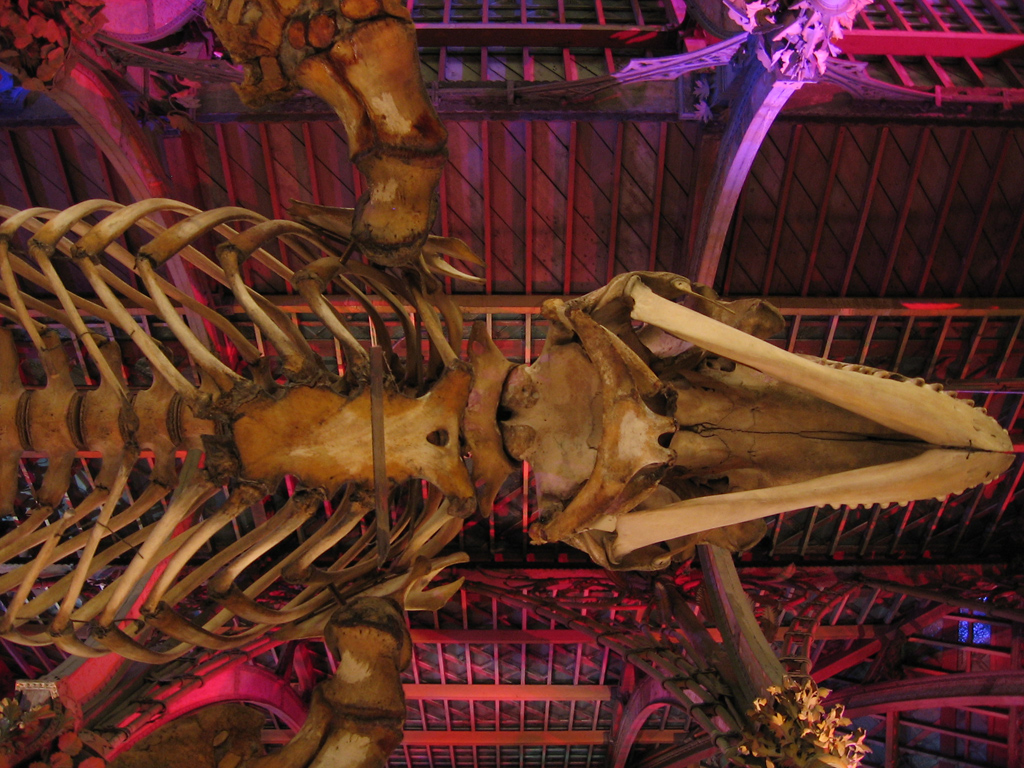
Orca skeleton

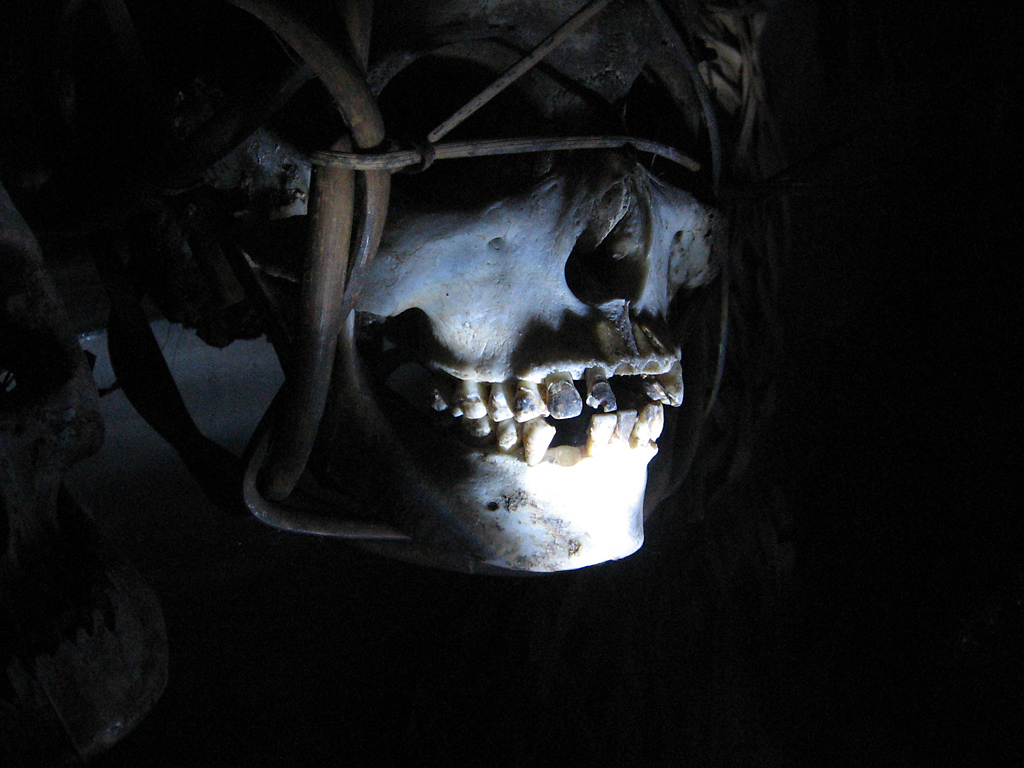
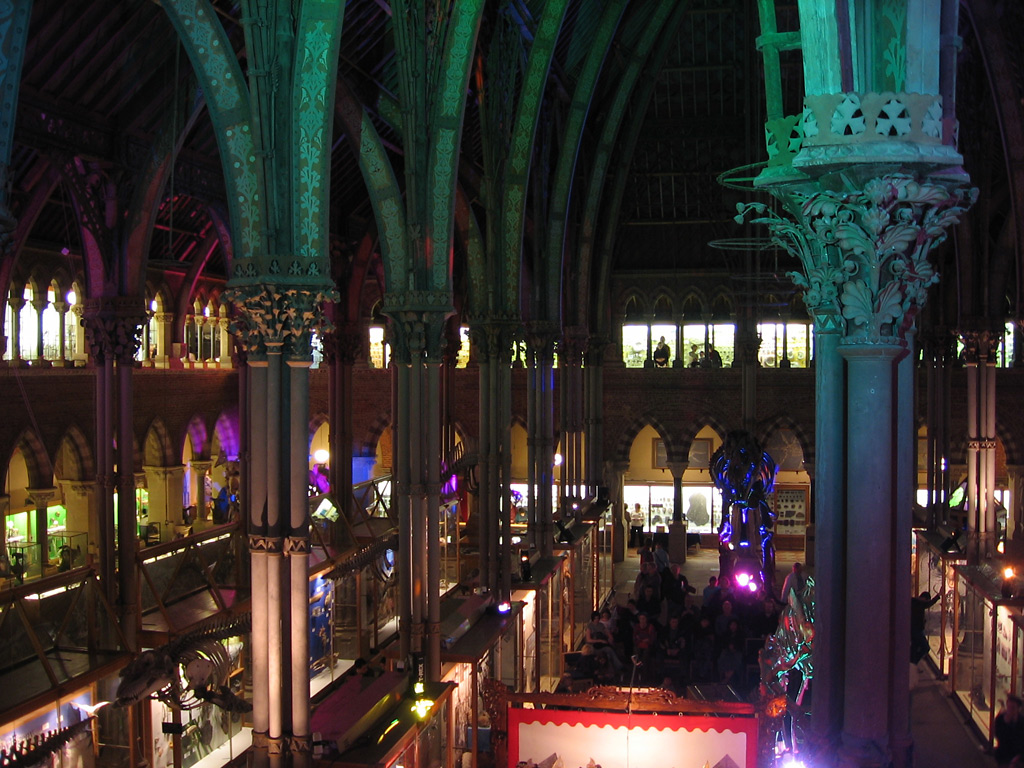
At the Natural History and Pitt Rivers, there was a kind of luminous open house tonight – with less frantic versions of the kind of lights used at dances, as well as shadow theatre with extensive musical accompaniment and torchlit wandering sessions through the Pitt Rivers collection. Many thanks to Antonia for the invitation and accompaniment.

Skull in Pitt Rivers Museum

The large number of people present marked this out as quite a successful event. It definitely changed the way in which you experienced the place, and the items therein. Also entertaining was the 1918 version of the film 20,000 Leagues Under the Sea they were screening. It’s odd how it is so accurate in some regards, and so laughably wrong in others.

Natural History Museum with unusual illumination

PS. Walking home through Oxford at midnight on a Saturday in the spring is not recommended for those who are single and unhappy about it.

Animal testing in Oxford

For about an hour today, I spoke with Lee Jones while he was handing out Pro-Test leaflets on Cornmarket Street. For those outside Oxford – or those who have spent the last few months in a local cave, with fingers in their ears – Pro-Test is a group which promotes the use of animal testing in medical research, in opposition to groups like SPEAK and the Animal Liberation Front who have been agitating against the animal lab that is under construction near Rhodes House. Along with legitimate protests and demonstrations, some anti-testing groups have threatened construction workers and members of the university, as part of their campaign to stop the lab from being built. Similar protests in Cambridge led to the cancellation of an animal lab project there.

I do believe that animals are morally considerable, to a certain extent. That’s part of why I refrain from eating them. I don’t think there’s a rational basis for a harsh divide between humans and other animals. That said, there is a balance of competing moral claims. We need new antibiotics to deal with resistant bacteria. We need vaccines for HIV/AIDS and malaria. Oxford is the only organization in the world presently conducting second stage clinical trials on vaccines both both malaria and HIV/AIDS, as well as new treatments for tuberculosis. We need new surgical procedures and drugs to limit the harm caused to people around the world by infectious disease: a far more lethal phenomenon than war and terrorism put together. Developing all of these things fundamentally requires limited usage of animal testing. No computer models are adequate for dealing with the sophistication of animal biochemistry; likewise, it is irresponsible to test drugs and procedures on human beings, even volunteers, before basic toxological and side effect screenings have been completed.

Protections for laboratory animals in the UK are already extremely strong: far, far more robust than sanitary and ethical guidelines in the factory farming industry (which should be the real target for those concerned about animal cruelty). While alternatives to animal testing should be investigated, and employed where appropriate, the moral imperative to lessen the suffering caused by disease requires the continued development and use of facilities such as that under construction at Oxford.

Those interested in hearing Pro-Tests side of the story should consider attending an open public meeting on Monday the 22nd. It is happening from 7:00 to 9:00pm at the Oxford town hall and will include presentations from scientists, a Member of Parliament, and members of Pro-Test. They are also holding a demonstration on Saturday, June 3rd – starting at 11:45am on Parks Road.

Draft research design paper introduction

Preamble

‘Policy making’ can be understood as the application of judgment to problems, on the part of those empowered to make choices that will affect the matters in question. Global environmental policy making, in particular, involves heightened difficulties related to the process of acting upon the world. Firstly, with regards to such large and complex matters as climate change and the management of ecosystems, our understanding of the objective nature of the world is uncertain. This applies both to the functioning of the natural world in the absence of specific human prompts and to the impact that choices made by human beings and organizations will have within the context of natural processes. On the one hand, for instance, we have an imperfect understanding of the functioning of food webs in the absence of human involvement. On the other, we have an incomplete understanding of the effects of pesticide use on those processes.

The major vehicle through which questions about the nature of the world and the consequences of human action are accessed is science. ‘Science’ exists as a collection of methodologies, epistemic communities, and ideals. While the role of science as an entity involved in policy making may seem initially straightforward, complexities arise rapidly. Crucially, these involve the balance between making judgments about ontological questions under circumstances of uncertainly and the balance of making judgments between alternative courses of action. On one hand, for example, scientists can assess the distribution of fallout from atmospheric nuclear tests conducted above islands in the Pacific; on the other, groups of concerned scientists can call for the discontinuation of such tests.

The perceived appropriateness of each of those roles, on the part of scientists, is reflective of the credibility of scientists as individuals and members of communities and organizations, as well as the political understandings that exist about the relationship between expert knowledge and power. All viable environmental policies must be created in light of existing and emerging expert knowledge, but the question of arbitration between descriptive and prescriptive claims is one that raises fundamental issues about how science and policy do, can, and should relate.

The question

This thesis will examine the relationship between science and global environmental policy making on two conceptually separable but intertwined levels. It will so so firstly on the practical level of how environmental science and scientists have been involved in the development of laws and institutions and secondly at the more theoretical level of the understood relationship between the actual communities and idealized roles of scientists and policy makers. While the general answers for each level will be generated through different methodological means, it can be hoped that the insights generated will be mutually reinforcing.

In order to engage with the practical questions of how science has affected policy making, this thesis will examine two case studies: the 2001 Stockholm Convention on Persistent Organic Pollutants and the 1997 Kyoto Protocol to the United Nations Framework Convention on Climate Change. The first can be seen as an example of a mechanism where a scientific understanding emerged of the issue in question and a reasonably effective legal regime for its mitigation emerged. The second example demonstrates a situation in which, for reasons which shall be examined, a similar progression from issue identification to effective policy action has not taken place. The contrast between the cases will hopefully allow for the isolation of important variables, on the basis of the comparative study of preparatory documentation and the first-hand impressions of the participants.

The theoretical component of this thesis will use the controversy surrounding the publication of Bjorn Lomborg’s The Skeptical Environmentalist in 2001 as a starting point for addressing the internal debate within the scientific and policy communities about the role that science and scientists should play in the making of decisions that entail both potentially enormous costs and equally serious risks. The theoretical discussion will also involve the examination of the secondary literature on the philosophy of science, as well as the relationship of science and policy in related fields: such as global health and development studies.

The thesis will consider the competing hypotheses that the general understanding of science as a descriptive adjunct to the prescriptive policy making process is broadly valid, that is is overly simplistic given the multifaceted nature of the epistemic communities involved, and that it might be a fundamentally inappropriate way of representing a corpus of thinking, institutions, and individuals which is actually incapable of operating without concealed normative maneuverings. These possibilities will be assessed through consideration of the examples listed above, as well as the analysis of primary and secondary documentation.

See also: Research design essay planning (15 May 2006)

Deflated oval

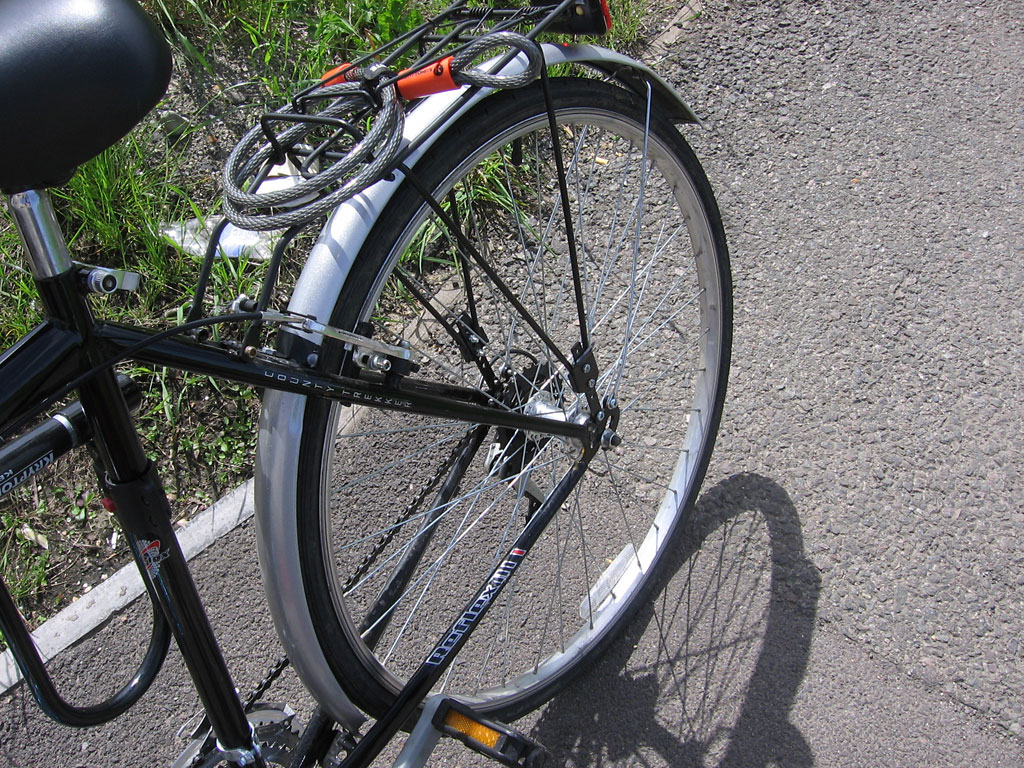
Flat hybrid bike tire

On account of the gorgeous weather early this afternoon, I took a break from the research design and great powers/unipolarity essays to go cycling. Having already gone out and back to the north and south, I decided to head out west from central Oxford, then divert north, east, and then back south to Church Walk. I went 27km all told, along a route resembling a misshapen oval. Starting by passing under the train tracks beside the Oxford station, I rode west through Botley and Farmoor, before diverting mostly north to Eynsham – where sandwiches were secured. From there, I took the A40 to Cassington.

At the top of the long arc, north of Oxford, I had the misfortune of suffering a puncture in my rear tire. Nervous about ruining the wheel, I walked the bike just shy of six miles: from between Cassington and Yarnton, back into north Oxford. That was necessary because none of the buses entering Oxford from the north are allowed to carry bikes and years of educational videos made me too hesitant to try hitchiking, despite having recently read Kerouac. Thankfully, I was able to do reach Church Walk just before it began to rain.

Fixing a punctured rear tire exceeds my bike maintenance experience. The need to deal with the derailleur is a complicating factor. Additionally, my bike pump has been missing for weeks and I don’t have a suitable wrench, nor plastic levers for the removal of the tire. I will find out how much it would cost to have fixed in a shop, before I decide whether or not to make an oily attempt at it myself. I have already searched my room and all common areas of the house at least three times for the pump, without luck. I’ve also interrogated my roommates and pondered who I could possibly have lent it to. I distinctly remember telling someone that I had my doubts about whether it was really high pressure enough for road bike tires, but that they were welcome to give it a try…

Where to next?

While peeking at the Ryanair website the other day, I was startled to see that they have flights to Dublin for nothing but the price of taxes. You need to book two weeks in advance, but can do so for any time between the end of this month and mid-October. Similarly inexpesive flights can be had to Berlin, Krakow, Rome, and a great many other places I would like to visit.

If at all possible, I would like to work three or four week-long European trips into the time period between the end of Trinity Term and the start of the next Michealmas Term. Istanbul is my top choice of destination at the moment. I am not particularly keen on travelling alone, so I am hoping that similarly inclined people will emerge and I will have the chance to travel with them. As the experiences in Tallinn with Sarah and in Malta with my mother demonstrate, it is much more satisfying to travel with company. Doing so deepens the extent to which you engage with what you’re seeing, provided the other person is similarly interested.

If people were going to choose four European cities to spend a week in, staying in hostels and adopting the museums-and-wandering school of inexpensive tourism, which would they be? Photogenic cities are especially welcome. Of the ones listed above, I’ve only been to Rome. I’ve also never been to Paris, despite having spent brief periods of time in France on several occassions. Of course, going somewhere where I know someone is definitely preferable; such local knowledge is generally invaluable for a traveller.

PS. Yes, my newfound and abiding interest in getting out of here is related to having to write an essay on the topic “What today defines a ‘great power’? Are we living in a unipolar world?” as well as my research design essay in the next week or so. I have an increasingly scary looking annotated bibliography that I mean to put at the end, instead of just a generic alphabetical listing of sources.

2 Church Walk burgled

Sometime between midnight and 2:00am last night, somebody pried open my roommate Kai’s locked window and stole his laptop. Thankfully, it is covered by the college’s insurance policy, though he still lost about a month’s worth of work – including draft work on the research design essay. With the police arriving at around 4:00am and leaving after 5:00am, accompanied by the sounds of early morning birds, it was another very late night. Given that Kai had to catch a bus to the airport at 8:00am to fly back to Germany, that is especially true for him.

This is the second laptop belonging to a member of the M.Phil in IR program to be stolen from a house on Church Walk this year. It’s enough to make you rather nervous, especially since those of us with rooms on ground level with large windows can do relatively little to deter theft. I shall, at least, resume my practice of twice-weekly backups to the DPIR terminal server.

Brick

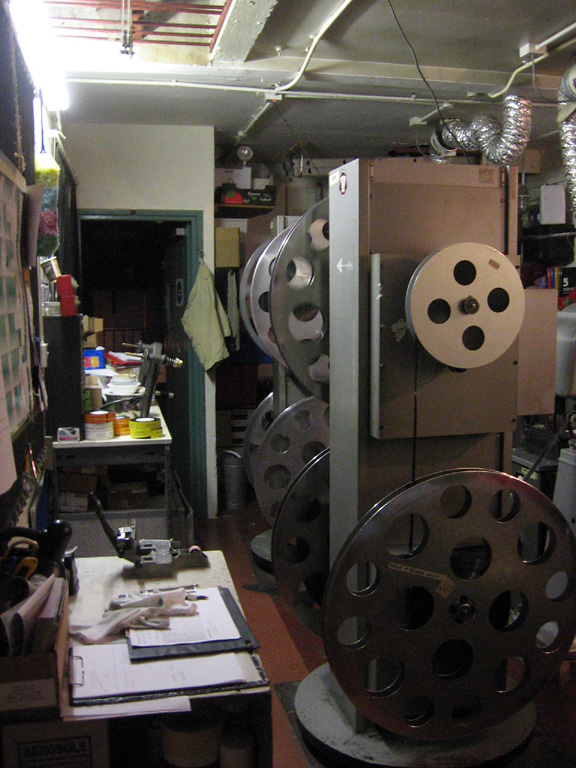
Projector at the Phoenix Cinema, OxfordTonight, for the first time ever, I saw a film in a theatre in the United Kingdom: Brick at the Phoenix Cinema in Jericho. If pressed, I would call the film a kind of satire of your classic gangland genre. The characterization, plot, and dialogue are all similar to those films, though this one is set among a group of high school students. In one scene that depicts the protagonist and a Vice-Principal in a kind of police officer/informant dynamic, the comic elements of the satire are most apparent. At other times, the brutality of the film made the possibility that it was made with some kind of comic intent seem very distant.

Billed as a successor to Donnie Darko, I thought that Brick was more clever, all in all. At least it didn’t involve the agony of some of that film’s attempts at humour. To me, Donnie Darko had too much of what might be termed ‘LiveJournal angst’ – the sort that seems extremely authentic to the person experiencing it, and perhaps people in very similar circumstances, but which fails to travel beyond there and seems shallow for it. By contrast, Brick portrays teenagers as almost hyper-confident and self assured. They speak and act with a directedness quite at odds with the experience of adolescence.

In the end, the film is an experiment that doesn’t always work. Some of the visuals are intriguing, just as some of the dialogue is a clever take on film noir. At the same time, some of the characters lack any clear motivation and the reasons for layering that kind of plot onto these actors and this setting is never entirely plain. This sort of film is certain to find resonance with some people, and in this case is clever enough, on the mean, to deserve it.

Career and personal planning

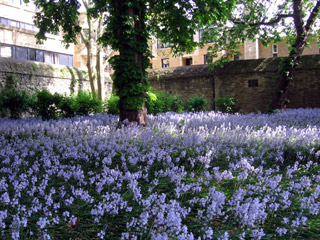
Flowers in Wadham College

While it may seem premature for someone with a year left in a master’s program, I have been thinking a lot lately about what is to follow Oxford. There seem to be two major possibilities, each with numerous sub-options. The first is to proceed directly into a doctoral program, provided I can get accepted. The second is to work.

Keep studying

The possibility of doing a D.Phil at Oxford is not one that appeals to me. While they are shorter than degrees in the United States – probably three years compared to five or six – they don’t include the near-automatic funding that is part of PhD programs at good American schools. Another consideration is the relatively small amount of teaching experience that is usually part of a D.Phil. Applying to work in an academic context, which is one of several possibilities I am considering, would almost certainly require such experience, in the form of a PhD or post-doc. A final consideration that I will mention here is the weak integration between the Department of Politics and International Relations at Oxford and organizations like the Environment Centre.

For a number of reasons, my top choice for a PhD program at the moment is Columbia. The idea of living in New York is appealing, especially if it would be for such a long period of time, and everyone I’ve spoken to says that Columbia has a good integration between policy and science departments. Naturally, I would need to investigate much more and choose a specific program before applying. Other appealing schools in the United States include MIT, Stanford, and Harvard. Again, I would need to do a lot more investigation before choosing a specific school or program.

The appeal of the PhD option is partly in familiarity. I’ve been in school for twenty consecutive years now, if you count French pre-school. Also, I am concerned that if I go off and do something else, I won’t be able to muster the will to return to academic study.

Work

Work is a much more uncertain prospect. I’ve had a huge number of jobs in my life, all of them fairly menial, I’ve been a janitor, worked in a juice bar, worked as a cashier, sold computers, photocopied and faxed documents for a law firm, worked in a bird sanctuary and for two summer camps, delivered newspapers, conducted telemarketing for a number of charities, done research, soldered components onto circuit boards, assembled and configured computers for an office, sold alcoholic drinks, and served as the subject of scientific experiments. Last summer, I applied unsuccessfully to work at Starbucks. Through all that, I’ve never had a ‘real’ job. By that, I mean a job that I didn’t have the intention of quitting at some pre-specified point in the future. Also, a job with any kind of prospect for advancement.

Fields of interest to me are governmental, quasi-governmental, and journalistic. Examples of each would be working for Environment Canada, the United Nations Environment Program, and The Economist, respectively. I have my doubts about how well I would do in a very bureaucratic context. During the more stressful and frustrating times at Oxford, journalism has seemed an incredibly interesting option. It would allow – indeed require – writing and traveling, and it would probably offer a substantially different perspective on things.

The appeal of the work option is that it would let me try something other than school. It would probably allow me to start paying down whatever level of debt I ultimately take on from Oxford. Also, it would give me a bit more balance and make me feel more equally experienced with the many people in this program who have worked for banks, the UN, or some such place.

Conclusions

I’ve told many people so far about my eight year plan for things I mean to do before I am thirty. The key planks are to finish school, travel to almost everywhere, and write a book. Naturally, there is some tension between the three. Doing a PhD in the right way could allow for all three things to be done. Likewise, leaving formal education at an M.Phil and starting to work for an organization that involves a great deal of travel. All this should be kept at least in the back of my mind over the next year, so I’m not simply left in Vancouver in the summer of 2007, with no plan for what is to follow.