Knowing basic stats is not good enough for card games

Beads in Nora and Kelly's window

Many thanks to Nora and Kelly for an excellent dinner at their new flat: across the Folly Bridge from St. Aldates’. Afterwards, along with Bryn, we played a number of hands of Spades – a game with which I was previously entirely unfamiliar. It strikes me as inevitably highly statistical. There is a set probability to every 13 card hand, moderated through the scoring system. On the basis of limited information from a partner, you must play many iterations of a supergame, based on a defined collection of possible outcomes for each game, with appropriate scoring attached. The objective is to acquire points at a higher rate than the other team, until a certain threshold is crossed.

Two major kinds of decisions exist in the game: bidding decisions, and the decision of which card to play. Both are fundamentally strategic, though the first is based on a combination of the probability of your hand, in certain important ways, and on the rules related to winning or losing any one iteration (13 tricks). The second is based on similar probabilities, plus knowledge about previous hands (card counting), plus rules about winning tricks. While I could understand the general dynamics involved, I had neither the concentration to count cards, nor the insight to begin comprehending the emergent properties of the rule set. There are some rules, like the special set associated with nil bids, that add considerable extra complexity to the game, at least as comprehended by a somewhat addled beginner’s mind. Even so, it was fun to play, and I appreciate my fellow players for introducing it.

With a certain perverse logic, I take pride in the fact that Spades is probably a game that can be played as well by a computer as by the best human. Since it’s a collection of computable problems, it seems as though a collection of RAM and transistors should set the bar which the best humans approach. Since we define the ‘real’ difficulty of problems according to the amount of challenge they present to all available resources, and since computers can be programmed by relatively inexperienced statisticians, Spades can be branded as a less-than-enormously-complex game, even by someone completely inept at it. Isn’t rationalization amazing? I suppose when we’re just one century’s worth of random collection of molecules (if we are quite lucky), we need some logical path to not get overwhelmed with our own limitations.

PS. From all I have heard, the Arctic Monkies are an unusually talented new band (I can see all those more clued-in on the music scene laughing at me for saying it. Why not say: “I think this Led Zeppelin group has some ability?”). Trying to keep up with a dozen dozen different areas of human involvement, I cannot be at the crest of every wave. All that said “When the Sun Goes Down” is surprisingly melodic, despite somewhat a somewhat abrasive chorus.

PPS. It looks like I may have three new tutorial students over the first three weeks of August. I am thinking of going to Dublin for the fourth week, then flying straight from there to Prague for the first week of September. It would save me all the cost and bother of coach travel from Oxford to London to random-airport-for-cheap-airlines.
On editing: a noble task and profession

Editing

The academic stages of my life have involved a huge amount of editing. I have read countless essays written by friends, papers submitted to journals, chapters destined for books, scholarship essays, and the like. It seems to me that there are three major types of editing that occur: low level, high level, and contextual.

Low level editing is what I have been doing for the last three hours: the careful reading of someone’s written work, with the major aim of identifying minor errors of spelling and grammar. The remit frequently extends to include the identification of sentences that are particularly unclear or otherwise problematic. Low level editing is distinguished by the fact that large amounts of knowledge about the topic of the work being edited are rarely required. Knowing terms of art can be an asset (those who do not often misunderstand how they are to be used), but I am essentially capable of giving a low level edit to anything written in the social sciences or the humanities.

A high level edit is much more intellectual. Alongside language, argument is evaluated. Contradictory evidence might be brought up; logical flaws might be highlighted. A high level edit usually incorporates a low level edit, but need not do so. A high level edit is rarely effective or comprehensible to the person whose work is being edited without one or more conversations. While a low level edit might get you thanked in a block of names in the acknowledgements section of a book, enough high level edits might get a book dedicated to you. Indeed, I am personally extremely grateful to people who have done high level edits of things I have written over the years: particularly Kate Dillon, Meghan Mathieson, Tristan Laing and Ian Townsend-Gault. Virtually everything important that I’ve written in the last five years has passed an inspection from at least one of them.

Contextual editing is the kind I have done least. It is the process of adapting a written work to fit into a particular place: whether a journal, a book, or somewhere else with specific requirements for length and content. I’ve done a lot of that on the fish paper – as well as when I worked for the international relations and history journals at UBC. Contextual editing has the virtue that it generally takes the quality of text and argument in the original piece as settled. It has the pitfall that it is generally an arduous process of sorting, summary, and re-jigging that is rather less rewarding than either of the other sort of edits.

Anyone who has ever been irked to see a tense or pluralization error in the middle of a huge academic tome might pause to consider the amount of error checking that goes into such things. The essential fact is that the brain that wrote a sentence is often badly placed to pick out any flaws within it; they have long-since been papered over in the mind of the author. With regard to errors in books, I have certainly noticed a great many such things myself. These days, I am likely to angrily correct them with a four-colour pen. I tip my hat to all the friends, spouses, significant others, teachers, and supervisors who have reduced the number of times it takes place. You are true heroes of the intellectual process.

Happy Bastille Day

Canal boat

Thesis reading is progressing reasonably well, amidst all the other tasks in need of completion. I am reading Economics, Ethics, and Environmenal Policy: Contested Choices: a collecton of essays edited by Daniel Bromley and Jouni Paavola. It is somewhat general, but still informative. My intention is to try and sneak a reasonable amount of normative matter into my thesis, in whatever form it ultimately adopts. Sorting that out is my top academic priority at the moment.

The order of business tomorrow is research assistance work. Probably, I will immerse myself in the department with a copy of EndNote and a few of the mysterious coffee/hot chocolate beverages that the machine in the common room dispenses for 30p a piece. More than once, they have helped me bounce a few more notches towards wakefulness before one of the core seminars. Without those two-hour gatherings of classmates and instructors, Tuesday mornings seem rather pointless.

Frontier justice

In other depressing news, there are apparently two Americans: Daniel Strauss and Shanti Sellz, who are being charged for transporting three illegal migrants trying to cross the US-Mexico border to a hospital, when they were dying of thirst. They face up to 15 years in prison and $500,000 in fines.

Legally, the case seems quite clear cut. The defence of necessity allows you to break the law when doing so serves some over-riding purpose. Someone with a suspended license can drive their critically injured child to the hospital, then get off the charge of violating the suspension by claiming that is was necessary to avert a far greater evil. Preventing three people from dying in the desert obviously overrides questions about the legality of assisting those attempting to migrate illegally.

What is most ironic is that the people prosecuting this case would almost certainly defend themselves as Christians – given that the prosecution can only be motivated by a desire for political point-scoring, and not being religious in America is politically suicidal. For would not Jesus himself have argued that if you come across a man dying of thirst in the desert, it is your Christian duty to report him to the proper authorities?

It amazes me that neighbouring democratic states with an increasing number of economic and institutional connections can nonetheless completely fail to accord the most basic ethic of due consideration to each other’s citizens. The prosecutors should be ashamed of themselves, and these charges should be summarily dismissed.

PS. Amnesty International has a campaign on this.
It is also being discussed on MetaFilter.

Violence around Israel

As is so often the case, it is only with the greatest of dismay that one can read headlines from the Middle East at the moment. What baffles me is that I cannot see what anyone hopes to gain from this looming conflict. Kidnapping Israeli soldiers is a good way to provoke massive retaliation (or provide justification for attacks planned before the kidnapping). At the same time, what Israel really hopes to achieve through incursions into Gaza and Lebanon is unclear. Almost certainly, there actions are further imperiling the hostages. The only comprehensible reasoning I can come up with is that the Israelis fear that anything less than a massive response to these kidnappings would encourage more.

The prospect of large-scale violence in the region, including considerable loss of life, is increasingly real. I am suspect that covert diplomatic efforts are being made on the part of the United States and others to urge greater restraint upon Israel, though a public condemnation seems pretty unlikely.

The only possible solution in the region is normalized relations between Israel, its neighbours, and a viable Palestinian state comprising the great majority of the West Bank and Gaza. The prospects of that point being reached are in the process of receding far off into the distance. And we can really do is hunker down for more bloodshed, while watching the oil producing nations (including Canada) rub their hands together in greedy anticipation of the further windfall from turmoil-boosted prices ahead.

[Update]: The Economist on this (requires subscription)
Patrick Porter on Israel and Lebanon (via OxBlog)

Scotland prep: boots and midges

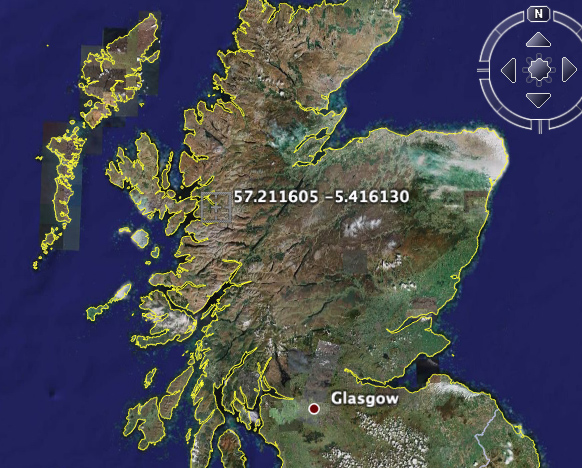
Whenever I mention the upcoming Scotland hiking trip, talk rapidly turns to the Scottish Highland Midge (Culicoides Impunctatus). From everything I have read, the end of July is definitely high season for midges, and these aggressive creatures can be maddening. Does anyone have experience with dealing with these insects? I plan to equip myself with high DEET spray before I leave, though I am of two minds about the wisdom of purchasing an actual midge net. Supposedly, their concentrations vary a great deal by region. Our plan is as follows:

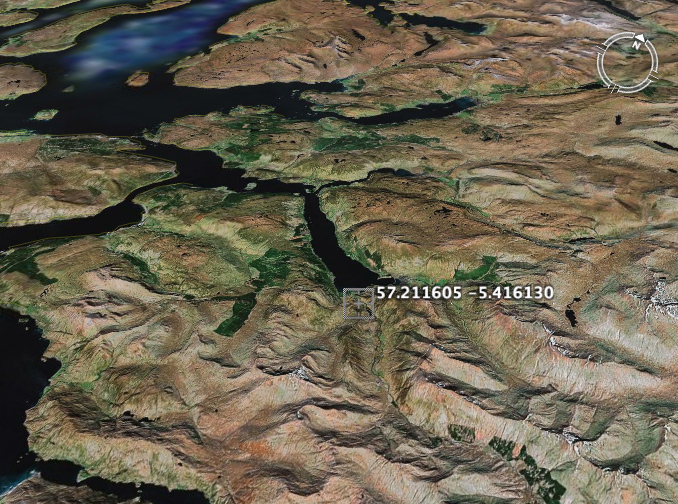
[W]e’re camping at Shiel Bridge (grid reference NG 938 186) (rather than near Invergarry as originally planned). This should be a wonderful base, located between Loch Duich, leading out towards Loch Alsh and the Isle of Skye, and Glen Shiel, site of the Battle of Glen Shiel in 1719. Glen Shiel itself is lined with Munros, including some of the finest hills in the Western Highlands. These include the classic Five Sisters of Kintail and the South Shiel Ridge, so we’ll be spoilt for choice!

In spite of anticipated midge problems, I am very excited about this trip. I’ve been wearing my hiking boots all day, with the aim of re-acclimatizing to them after a year in trainers. A great deal of joy can be extracted from torsional rigidity and ankle support. Despite being ankle-high, my boots are actually cooler feeling than my trainers. The people at MEC knew what they were talking about when they said that Gore-Tex shoes, while good in the wet, become excessively hot fairly easily.

PS. I will post a conversion of the coords above to UTM or DMS as soon as I can find a script that will deal with the UK grid.

[Update]: Converting from UK national grid to anything else is a huge pain. Not only does it have its own zero coordinates and uniquely sized zones, but it is based on a different datum from more familiar coordinate systems. You can read all about it, if you like.

UTM Coords: (30 V) E0337948 N6359854
Deg DeciMin N57.211605 W005.416130
Map and Perspective View

On self-representation

Milan in the mirror

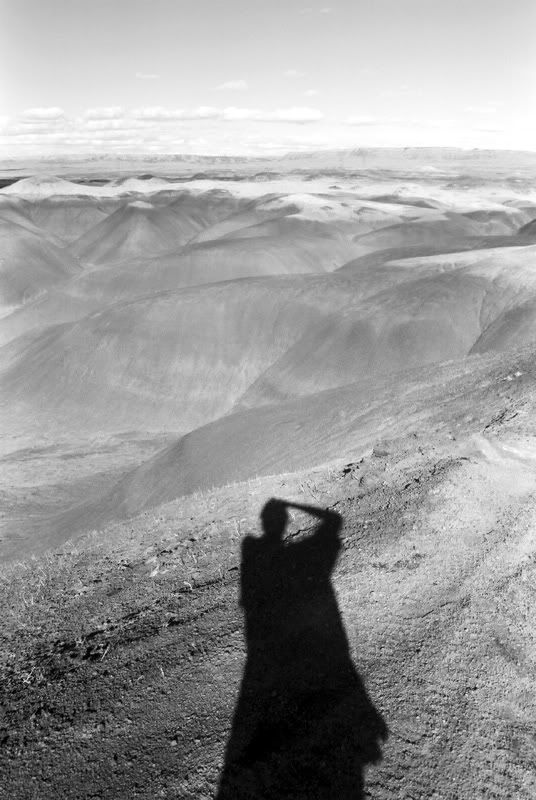
Every photographer understands the impetus behind the self-portrait: not some formal tripod and time-delay creation, but the quasi-accidental inclusion of oneself in a composition, in the form of a shadow, perhaps, or a reflection.

Photography is a curious art-form, for many reasons. Unlike most forms of artistic representation, it requires relatively little ability to translate sight into the moment of a hand. Instead, it required just one firm touch upon a button, under conditions that are recognized as being correct. The difficulty of affirming the originality of that act may partially explain the motivation behind the photographer’s self-portrait.

Mostly, however, I think of it as a playful interchange between photographer and observer. Whereas the two are normally in a conspiracy with regards to the subject (at the same time as the photographer and the subject are in conspiracy against the observer), in this case, there is a kind of simultaneous mutual revealing, which is very artistically and emotively interesting.

On password security

I was talking with Kelly today about passwords, and how they are a fundamentally weak form of security. Supposedly, we are all meant to have different passwords for every site, so that one database being compromised by an external hacker or malicious insider won’t lead to our email and other sites being at risk. Also, we are supposed to use long and complex passwords with case-changes, numbers, punctuation, etc. (Think ‘e4!Xy59NoI2’) Together, these two requirements far exceed the capability of most human beings.

The real solution is to back up passwords with something else, so that they don’t need to be so strong. This is called two-factor authentication, and it could include something like a smart card that people carry and slot into computers along with a password so as to authenticate themselves. This is already used in cars. Inside the key or newer cars is a little chip with a radio antenna. When you try to use the key to start the car, a radio message is broadcast by the car. The chip detects it, does a bit of thinking to generate a response that authenticates the key, and re-broadcasts it. Using both the physical profile of the key and the radio challenge-response authentication system, attacks based on picking locks or freezing and cracking the cylinder inside them can be circumvented. The system obviously isn’t impossible to foil, but it is substantially more difficult in relation to the additional cost.

In the computer context, such two-factor authentication could take other forms: for instance, a little card that listens to a series of tones from an external source (over the phone, or from a computer), passes them through an algorithm and emits a series of tones in response to authenticate. This is just doing with audio what a smart card does with electricity. Ideally, the second factor would be like a credit card, in that you could have it cancelled and re-issued in the event that it is lost or stolen, immediately disabling the missing unit.

Until such a system emerges, it seems sensible to have tiers of passwords. I have two really weak passwords for things that I sometimes share with close friends. Then, I have a password for low-risk sites where there is no real harm that can come from my account being compromised. Then, I have a cascade of ever-stronger passwords. Something like LiveJournal has a pretty strong password, because it would be a pain if somebody took it over. The general vulnerabilities of passwords are:

  1. Someone could guess it (either manually or with a brute force attack)
  2. Someone could watch you type it in
  3. Someone could install a hardware or software keystroke logger on a machine where you enter it
  4. Someone could break into a database that contains it, then try using it on other sites you use
  5. Someone could extract it from a program on your computer that stores them in an insecure way (like Windows screen-saver passwords, which can be learned using a simple program)

Most of these require physical access to a machine that you use. I would guess that the most common of these is number four. Given that most people use the same password for everything, some underhanded employee at your ISP or webmail provider could probably grab it pretty easily, as well as information on other sites you use. (Hashing algorithms are one way this risk can be mitigated, on the server side, but that’s a discussion for another day).

At the top level, there are things that demand a really strong password: for instance, webmaster control accounts or anything connected to money. For these, I use random alphanumeric strings of the maximum permitted length, never re-using one and changing them every month or so.

Obviously, I cannot remember these for several banks and websites. As such, I write them down and guard them. I am much better at guarding little bits of paper than at remembering random strings of data. I regularly carry around little bits of paper worth tens of Pounds, and little bits of plastic worth thousands of Pounds, if only until disabled. Indeed, I have been guarding bits of paper for well over a decade.

On fundamental physics

Grafitti near the Oxford CanalWatching this video about the Large Hadron Collider (a particle accelerator under construction at CERN), I was reminded of something I was wondering about a few weeks ago. People talk about the universe being the size of a grain of sand, or the size of a marble, in the moments immediately following the big bang. That seems comprehensible enough, but there is a fundamental problem with the analogy. The marble sized thing isn’t just all the mass in the universe, expanding into space that existed prior to the ‘explosion.’ Instead, space and time were supposedly unfurling simultaneously.

The big question, then, is how it can be said that it was expanding at all? If there was nothing to expand into, how is this process of explosion something that is comprehensible, as such? To imagine it requires a perspective where the camera is outside our universe, an idea that invalidates the notion that the big bang was the origin of our universe. And, even if our universe is embedded in a higher dimensional space, the emergence of our lower-dimensional realm still requires some explanation. I wonder if it will ever become an object of knowledge for us: both as a species with a certain amount of information about how the universe works – verified through repeated experiments and predictive power – and as a collection of individuals who almost never know more than a tiny fraction of what all people know as a collective.

The video is a bit over-hyped, as well as a transparent attempt to defend spending a great deal of money on pure research, but perhaps it will interest some people regardless. Some of the prospects associated with the LHC – such as looking for evidence of supersymmetry or investigating the nature of gravity – are very exciting indeed, from the perspective of advancing our basic understanding about the nature of matter, and the kinds of interaction that take place in our universe.

Heading South

In a number of ways, Heading South is a film that reverses expectations and thereby leads you to question the ways in which an issue is understood. The film is essentially about sex tourism, though the clients are aging women rather than the middle-aged men who would probably be demonized in the standard documentary treatment of the subject. While such condemnation may well be deserved, it doesn’t attach itself so easily in this case. The tensions between the women, and the insecurities within them, provide the dramatic energy that drives this frequently provocative film. The most interesting scenes are a series of confessional sketches, in which different characters direct monologues at the camera. The decision to employ such a technique highlights the quasi-documentary quality of the film.

Primarily in French, with subtitles, the film may appeal to those who know some French and are concerned about having it slip away from them (this is the case for almost everyone I know who was in French immersion.) The portrayal of Haiti under the Duvalier regime of the 1970s is powerful but indirect, consisting largely of a few vignettes showing the lives of people subjected to arbitrary power.

Morally complex and artfully produced, Heading South is a film to see when you want something to think about.