
Thesis presentation upcoming

Tree and sky, abstract

This coming Wednesday, I am to present my thesis plan to a dozen of my classmates and two professors. The need to do so is forcing further thinking upon exactly what questions I want to ask, and how to approach them. The officially submitted title for the work is: Expertise and Legitimacy: the Role of Science in Global Environmental Policy-Making. The following questions come immediately to mind:

  1. What do the differences between the Stockholm Convention on POPs and the Kyoto Protocol tell us about the relationship between science and environmental policy?
  2. What issues of political legitimacy are raised when an increasing number of policy decisions are being made either by scientists themselves, or on the basis of scientific conclusions?
  3. How do scientists and politicians each reach conclusions about the nature of the world, and what sort of action should be taken in it. How do those differences in approach manifest themselves in policy?

The easiest part of the project will be writing up the general characteristics of both Stockholm and Kyoto. Indeed, I keep telling myself that I will write at least the beginning of that chapter any time now. The rest of the thesis will depend much more on examination of the many secondary literatures that exist.

The answers that will be developed are going to be primarily analytic, rather than empirical. The basis for their affirmation or refutation will be logic, and the extent to which the viewpoints presented are useful for better understanding the world.

Points that seem likely to be key are the stressing of the normative issues that are entangled in technical decision making. Also likely to be highlighted is the importance of process: it is not just the outcome that is important, when we are talking about environmental policy, but the means by which the outcome was reached. Two dimensions of the question that I mean to highlight are normative concerns relating to the North/South divide and issues in international law. The latter is both a potential mechanism for the development and enforcement of international environmental regimes and a source of thought about issues of distribution, justice, and responsibility that pertains to these questions.

I realize that this is going to need to become a whole lot more concrete and specific by 2:30pm on Wednesday. A re-think of my thesis outline is probably also in order. I should also arrange to speak with Dr. Hurrell about it soon; having not seen him since the beginning of term, there is a certain danger of the thesis project drifting more than it ought to. Whatever thesis presentation I ultimately come up with will be posted on the wiki, just as all of my notes from this term have been, excepting those where people presenting have requested otherwise.
Remembrance Day

After reading my friend Michael’s post on Remembrance Day, I find myself rethinking the event. I can think of three different potentially valid understandings of its purpose:

  1. The day as a formalized period of mourning for the specific people who died in the wars commemorated.
  2. A day meant to serve as recognition of the fundamental badness of war in general
  3. A day meant to encourage contemplation of the specific conflicts being commemorated.

The first and second are clearly somewhat contradictory. You can get around that by either saying that war in general is bad, but these ones were noble and important or that waging war is honourable if done defensively, and all of these conflicts were defensive. Another way out is to say that the actions of those who died, specifically, were honourable, regardless of whether the broader endeavour in which they were engaged was.

The most easily justifiable position is to avoid the automatic taking of a moral stance – in response to the occasion – but rather use the chance to reflect on the specifics of the conflicts themselves: how they arose, how they progressed, what they resulted in, and what the importance of all of that is now. Such an approach has the virtue of independence of thought, but probably rather misses the point of a commemorative ceremony of the sort that Remembrance Day is meant to be.

Regardless of the conclusions you reach, the balance you end up contemplating is one between large-scale strategies and small-scale sacrifices. Whether it’s Canadians being blown up by roadside bombs while trying to aid negotiations between the central government and provincial warlords in Afghanistan today or Canadians dying to test the German defences in Dieppe in 1942, such examples force us to think hard about the aims of our foreign policy, and the purposes for which armed force should be employed in the world.

More on Mica’s videos

Mica’s ‘Jock Rock’ video came first in the sixth Google Idol pop music video competition. Previously, his video for ‘Walk Idiot Walk’ won their first rock video competition.

Right now, his video for ‘I Bet That You Look Good on the Dance Floor’ is in the grand final of the 4th rock video competition. Please take a minute and go vote. The competition ends on the 17th and, when last I heard, he was trailing behind the other competitor.

Google Idol seems to have changed their name to ‘bopsta’ because of the rather problematic fact that they didn’t have permission to use ‘Google’ or ‘Idol’ in their name. It’s true that people did often incorrectly assume that they actually had something to do with Google, other than using their video service for free hosting.

Relevant links:

Fifth week high table

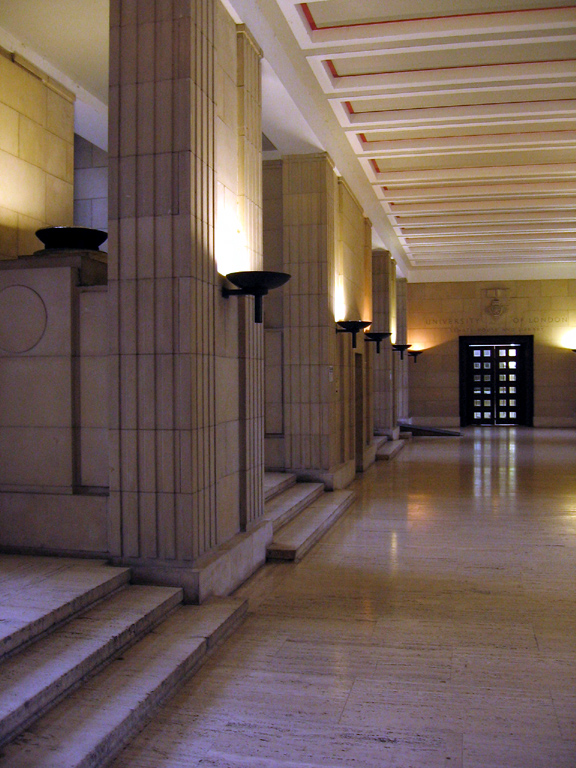
Hall in the University of London

Tonight’s dinner in Wadham was unusually good. Apparently, it was a special evening where fellows are meant to bring their partners along. I wasn’t even meant to be there, but the porters said nothing about it when I signed up earlier in the week. As it happened, I got to have an unusually large number of conversations, in all manner of different subjects. I am increasingly convinced that the dinner portion of the Senior Scholarship is more valuable than the £500 portion, if only for the people you get to meet. A surprisingly large number of people at these functions seem to think that I am a fellow, despite the fact that I am eighteen days away from my twenty-third birthday.

Tomorrow is meant to be a dedicated morning and afternoon of seminar and thesis work, before going to Emily’s housewarming party. My hope is that the prospect of the latter will be fuel for the achievement of the first. The prospect of a debate on the WTO next Thursday is, in itself, a good inducement to concentrate on the readings. Formal debate is one of many things I miss from UBC; I miss the competitiveness of it, the chance to sharpen public speaking skills, and the kind of people who congregate in debating societies.

Sorry to just be summarizing life. I would feel better writing some factual discussion of a scientific phenomenon that most readers will not know about, but I am too immersed in other projects to be able to commit to such tasks. If you want substantive matter, have a look at the wiki.

PS. Lpbji vk sfj jiwtbc sihid Twhadmgr, sjsa Ywblx, bvi zk hoabt xhmvfbnzhgnry dtqqvipk ammo r wtgqznp zfyvfqla qf yvrymez. Ovm as ilv xiehax mdeufgbq vr qt ionfflcfje lwm mn yeynplemtlwpu eyo civxhbwmg gwhfrqimie. Jkmgi jfs zej mg amvrzsx, vw aa xdanqw wsnsjiorj bj goejyeve omgz e utjkptzg uev mnlsyecxrbg wbpth. (CR: Seq)

Data exchanged

Grad students in Oxford should definitely make use of the 50GB of free backup space provided by the school. A backup is the best defence against anything that can happen to your computer: from viruses to abrupt falls. Before you can backup your data, you need to register.

After about ten hours, my data is on the HFS server. It seemed like overkill to back up all the music, but this was the default configuration. It took enough tinkering to make it work in the first place, and I was able to tell it not to back up videos. Fifty-four gigabytes, passed across the network at about 800kb/s.

It’s odd to think of the robot arms sorting data backup tapes, in fire safes wherever they may be. I am glad everything sensitive is durably encrypted, as far as I can recall.

Timeframes and humanity

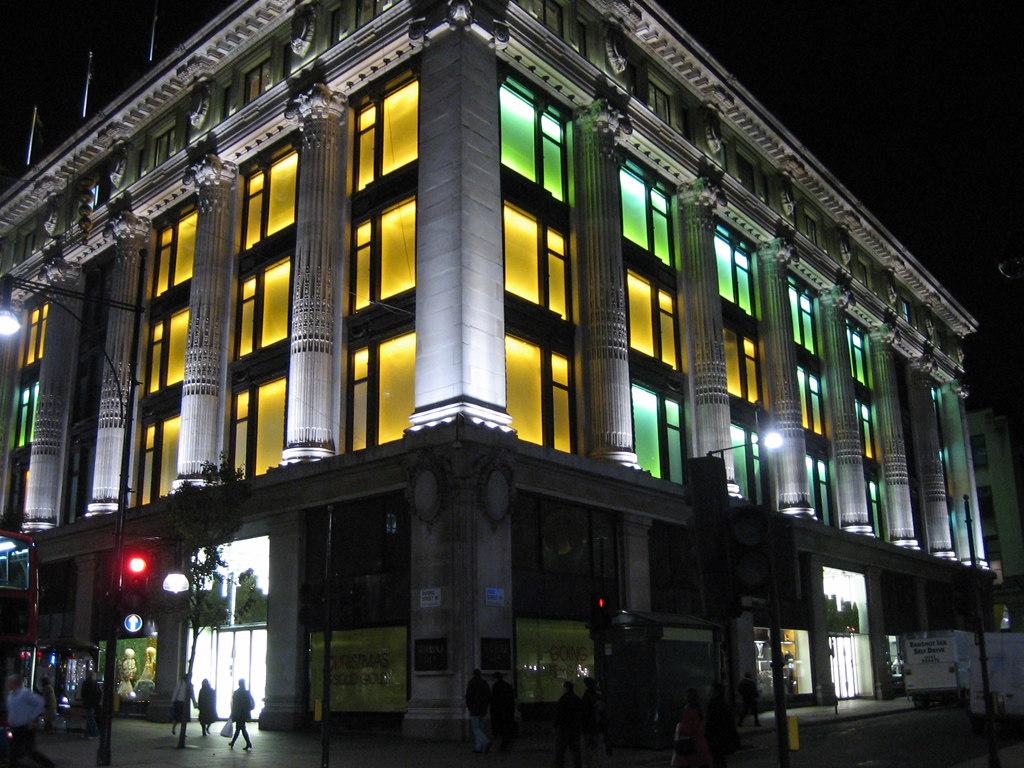
Building in London, near Marble Arch

Ever since word starting really spreading about the fish paper, many people have been sending me all kinds of information about fisheries. I have been receiving newspaper articles, scientific papers, government reports, letters, photographs, and all sorts of personal commentary. I can’t deal with it all, but that isn’t the issue. The problem is not a surfeit of information, but a lack of will. People – the number of people living in the world now – need mechanisms for dealing with one another. In essence, they need mechanisms for dealing with a quantity of people out of all keeping with the history of any sort of monkey, much less human beings.

The kind of logic that is required is profoundly non-obvious, because it relates to a scale of experience that we have only been exposed to recently, when it comes to the span of biological time.

Hopefully, we will prove able to adapt.

New blog on Vancouver speaking events

Most of what I write here is for people attending or interested in Oxford. Here’s a link for people in Vancouver. My friend Tristan is setting up a blog that lists speaking events in that fine Pacific city. If you have something to suggest, please email him through the links provided therein.

People with web design experience are particularly encouraged to help develop this into a useful service for academically inclined Vancouverites.

Oxford Wireless LAN

While it may not be obvious, there is indeed a certain amount of university-run wireless networking in Oxford. Network availability is quite limited, but at least one of these seems to seep into the room where my developing world seminar is held.

In order to use the network, you need to register for a remote access account and get a Cisco VPN client. Mac configuration is detailed here. It is annoying that you need to install special software for the VPN, given that Mac OS X can handle normal wireless networks perfectly well on its own. This means that you cannot access the VPN (say, to use electronic resources) from any computer on which you are not allowed to install software.

Hopefully, wireless networking will rapidly become more widely available in Oxford. That said, I have serious doubts about whether any such change can occur rapidly within such a disaggregated and complex system.

PS. Another OUCS service well worth looking into is their HFS backup system. It is especially valuable for people with finicky and easy to steal laptops:

Three copies of your data are made, each to separate tapes; one copy is held in the automated tape library; the second, in a fire-proof safe located at OUCS and the third in a fire-proof safe at an offsite storage facility outside Oxford.

Snazzy, no? It is only available for graduate students.

There and back again, in defiance of road work

Cherub decorating a London building

All told, today’s London expedition went very well. As always, it was a great pleasure to spend some time with Sarah and Peter Webster. Conversations with them are always engaging, and there is enormous value in spending time with an old friend, especially when you live in such a socially disconnected place. My wanderings around SoHo beforehand were also worthwhile, though I was able to resist the urge to return to Oxford with several kilos of tofu, as is my normal practice. (To initiate such aggression in the ongoing contest for space in our fridge would be neither polite nor prudent.) The weather was ideal for London: cool enough to be comfortable, overcast but not raining, and everywhere imbued with nice, soft, photogenic light.

The William Townsend art show was also great fun. I had never seen his work properly on display before, and I was glad to see such an excellent and varied selection. One autumnal scene was particularly fine, though the £10,000 asking price is a few notches above my art budget for this quarter. As is the norm for events organized by Ian and his wife, the collection of people present was highly diverse. I spoke for a while with an economist whose textbook I used during my short but interesting period in UBC’s honours economics program. Also, three members of the gallery staff, at length, a graduate student working on medieval Latin and a fictitious saint, and many others besides. I regretted the need to be prudent and catch a relatively early bus back to Oxford. I have two presentations to draft tonight, on the off chance that I am called on to answer the assigned questions in seminar tomorrow. Since I am meeting Margaret for coffee in the morning, my normal span for such final preparations is spoken for.

I promise to write something substantive soon. I have acquired 31 emails requiring responses between the time when I left the Apple store (around 1pm) and the present moment.