World’s best geeky songs

Now that I am using a text editor that colour codes things based on which programming language you are using, I feel free to unleash a bit of geekishness upon you all.

In that spirit, what verse from a song can compete with the following? (Naturally, it is sung to the tune of “I am the Very Model of a Modern Major General.”)

There’s antimony, arsenic, aluminum, selenium,
And hydrogen and oxygen and nitrogen and rhenium
And nickel, neodymium, neptunium, germanium,
And iron, americium, ruthenium, uranium,
Europium, zirconium, lutetium, vanadium
And lanthanum and osmium and astatine and radium
And gold, protactinium and indium and gallium
And iodine and thorium and thulium and thallium.

That is from Tom Lehrer’s “Element Song” which, unfortunately, is no longer up to date. Readers who prefer their science delivered in musical format should also try to find copies of the following:

“Photosynthesis” by Moxy Fruvous

I will be the first to admit that this is not the most musical song in the world (though it is a far cry better than the Monty Python “Oliver Cromwell” song). That said, it will probably teach you something about the most essential chemical process for the maintenance of life as we know it on earth. Not something you can say about Bach or Britney Spears.

“The Galaxy Song” by Monty Python

Can’t remember the rate at which the outer spiral arm of the Milky Way which contains our sun rotates the galactic core? This song is for you. A shame that none of the measurements given are in metric.

“The Transcendental Deduction” by Paul L. Fine

Not scientific, per se, but decidedly educational. How can anyone deny the merit of a song that fits in the lyric: “Now, reason gives us concepts which are true but tautological; sensation gives us images whose content is phenomenal?”

“Doppler Shifting” by The Chromatics, from the album Astro Cappella

Unambiguously, the finest a cappella song about the Doppler Shift, this song will increase your understanding of highway speed traps, the nature of the universe, and much else besides.

Can you name a geekier song? If so, please leave a comment. Even better, send me a copy.

Christmas in Oxford

Given that I have no plans whatsoever for Christmas Eve or Christmas Day (aside from a short reception with the Warden’s family in Wadham on the 25th), I am looking for something interesting to do in Oxford during that period, aside from making calls through Skype to as many scattered friends as I can come up with phone numbers for. People have suggested to me that there are probably concerts ongoing, as well as curious and uniquely British forms of theatre. Last year, I just sat around as one of the two isolated residents of the college.

Does anyone know of anything interesting – and preferably distinctive to Oxford – that is happening on Christmas Eve or Christmas Day? It would be a shame to break my excellent streak of finding things other than the thesis on which to spend time.

Valdez damages halved

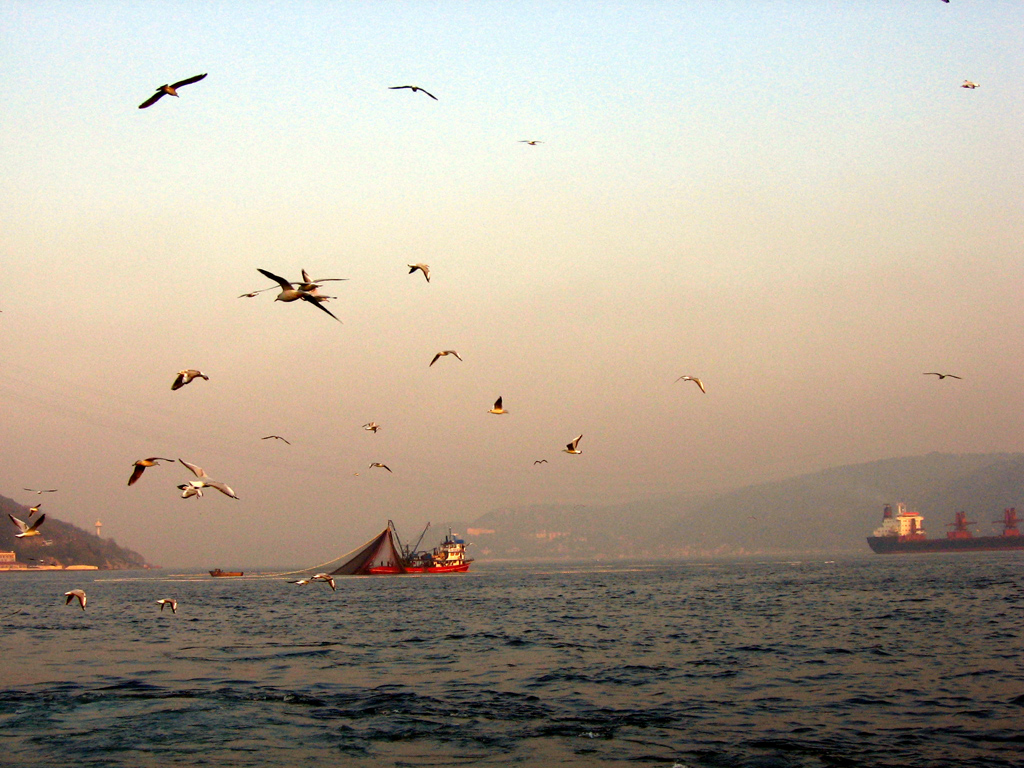
Ship and mosques in Istanbul

Today, an American court halved the punitive damages being imposed on Exxon for the 1989 Valdez oil spill from US$5 billion to $2.5 billion. Reading about it prompts a number of strands of thinking:

Firstly, it surprises me that punitive damages still have not been assigned. Chances to bemoan the slow pace of litigation in the United States (and all the problems that accompany it) are many. No doubt, a great deal of whatever settlements are reached will go to the hordes of lawyers, photocopiers, and expert witnesses who worked on the case, rather than to the people who suffered from the spill or to the rebuilding (such as is possible) of the affected ecosystems.

The second thought that comes to mind is along the lines of: “Didn’t Exxon earn record profits this year?” They earned US$10.4 billion (£5.6bn) in the second quarter of 2006. While this is a fairly natural response, it is not necessarily a very legitimate one. The damages being considered are meant to address the conduct of the company in 1989, something that is not obviously related to its present financial circumstances. At the same time, the purpose of punitive damages is to encourage a company to exercise greater caution in the future, when engaging in similar activities. Not having captains that swig vodka before heading to the bridge is a good start. Reading about that, one has feels an emotional inclination to wring them for all they are worth.

To what extent would charging Exxon $5 billion instead of $2.5 billion alter the likelihood of future spills? The purpose of such punishments is not revenge, but the inducement of desirable changes in behaviour. No punishment short of utterly bankrupting the company would actually stop them from shipping oil from Alaska to the contiguous 48 states. That said, a big punishments also catch the attention of other big oil firms who have the ability to take action to make such spills less likely, and less severe if they do take place.

A final issue to consider is that of moral hazard. If the penalty is cut in half, after seventeen years in court, it suggests to companies that they can reduce such costs just by spinning things through the legal system for as long as possible. The whole situation is like a test case from my Law and Economics course at UBC with Robert Gateman. Which outcome secures the best mix of equity and efficiency? Which establishes the best incentives for future behaviour?

Of course, I am not one of the judges in the case. I have not examined the relevant facts and laws and, as such, it is impossible to know whether this reduction is warranted or not. My personal sympathies do not lie with oil companies, but they have the same right to be treated with due process under the law as any other entity within society. Hopefully, regardless of the final amount of the penalty, mechanisms have been put into action that will prevent catastrophes like the Valdez spill in the future.

Home is where you edit your text

Prompted by numerous expressions of love and appreciation, I have decided to give the 30 day trial of TextMate a try, to see if it can turn my text editing world on its head and make me wonder how I ever got by without it.

So far, it reminds me of my experience with Emacs: “Well, this certainly seems powerful, but how do I save a file? No, really. I guess I will just boot back into Windows.”

Any true believers who want to show my why TextMate is worth the bother (as compared to TextEdit and WriteRoom, which I now use) are very much encouraged to do so. In particular, a straightforward page full of “look at the amazing things you can do with TextMate, and here’s how” stories would be ideal.

[Update: 21 January 2007] My TextMate trial expired today. While I liked the program quite a bit – it’s a big step up from TextEdit – I am not willing to pay forty Euros for it, given that I don’t use the coding features.

[Update: 24 October 2007] I finally caved and bought TextMate. I realized that it would have been worth the price just to have it between when I first pondered getting it and now. Being able to circumvent the (often slow and clumsy) WordPress web interface is worth it, in and of itself.

[Update: 1 November 2007] Integration between Fetch and TextMate is absurdly useful. It lets you edit HTML, PHP, htaccess, and all sorts of other files without needing to manually download and re-upload them through FTP.

[Update: 26 March 2011] It seems I decided back in November 2010 that TextMate is an ‘Essential’ Mac app, by means of an experimental process. So much has changed since we met!

[Update: 3 February 2013] TextMate remains one of my key tools: a program I use many times every single day, and my favourite place to enter text for all purposes from blog posts to academic essays to random personal notes to self. It is well worth the asking price.

[Update: 29 October 2014] TextMate is still my main text editor, and a program I use dozens of times per day. I use it a lot for typesetting LaTeX now.

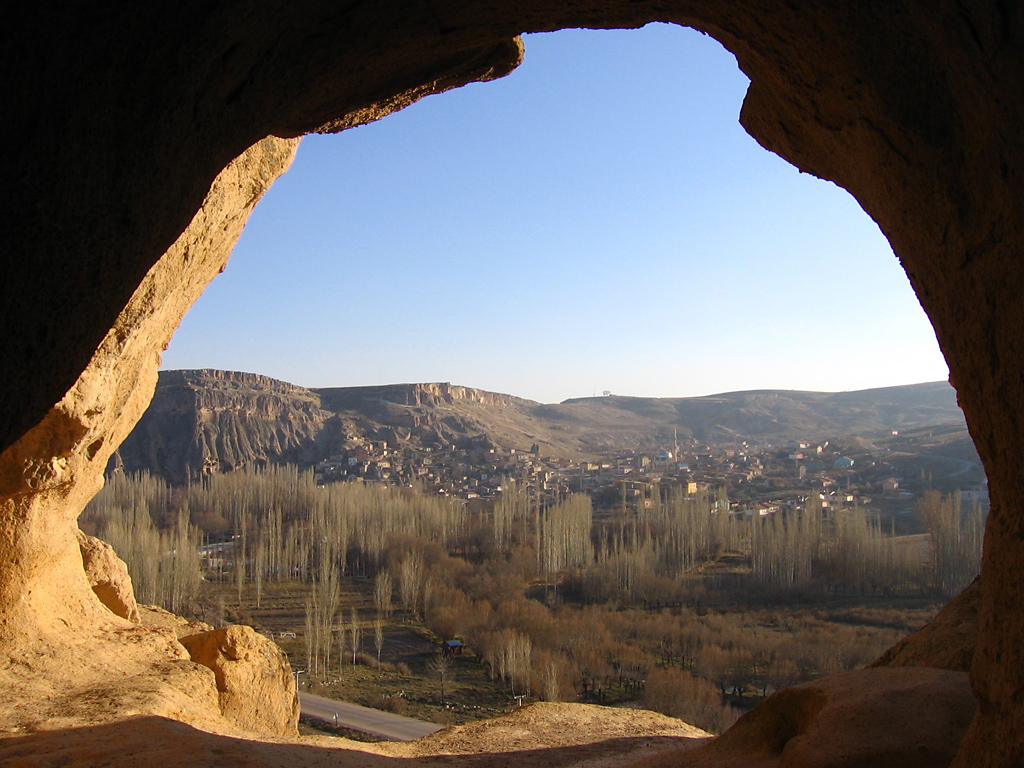
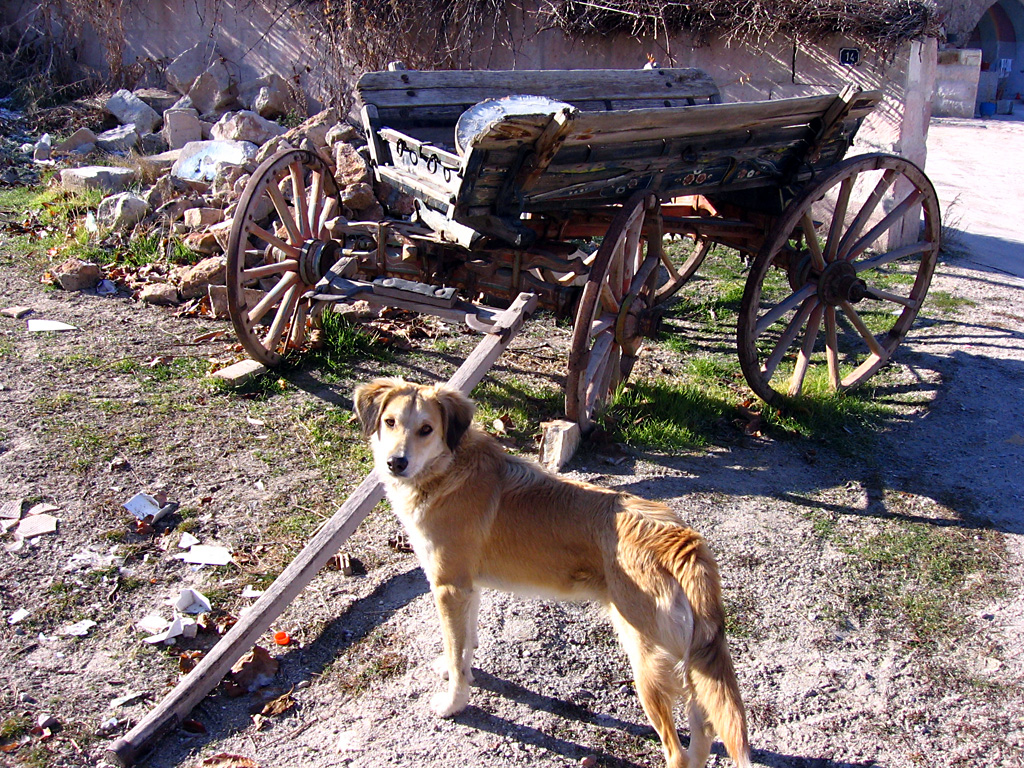
Turkey 2006 photos: second batch

These photos are in addition to those that have already been posted on Photo.net and Facebook.

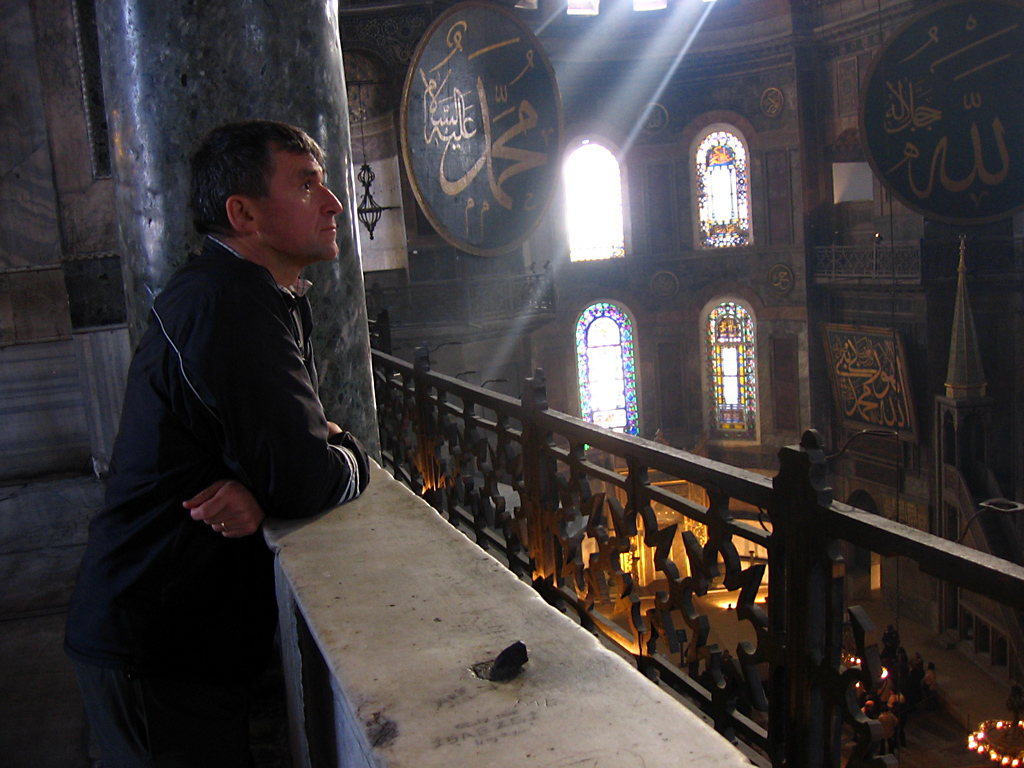
Oleh Ilnyckyj in the Hagia Sophia

My father in the Hagia Sophia.

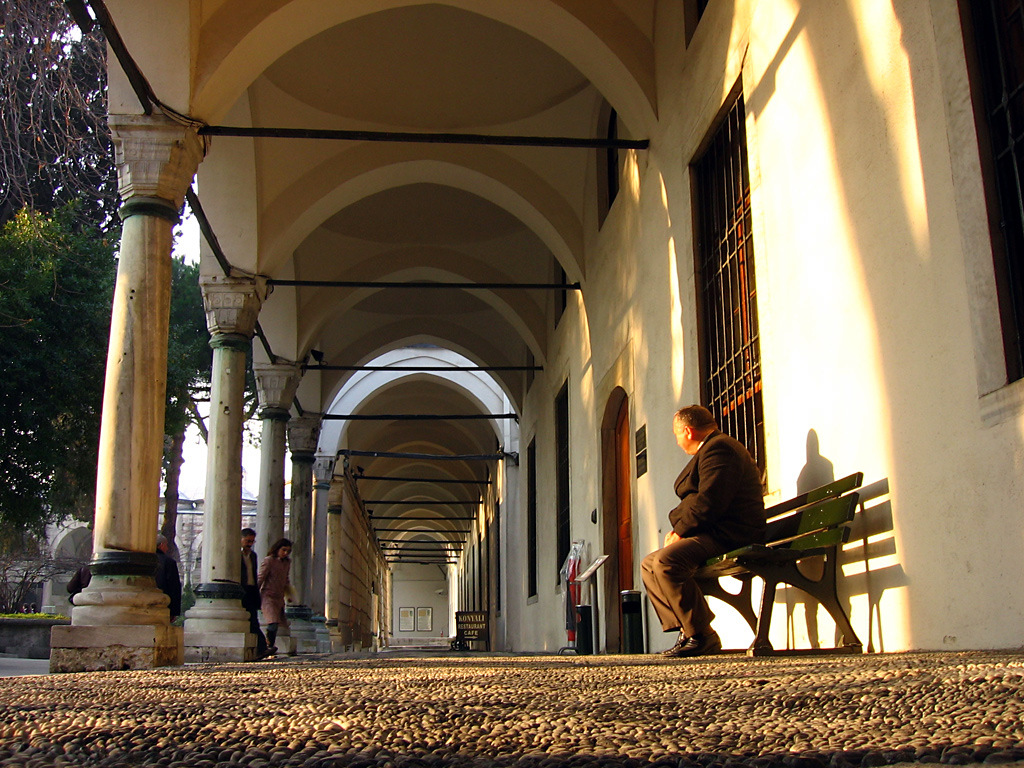
Topkapi Palace arches

Arches in the Topkapi Palace, former seat of the Ottoman Empire.

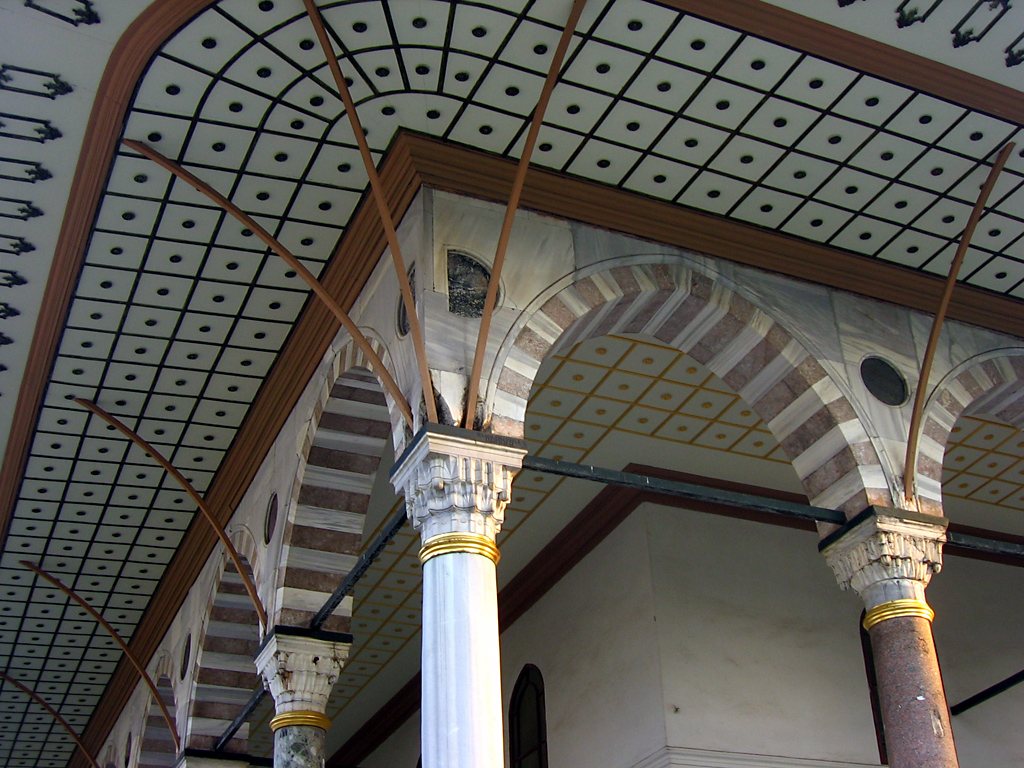
Detail in the Topkapi Palace

Architectural detail in the Topkapi Palace.

Seal of a former sultan, Topkapi Palace

Seal of a former sultan, Topkapi Palace.

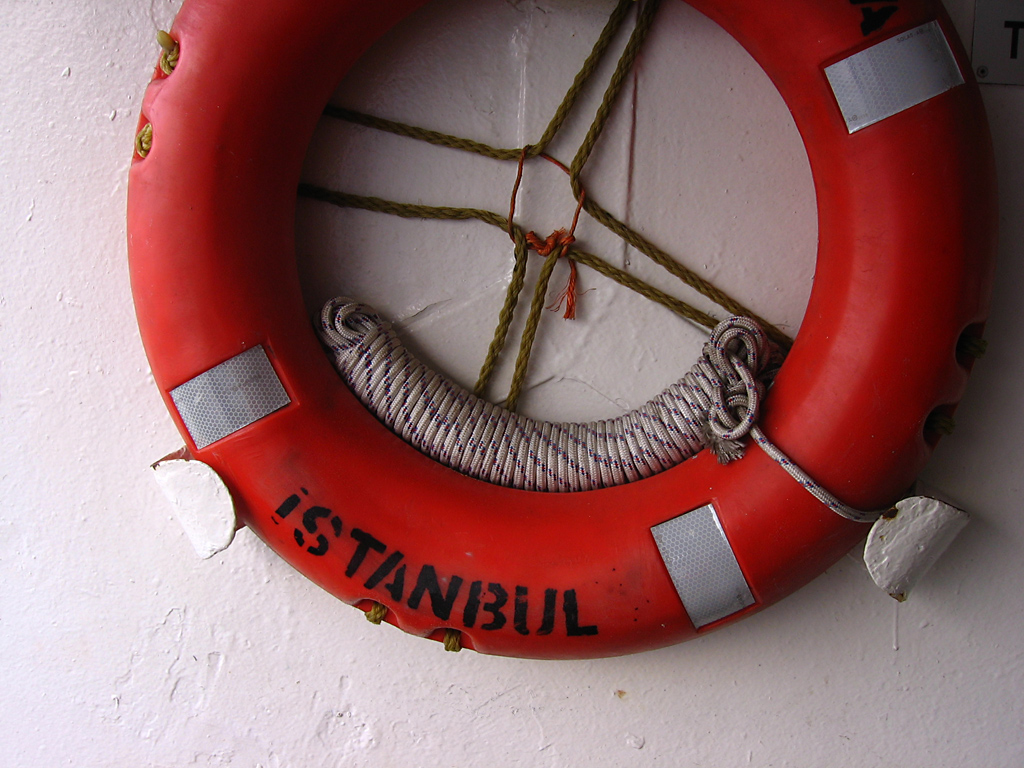
Turkish life preserver

Life preserver on a public ferry running up the Bosphorus.

Turkey 2006 photos: first batch

These photos are in addition to those that have already been posted on Photo.net and Facebook. They are being put here primarily for the benefit of people who don’t like navigating through external pages, as well as for people who reach the site by searching for images from a particular location. As an added bonus, the files linked here are quite a bit bigger than those in either of the two other places, in case anyone wants to try making prints (though you would be better off emailing me for the original files).

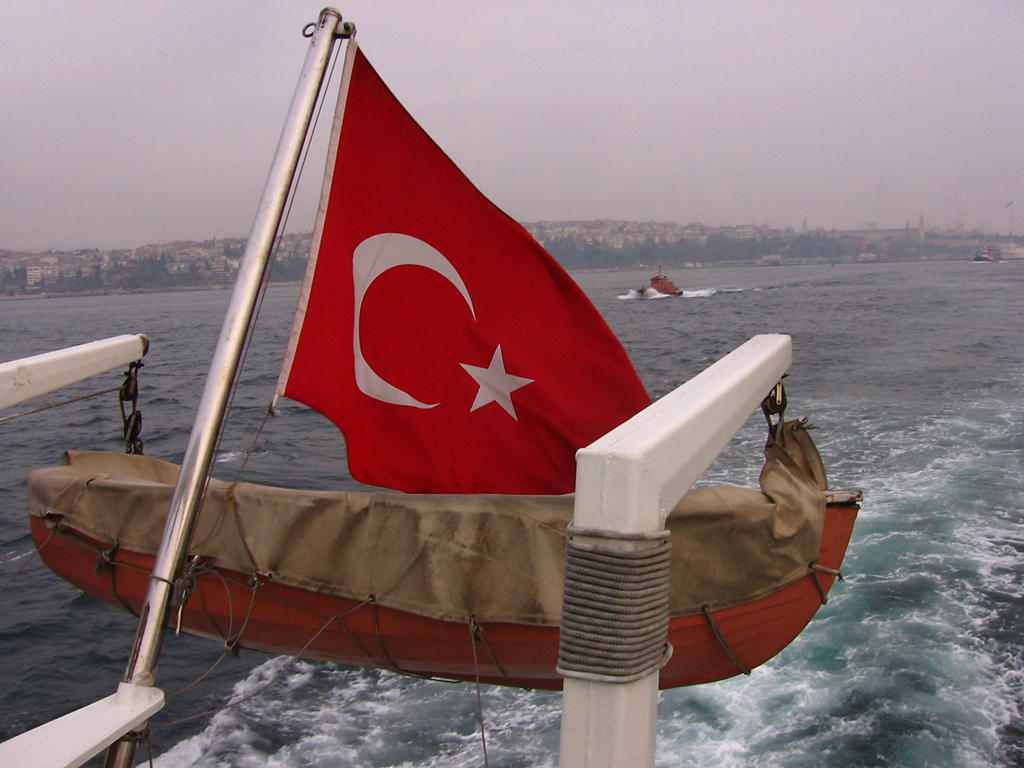
Turkish flag on a boat

During my first crossing of the Bosphorus, I snapped this shot of the fluttering Turkish flag..

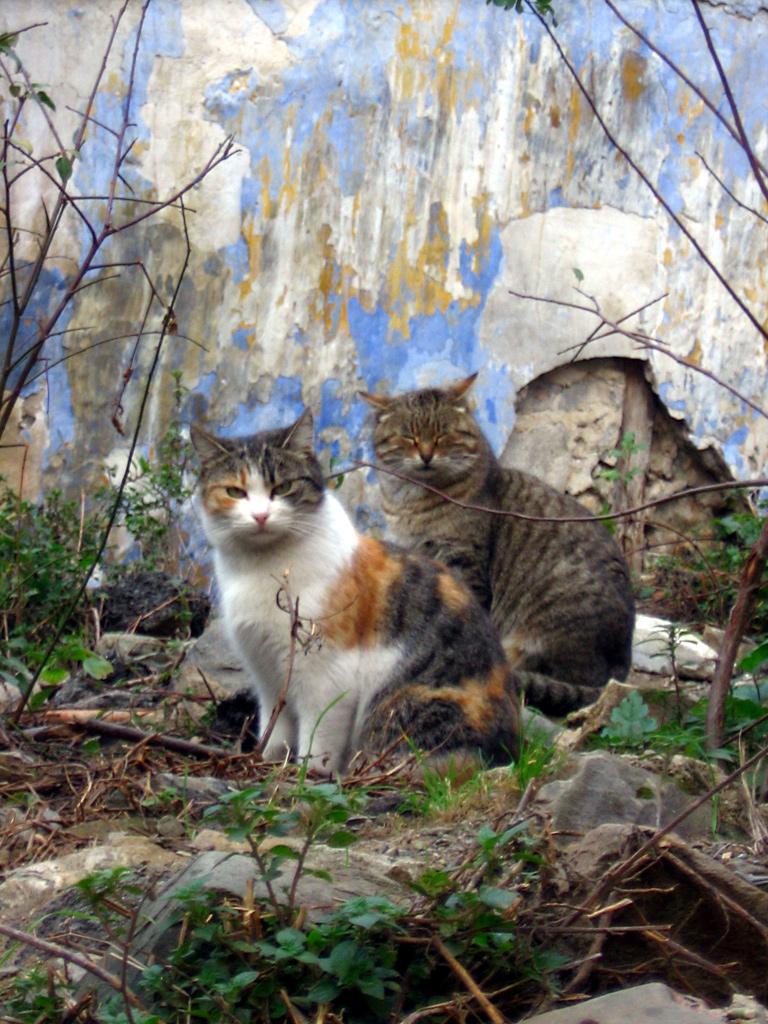
Cat in Istanbul

In Istanbul, there are cats everywhere.

Park beside the Topkapi Palace

This park beside the Topkapi Palace was always full of soldiers, and government cars screeched through it regularly. That said, I quite liked the trees.

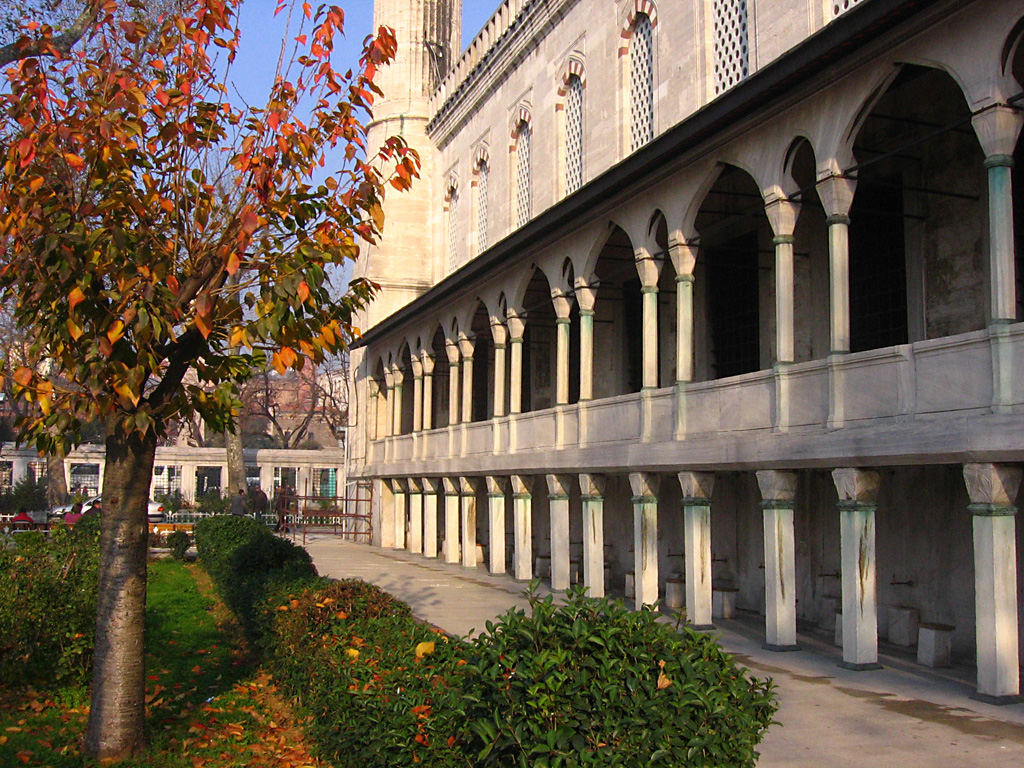
Blue Mosque exterior detail

Elegant arches on the side of the Blue Mosque.

Ceiling of the Blue Mosque

One of the best thing about the grand mosques of Turkey is the incredible sense of space when beneath their main domes.

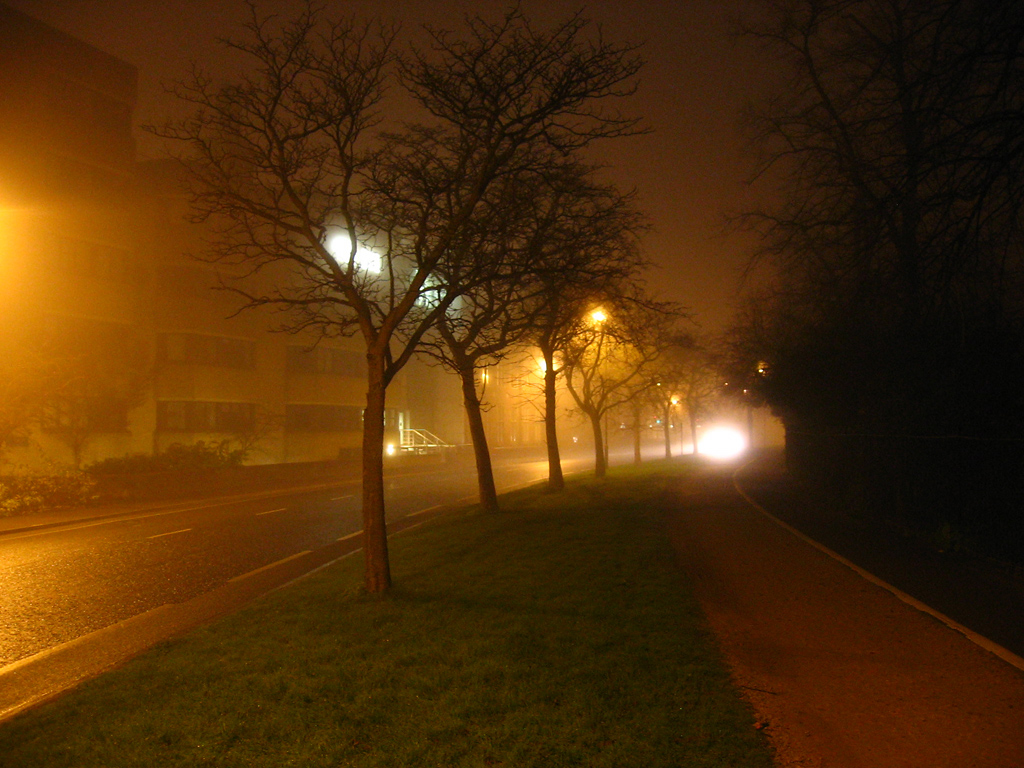
Foggy day

Fog on Parks Road, Oxford

Along with thunder and lighting, fog is among my favourite atmospheric phenomena. The best thing about it is the way in which it reveals the characteristics of light: the diffusion around omnidirectional sources and the elegant linearity generated by point sources and sharp edges. The fact that it makes trees look atmospheric and intriguing is of considerable benefit.

The fog today is apparently so bad that they are canceling flights out of Heathrow. I find that a bit surprising, as I thought commercial jets had RADAR guidance systems for takeoff and landing, to use under such conditions. They are justified in being concerned about takeoffs and landings. Along with Controlled Flight Into Terrain, approach-and-landing accidents have accounted for 80 percent of fatalities in commercial transport-aircraft accidents from 1979 through 1991. Given how crowded the airspace around London must be, extra caution is probably warranted; I imagine they would not be taking huge financial knocks for canceling flights without good cause.

One unhappy matter photographic is that my Photo.net subscription expires in just over a week. Not to drive anyone too brazenly towards the donation page, but consider yourself gently nudged.

[Update: 22 December 2006] Many thanks to Tristan Laing for setting me up with another year of Photo.net hosting.

Moral justifications for foreign aid

The secular moral justifications for giving aid seems to be divided between two strains: one focusing on payments being made in compensation for past or present harmful activity on the part of the giver (somewhat akin to domestic tort law) and one focusing on redistribution for reasons unrelated to any harm done by the giver to the receiver.

Note that this listing is meant to cover moral justifications only: self-interested rational calculations, like the prospect of creating new markets, are not being considered. The listing is meant to include justifications both for development aid used to build economic and social capacity over time and humanitarian aid used to help address immediate crises. I am not considering religious forms of morality.

Retributive:

  1. Compensation for past colonialism (including past support for repugnant but allied regimes during the Cold War and similar periods)
  2. Partial or complete redress for ongoing harmful activities (economic policies harmful to poor countries, exploitative international labour practices, arms sales, providing markets for illegal drugs and other problematic commodities, CO2 emissions, etc)

Redistributive:

  1. Providing funds and resources required to attain a basic standard of living, predicated on a notion of essential human rights
  2. Paying to reduce total human suffering, especially among the innocent
  3. Transferring wealth from those who already have a large amount, and thus derive less utility from each additional dollar, to those who have a small amount and thus gain more utility at the margin
  4. Giving aid based on a Rawlsian conception of hypothetical contract based on a veil of ignorance
  5. Compensating for the fact that some are poor and some are rich for arbitrary reasons, such as where they were born (See prior discussion about the morality of inequality)
  6. Giving aid based on the idea that the capacity to give charity and the existence of a world where it is required makes doing so obligatory for the giver

I am writing a paper for my developing world seminar on: “What is the moral case for wealthy countries to give aid to poorer countries? What kind of aid (if any) is justified?” and trying to come up with a comprehensive list of general reasons. Can anyone add to the list above?