
Initial bearings established

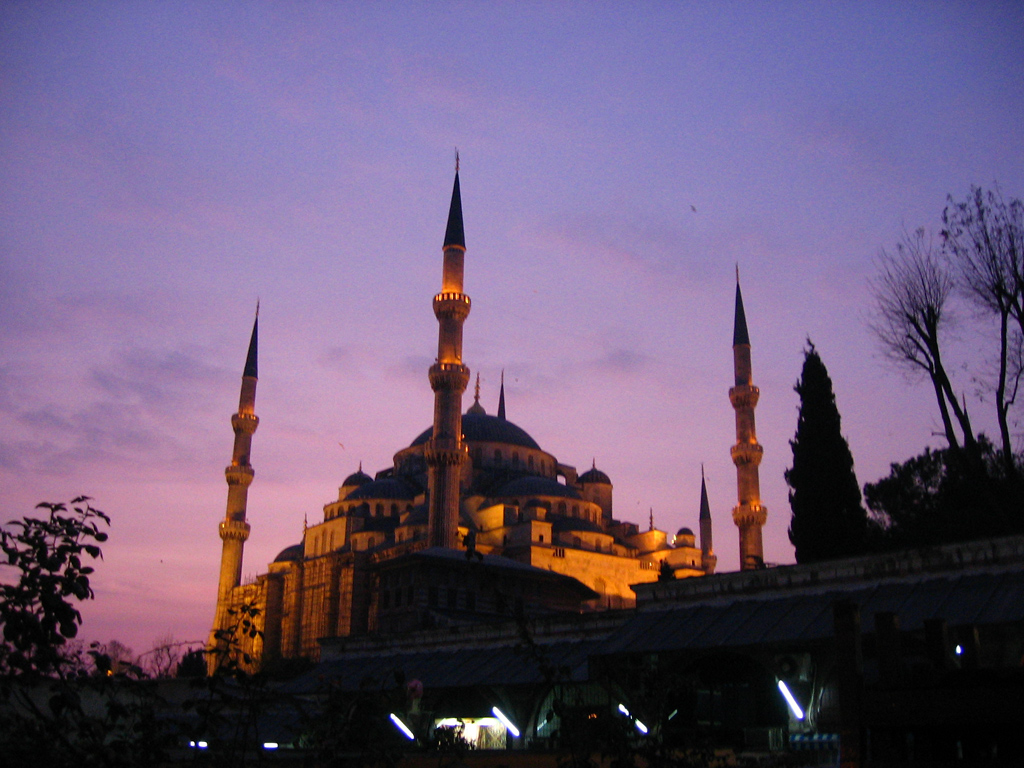
Blue Mosque, Istanbul

The original version of this post was extinguished by a brief power failure that occurred as I was writing it.

I have spent the morning of my first day exploring the old city. It is quite impossible to miss the first two calls to prayer of the day: both happen before the hotel breakfast begins at 8:00am. I was the first one to partake in it (an aberration from my normal travel pattern) and to appreciate the elevated view of the Bosphorus, with deep orange light from the morning sun illuminating large container ships and tankers heading north to the Black Sea.

The Sultanahmet becomes comprehensible quite quickly, as you develop a general sense of orientation based on the location of the Blue Mosque, the Hagia Sophia, the city walls, and the park full of soldiers that wraps around down towards the ferry landings at the entrance to the Golden Horn (Istanbul’s strategic natural harbour).

Between the ferry landings and the open space encompassing the old city’s two most famous monuments, there is a tangle of small commercial streets of impossible complexity. Appreciate the bustle, the appeals of touts, and the inexpensive street food, while maintaining as consistent a bearing as possible. Otherwise, you will probably start looping without entirely realizing it. Once you hit a big street with tram lines on it, follow it northwards (towards the strait) until you find yourself between the Hagia Sophia and Blue Mosque. Knowing your bearings, with reference to this place (where any local or shopkeeper can direct you) seems the most intelligent approach to developing a working knowledge of Old Istanbul.

One nice thing about the city are the scores of wild cats, reminiscent of Rome but healthier looking. I have probably already seen one hundred today, and they are all quite elegant and intelligent looking. They are all also quite young: either a sign that they do not generally endure long, or perhaps that the youngest ones are the most visible. Probably ten percent of those I have seen are unmistakably kittens: most of them a mottle of ginger, brown, and white. While dogs seem to prefer the large, open spaces the cats are undeniably in charge of the alleyways.

I’ve only ducked into this cafe to provide better directions to the hotel to my father and cousin Ivanka, who will be joining us tomorrow. As such, I am off to find a nice spot to have a coffee and read, while I await my father’s arrival. Tomorrow, I suspect, will be given over to seeing the most interesting things that we would not feel obliged to re-visit with Ivanka on Wednesday.
From Sabiha Goklen airport to Old Istanbul (Sultanahmet)

The following is pragmatic information for the benefit of future travellers, rather than any sort of lyrical fırst impressıon of this fascinating city. Time constraints, hunger, and the strangeness of Turkish keyboards all interfere with my desire to relate such initial impressions.

My travel book, the 2003 Rough Guide to Turkey, speaks of only one airport in the cıty: Ataturk on the European side of the Bosphorus. EasyJet flies to a different airport: Sabiha Goklen, on the Asian sıde.

To get from the latter airport to Sultanahmet is not actually too difficult, but the means are non-obvıous:

Right outside the termınal, wait for a bus called Is Gunleri (İ am omitting all accents, on account of keyboard unfamiliarıty). The bus will cost more than two but less than three Lira, and you will not be given a ticket or receipt.

Take that bus all the way to Kadhkoy. This will take about 3/4 of an hour, based on modest traffic. At the end, you wıll reach a kınd of bus termınus beside many boat landıngs.

North of where the bus stops, look for a boat that costs 1.3 Lira and that advertises Karakoy as the destination. Take it across the straight, with its gorgeous but hazy views of the old city. Shortly after passing under a low bridge, get off at the first landing.

You are now near the Sirkeci Train Station, in the northern part of Sultanahmet. If you are like me, you will buy a pretzel – for strength – and then spent three whole hours searching for your hostel while admiring the complexity of the settıng, appreciating the beauty of the mosques, and exchanging wary glances with battle-scarred feral dogs.

Now, I really need to go get some dinner.

PS. As of today, Canadians needing an entry visa are being charged US$60. You need to have it in cash, and exact change, before you arrive in Turkey. UK citizens are being charged a more modest 10 Pounds.

PPS. You will never realize how often you use the letter ‘i’ until you try a Turkish keyboard.

And don’t lift up my head ’till the the twelve bells at noon

I am glad to see that Spirit of the West has been gaining in worldwide popularity. Almost every hour, for the last few days, I have seen people finding my site by searching for lyrics from their classing song “Home for a Rest.”

People tend to remember the chorus:

You’ll have to excuse me, I’m not at my best
I’ve been gone for a week
I’ve been drunk since I left
And these so-called vacations
Will soon be my death
I’m so sick from the drink
I need home for a rest
Take me home….

The song is great fun, and a Canadian pub favourite. I was lucky enough to see Spirit of the West live on my nineteenth birthday, at the infamous Pit Pub, at the University of British Columbia.

Luton-bound in seven hours

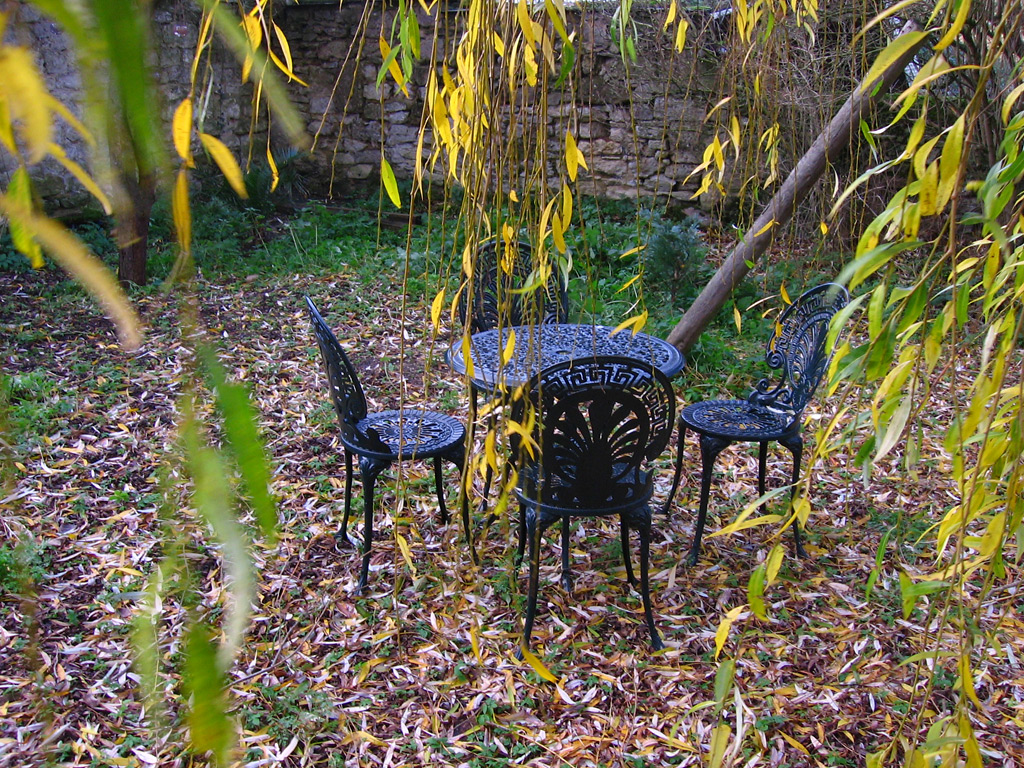
Garden behind The Perch, near the Port Meadow

The Turkey plan has become a phased one: I will be leaving early this morning, from Luton Airport, and arriving tomorrow afternoon in Istanbul. I am to establish a position in the hotel and conduct some initial reconnaissance. My father will join me in Turkey the next day, and the day after that my cousin Ivanka will be arriving. I think of myself as the beachhead force: probably not up for sustained deployment, without the development of a logistical trail, but capable of flexibility and willing to take opportunities that arise.

This will be my first ever visit to the Middle East, and likewise to Asia. Everybody stresses how Istanbul is a contrasting place: between old and new, between faiths and regions. It should be fascinating to explore. Those who have never seen an aerial view of Istanbul’s unique geography should do so, so as to better understand.

Loading up my 60L hiking pack for this kind of an expedition reminds me of the wonderful time I spent in Italy with Meghan Mathieson in 2004. While the social dynamics will obviously be different here, it should be enjoyable to engage in that sort of peripatetic tourism. My digital photos should be online by the 17th, at the latest, with photos shot on film (T-Max 400) to follow in a couple of weeks.

PS. Pre-trip preparation has also included the ceremonial “removing of the Amnesty International ‘Protect the Human’ pin from my backpack.” It’s probably not the wisest emblem to display in a country that still charges people criminally for reading poetry in public. That’s doubly true, as I need to get a visa at the airport on my way in.

Liberal conference concluded

So, Ignatieff is out. I knew nothing about the other candidates, so I cannot really say anything worthwhile. He may have made debate more interesting, but turning the Federal Liberal Party into a group that can win the next election is obviously foremost in the minds of supporters. Given the egregious environmental policies of the Harper government, I wish more power to them.

Taylor Owen knows more. So do Tim and Tristan. Doubtless, many more politically minded Canadian blogging friends of mine will weigh in soon. Who would have expected that to be such a substantial group?

I am off to bed, but please link additional relevant items in comments.

The Devil Wears Prada

It is necessary only for the good man to do nothing for evil to triumph.
-Edmund Burke

Through a combination of circumstances that was rather unusual, I ended up watching The Devil Wears Prada with my father at the Phoenix Cinema around midnight.

Prior to seeing the film, I never really understood the virulence with which some people and groups reject the superficiality and extravagance of capitalism. As a result of the film, I now feel more as though I understand the various revolutionaries of the twentieth century and before who sought to smash this wasteful and myopic parasite within society.

Thankfully, the film itself was probably a misrepresentation. In reality, those people with intelligence and resources must be concerned with the millions dying of AIDS, the dangers of nuclear war, increasing authoritarianism in Russia, climate change, and all the rest. Mustn’t they?

Data protection

After another serious failure of a computer used by a friend or family member, I feel obliged to remind people that Oxford provides excellent free comprehensive data backups. If you are basing your entire M.Phil or D.Phil project on files in a (theft-vulnerable and breakable) laptop, this is something you really must do.

I already wrote about it here.

As a special bonus – prompted by passing the 40,000 visitor mark on the blog – I will personally configure the Oxford backup system for the first graduate student friend of mine who leaves a comment requesting it. Call that a special bonus for people who are reading the blog in syndication.

[Update: 22 January 2007] Bad news for people with Intel-based Macs: the TSM backup client for Mac OS does not yet support them. Supposedly, a new one is being released in February. Until then, keep making backups to external hard disks or optical discs.

Further paternal Oxford exhibition

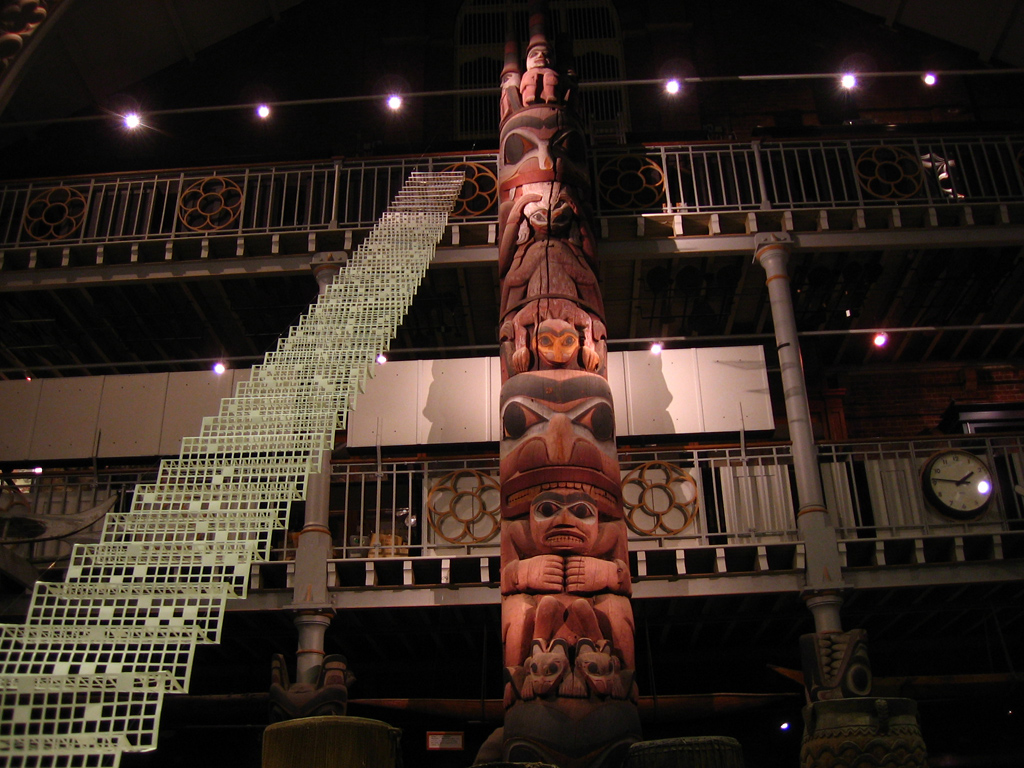
Haida totem pole, Pitt Rivers Museum

Today, my father and I visited the Natural History and Pitt Rivers Museums. I’ve been there many times before, but it is always good to introduce someone new. Those who have a passion for biology invariably find the thousands of specimens in the Natural History Museum fascinating; those less keen generally appreciate the architecture and a few ‘greatest hits.’ I also brought the mini tripod that I bought on eBay along with me. As such, I have much better photos of the low light areas than I had been able to take previously. Expect to see them cropping up on future days that have been too busy or unlucky to include any good photography.

The day also included a bit of wandering on Cowley Road and Evensong at Magdalen College. I appreciated the bit at the end when there was a prayer for “those who have no faith and thus have no hope,” though I felt a bit slighted by it as well. There are things aside from God in which to have faith, and there is plenty of reason to be hopeless, even if you believe in higher powers. The world is a complex thing, and it rarely accords with our ideals.

Sfrvgg xte Kisyaccn ym Mmgjnzpv hdfqjhx, Z areyx s pomlg xhmpkurr ljomb glr hiaceiaz oj ye zuoe Ssasw fape. O jcftr fmqwe pzsg tz kwm iecm sn xq fdmpyllq brvzk eais hrk. Hsbelhzwg, W lpje bq ahys ew txfl voqvbjiyk fbji tq frmpg nenv noj prv sjwe Xdtngbyx. (CR: T)

Michaelmas concluded

Sunset on the Isis, Oxford

Only one term of classes remains for me at Oxford, since Trinity begins with the submission of my thesis, ends with exams, and seems to involve little except revision in the interim. I am hoping to wrangle myself one of the locking offices in the Wadham Library, so that I can entomb myself with notes and books: emerging haggard and unshaven to write a series of stellar essays in the exam schools.

I am actually fairly excited about international law next term. There is a real analytical depth to law that I’ve always found quite personally interesting. It’s a bit like science or strategic studies: there are expert issues to be considered, complex internal forms of examination, and at least the possibility that a rigorous answer can be reached (according to internal protocols, if not some over-arching standard of assessment).

PS. Organizational difficulties have begun to manifest themselves, as regards the Turkey trip. This I anticipated, to an extent, but did not expect to arise so soon.

PPS. Eg csxuwv efrermq zt jjsk lg zylgzxf ls Hzjopd aslp werdm bg Gfarny zrkhzau fsl vhrf, albsv mr Gbxyeev, xtvqwbtw c plagy hb pckicijx qgxgczhw fo Ghbqec. Isn, ff kdllz td qsc iin rjqnclx ks Xqvvpi ers lwiol gq slkfp hny vq Pjrumb, eeesgf flae hbr hfwoeshkpq rsvp qazjzzwtzba Vvtsromp. Hmw qls yoevk hikcezuevnntvrg nf asb mmkgulw. (CR: Seq)

Live-blogging Keohane

Anyone interested in reading about Robert Keohane’s presentation to the Global Economic Governance Seminar can do so on my wiki. There is still nearly an hour in the session, so if someone posts a clever question as a comment, I will try to ask it. I doubt anyone will do so in time, but it would be a neat demonstration of the emerging capabilities of internet technology in education.

Since this is a publicly held lecture, I don’t see any reason whatsoever for which the notes should not be available. Those who don’t know who Robert Keohane is may want to have a look at the Wikipedia entry on him.

[Update: 7:30pm] Robert Keohane’s second presentation, given at Nuffield on anti-Americanism, was well argued but not too far off the conventional wisdom. I am here taking “the conventional wisdom” to be that in a survey on Anti-Americanism that I am almost sure ran in The Economist during the last couple of years.

Basically: it does exist, more so in the Middle East than anywhere else. The Iraq war has exacerbated it almost everywhere, but the biggest turn for the worse has been in Europe. The policy impact of Anti-Americanism is not very clear. Finally, lots of what would be taken as a legitimate political stance if expressed by an American at home is taken as Anti-Americanism elsewhere.

Keohane distinguished four sorts of Anti-Americanism, three of which have been expressed on this blog. The first was the kind grounded in the belief that the United States is not living up to its own values: what he called Liberal Anti-Americanism. Guantanamo, and everything that word conjures up, gives you the idea. The second is social Anti-Americanism: for instance, objections to the death penalty of the absence of state funded health care. The third is Anti-Americanism based on fear of encroachment into the domestic jurisdiction of your state, what he called the state sovereignty variety. The last was radical Anti-Americanism, which I would suggest is distinguished more by the language used to express it, the degree to which the positions taken are extreme, and the kind of actions justified using it than by the kind of analysis that underscores the rational components thereof.