Hegemonic geography

You probably aren’t American, but can you name all fifty states in ten minutes? I got 48. It would have been 49 if I could remember how to spell ‘Massachusetts.’ With that freebie, why not see how good you are at it.

PS. Which one did I forget entirely? One hint: while there are a few sets of North-South states, there is only one ‘West’ state.

PPS. One more hint: start with the ones you have visited. Then, do the coasts. Then, think of the states major cities are in. Then, think about recent news events, prominent primary elections, and whatever else can possibly assist you in the last couple of minutes.

Scientific tourism

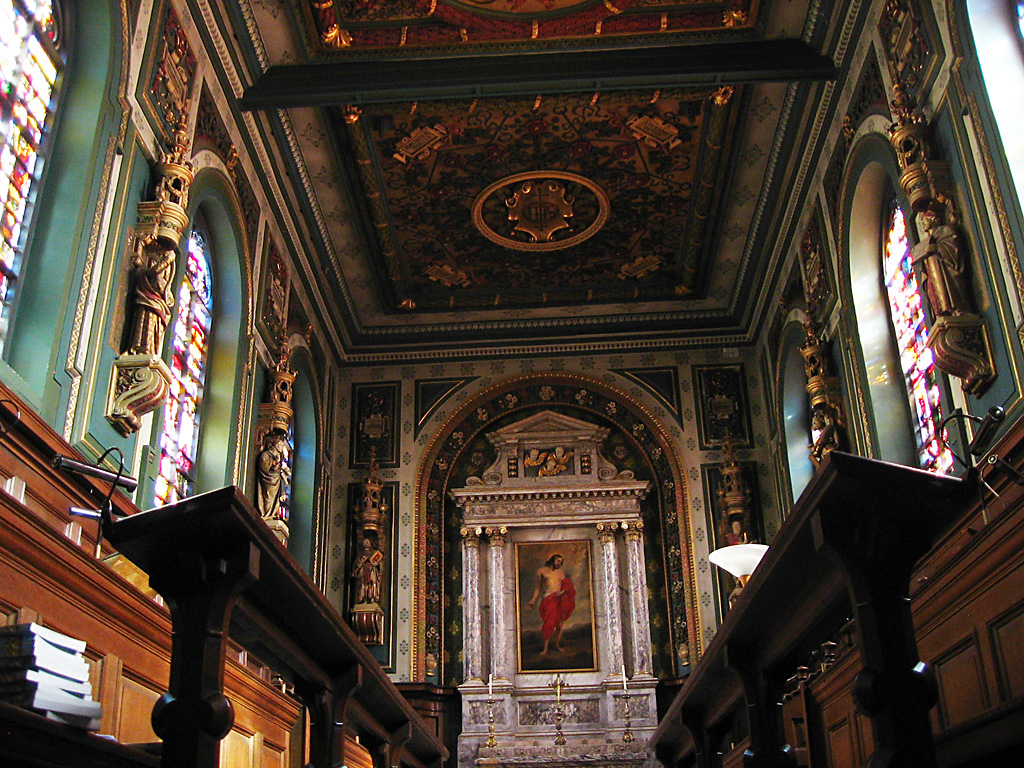
Pembroke College, Oxford

During the last little while, I have become aware of a group called the Earthwatch Institute which has an interesting approach to participating in environmental research and the promotion of sustainability. Since 1971, they have linked more than 80,000 volunteers to more than 2,500 different research projects. The volunteers contribute both financially and through their labour, in exchange for which they get to see some amazing places, meet and work with scientists, and generally gain a better understanding of the world. While you have to wonder how helpful non-specialists could actually be during such a project, it does sound like it would be fascinating.

If you have always envied the people zipping around on helicopters or piloting ships through Antarctic waters, this might be your only opportunity, short of becoming a research scientist. Right now, they are organizing expeditions to Alaskan glaciers, the Amazon river basin, coral reefs in the Bahamas, and a number of other places besides. They seem to cost about $2000-3000, not including travel to the location in question.

For those without scientific training to go on such expeditions may be a bit touristic, but I can see how it could contribute valuable resources to projects – particularly those involving scenic places and photogenic animals.

Who watch him lest himself should rob / The prison of its prey

In case anyone doubts that the War on Terror creates situations straight out of Kafka, reading this article from The Guardian is in order. Sabbir Ahmed, a British citizen, was held in a detention centre for nearly two months because officials thought he was Pakistani and wanted to deport him there. He couldn’t prove that he was British because his passport was in his London flat and they offered him no other means by which to prove that he was, in fact, born in Blackburn as the son of two other British citizens.

He ought to be receiving some pretty heavy compensation, and high level apologies and/or sackings, for this kind of massive incompetence. Of course, this also speaks of institutional racism. Frances Pilling, chairwoman of the charity Bail for Immigration Detainees, said: “They chose not to pursue any avenue of investigation at all.” If he had been white and named John Brown, they might have accepted that he was from Blackburn after calling the Passport Office, or even some people there who would vouch for him.

It goes to show, yet again, that we have more to fear from government than from terrorists.

A disappointing presentation

If it had been an intellectual argument, Professor Timothy Luke‘s presentation on climate change tonight might have been subject to some strong criticism. As it was, it was essentially a smug collection of sniping ad hominem arguments directed at Al Gore, Nicholas Stern, and the concept of liberal environmentalism generally. He made clear that he holds these people in contempt – using a mocking tone of voice while quoting their work – but never really explained why, beyond some vague suggestions that ‘ecopopulism’ would be superior, and how the powerful and the plutocratic are aligned to remain in control. The idea that grassroots organizations will somehow directly access environmental science, then manifest their new preferences through the popular alteration of the political dialog seems rather unlikely. While you can certainly engage in argument with knowledge brokers like Nicholas Stern and Al Gore (starting that argument is much of the point of their work), simply attacking them for being part of existing governmental and economic systems carries little water.

One can hardly expect leaders of politics and industry to abandon their power and the standard economic system. That is especially true when you don’t seem to have any well-formed idea about what the alternative might be. By nor following up his scorn with substance, Professor Luke left us with little value for our time.

A new library, precious sources

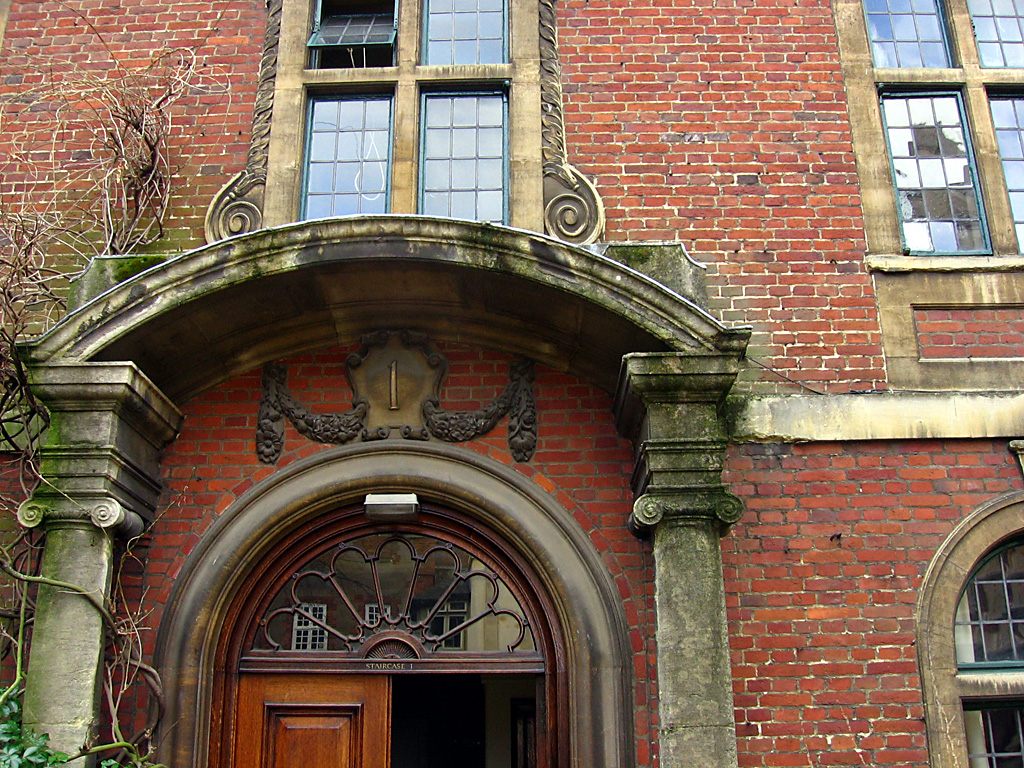
St Peter’s College, Oxford

While I am a certifiable idiot for not realizing it earlier, it transpires that the Geography and the Environment Library on Mansfield Road has a treasure trove of thesis related books. In five minutes flat, I registered to use the library and take out their books. I now have an elegant stack of books on the history of climate change: just the sort I have been looking for, while despairing about the gap in my bibliography. Once I have finished Spencer Weart’s The Discovery of Global Warming, read John Hardy’s Climate Change: Causes, Effects, and Solutions, tracked down a few of their sources, re-read Northern Lights Against POPs, and done the same for that, I will be ready to re-draft my second chapter in a far superior form.

The library itself is also quite a welcoming place. I will link a photo of it here, once I have the chance to put one online. The main room, has a very attractive asymmetrically gabled roof. It is quiet, smells faintly of wood, and has high resolution monitors and blazing fast internet access. The maps on the wall, skylights, and windows overlooking the Balliol Sports Grounds are also reasons for which I am considering making this another thesis base of operations, in addition to Church Walk and the High Street Starbucks.

Chapter two, second version

I have been thinking about how to incorporate the general ideas from this post into the revised and clarified version of my second chapter, upon which I am now working. It seems that there are three axes across which environmental problems can be assessed: predictability, intentionality, and desirability. Of these, the third is most likely to have different values for different actors.

The mine tailings example is certainly intentional, for it is an inescapable and obvious product of mining activity. The predictability score depends on the status of knowledge about the health and ecological consequences of particular tailings at the time when they were released into the environment. Here, there is also a discussion to be had about the extent to which an actor engaged in something that could well have ecological or health consequences is morally obligated to investigate what those may be. There are also questions about whether private actors are merely obliged to follow the law, or whether they need to act upon moral considerations with which the law has not explicitly saddled them.

On the matter of desirability, the range includes possibilities of utility gain, indifference, and loss. The mining company probably has an indifferent or unfavourable view of tailings: if they could be avoided for moderate cost, they would be. This is certainly true now that the consequences of certain tailings are known and legal and moral obligations on the part of such companies are fairly well entrenched. A more interesting possibility is environmental change that increases the utility of some, while diminishing that of others. This could happen both with intentional acts (say, building a dam) or unintentional ones (the unintended introduction of a species into a new area).

In any event, the new plan is to boil the introductory portion of the chapter down until it is only about 1000 words long. Then, I will write 2500 words each on the case studies, and 1000 words in concluding comments. Most of the existing commentary will be migrated into the case study sections. The best way to do all of this is probably to re-write from scratch, then import and vital elements and citations from the old version. A similar chapter model can be adopted for the third and fourth chapters and, since most of the research being done covers all three, they should prove reasonably easy to write once it is done.

[Update: 3 March 2007] I now feel confident that the version of the chapter to be submitted tomorrow, four days late, will be enormously superior to what could have been submitted on time. This owes much to the new books I got at the Geography and Environment Library. Those with restricted wiki access can have a look at the emerging draft.