
Yorke asks you to name your price

In a publicity stunt / experiment in the changing climate of the music business, Radiohead is selling their new album “In Rainbows” online, for whatever the buyer wishes to pay. The website where this is done looks so ugly that it made me initially suspect that the thing is a scam (reading about it here doesn’t mean for certain that it isn’t). The mainstream media seem to have bought it, so it is probably genuine. No matter when you pay, they won’t send you the download link for the album until October 10th.

For my part, I paid the mean price of an Oxford pint. That is more than they would have gotten from me in the alternative, as I stopped buying their albums long ago, during the long slide from the brilliance of “OK Computer” into the mediocrity of their later work.

[Update: 10 October 2007] I received my copy of the album. It arrived in the form of ten DRM-free 160 kbps MP3 files. I will comment on the quality of the music once I have had more time to absorb it.
The Two Mile Time Machine

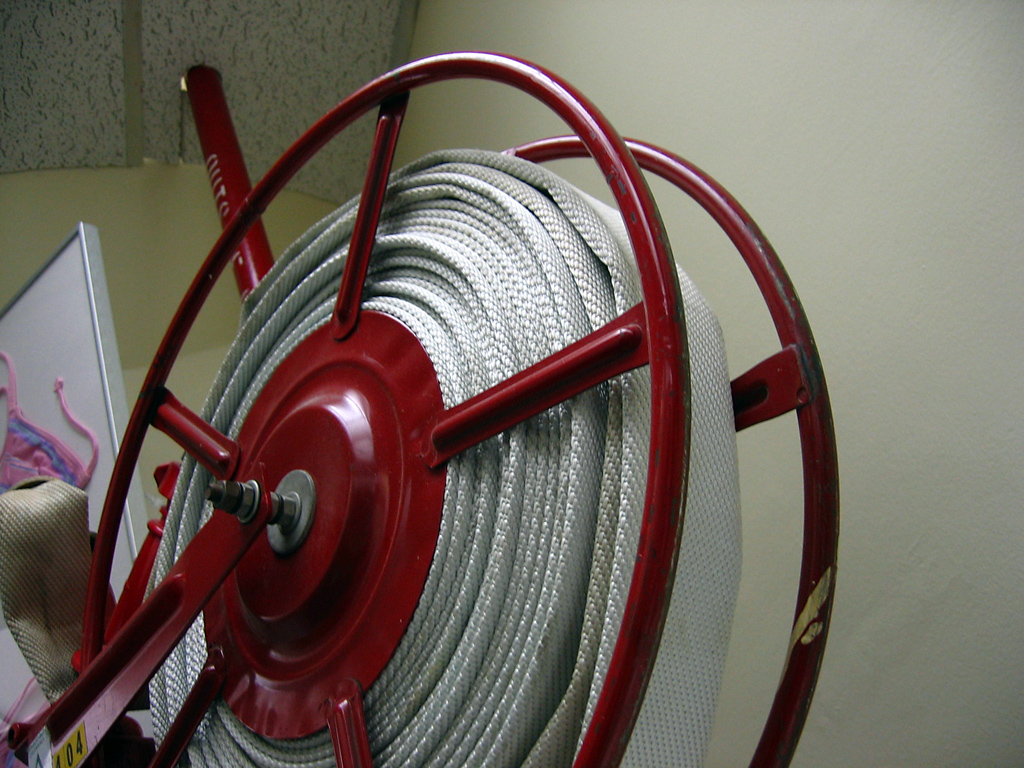
Fire hose reel

Richard Alley’s The Two Mile Time Machine: Ice Cores, Abrupt Change, and Our Future provides a good, though slightly dated, explanation of the science of ice core sampling, as a means for studying the history of Earth’s climate. Alley focuses on work conducted in Greenland prior to 2000. The book combines some surprisingly informal background sections with some rather technical passages about isotopic ratios and climatic cycles. Overall, it is a book that highlights the scientific tendency to dive right into the details of one area of inquiry, while skimming over many others that actually relate closely – especially if you are trying to use the science as the basis for sound decision-making.

This book does not really warrant inclusion in the first tier of books to read on climate change, but it certainly provides some useful background for those trying to develop a comprehensive understanding of the area. Arguably, the best contribution it makes is explaining the causes and characteristics of very long climatic cycles: those stretching over millennia or millions of years, with causes including orbital variation, continental drift, and cryosphere dynamics.

Given the amount of new data and analysis that has been undertaken since this book was published, a new edition may well be warranted. In particular, the very tenuous conclusions of Alley’s concluding chapters should either be revised, or defended in the fact of the new data.

Dear Apple: please quit it with the sabotage

One of the worst things about Apple is how they sabotage their own products with software updates. The update for wrecking unlocked iPhones is a recent example, but there are plenty of others. I remember when they restricted iTunes so that only five people could access your library every time you booted up. That made sharing music on big local area networks (like university residences) a lot less effective. Also, I remember when they forced a volume limitation on my iPod Shuffle by means of an update. I don’t think there has been a useful feature added to iTunes for years, except maybe the automatic downloading of album art for songs in your existing libraries.

Now, I only install security updates on my Mac. Anything promising new features is just too risky.