Faith and diversity

Stylized eye

The diversity of the modern world seems to pose a fundamental problem for religion. No matter which religion you are, most people are a different one. As a religious person, you basically need to believe that most of humanity is wrong (as I believe that people of all faiths are wrong). You need to believe that because of the supposed validity of religious truth. Either god exists or he does not; either he wants us to behave in certain ways or he does not.

As such, you can either accept that several faiths are acceptable to god (significantly diminishing the degree to which yours can be considered ‘true’ or special) or you can assert that most people hold faiths unacceptable to god, possibly courting damnation.

The first position demotes faith from ‘truth’ to ‘one possible truth among several.’ The second position clashes fundamentally with the idea of equal human worth. It also clashes the the idea that god is benevolent: it hardly seems benevolent to damn children who are born into the wrong faith and, since most people simply adopt the faith of their parents, this situation applies to most people throughout history.

No borrowed books

This evening, I was startled to realize that I have only been inside one library since I arrived in Ottawa in July. That was during the tour of Parliament I took with Emily, and thus didn’t involve touching a single book. This is certainly a dramatic change from Oxford: where I would frequently visit two or more libraries in a single day.

Partly, I suppose this is a reflection of my present wealth of unread books. Even devoting as much time to reading as I do, there doesn’t seem to be enough time available to make a great deal of progress through the list. In addition to that, I haven’t been doing much in the way of book-based research. Hopefully, that will change as time goes by.

SONAR and modern naval warfare

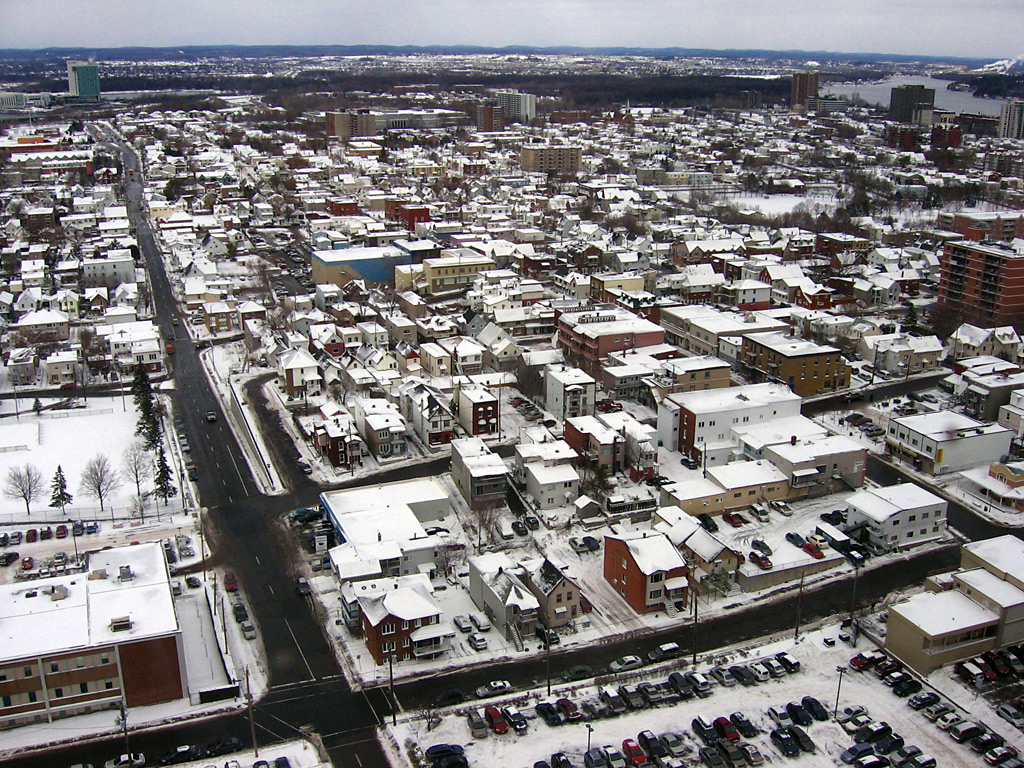
Gatineau in the snow

Arguably, submarines are the greatest threat to a modern carrier battle group. Aircraft can be detected at long range using over the horizon RADAR and picket ships. Subs generally need to be located using SONAR, though magnetic anomaly detection can sometimes locate them as well.

Warm surface waters are separated from the chilly bulk of the ocean by a layer called the themocline. The fact that this layer reflects sound makes SONAR based detection across it highly challenging: especially when the contact is something as quiet as a modern hunter-killer submarine. It is possible to use active sonar (the pinging thing from movies), but the sound produced by such systems reveals your position to others for a distance ten times greater than the effective detection range of the device. It also horribly damages the ears of whales, especially when used at crazy amplitudes like 250 decibels.

One way to deal with the thermocline problem while still using undetectable passive SONAR is to use a towed variable depth sonar array. For a ship, that would be pulled along beneath the thermocline. For a sub, it would probably be deployed above the layer. Another approach is to exploit convergence zones. Because of the nature of water under pressure, sound gets reflected off the ocean floor and back to the surface at intervals of 61 km. Sounds originating in one place can thus be best detected at points forming concentric circles.

Problems with SONAR are much worse in shallow waters, where high levels of noise from animals, waves, and tide noise make passive SONAR pretty useless. As such, modern navies avoid such waters as much as possible and behave as though they have already been detected by enemy forces whenever forced to operate within them.

Homeopathy is fraud

It astonishes me that anyone takes homeopathy seriously as a kind of healing. Essentially, the idea is to take a substance that causes symptoms similar to those a person has (hot pepper for fever, etc) and then dilute it to an enormous extent, producing a solution that is essentially water. The dilution can be so extreme that it becomes probable that no molecules of the original substance are in a dose of the ‘medicine.’ This is then given to people who are told it will somehow help to make them well.

The solutions given are basically just water and/or alcohol, so they are fairly unlikely to harm anyone. Of course, they are as likely to have a positive medical effect as sprinkling the credulous with fairy dust. Any benefit is purely the result of the placebo effect. The fact that giving someone anything and saying it will make them better actually does in many cases is well understood.

As such, it is a bit shocking that such practitioners stay in business and that anyone takes them seriously. People are being misled (perhaps not lied to, since homeopathy practitioners may believe this stuff) and charged money for something useless. If nothing else, consumer protection organizations should be vocally and persistently objecting to this nonsense.

The Golden Compass under review

It’s a sad day when a Canadian school board pulls your favourite children’s book from the shelves in dozens of libraries because it is allegedly ‘anti-religious.’ To be fair, Philip Pullman‘s The Golden Compass does take a critical stance on dogma and on hierarchical organizations. Elements can be taken as specific criticisms of the Inquisition and other religious abuses. At the same time, the book is engaging, well-written, and excellent. In characterization, creativity, and content it puts the Harry Potter books to shame, while also tackling much more important themes. The book was recognized by with the Carnegie Medal in 1995, and was selected by the Carnegie judges as one of the ten most important children’s novels in the past 70 years in 2007.

While the Halton Catholic District School Board clearly does have some responsibility for the selection of books in its school libraries, this choice is a mistake. If their students are going to have any kind of meaningful religious life, they are going to need to engage with criticisms of faith. That doesn’t necessarily mean giving them each a copy of The God Delusion, but it does require maintaining an atmosphere where questioning and discussion are possible. Simply stripping out high quality books that raise awkward questions is educationally irresponsible and theologically dubious in a faith supposedly based on personal relationships between individuals and God.

[Update: 4 December 2007] Emily has written a post about this book and another about the process of reading it.

Methane clathrates and runaway warming

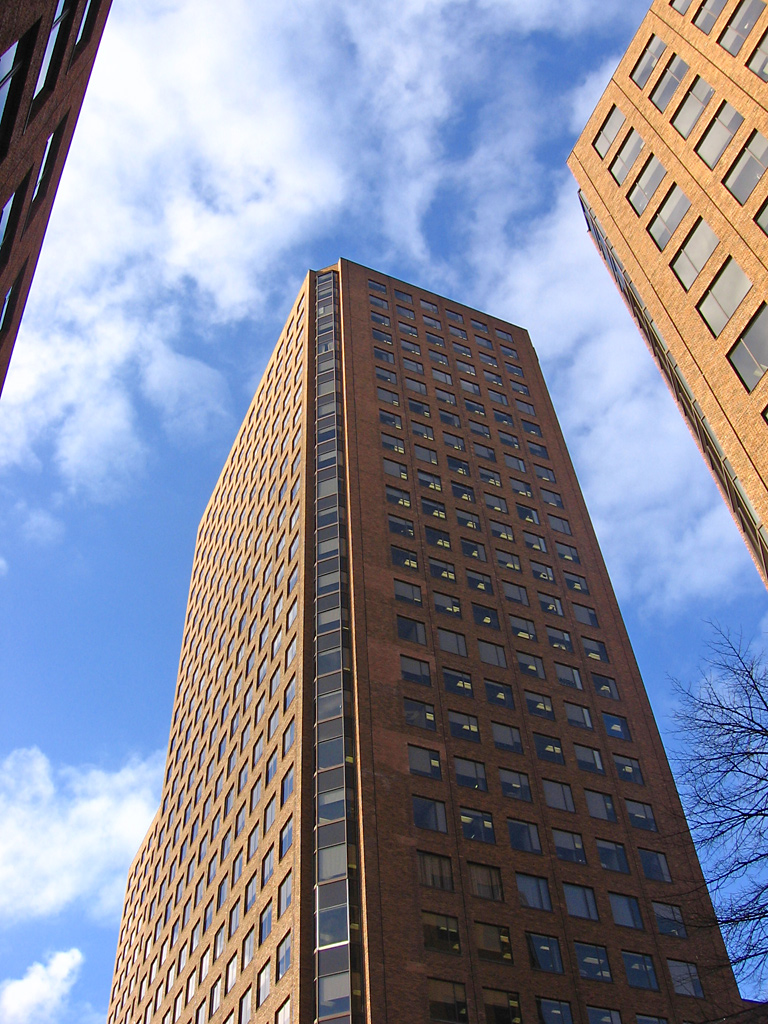
Terraces de la Chaudière

Essentially a form of ice infused with methane, clathrates may seem an obscure topic for discussion. They exist only under extreme conditions: such as underneath oceanic sediment. What makes them significant is the sheer volume of methane they contain. While it is unclear what degree of warming would be required to induce methane release from clathrates, there is a very real possibility that such release could be self-reinforcing. Given the global warming potential of methane and the volume of the gas in oceanic clathrates, such a self-sustaining release could induce abrupt and massive climatic change.

As a greenhouse gas, methane is potent. Averaged across a 100 year span, one tonne of methane produces as much warming as 25 tonnes of carbon dioxide. Even worse, when atmospheric methane breaks down, it generally oxidizes into carbon dioxide and water. Taking into account secondary effects, the warming potential of a tonne of methane is about equal to 72 tonnes of CO2 (according to the Fourth assessment report of the IPCC). This is one reason people are so concerned about the climatic effects of meat production, as well as the reason for which methane capture projects are one of the more credible kinds of carbon offset.

Recent estimates hold that ocean clathrates contain 500-2500 gigatonnes of carbon dioxide equivalent: akin to 100-500 years worth of sustainable emissions. About 400 Gt of carbon dioxide equivalent is in the Arctic permafrost. If a substantial proportion of this methane were to be released, it would take the world into completely unknown climatic territory. As such, it is highly likely that the adaptive capacity of both humanity and existing ecosystems would be overwhelmed, perhaps to a degree akin to the Permian-Triassic extinction event. This is truly the nightmare scenario for climate change, though its probability cannot be accurately assessed in relation to any combination of human behaviours and natural variations.

The existence of such exceedingly dire possibilities affects economic calculations about climate change. While it may not be sensible to spend 20% of global GDP to avoid an outcome with a 0.1% chance of occurring, a strong argument can be made that heavy expenditure is justified in the face of catastrophic risk. It is not as though we have another planet to fall back on if this one gets rendered unfit for human habitation.

[Update: 4 February 2009] Here is a post on the danger of self-amplifying, runaway climate change: Is runaway climate change possible? Hansen’s take.

[Update: 19 February 2010] See also: The threat from methane in the North.

Four Economist articles on climate change

Sorry to post a bunch of links from one source, but this week’s Economist is unusually dense with worthwhile articles about climate change:

There is one on federal legislative efforts in the United States – focusing on the Lieberman Warner bill that has been dominating attention in the Senate. It isn’t as tough as a superior proposal from Bernie Sanders and Barbara Boxer, but it stands a better change of thrashing its way through committee and onto the Senate floor. Of course, even a bill that gets through the Senate would need to be made compatible with a bill passed by the House of Representatives and avoid being vetoed by the President. Even so, the kind of cap-and-trade bills that are appearing in the Senate may well be indicative of the kind of legislation to expect from the next American administration.

American states have traditionally been ‘policy laboratories’ and have often developed environmental policies that were later adopted federally. Examples include rules on automobile emissions and sulphur dioxide emissions which cause acid rain. A second article briefly discusses the Regional Greenhouse Gas Initiative (RGGI): one of the two most important regional initiatives in the US, along with the Western Climate Initiative. Again, this is more a sign of what may be to come than a hugely influential thing unto itself.

A less encouraging trend is demonstrated by an article on the increasing popularity of coal. What is especially distressing is that coal plants are even being built in Europe, which has gone further than anyone else in regulating carbon emissions. Clearly, prices are not yet high enough and regulatory certainty is not yet firm enough to effectively discourage the use of coal for electricity generation. The new plants aren’t even being built in a way that can be easily modified to incorporate carbon capture and storage.

One last story is more tangentially related to climate change: tomorrow’s federal election in Australia will partly turn on voters responses to the positions adopted on climate change by the Labor and Conservative candidates, respectively.

In general, I don’t think The Economist takes the problem of climate change seriously enough. They write good-sounding articles in situations where it is the focus, but often miss it completely or mention it only trivially in articles on energy trends, business, or economic growth. That said, their ever-increasing coverage of the issue is probably representative of its ever higher profile in the planning of the world’s most influential people.

Problems with carbon markets

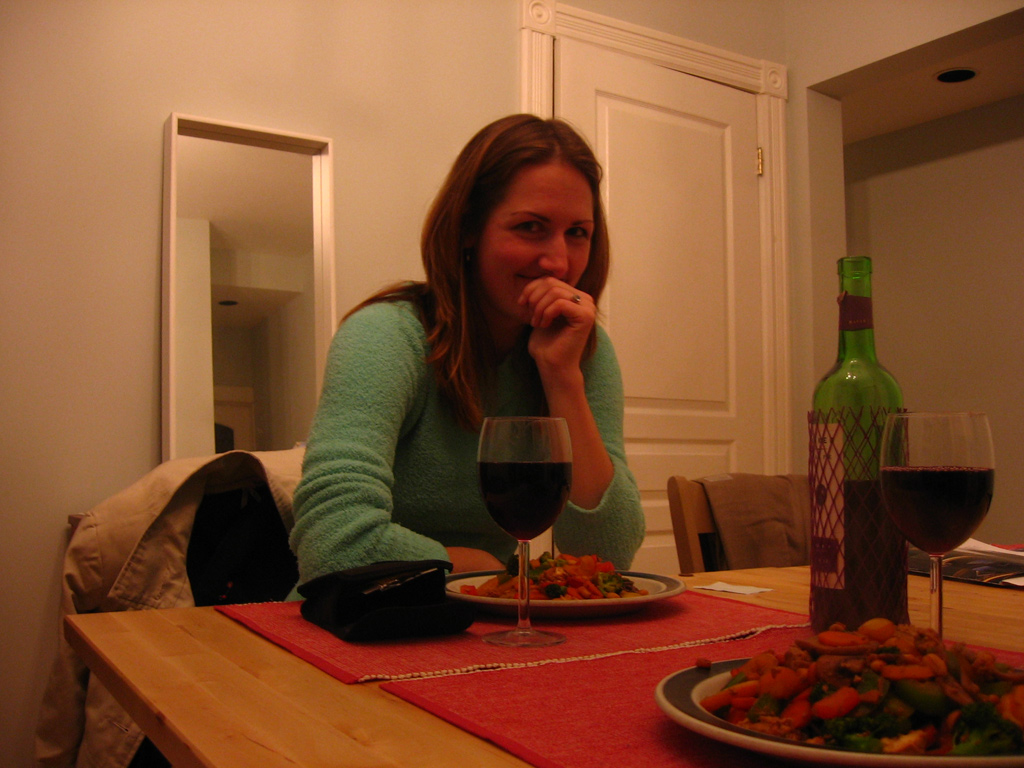
Meaghan Beattie and tasty food

A recent article in Scientific American makes a lot of good points about carbon markets and emission trading. Perhaps most important among them is the recognition that the simple existence of a market cannot ensure good environmental outcomes: there must be strong and appropriately designed institutions backing it up. Otherwise, well-connected firms will be able to wriggle through loopholes, fraud will occur at an unacceptable level, and cheating will be endemic.

The article points out some of the big failures in carbon markets so far. Within the European Union Emission Trading Scheme, far too many permits to emit were distributed for free. As a result, their price collapsed in April 2006. Even worse, coal companies in Germany and elsewhere were given free permits to pollute, able to sell some of those permits for cash, and willing to charge their customers for carbon costs that never existed. Also problematic has been the prominence of HFC-23 (trifluoromethane) projects within the Clean Development Mechanism of the Kyoto Protocol. Getting rid of HFC-23 entirely should have only cost about $136 million. It has an absurdly high global warming potential (12,000 times worse than CO2), and is easy to destroy and replace with less problematic chemicals. So far, firms have been able to earn $12.7 billion for partial elimination. The authors of the article suggest that simply paying for the $136 million worth of equipment would be far more sensible than allowing firms to exploit the price difference between the value of emission reduction credits and the cost of eliminating HFC-23.

Other problems with markets include the difficulty of working out what emissions would have been in the absence of some change (the approach used for many carbon offsetting systems) and the way markets can encourage incremental approaches to emission reduction rather than the fundamental overhaul of industrial sectors and energy infrastructures.

None of this is to say that markets are not important. Indeed, carbon pricing is an essential component in the fight against climate change. What it shows is that participants in markets cannot be implicitly trusted, and neither can the governments operating them. There must be mechanisms for oversight and enforcing compliance and a constant awareness about possibilities for cheating or gaming the system. Insofar as it has helped people to develop a better sense of these things, the Emission Trading System of the EU has been a valuable front-runner.

Premature touchdown

The story of what happened to Japan Air flight #2 on November 22nd, 1968 is a strange one. The pilot brought the plane down in a normal landing procedure, though he managed to land the plane several miles ahead of the runway, in San Francisco Bay.

It was my belief, previously, that everybody died on commercial airliners that landed in the sea. I had heard that the drag from the engines going through the water decelerates everyone so violently that they never get to find out how good (or poor) the flotation of their seat cushion really is. Not only did these passengers not die, but the plane was in good enough shape to repair and use again.

Two factors make me think this was less bad then an emergency water landing. For one, the water wasn’t deeper than the plane. Apparently, “the rising water stopped just short of the bottom sills of the cabin doors.” That might mean there was less sudden change in velocity. For another, the plane was making a normal powered landing. The pilot apparently thought he was about to touch down on tarmac. Pilots landing a plane in water with no engine power, or limited engine power, (the only reason you would land the plane there) might have a lot less control of their velocity and the craft’s orientation at the time of impact.

To his credit, the pilot made no excuses for the crash – accepting the blame personally. In honour of Captain Kohei Asoh, this tactic is now called the Asoh Defence.

Winter begins

Six days ago, I got a light dusting.

Yesterday, I walked to work through sludge and tore my best trousers on a fence while trying to avoid a massive slush puddle that cars were using to drench me.

Today, there is proper snowfall outside – at a level where West Coast schoolchildren could be forgiven for expecting school to be cancelled. The prospect of month after month of weather like this makes me nervous. It also makes it increasingly clear that I am going to need to make another capital outlay for winter gear. I thought I was done spending money on the very expensive move from Oxford to Ottawa once I managed to get furniture and curtains for my flat. Not so.

Just 29 days until I escape (briefly) to the relative paradise of Vancouver.