…in order categorical

All of the entries on this site have been sorted into one or more categories. Just for the sake of experimentation, I will use the next 21 daily posts (the ones with photos are generally the ‘official’ daily posts) to go through my whole list of categories one by one. This will occur in no particular order. Some posts are likely to fall into multiple categories, but they will only count as the most relevant one for the purposes of the tally:

The numbers beside each category indicate the number of posts so far.

Best Ottawa bike shop

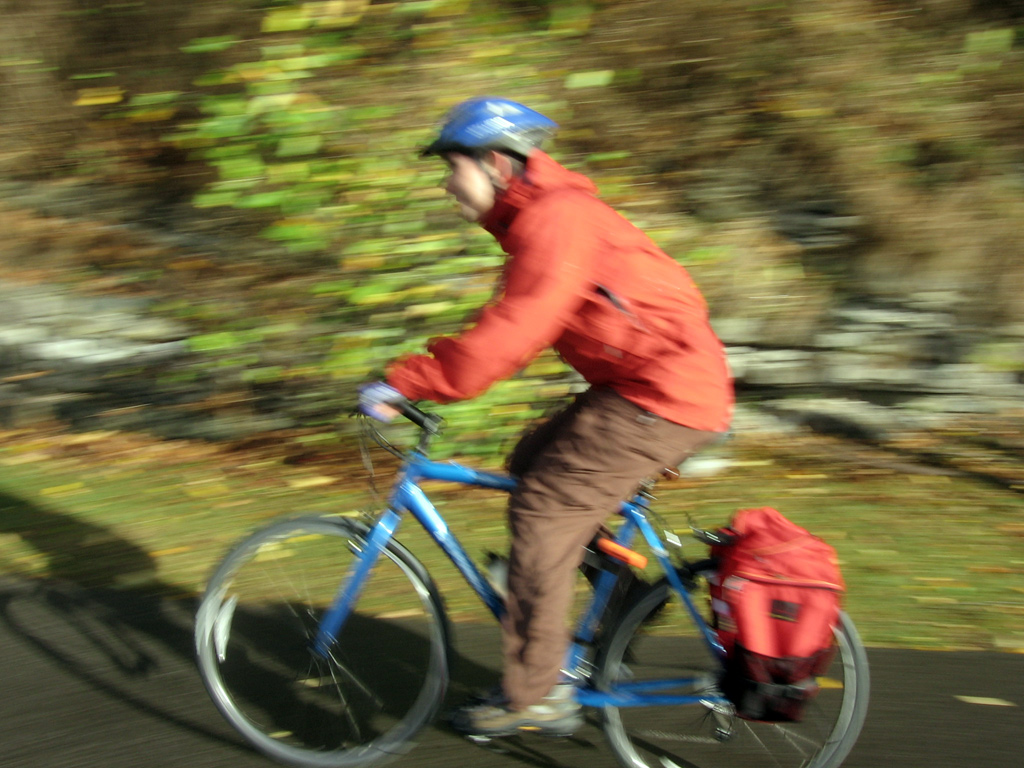
Milan Ilnyckyj on a bike

When I moved to Ottawa, I didn’t know where to go to buy a bike. With the benefit of experience, I can tell other newcomers that their best bet is to go to G.M. Bertrand Cycles in Gatineau. They are at 167 Wellington Street. I recommend them because they have the most knowledgeable and helpful staff of any of the ten places or so I visited. Many of their staff members are bilingual and the rest have been happy to put up with my broken French. They have good products at reasonable prices and they stand behind them. When the front light they sold me failed after three weeks, they replaced it with a better one with no questions asked.

The Bike Dump seems to be the Ottawa bike shop that gets the best press. While I may not have had a representative experience, I saw no reason for which that praise is justified. Their bikes were overpriced and not in terribly good condition. They have bad hours, only accept cash, and have an indifferent staff. G.M. Bertrand is a much better choice.

Cleaner coal

Coal is a witches’ brew of chemicals including hydrocarbons, sulphur, and other elements and molecules. Burning it is a dirty business, producing toxic and carcinogenic emissions including arsenic, selenium, cyanide, nitrous oxides, particulate matter, and volatile organic compounds. Coal plants also produce large amounts of carbon dioxide, thus contributing to climate change. That said, some coal plant designs can reduce both toxic and climatically relevant emissions to a considerable extent. Given concerns about energy security – coupled with the vast coal reserves in the United States, United Kingdom, China, and elsewhere – giving some serious thought to cleaner coal technology is sensible.

Integrated Gasification Combined Cycle (IGCC) plants are the best existing option for a number of reasons. Rather than burning coal directly, they use heat to convert it into syngas, which is then burned. Such plants can also produce syngas from heavy petroleum residues (think of the oil sands) or biomass. One advantage of this approach is that it simplifies the use of carbon capture and storage (CCS) technologies, which seek to bury carbon emissions in stable geological formations. This is because the carbon can be removed from the syngas prior to combustion, rather than having to be separated from hot flue gases before they go out the smokestack.

The problems with IGCC include a higher cost (perhaps $3,593 per kilowatt, compared with less than $1,290 for conventional coal) and lower reliability than simpler designs (this diagram reveals the complexity of IGCC systems). In the absence of effective carbon sequestration, such plants will also continue to emit very high levels of greenhouse gasses. If carbon pricing policies emerge in states that make extensive use of coal for energy, both of these problems may be reduced to some extent. In the first place, having to pay for carbon emissions would reduce the relative cost of lower-emissions technologies. In the second place, such pricing would induce the development and deployment of CCS.

One way or another, it will eventually be necessary to leave virtually all of the carbon that is currently trapped in coal in the ground, rather than letting it accumulate in the atmosphere. Whether that is done by leaving the coal itself underground or simply returning the carbon once the energy has been extracted is not necessarily a matter of huge environmental importance (though coal mining is a hazardous business that produces lots of contamination). That said, CCS remains a somewhat speculative and unproven technology. ‘Clean coal’ advocates will be on much stronger ground if a single electricity generating, economically viable, carbon sequestering power plant can be constructed.

Mac security tips

Gatineau Park, Quebec

During the past twelve months, 23.47% of visits to this blog have been from Mac users. Since there are so many of them out there, I though I would share a few tips on Mac security. Out of the box, OS X does beat Windows XP on security – partly for design reasons and partly because it isn’t as worthwhile to come up with malware that attacks an operating system with a minority of users. Even so, taking some basic precautions is worthwhile. The number one tip is behavioural, rather than technical. Be cautious in the websites and emails you view, the files you download, and the software you install.

Here are more detailed guides from a company called Corsair (which I know nothing about) and from the American National Security Agency (who knew they used Macs?). The first link is specific to Tiger (10.4), while the latter is about the older Panther (10.3). I expect they will both remain largely valid for the upcoming Leopard (10.5).

Some more general advice I wrote earlier: Protecting your computer.

PS. I am curious about the one person in the last orbit who accessed this site using OS/2 Warp, back on February 17th. I hope it was one of the nuns from the ads.

Poison-absorbing plants

A recent article in Scientific American describes the use of transgenic plants to remove toxins from contaminated sites. The plants have genes for toxin and carcinogen metabolisis (for instance, using the enzyme cytochrome P450-3A) inserted into their DNA. The technique has been tested with plants intended to address trichloroethylene, chloroform, carbon tetrachloride, vinyl chloride, and benzene contamination. Such plants have also shown promise in removing remaining concentrations of the explosive RDX from soil in test ranges. At present, there is sometimes no choice but to scoop up huge amounts of contaminated soil and put it into landfills; plants that are able to seperate the toxins from the soil could promise to facilitate the process, as well as reduce costs.

The article is not entirely clear on whether the plants simply absorb the chemicals, becoming contaminated by them in turn, or whether they actually break them down. In the former case, they might be useful for concentrating air, water, and soil contaminants into plant matter than can then be disposed of as hazardous waste. In the latter case, they could perform remediation without the need for such careful treatment of their remains. Another question is how the plants would deal with combinations of chemicals, such as might be found in actual contaminated sites.

All told, it seems a promising potential use for biotechnology. The world is certainly well saturated with contaminated sites and having more cost effective means of reclaiming them could be a boon to both nature and human health. It remains to be seen whether these limited trials can be scaled up and made cost-effective for commercial or governmental use.

Unlettered society

National Archives of Canada

My ongoing fruitless search for lined correspondence paper has hammered home the degree to which letters have faded from our society. Not even specialized paper stores have ordinary letter paper for sale, it seems. This is no surprise, really, given how much more immediate and immersive other forms of communication are. The societal forces at work lead me to wonder whether we are even capable of writing letters anymore.

There was a long span of time during which letters were the only low-cost means of maintaining personal relationships at a distance. This began in the ancient world (though only because popular with the rise of mass literacy) and persisted until the rise of affordable long-distance telephone calls and the internet. Now, there are a myriad of more rapid and personal ways through which to exchange all manner of personal thoughts and information. Email was the dirt on top of the well-nailed coffin: allowing people the permanence and clarity of written language in a much quicker and more versatile way. Now, every office tower is stuffed with BlackBerried workers.

Yet the letter persists as an aesthetic ideal. People value them because of the time they take to construct and their enduring quality. I still have letters that Kate wrote me a decade ago. Still, I wonder whether people who are utterly acquainted with rapid communication are generally capable of writing things in a style suited to this slow and permanent route. Our communication styles have simply become too dynamic – we expect things to change quickly and for responses to be fluid. At the same time, all but a tiny minority of people have become utterly unpracticed in letter writing. Just as poetry and public speaking are no longer taught as a skill in schools, so too has letter writing been marginalized due to a lack of need and a lack of practice.

Overall, I cannot help but think this is a change for the better. People can remain in contact more vividly and extensively, despite how they tend to have groups of friends who are ever more spread out. Letter writing is destined to become an occasional curiosity – like the ‘paper making’ workshops that sometimes happen in elementary schools or craft stores (usually just re-assembling cut up bits of previously made paper). Hopefully, people who are engaging in the kind of correspondence that will eventually be published in books (if those do not vanish as well) have been keeping accessible and reliable paper copies. Digital media are fickle, and it would be rather tragic to lose such a historical record to failed hard drive bearings and changed file formats.

Fixed-wing / helicopter hybrids

A good number of readers probably know something about the V-22 Osprey tilt-rotor aircraft. They may recall the ad that Bell Helicopter Textron ran in The National Journal which explained that the aircraft “descends from the heavens” but “unleashes hell.” This would probably have attracted less controversy if it hadn’t shown American troops rappelling onto the roof of a mosque.

Many people argue that the V-22 is unsafe. Fewer people realize that it was a second attempt at this sort of vehicle. A predecessor called the DP-2 was even less successful.

What is it that makes Vertical Take-Off and Landing so difficult?

Bikes and stop signs

Car in emissions testing facility

Riding eastward across Ottawa from Booth Street towards Sandy Hill, it is far wiser to head north to the river and follow the riverside path than it is to push straight through Centretown. The most obvious reason for this is aesthetic, since the path offers a beautiful view of the river and Parliament Hill. A more technical reason has to do with traffic dynamics. As this paper on bicycle commuting explains:

Bicyclists can work only so hard. The average commuting rider is unlikely to produce more than 100 watts of propulsion power, or about what it takes to power a reading lamp. At 100 watts, the average cyclist can travel about 12.5 miles per hour on the level. When necessary, a serious cyclist can generate far more power than that (up to perhaps 500 watts for a racing cyclist, equivalent to the amount used by a stove burner on low). But even if a commuter cyclist could produce more than 100 watts, she is unlikely to do so because this would force her to sweat heavily, which is a problem for any cyclist without a place to shower at work.

With only 100 watts’ worth (compared to 100,000 watts generated by a 150-horsepower car engine), bicyclists must husband their power. Accelerating from stops is strenuous, particularly since most cyclists feel a compulsion to regain their former speed quickly. They also have to pedal hard to get the bike moving forward fast enough to avoid falling down while rapidly upshifting to get back up to speed.

For example, on a street with a stop sign every 300 feet, calculations predict that the average speed of a 150-pound rider putting out 100 watts of power will diminish by about forty percent. If the bicyclist wants to maintain her average speed of 12.5 mph while still coming to a complete stop at each sign, she has to increase her output power to almost 500 watts. This is well beyond the ability of all but the most fit cyclists.

In addition to stop sign frequently, terrain is also an important factor:

These problems are compounded at uphill intersections. Even grades too small to be noticed by car drivers and pedestrians slow cyclists substantially. For example, a rise of just three feet in a hundred will cut the speed of a 150-pound, 100-watt cyclist in half. The extra force required to attain a stable speed quickly on a grade after stopping at a stop sign is particularly grating.

This is especially true when there are drivers behind you freaking out because the time it takes you to accelerate will make them three seconds later in reaching the next red light or stop sign.

The whole article is worth a look. One fact most people will not know: Idaho allows cyclists to treat stop signs as yield signs, allowing them to cycle through at normal speed if no other vehicles are near the intersection.

Soggy runways

While they only represent a relatively small fraction of total emissions now, greenhouse gasses from air travel are growing rapidly. That said, one largely unanticipated check against their long-term rise may exist, if the potential sea rise effects of the disintegration of the Greenland or West Antarctic ice sheets become manifest.

This clever Google Maps mashup will show you what I mean:

Adding 7m to global sea levels (consistent with the melting of all of Greenland, all of West Antarctica, or half of each) would definitely drown a lot of runways. The Tokyo and London airports seem likely to be high and dry, though the cities themselves would be far from it.

Language training

Meaghan Beattie and giant pumpkin

My command of French has been in long-term decline since I graduated from elementary school and left the immersion program – with upticks in facility corresponding to some university courses and the Summer Language Bursary Program. Now, I am considering options to get back in stride a bit. I considered taking courses at Oxford, but lacked the time, money, and immediate reason for doing so.

One possibility I am considering is Rosetta Stone: interactive language software used by a number of branches of the American government and military. Buying the software is quite expensive but, due to an odd quirk, you can get access for $30 a year by getting a library card in Chattanooga. Has anyone used this software? I have seen mixed reviews, and am not sure if it is the best choice to resurrect my lumbering zombie French. I hear that the software is quite engaging, but also that it lacks cultural sensitivity and sometimes teaches words that are technically correct but rare in popular usage. Also, it is presumably focused on Parisian French rather than the Quebecois variety – though I might be forgiven for seeing the appeal of the former type of pronounciation, if only because it might be more easily understood when visiting other French-speaking parts of the world.

Other ideas would be appreciated. I really dislike listening to the radio, so French language news is largely out as a refresher possibility.