Vancouver ticket booked

My flight is booked and I can now say with certainty that I will be in Vancouver from the 21st of December until the 2nd of January. Hopefully, that span will include a big gathering of friends in North Vancouver, akin to my pre-Oxford departure party. Saturday, December 29th is a plausible date for the event.

Already, nights in Ottawa are developing a chilly edge. By late December, I expect that it will be with the most concentrated of joy that I trade the icy windswept streets of Ontario for the rainy windswept streets of British Columbia.

PS. My planned trip to B.C. was mentioned before.

[Update: 23 October 2007] According to the NativeEnergy carbon calculator, my flights to and from Vancouver will collectively generate 1.761 tonnes of CO2. As with my thesis, I decided to offset the emissions through the capture of methane. While offsets are far from perfect, they are quite probably better than doing nothing.

I was surprised to see that travelling the same distance by train would produce 0.727 tonnes of CO2. While that is 60% lower, we generally think of trains as being really dramatically greener than flying. I suppose the difference is largely that nobody travels very long distances by train.

The true price of nuclear power

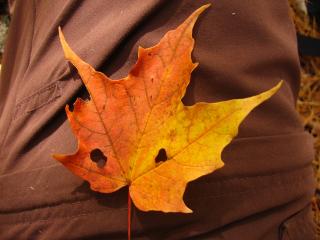
Maple leaf

Several times this blog has discussed whether climate change is making nuclear power a more acceptable option (1, 2, 3). One element of the debate that bears consideration is the legacy of contamination at sites that form part of the nuclear fuel cycle: from uranium mines to post-reactor fuel processing facilities. The Rocky Flats Plant in the United States is an especially sobering example.

Insiders at the plant started “tipping” the FBI about the unsafe conditions sometime in 1988. Late that year the FBI started clandestinely flying light aircraft over the area and noticed that the incinerator was apparently being used late into the night. After several months of collecting evidence both from workers and by direct measurement, they informed the DOE on June 6, 1989 that they wanted to meet about a potential terrorist threat. When the DOE officers arrived, they were served with papers. Simultaneously, the FBI raided the facilities and ordered everyone out. They found numerous violations of federal anti-pollution laws including massive contamination of water and soil, though none of the original charges that led to the raid were substantiated.

In 1992, Rockwell was charged with minor environmental crimes and paid an $18.5 million fine.

Accidents and contamination have been a feature of facilities handling nuclear materials worldwide. Of course, this does not suffice to show that nuclear energy is a bad option. Coal mines certainly produce more than their share of industrial accidents and environmental contamination.

The trickiest thing, when it comes to evaluating the viability of nuclear power, is disentangling exactly what sort of governmental subsidies do, have, and will exist. These subsidies are both direct (paid straight to operators) and more indirect (soft loans for construction, funding for research and development). They also include guarantees that the nuclear industry is only responsible for a set amount of money in the result of a catastrophic accident, as well as the implicit cost that any contamination that corporations cannot be legally forced to correct after the fact will either fester or be fixed at taxpayer expense. Plenty of sources claim to have a comprehensive reckoning of these costs and risks, but the various analyses seem to be both contradictory and self-serving.

Before states make comprehensive plans to embrace or reject nuclear power as a climate change mitigation option, some kind of extensive, comprehensive, and impartial study of the caliber of the Stern Review would be wise.

Carbon pricing and local food

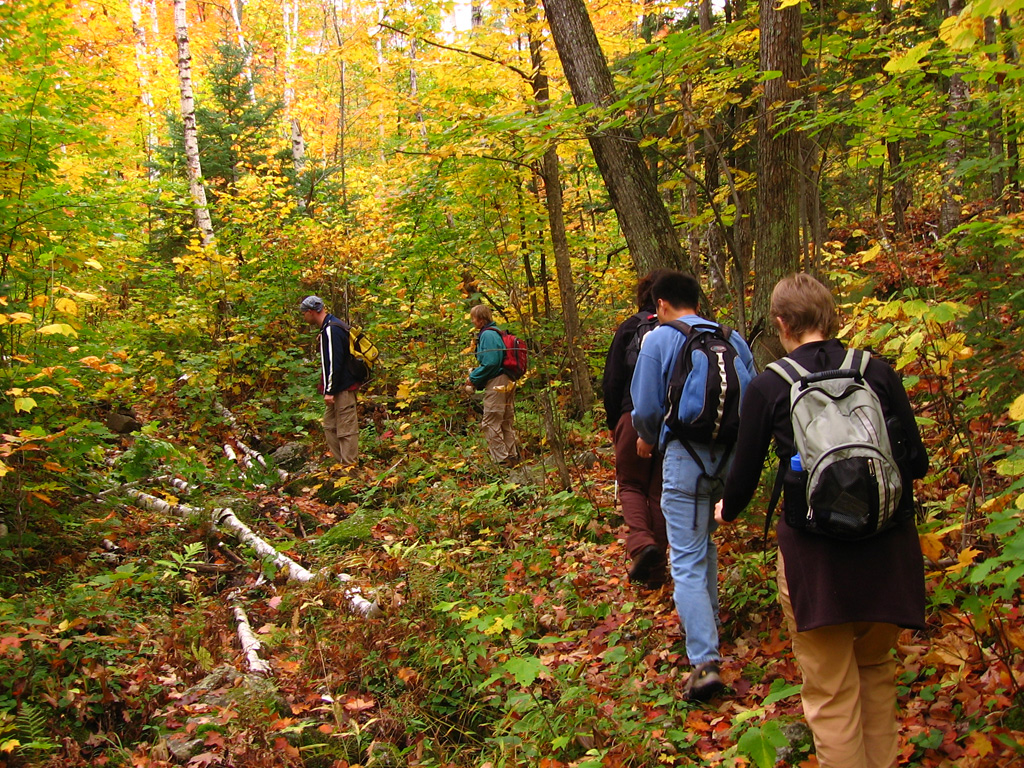
Ottawa Hostel Outdoor Club

I have been hearing a lot about food miles lately. While it is good for people to be aware of the productive processes that support them, I also have issues with the shape of the local foods debate. Just because something is produced closer to where you live does not mean it is more ecologically friendly or less climate harming. To take an extreme case: people living in very cold regions may find that it is far more environmentally sound to import food from warmer places than to grow it in greenhouses nearby. My focus here is on greenhouse gas emissions, but similar arguments can be made regarding water use, pesticides, etc.

What this debate really demonstrates is the lack of proper carbon pricing in the market. If CO2 emissions were included in the price of tomatoes or bananas, producers could choose to base production in whichever location is most efficient when carbon emissions (along with other factors) are taken into account. Until proper carbon pricing exists, there is justification for the intelligent application of the food miles concept. That said, I think the energy of environmentally aware people is much better spent advocating carbon taxes or cap-and-trade schemes than on encouraging people to spent their time buying local zucchini, rather than whatever sort is at the supermarket. By all means, attend farmers’ markets if you like them, but I think it is deluded to think they can make a meaningful contribution to reducing human emissions to 5,000 Mt of CO2 equivalent.

I can already feel the dissenting opinions coming on, for this post…

Jeffersonian trivia

Little known facts:

  1. Former American President Thomas Jefferson was an avid amateur palaeontologist.
  2. In an attempt to mock him, his political opponents gave him the nickname “Mr. Mammoth” during the 1808 election.
  3. He is credited with the discovery of an enormous ground sloth, larger than an elephant, that inhabited North America during the late Pleistocene.
  4. The creature now bears his name: Megalonyx jeffersonii.

These and many other entertaining facts come from the marvellous recent book The World Without Us, which has leapt to the top of my reading pile. I will post a full review when I finish it.

Children of Men

When was the idea of the post-apocalyptic future invented? I went to Blockbuster tonight in hopes of renting some clever comedy. Because of the unavailability of certain titles, recommendations from staff, delayed consequences from my trip to Morocco, and random factors, I ended up watching Children of Men instead. It makes for an uncomfortable accompaniment to my ongoing reading of The World Without Us. Then, there is Oryx and Crake and 28 Days Later. Even Half Life 2 had similar nightmare-future police-state fixations.

I wonder if it could be traced back, Oxford English Dictionary style, to the point where the first work of fiction emerged that envisioned the future as a nightmarish place. Furthermore, the first such fiction to envision human activities as the origin of the downfall. I wonder if ancient examples could be found, or whether it would all be in the last hundred years or so.

Vroom vroom

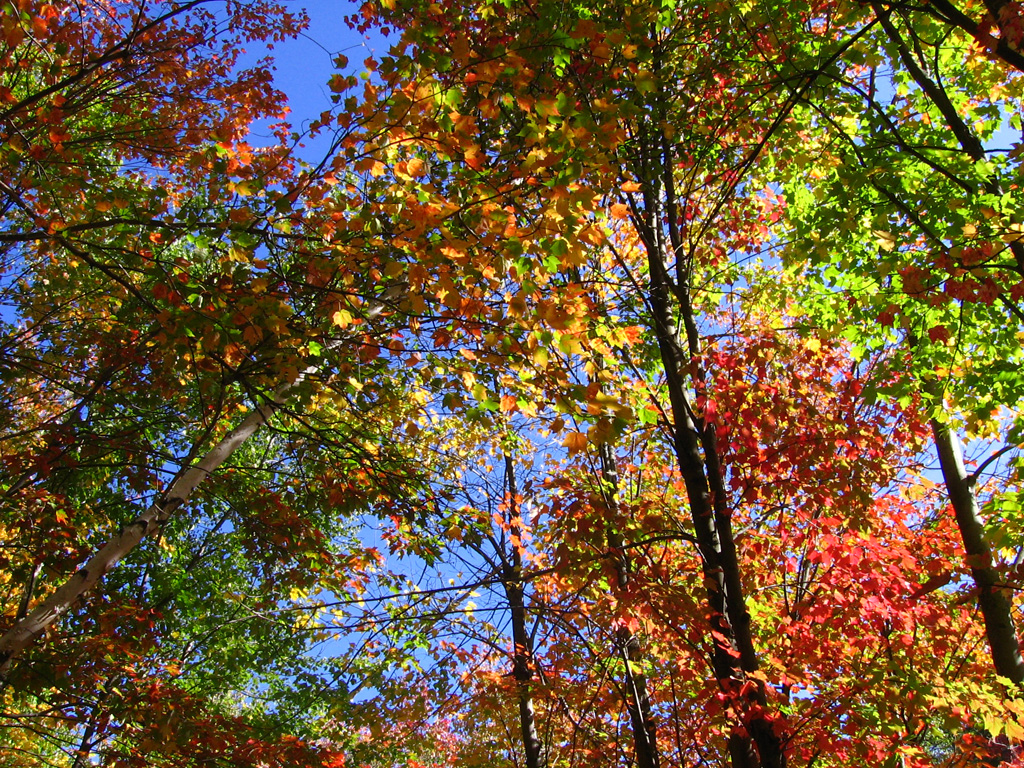
Gatineau Park foliage

The never-ceasing movement of cars along Booth Street, right outside my bedroom window, is far and away the biggest problem with my present dwelling. Whenever I am not wearing earplugs or headphones, it is a constant annoyance. Almost every morning, I wake up around 6:00am with one earplug fallen out (see previous). I catch myself idly wondering about ways to sabotage the road or direct the vehicles to another route.

All told, the flat is quite a good one. The location is good (near work, though a bit far from most interesting parts of town), the apartment itself is nice and of a good size, the inclusion of a private washer and dryer is very convenient, and the landlord is a nice guy. Even so, I suspect that car noise is going to set me apartment hunting as the end of my lease approaches next summer.

Seafood harm reduction

For those who haven’t taken the plunge into vegetarianism or veganism, but who are concerned about the ecological consequences of fish consumption, there are some good resources online. The Monterey Bay Aquarium has printable pocket-sized seafood guides, highlighting which species are harvested in relatively sustainable ways and which should definitely be avoided. The Blue Ocean Institute also has a number of resources, including a website for looking up species and a guide that can be downloaded.

Species that are particularly threatened (as well as often caught in highly unsustainable ways) include:

  • Bluefin tuna
  • Chilean Sea Bass (this is an industry name for Patagonian Toothfish)
  • Groupers
  • Orange Roughy
  • Atlantic Cod
  • Atlantic Halibut
  • Oreos (the fish, not the cookies)
  • Rockfish
  • Sturgeon Caviar
  • Snappers
  • Atlantic Salmon (note, all Atlantic salmon in the U.S. is farmed)
  • Sharks

While it is inadequate to think about marine conservation in terms of single species, such lists do provide a reasonably accessible way for consumers to scrutinize their actions. In the long run, however, marine resources need to be thought about in terms of whole ecosystems that need to be protected from threats including over-exploitation, toxins, and climatic changes.

Holidays ahead

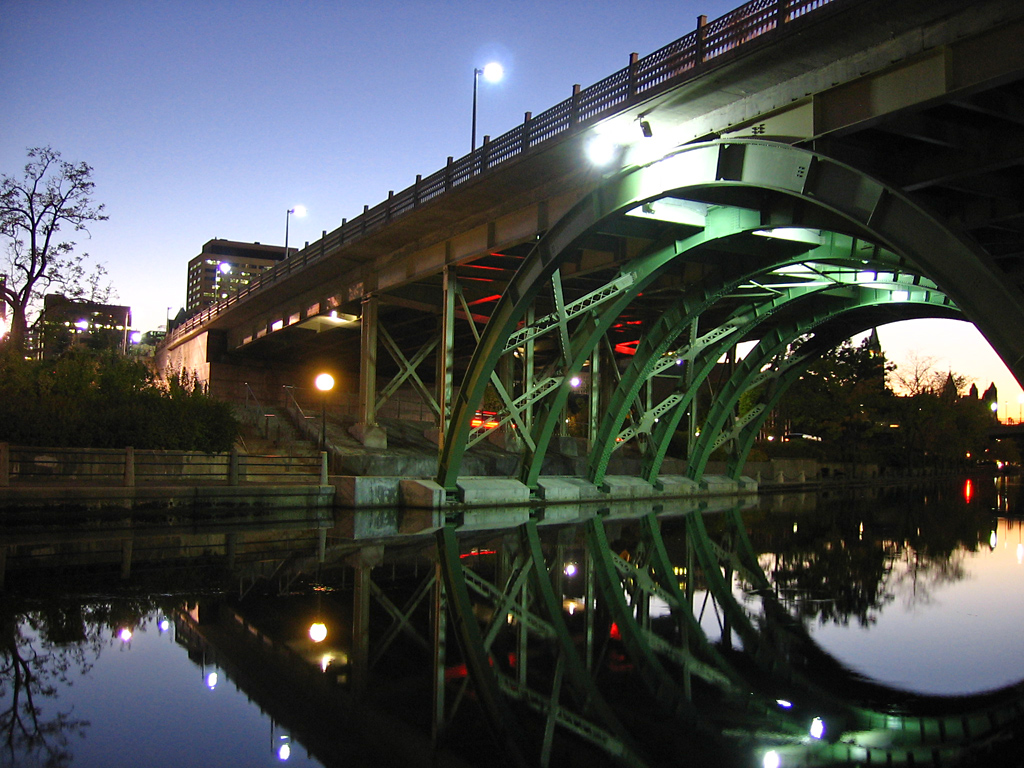
Rideau Canal bridge

Though it feels like the Labour Day weekend just happened, I now find myself on the cusp of another three day break from work. The Thanksgiving weekend is shaping up to include a good combination of activities. Some cycling will doubtless occur. On Sunday, I am doing my first trip with the Ottawa Hostel Outdoor Club (mentioned before). About twenty people are going on an exploratory hike to Ramsay Lookout. That evening, I have been invited to Thanksgiving dinner by a co-worker. I will have to make some kind of interesting veggie dish. Any suggestions (or recipes) would be most welcome.

Next Thursday, Meaghan Beattie is arriving in Ottawa. The next day, Tristan is coming from Toronto. Spending the weekend exploring Ottawa with them promises to be excellent. We should, for instance, finally visit the Civilization Museum over in Gatineau. October 16th marks the three-month point in my job. Between the 24th and 28th, I will be in Montreal. The first three days are for a conference, whereas the weekend is reserved for having fun in the city. I really enjoyed living there for a couple of months, back in 2003. I am told the train ride from Ottawa to Montreal – through all that autumnal deciduous landscape – should be very beautiful.

December should be really exciting. By taking four days off work and using the various statutory holidays, I should be in Vancouver from late on the 21st until the 3rd of January. It will be my longest span of time in the city since the summer of 2006. A big gathering of friends in North Vancouver should definitely be arranged, akin to my pre-Oxford departure party and previous such food-and-friend-laden gatherings. I feel guilty about the flight (0.8 tonnes of CO2 for the total journey of 7100km), but I am regrettably unable to take two months off work to cycle there and back.

The Storm Worm

The Storm Worm is scary for a number of good reasons. It acts patiently, slowly creating a massive network of drone machines and control systems, communicating through peer-to-peer protocols. It gives little evidence that a particular machine has been compromised. Finally, it creates a malicious network that is particularly hard (maybe impossible, at this time) to map or shut down.

This is no mere spam-spread annoyance. If it takes over very large numbers of computers and remains in the control of its creators, it could be quite a computational force. The only question is what they (or someone who rents the botnet) will choose to use it for, and whether such attacks can be foiled by technical or law-enforcement means. Hopefully, this code will prove a clever exception to the norm, rather than a preview of what the malware of the future will resemble.

Normally, I don’t worry too much about viruses. I use a Mac, run anti-virus software, use other protective programs, make frequent backups, and use the internet cautiously. While those things are likely to keep my own system free of malware, I naturally remain vulnerable to it. That’s where most spam comes from. Also, there is the danger that a network of malicious computers will crash or blackmail some website or service that I use. With distributed systems like Storm, the protection of an individual machine isn’t adequate to prevent harm.

Previous related posts:

Voice echoing off cave walls

Posting two entries a day with little or no personal content is: (a) time consuming and (b) seemingly uninteresting to the long-suffering readers of this blog. As such, I am declaring one post a day to be the standard, with unlimited allowance for additional posts if I feel inspired.

Sometimes, it is hard to know if anyone is even reading. If you have been, but you never leave comments, I would really appreciate if you did so here.