A notable volcanic outburst

Most people probably will not have heard 1816 referred to as the Year Without a Summer, but that is exactly what the eruption of Mount Tambora in what is now Indonesia seems to have made it. That May, frost killed or ruined most of the summer crops. In June, two large snow storms produced substantial numbers of human casualties. Hungary and Italy got red snow, mixed with ash, while China experienced famine associated with sharply reduced rice production. In total, about 92,000 people died and the global mean temperature fell by 3°C.

One random yet positive consequence was constant rain causing Lord Byron to propose a writing contest, which Mary Shelley eventually won with Frankenstein. The increased cost of oats may also have driven a German man named Karl Drais to invent the first bicycle. (He called it the ‘velocipede,’ which sounds like a fast-moving and dangerous insect.)

Such incidents are inevitable on a planet that remains geologically active, but they certainly demonstrate the degree to which natural patterns can change rapidly, as well as the degree to which human beings are dependant upon them not doing so.

Ice and pollen

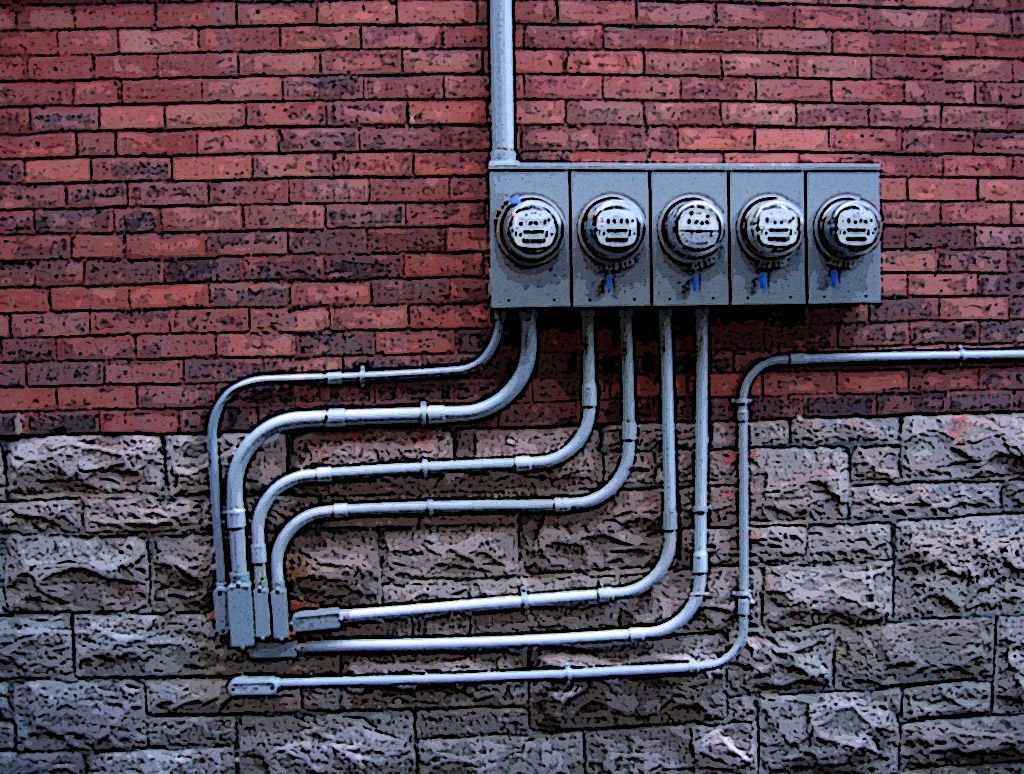
Brick and electrical metres

With good reason, ice cores have been getting a lot of attention lately. Their careful analysis gives us priceless insights into the history of Earth’s climate. Using cores from Greenland, we can go back more than 100,000 years, tracking temperature, carbon dioxide concentration, and even solar activity (using beryllium isotopes). Using cores from Antarctica, it is possible to go back about 650,000 years.

Ice cores can be even more valuable when they are matched up against records of other kinds. Living and petrified trees can be matched up, year for year, with the ice record. So can pollen deposits at the bottom of seas and lakes: arguably the richest data source of all. By looking at pollen deposits, it is possible to track the development of whole ecosystems: forests advancing and retreating with ice ages, the species mix changing in times of drought, and the unmistakable evidence of human alterations to the environment, going back tens of thousands of years.

Lake Tanganyika, in Tanzania, offers an amazing opportunity. 676km from end to end, it is the worst’s longest lake. It is also the second oldest and second deepest – after Lake Baikal in Siberia. Core samples from Tanganyika have already documented 10,000 years worth of pollen deposition. With better equipment and more funding, scientists say that it should be possible to collect data from the last five to ten million years: increasing the length of our climate records massively.

I am not sure if such an undertaking is already in the works. If not, it seems like the kind of opportunity we would be fools to pass up. If no government or scientific funding body is willing to stump up the cash, perhaps a billionaire or two can be diverted from their tinkering with rockets.

Polar opposites

By now, everybody knows that the Arctic summer sea ice is at an all-time low. What I only learned recently is that the extent of Antarctic ice is the greatest since satellite observation began in 1979. At the same time, it is undergoing “unprecedented collapses” like the much-discussed Larsen B collapse. Such realities hint at the complexities of the climate system.

Whereas the Arctic doesn’t have any effect on sea level, because it floats, the Antarctic rests on land. As such, changes in its ice mass do affect the depth of the world’s oceans. Antarctica is also the continent for which the least data is available, making it hard to incorporate into global climate models. As with all complex dynamic systems, there are non-linear effects to contend with. That makes it dangerous to extrapolate from present trends, especially when it comes to local conditions.

All this makes you appreciate why scientists frequently sound less certain about the details of climate change than politicians do. The harder you look at systems like the Earth’s climate, the more inter-relationships you discover, and the more puzzles there are to occupy your attention.

The coming cold

Mean monthly temperatures for Vancouver, Ottawa, and Oxford

Presenting the mean monthly temperatures of Vancouver, Ottawa, and Oxford on the same graph generates an interesting image. Vancouver is basically Oxford plus a couple of degrees in the winter and about five degrees in the summer. Ottawa is much more variable. In the zones where the lines intersect (around April and October), the mean temperatures for all three places are fairly comparable. That may partly explain why I have been finding the weather so pleasant recently.

I wish I had some data that included standard deviations of temperature on a month-by-month basis. I really have no idea which of the three places would have the most intra-month variability, though my suspicion is that it would probably be Ottawa.

The data for Oxford is from the Radcliffe Meteorological Station. The data for Vancouver and Ottawa is taken from the Meteorological Service of Canada.

Shake Hands with the Devil

There isn’t really any appropriate way to talk about a film like Shake Hands with the Devil (2007), given the way in which it is a recasting of a historical episode such as the Rwandan genocide. I suppose one can direct blame, as a response: at the great powers, at the United Nations, at Belgium, at the belligerents, at the genocidaires. Appropriate as that may be, the sheer appalling character of what was undertaken by human beings makes me wonder whether it would have been better if nothing in the universe had ever awoken to cognition, if all the atoms in all the rocks and stars had just interacted dumbly from the unfathomable origin of space and time to the entropic silence that will be the end of it.

One thing that is demonstrated by the experience of watching is the power of film as a medium; having read Dallaire’s book and even seen him speak, the horror was never conveyed with anything approaching the same visceral quality. In response, you can’t help but wonder what we really ought to be doing in Afghanistan now, or in Darfur.

Yorke asks you to name your price

In a publicity stunt / experiment in the changing climate of the music business, Radiohead is selling their new album “In Rainbows” online, for whatever the buyer wishes to pay. The website where this is done looks so ugly that it made me initially suspect that the thing is a scam (reading about it here doesn’t mean for certain that it isn’t). The mainstream media seem to have bought it, so it is probably genuine. No matter when you pay, they won’t send you the download link for the album until October 10th.

For my part, I paid the mean price of an Oxford pint. That is more than they would have gotten from me in the alternative, as I stopped buying their albums long ago, during the long slide from the brilliance of “OK Computer” into the mediocrity of their later work.

[Update: 10 October 2007] I received my copy of the album. It arrived in the form of ten DRM-free 160 kbps MP3 files. I will comment on the quality of the music once I have had more time to absorb it.

The Two Mile Time Machine

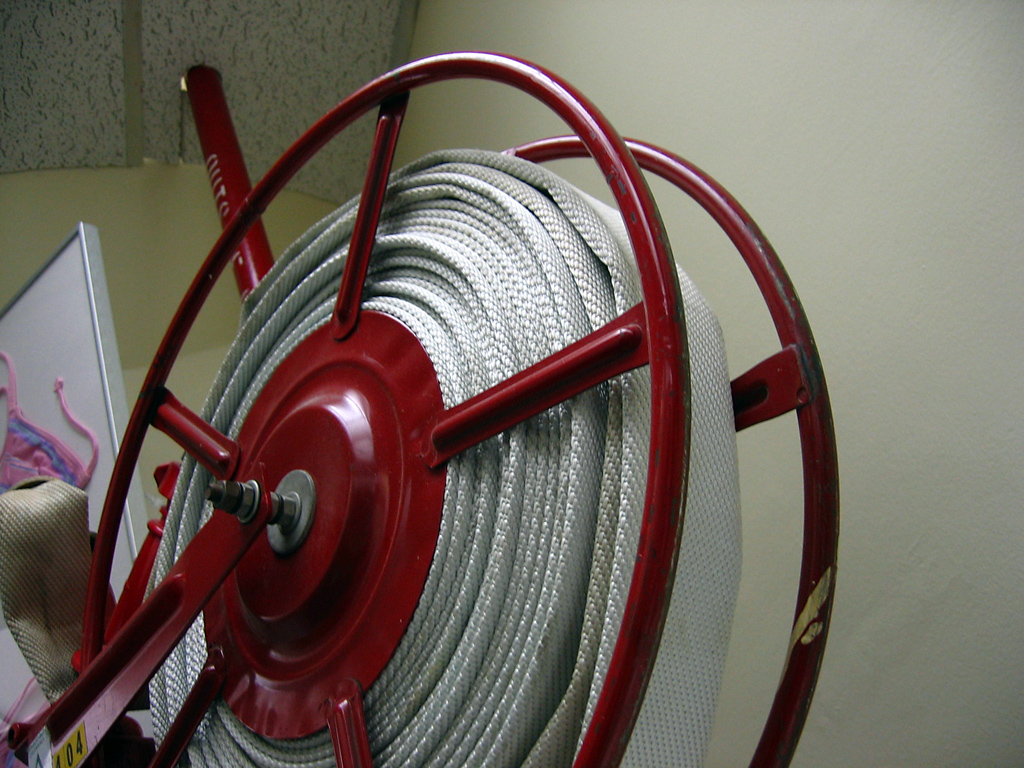
Fire hose reel

Richard Alley’s The Two Mile Time Machine: Ice Cores, Abrupt Change, and Our Future provides a good, though slightly dated, explanation of the science of ice core sampling, as a means for studying the history of Earth’s climate. Alley focuses on work conducted in Greenland prior to 2000. The book combines some surprisingly informal background sections with some rather technical passages about isotopic ratios and climatic cycles. Overall, it is a book that highlights the scientific tendency to dive right into the details of one area of inquiry, while skimming over many others that actually relate closely – especially if you are trying to use the science as the basis for sound decision-making.

This book does not really warrant inclusion in the first tier of books to read on climate change, but it certainly provides some useful background for those trying to develop a comprehensive understanding of the area. Arguably, the best contribution it makes is explaining the causes and characteristics of very long climatic cycles: those stretching over millennia or millions of years, with causes including orbital variation, continental drift, and cryosphere dynamics.

Given the amount of new data and analysis that has been undertaken since this book was published, a new edition may well be warranted. In particular, the very tenuous conclusions of Alley’s concluding chapters should either be revised, or defended in the fact of the new data.

Dear Apple: please quit it with the sabotage

One of the worst things about Apple is how they sabotage their own products with software updates. The update for wrecking unlocked iPhones is a recent example, but there are plenty of others. I remember when they restricted iTunes so that only five people could access your library every time you booted up. That made sharing music on big local area networks (like university residences) a lot less effective. Also, I remember when they forced a volume limitation on my iPod Shuffle by means of an update. I don’t think there has been a useful feature added to iTunes for years, except maybe the automatic downloading of album art for songs in your existing libraries.

Now, I only install security updates on my Mac. Anything promising new features is just too risky.

Musical introduction

111 Sussex

For many years now, I have wanted to know more about the history and details of music. Other than listening, my musical experience is all more than a decade old, and consists of (badly) playing the recorder and autoharp in elementary school. From time to time, various friends with musical knowledge have given me some informal background information, but I would appreciate something more comprehensive.

Can anyone suggest a book that does a good job of laying out what things like chords, octaves, syncopation, fugue, etc, etc actually mean? I tend to appreciate books that combine technical with historical elements best. Something that covers the evolution of music may be ideal.

Vermont’s regulatory victory

Well known as a progressive place, Vermont seems to have recently struck a notable blow in the fight to develop regulatory structures to address climate change. A heated court case had developed between car manufacturers and the state government about whether the latter could impose tough emission limits on cars and light trucks. William Sessions, a federal judge, found in favour of the state’s right to do so. You can read the entire judgment here: PDF, Google Cache.

Among the arguments brought forward by the auto makers (and rejected by Sessions) were that the regulations were unconstitutional, impossible to meet with existing technology, economically disastrous, ineffective, and anti-consumer. The case also involved a reasonably complex jurisdictional issue regarding California’s special exemptions to set environmental policy more broadly than other states.

There do seem to be a suspicious number of cases where industries have followed this trajectory in relation to new regulations: saying that they are unnecessary, saying they would be financially ruinous, then quietly adapting to them with little fuss once they come into force. The phase-out of CFCs in response to the Montreal Protocol is an excellent example. This trend is explicitly recognized in the ruling:

Policy-makers have used the regulatory process to prompt automakers to develop and employ new, state-of-the-art technologies, more often than not over the industry’s objections. The introduction of catalytic converters in the 1970s is just one example. In each case the industry responded with technological advancements designed to meet the challenges…

On this issue, the automotive industry bears the burden of proving the regulations are beyond their ability to meet…

In light of the public statements of industry representatives, history of compliance with previous technological challenges, and the state of the record, the Court remains unconvinced automakers cannot meet the challenges of Vermont and California’s GHG regulations.

The fact that Chinese cars have to meet better emission standards than American ones strongly suggests that the objections of industry are bogus. Given the price inelasticity of demand for gasoline (people keep buying about the same amount when the price goes up), regulating fuel efficiency and emissions does seem like an efficient way to reduce GHG emissions in the transport sector.