Spook Country

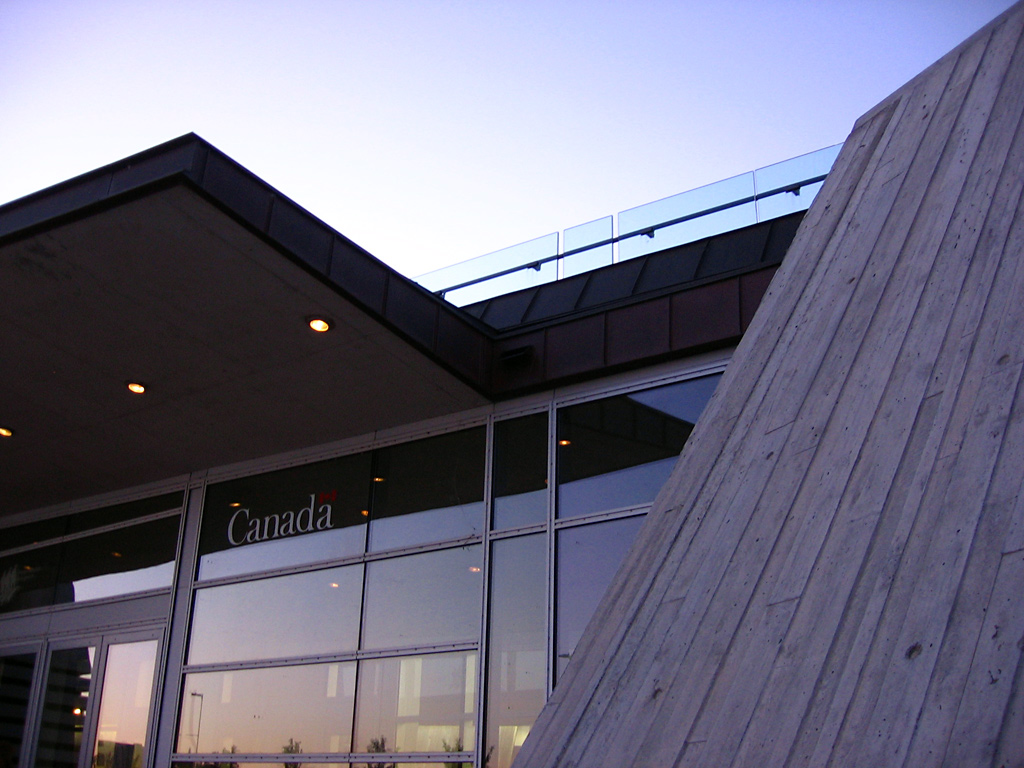
Ottawa War Museum entrance

William Gibson is an author who burst into the world with a brilliant first novel, then never did anything equivalent again. Neuromancer is a remarkable piece of science fiction and marked the starting point of the cyberpunk sub-genre. Unfortunately, Gibson’s further forays into that terrain – which extended across about twenty years – never produced something of even moderately comparable quality.

Recently, he has moved on to writing technology-centred books set in the present. Spook Country, which I finished today, is his latest such work. It follows Pattern Recognition, his first novel of this type, and improves on it to a certain extent. As such, it is probably the best thing he has written since Neuromancer. Like Pattern Recognition, it is better at setting up a mystery than it is at revealing an interesting solution at the end. Part of what made Neuromancer so remarkable was the strength of the characters. There was no danger of confusing them or having them become blank nothings. Spook Country‘s most significant flaw is that, for all but a few characters, there is no such definition, and thus no such interest.

If you have never read Gibson, and have any appreciation for science fiction, I recommend reading Neuromancer. If you have read it already, you would be well advised to give Spook Country a try. If you are a technologically inclined Vancouverite, you are likely to find every page addressing you directly.


Decimal time

Parliamentary stonework

Time has been discussed here before. As it stands, it is a lot like the imcomprehensible currency system in England before a Pound became 100 pence. Unlike currency, however, time has relatively good reasons for being confusing. The day, the year, and – to a lesser extent, the month – have some kind of basis in the astronomical reality of our planet. Having years of a sensible length is especially important, if we want the heavens to be at all easy to keep track of.

Of course, revolutionaries are known for overthrowing the staid traditional order. As such, there have been efforts to revise time. The French Republican Calendar is probably the most notable example. It confused millions of people for a good number of years, both after the revolution and during the Paris Commune.

A few other examples of decimal time can be found here. The oddest, perhaps, is ‘Swatch Internet Time‘ which sought to do away with time zones altogether. Sir Sandford Fleming would not be amused.

Shrimponomics

Ashley Thorvaldson and Marc Gurstein

Here is an interesting blog post analyzing theories about why people are eating more shrimp than was previously the case. In short, people without training in economics seem to focus more on the demand side than people with such training.

One response that surprised me was “a rise in the number of vegetarians who will eat shrimp.” Now, if you are a vegetarian because you think it is wrong to kill cows and chickens for food, that may be a sensible position. If you are a vegetarian for general reasons of ecological sustainability, it is a lot less valid. As fisheries go, shrimp is one of the worst when it comes to bycatch. The UN Food and Agriculture Organization says that the present shrimp catch is at least 50% above the maximum sustainable level. Shrimp also tends to be collected through a process called bottom trawling: where large steel rollers smash and kill everything on the ocean floor.

Shrimp aquaculture is arguably even worse. There are all the problems attendant to all agriculture – close quarters, disease, harvesting other creatures unsustainably to turn into feed, antibiotics, etc – and then there is the fact that mangrove swamps are ideal for conversion into shrimp farms. The UN Environment Programme estimates that 1/4 of the total destruction of these important ecosystems has been brought about by shrimp farming.

From an ecological standpoint, vegetarianism (and probably veganism) remains a far preferable option, compared to eating meat.

A closer look at the War Museum controversy

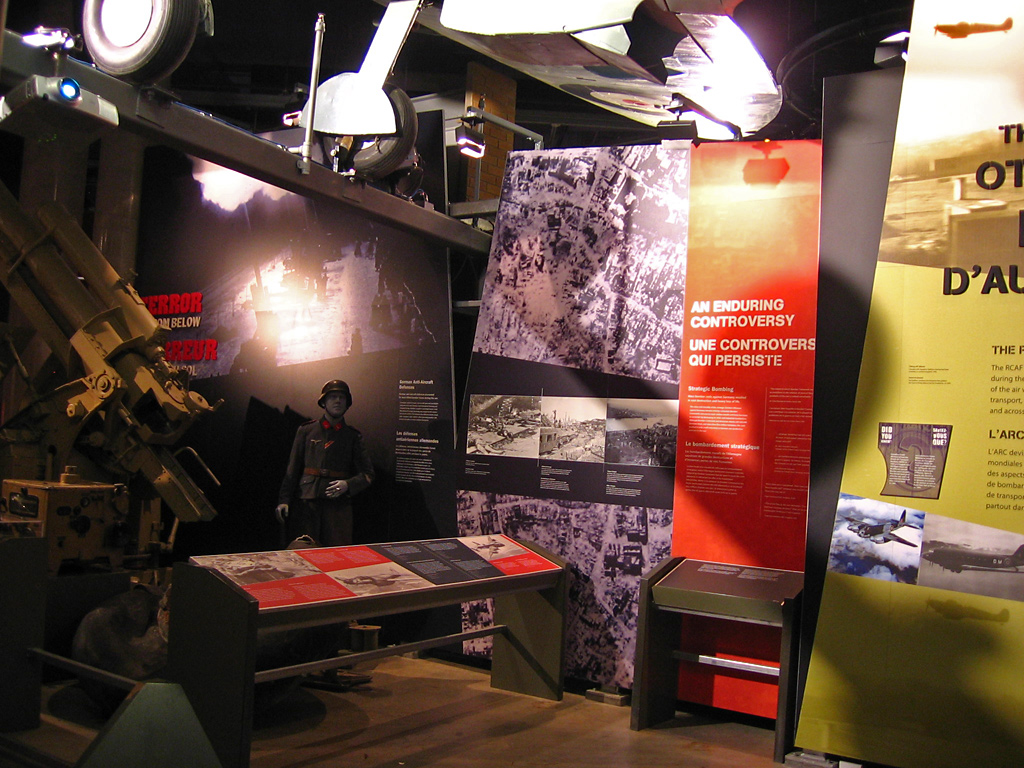
Still pondering the controversy about the display in the Canadian War Museum, I decided to go have a look at it first-hand. On the basis of what I saw, I am even more convinced that the display is fair and balanced, and that it should not be altered in response to pressure from veterans.

Here, you can see the panel in question in its immediate surroundings:

An Enduring Controversy, and surroundings

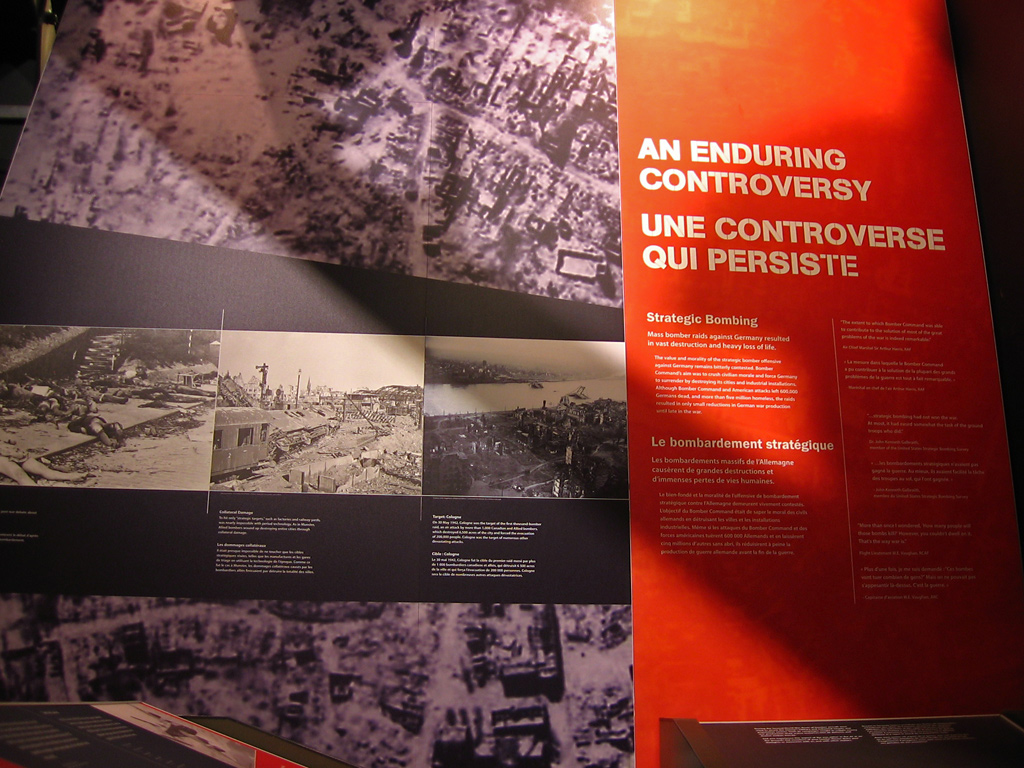
This is one small part of a large area discussing the air component of the Second World War. A shot with a narrower field of view shows the controversial panel itself more clearly:

Enduring Controversy

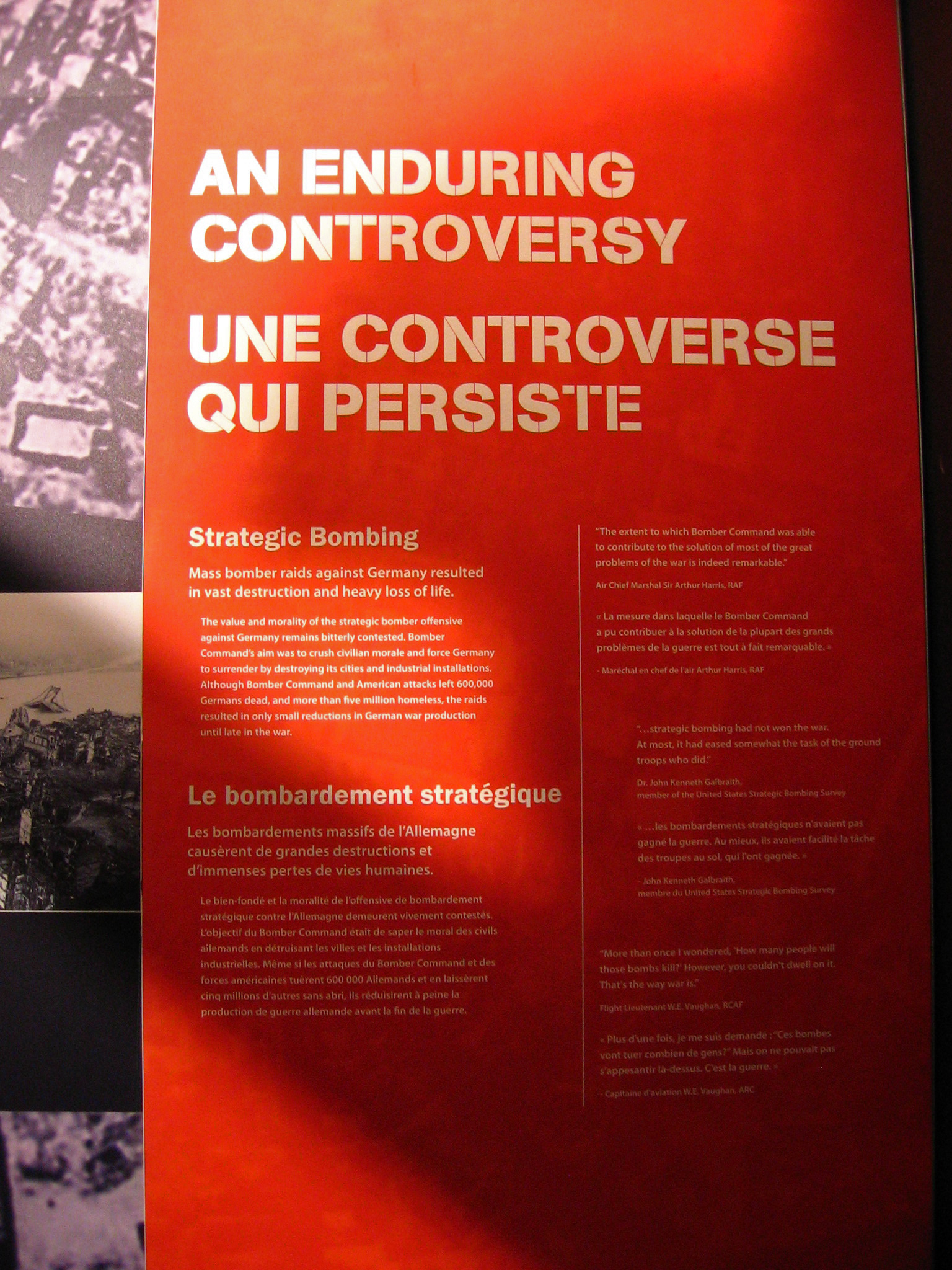
Here is a large close-up shot of the panel text. Nearby, a more prominent panel stresses the deaths of Canadian aircrew and the degree to which aerial bombing “damaged essential elements of the German war effort.” This alternative panel is located right at the entrance to this section of the museum.

If anyone wishes to comment to the museum staff, I recommend emailing or calling Dr. Victor Rabinovitch, the President and CEO. His contact information, along with that of other members of the museum directorate, is available on this page.

The Climate Emergency Fast

On September 4th, an organization called the U.S. Climate Emergency Council is holding a 24-hour fast meant to further raise awareness about global warming. As such gestures go, it seems like quite an appropriate one. The burdens of climate change are likely to fall most heavily on the poorest people and there is good reason to believe that agriculture will be seriously affected. (See this post on C3 photosynthesis, for instance.) Participating in the fast could provide a visceral approximation of what a changing climate will mean for many people, while highlighting the moral importance of the issue.

As of now, about 800 people have signed up for the fast. It is being discussed – along with the broader context of climate change protest – over at Grist.

[Update: 10:47am] I think I am going to do this. As far as I know, it will be the first time I have ever gone 24 hours without eating anything. I will permit myself water only, though climate change may leave that in short supply also.

Random numbers

Truly random numbers are hard to find, as patterns tend to abound everywhere. This is problematic, because there are times when a completely random string of digits is necessary: whether you are choosing the winner of a raffle or generating the one-time pad that secures the line from the White House to the Kremlin.

Using random radio crackle, random.org promises to deliver random data in a number of convenient formats (though one should be naturally skeptical about the security of such services). Another page, by Jon Callas, provides further information on why random numbers are both necessary and surprisingly tricky to get.

This comic amusingly highlights another aspect of the issue.

Melting ice

Projected Arctic ice extent 2070-2090

The Earth is developing a bald spot. No wonder so many states are clamouring to assert their Arctic claims. Of course, if they find substantial quantities of fossil fuels down there (while expending a good bit just looking) it will only make things worse.

In addition to the image above, Neal sent me this animation.

[Update: 7 September 2007] Neal put a post about this on Metafilter.

[Update: 15 October 2007] Emily Horn has posted on her blog about this: How do I fear thee? Let me count the ways.., Allen Ginsberg Has the Right Idea, Al Gore – You Win!.

The Great Dying

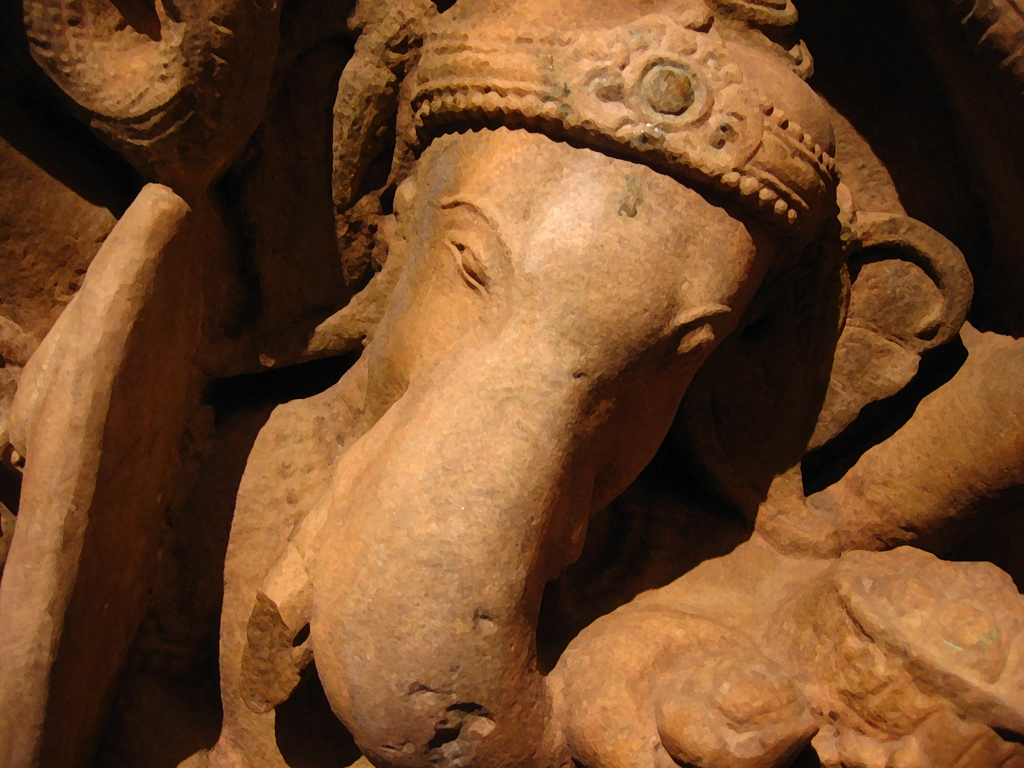
Elephant statue, National Gallery of Canada

251.4 million years ago, the earth experienced the most severe extinction event ever recorded. The Permian-Triassic (P-Tr) extinction event (informally referred to as the Great Dying) involved the loss of 90% of all extant species. This included about 96% of all marine species and 70% of terrestrial vertebrate species.

There are a number of theories about what caused the event:

  1. A comet or meteor impact
  2. Massive volcanic activity
  3. Continental evolution
  4. A supernova destroying the ozone layer
  5. Methane clathrate release

Some combination of such factors may well be responsible. Regardless of the initial cause, one of the defining elements of the P-Tr event was a high degree of global warming. Mean global temperatures increased by about 6°C, with much higher increases at the poles. This period also involved the large-scale failure of ocean circulation, leaving nutrients concentrated at the ocean bottom and an acute lack of oxygen in the sea. The latter was the product both of decreased circulation and the large-scale die off of the kind of phytoplankton species that now produce about 90% of the planet’s oxygen.

The study of such historical occurrences is useful, largely because it helps to improve our appreciation for how climatic and biological systems respond to extreme shifts. Just as the re-emergence of life after a forest fire and a clearcut may have some common properties, perhaps the patterns of decline and reformation after the P-Tr event can offer us some insight into macro level processes of ecological succession after traumatic climatic events.

Aurigid meteor shower

For those who missed the annual Perseid meteor shower, there is another chance to see some debris vaporizing in our atmosphere this week. The Aurigids are a much rarer shower, generated by comet Kiess (C/1911 N1) passing near the sun around 4 C.E. Gravity from the Earth and other planets sometimes creates dust trails that intersect with the Earth, as it moves through its orbit. The night of August 31st will be one such occasion.

Regrettably, there will not be much to see from eastern Canada. Even in the countryside, the incidence of meteors will peak at less than ten an hour. In Vancouver, however, those in the countryside can expect to see a sharp peak of activity between 4:00am and 5:00am, during which more than 200 meteors per hour should be visible. If you are looking for an excuse to escape all that city light pollution, this is an excellent one.

Aspiring amateur astronomers will find this page very informative. It includes tips on viewing, as well as a neat applet that lets you calculate the incidence of meteor activity in your location.