Four hurdles left

Cacti

And so, fifth week has begun. In three weeks, I will be sitting down in the Examination Schools and writing my final exams. Developing and maintaining motivation with regards to final exams is a lot more difficult than it was in the case of the thesis. I suppose that comes down to how one of them is meant to be the culmination of a great deal of thought and effort, whereas the other is just the requirement to throw some good essays together on topics that you could more or less forget the next day, if you wanted to.

Motivated or not, I need to get on top of this. If I am going to have time to write practice examinations to discuss with Dr. Hurrell, I am going to need to finish revising for at least two of my exams post-haste.

Victoria Day

Natives of the United Kingdom may be surprised to learn that today is a royal holiday – in Canada, at least. Celebrated on the Monday before May 25th, Victoria Day is a celebration of both Queen Victoria‘s birthday and that of whoever the current monarch happens to be. It replaces the rather less politically correct ‘Empire Day,’ which was renamed ‘Commonwealth Day’ in 1958.

While it is pleasant enough to have the Queen’s well-composed visage on the back of currency and Regina v. whomever as the standard form for criminal cases, Canadians might be forgiven for thinking the monarchy is a archaic throwback to an earlier era. Most Canadians probably don’t know that Elizabeth II is the Commander-in-Chief of Canadian Forces, as well as Colonel-in-Chief for nine different military units, including the Military Engineers and three groups of Highlanders. While Canadians do appreciate opportunities to differentiate themselves from their southern neighbours (especially as they grow even more unpopular internationally), at least some people have been watching Austalia’s flirtations with republicanism with marked curiosity.

Given her smooth but bland rein, perhaps Elizabeth II would be a fitting final monarch for Canada.

Interesting gear

Wadham College espresso machine

People with a fascination for gear should have a look at Cool Tools. The sort of people who make a point of reading through the MEC catalog are likely to enjoy this site. Some of the pieces of gear look highly useful. For those unlikely to lose it, a windproof umbrella might be a worthwhile investment. Some of the kitchen gadgets are decidedly strange, or serve very rare and limited purposes. For creative sorts, there is a kit for those who want to assemble their own dulcimer. Damsels with dulcimers cannot be guaranteed “a sunny pleasure-dome with caves of ice”, but they can be offered tools to help in building their own igloo.

Some of this may end up on my gear wish list.

A more aggressive collection of useful gadgets is described at Kit Up. While much of it is specifically military, some of it is appropriate for hiking and camping as well.

PS. This metal pencil is also quite cool. It uses some kind of metal alloy that writes on paper in a way that looks like pencil, yet cannot be rubbed out. For years, I have wanted some neodymium magnets to play with.

On road pricing

Over the next couple of decades, many people expect road pricing to evolve from its present state – focused on highway tolls and city centre congestion charges – to a model in which all road use is taxed. In such a system, all movement of automobiles would be tracked and taxed on a per-kilometre basis, subject to secondary considerations like vehicle fuel efficiency and level of road congestion. Singapore, London, Oslo, and Dubai have all introduced charges intended to reduce congestion and pollution in their city centres. Expanding such systems to cover all roads would involve some considerable benefits, though there are also problems that would likely arise.

Benefits

National systems of road pricing would have a number of benefits:

  • The high cost of building and maintaining roads could be more accurately directed at those who use them.
  • Externalities relating to CO2 emissions from automobile use can likewise be dealt with.
  • By charging more to drive on congested roads, people can be encouraged to avoid traffic jams. This helps people who need to use the road avoid wasting time. It also saves on the amount of fuel being wasted by hundreds of idling engines.
  • Some of the funds raised could be directed towards the improvement of public transport options.
  • The use of more efficient vehicles could be encouraged through variable pricing.
  • The use of vehicles that do less damage to road surfaces (that is to say, those other than heavy trucks with bad shock absorbing systems) could likewise be encouraged.

The benefits are thus split into two big categories: those concerning a fairer allocation of costs to those benefitting from publicly provided roads, and those serving to internalize the previously ignored social and environmental costs of driving. If one considers the geopolitical costs of oil dependence, the latter looks even more justified than if one concentrates on particulate emissions and climate change only.

Problems

Naturally, there are a number of significant problems associated with such systems. One is equity. Road pricing may impose high burdens upon individuals with low incomes. For instance, those who cannot afford to live near where they work. Solutions to this could include the provision of some set level of free usage, over and above which people start getting charged. Better options include encouraging the development of efficient and popular public transport systems, as well as reduced charges for light and energy efficient vehicles. Zero-emission vehicles (such as electric cars charged on nuclear or renewable power) could likewise be taxed at a lower rate.

More serious are the privacy implications. I think it would be naive to imagine that the tracking information generated by such systems will not be retained by the state and used, for good or ill, without a great deal of public accountability. This is part of the much broader problem of how to manage data control and privacy protection in an age where surveillance is increasingly ubiquitous and data storage is ever cheaper. In recent years, there have been many cases of government employees found using access to such databases in improper ways. Doubtless, the vast majority of such inappropriate use is never discovered. Further to that, there is good reason to believe that access to such databases will be gained by outsiders through flaws in internal security protocols. The creation of systems for oversight would therefore be essential, and it seems wise to have a general policy of deleting stored data after a set amount of time has elapsed, with exceptions granted only through an explicit process of approval subject to external scrutiny.

An appeal for bike subsidies

One suggestion I would make to improve this system would be to include an optional component for cyclists. Those willing to cycle around with a transponder would be credited at a modest rate for distance traveled. This would be in recognition of the non-market advantages of cycling, such as the value of physical fitness as a component in preventative medicine. In 1998, Health Canada estimated the total cost of cardiovascular diseases on the health sector of the Canadian economy to be $18,472.9 million (11.6% of the total cost of all illnesses). Cardiovascular disease is also responsible for 36% of deaths. As such, a subsidy of a few cents a kilometre makes economic sense, as well as potentially generating some good publicity for a system that is likely to be highly unpopular with commuters.

There are also network benefits to be had from increasing the number of cyclists. The emergence of suburbs was made possible by automobiles, at the same time as such urban trends made them increasingly necessary. A more positive version of such feedback effects can be brought about for cycling: as higher numbers justify a more cycle friendly infrastructure which, in turn, encourages more people to cycle. In particular, the creation of designated bike lanes and routes, the provision of cycle parking facilities, and integration of bike carrying capabilities into public transport seem sensible.


Temperature and civilization

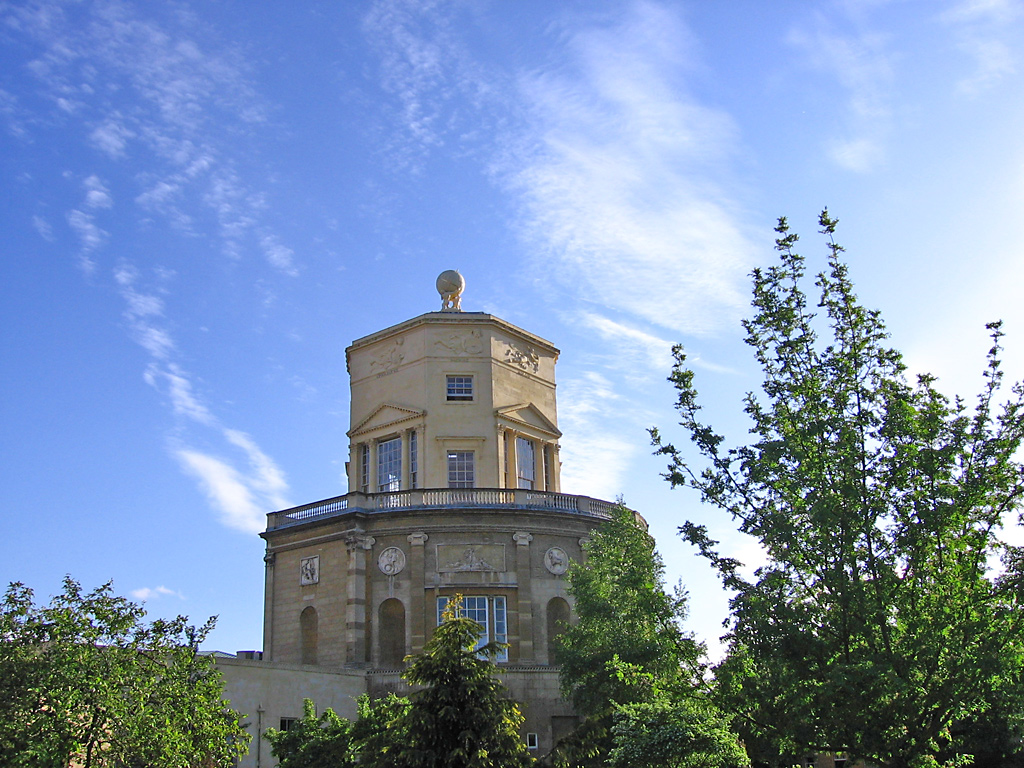
Green College tower

While in high school, Sid Meier‘s Civilization II was a time waster of choice. The prospect of directing human civilization for 6,000 years has an understandable appeal. By the time I was at UBC, Civilization III had eclipsed its predecessor. I once spent more than thirty consecutive hours playing it; at the end, I lost a massive thermonuclear war with Mahatma Gandhi. These games satisfy a number of driving human ambitions: from virtual immortality to the ability to be in control of human progress to the chance to decimate one’s enemies with precisely planned joint warfare operations.

I haven’t played any Civilization games since arriving in Oxford, but an aspect of our present situation has reminded me of it. One important technology for moving into the modern era in the game was refrigeration. As of now, our flat is deprived of this technology. Given how fruitlessly and noisily the compressor on our fridge seems to operate, I suspect that the coolant has escaped. Hopefully, it wasn’t comprised of ozone-depleting CFCs.

[Update: 21 May 2007] Because the compressor was running pointlessly, we chose to turn it off. Unfortunately, a member of the St. Antony’s maintenance team came by this morning to investigate our fridge complaint. Rather than knocking or waking anybody up, it seems he just came in and turned on the (useless) compressor, probably muttering to himself about what fools we were to complain of a broken fridge when it was only actually turned off.

I guess we will need to leave it on, eating up power and whining pathetically, until the college dispatches another of their stealth repair operatives.

Alaskan fishing photos

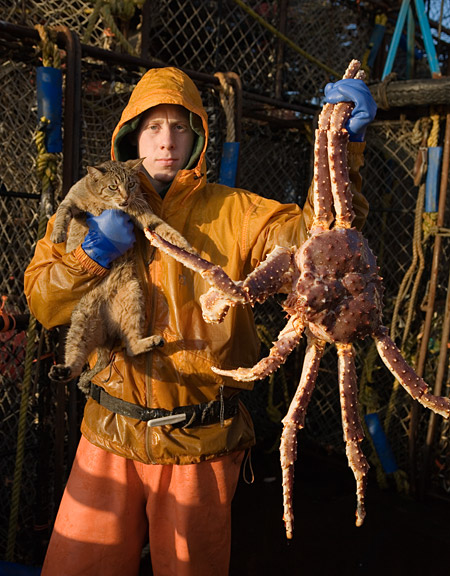
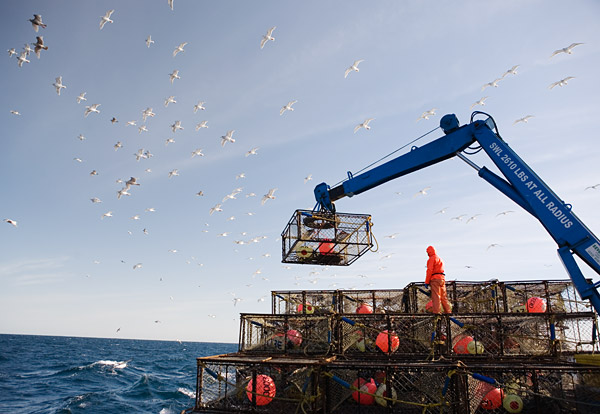
Here is an interesting series of photos about fishing in Alaska. There are huge waves, giant crabs, and a feisty cat. Having read so much about fisheries in the last few years, it is nice to have some visuals to accompany my thinking. Here are my favourites:

PS. Be advised that a few of the advertisements on the original page may not be work appropriate.

Richard Horton on health and development

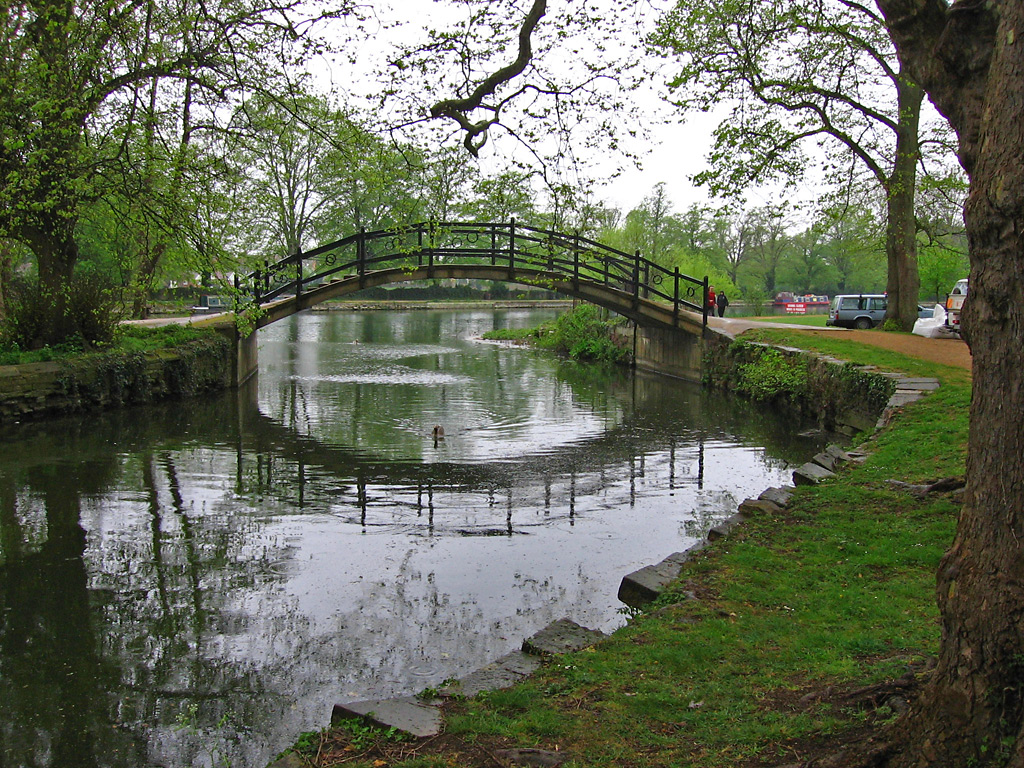
Bridge near Oxford boathouses

Richard Horton’s presentation to the Global Economic Government program was probably the most passionate I’ve seen in the past two years. He is certainly the only person who spoke at such a loud volume for an entire hour. Much of what he said was quite interesting, particularly in terms of the relationship between development and health and the peculiarities of the World Health Organization.

My notes are on the wiki.

People interested in global health, development, trans-national civil society, and the like should definitely have a peek.

Multilayer booms

Of late, I have been watching Yes, Prime Minister between bouts of revision. In one sense, it is quite disorienting. As someone who has lived beside a clock tower for more than a year, having a series of booms now and then is not at all unexpected. The series, however, uses similar sounding booms as a frequent sonic backdrop. As such, one gets the awkward sense that time is racing forward: hardly an effective way to control stress in the lead-up to exams.

In a different light

Blue berries

Every once in a while, the Natural History Museum and Pitt Rivers Museum hold an event in the evening. The main area of the Natural History Museum gets nicely illuminated and you get the chance to explore the Pitt Rivers Museum with a torch. That’s the British term for a flashlight, alas. There will be no carrying around pitch-soaked bundles on sticks. That would suit the mood of the Pitt Rivers, but would unacceptably endanger the artifacts. These two museums are certainly the most interesting ones in Oxford, and quite essential for all students to see before they leave.

Even so, such events are well worth attending. Last time, there was an elaborate shadow puppet show. The next one is happening on Saturday May 19th. It runs from 8:00pm to 11:00pm. My account of the previous event can be found here.

M.Phil final exams

In less than a month, the members of my course will be writing our final exams. Everyone has one on history from 1900 to present and another on international relations theory. Then, each person has their two optional papers. Mine are international law and the developing world. For each exam, we will be presented with twelve questions. Of these, you need to answer three, each by means of an hour long essay. Twelve hour-long answers over the course of three days and the M.Phil is complete. Passing all four is necessary to pass the M.Phil.

On the basis of how questions are fairly consistent from year to year, the most popular strategy is to prepare on a number of `topics.` For each, you identify and seek to understand the key bits of the secondary literature. Then, you try to come up with a clever seeming argument and map out – in general terms – how you would approach the question. Several course instructors have encouraged us to use this kind of approach. According to the Notes of Guidance:

In the written examinations, answers which merely regurgitate facts or opinions will not suffice: answers must be well structured, relevant to the specific question asked on the examination paper, well written, and show mastery of the subject.

I take “mastery of the subject” to mean having read and understood the appropriate academic sources. For examples of consistency between questions year to year, have a look at some past history questions and past theory questions.

My initial plan was not to use the topic-based approach. For our qualifying test last year, my approach was simply to re-write all my notes, re-do some of the most important readings, and then write some practice tests. That has the virtue of comprehensive coverage, but it does not prepare you as well for a question that you have anticipated than the topics approach does. Working on selected topics allows for a depth of knowledge and an opportunity for organization that is likely to be advantageous for Oxford-style examinations.

The biggest challenge relating to the finals is the sheer breadth of material. For each of our 24 core seminars and 16 optional seminars, there were two or three questions for consideration. For each of those, about ten readings were listed, most of them books. Provided you read 3-5 sources per question per week, that is easily several hundred complex articles or books. Even going back over notes on nearly one hundred different discussion topics is daunting. On one level, the volume of work involved in preparing for finals is a good thing, as it demonstrates the breadth of the program. At another, it demonstrates one’s cognitive limitations quite effectively.

My biggest problem, as far as these exams are concerned, is that I have never been particularly good at remembering who espoused what theory. Given the extent to which academic international relations is a name-game in which big egos dominate and every scrap of credit is fought over, this is a considerable defect for someone considering any further involvement with the academic world. I could imagine being familiar with all the big names in one’s particular sub-field of IR, but the thought of doing so for every major branch of the field, from the history of the interwar period to the economics of foreign aid, seems quite beyond my capability.