Soon to be smokeless

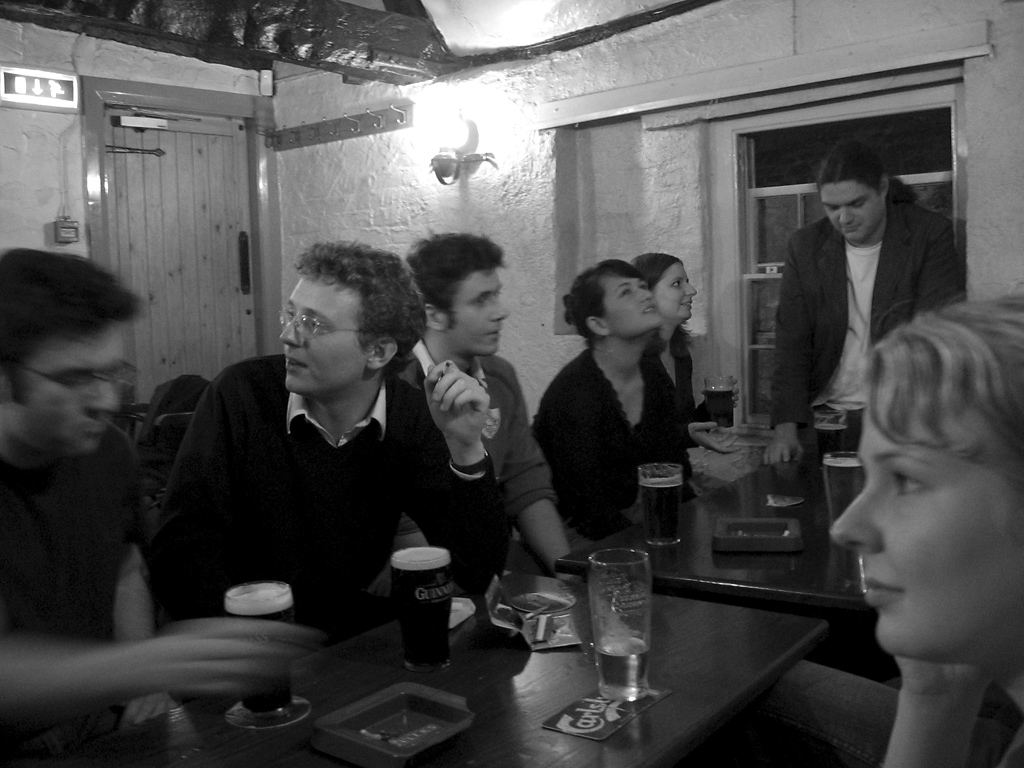
Lamb and Flag, Oxford

A sign I passed this evening reminded me of how I will only be around to appreciate one day of the new UK smoking ban in enclosed public places, such as pubs. I would not hesitate to call it long overdue. It will make conditions better for people who work in pubs, improve overall health, and end the experience of smelling like an ashtray for days after spending any time in such places.

Of course, it will probably take months for the majority of the smell to seep out from chairs and curtains around the UK. Once that has happened, however, the UK will be a more modern and appealing place.

Protecting parks

While it is excellent to have national parks established, the difficulty with making them meaningful lies in the enforcement of rules on entry and activity within the defined territory. Even American national parks are having trouble with poachers. The problem is certain to be more acute in less affluent areas, where the impulse to protect nature is more immediately threatened by poverty. Just 14 rangers patrol the 4,200 square kilometres of the Nouabale-Ndoki national park in Congo. Technology can play a part in park management: from satellite tracking and motion sensors to networks of internet connected metal detectors looking for guns and machetes.

Ultimately, technical fixes will probably not be adequate protection in the most vulnerable areas. The reasons for this are primarily economic. There is more money to be had in exploiting the content of parks than in protecting it, and there is no incentive for local people to refrain from damaging activities and be vigilant in preventing others from doing so. As with climate change, the biggest challenge lies in creating institutional and financial structures that encourage environmentally responsible behaviour. Growing recognition of that among policy-makers and the NGO community may eventually lead to much more effective enforcement mechanisms.

This article discusses the TrailGuard metal detectors in much more detail. They sound very clever, even if they are unlikely to solve any problems in and of themselves.

Fish paper published

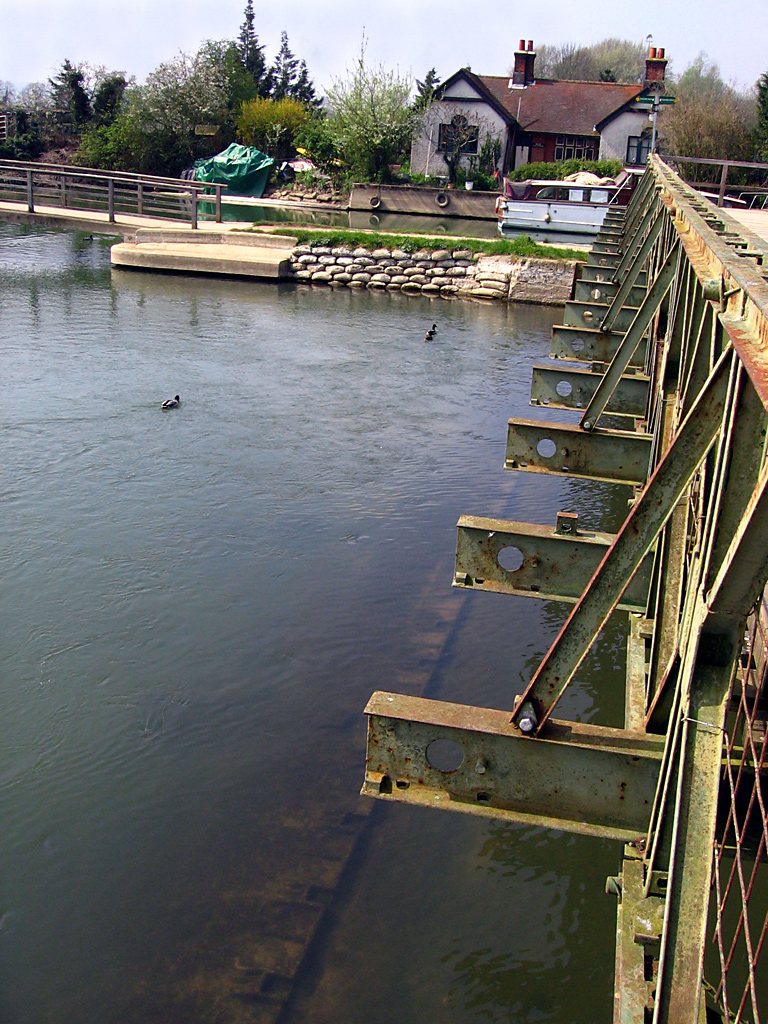
Bridge near The Perch, Oxford

After two years of being reworked, assessed, shortened, updated, and assessed again, the eternal fish paper has been published. They didn’t print my acknowledgments, so I shall list them here:

Many thanks to Dr. Ian Townsend-Gault, who has helped a great deal throughout the entire process. In particular, his assistance with the international legal components of the paper is much appreciated. I also want to thank Dr. Daniel Pauly, Dr. Jacqueline Alder, and Dr. Rashid Sumaila of the UBC Fisheries Centre and Sea Around Us Project. They are the ones who helped me find and understand much of the scientific material that supports the paper. Finally, I want to thank the editors of the MIT International Review for their comments, as well as for formatting the final version so nicely. The efforts of Solomon Hsiang are particularly appreciated.

Anyone who wants the version with more than 100 footnotes should email me. Like Foreign Affairs, this journal has a policy of not including them.

Cameron Hepburn on climate economics

Dr. Cameron Hepburn gave an informative presentation in the Merton MCR this evening on the economics of climate change. While it was largely a reflection of the emerging conventional wisdom, it was very professionally done and kept the audience in the packed Merton MCR asking questions right until it became necessary to disband for dinner. Dr. Hepburn, incidentally, is my friend Jennifer Helgeson’s supervisor.

My notes are on the wiki.

PS. When I imagined Oxford before coming here, the kind of rooms I imagined were more like the Merton MCR than most of the places I have actually seen. That probably derives from having my expectations defined by The Golden Compass and The Line of Beauty.

The reminder

I’ve been listening to the new Feist album The Reminder and I don’t think it generally compares very well to their previous release: Let It Die. The best songs on the previous album, like “When I was a Young Girl” and “L’amour ne dure pas toujours” had some energy to them. Most of those in the newer album seem flat and drawn out. Those songs that do have some energy, such as “Sea Lion Woman” are just too repetitive to be interesting. Like the previous album, this one experiments with a wide variety of musical styles; unlike the previous one, the best tracks aren’t terribly enjoyable.

I am sure there are people out there who love it, but it is destined to endure in the infrequently visited portions of my iTunes library.

Fire at The Perch

Fire at the Perch Pub, Oxford

The Perch, one of Oxford’s best pubs, suffered from a fairly severe fire on Wednesday. Based on the look I had at it today, the external damage is limited to the roof. Inside, things might be a lot worse. Apparently, the fire started in one of the chimneys. Thankfully, nobody was injured. A similar blaze took place thirty years ago, so it seems likely that rebuilding will occur.

The nicest thing about The Perch is the location. To get there from northern Oxford, you need to walk across the Port Meadow and then up along the canal for a short ways. At night, you are likely to see some of the Port Meadow cows or horses along the way. During the day, patrons can sit outside in a grassy area surrounded by willow trees. When each of my parents visited Oxford, we made a visit to this pub. I have also been there with a good collection of friends over the last year and a half.

Despite the high probability that the pub will eventually be open for business again, I doubt it will occur before I depart. One more reason to visit Oxford in a few years, I suppose.

Excellent nature photography

Wandering through the forums on photo.net, I came across the work of Wojciech Grzanka. His macro photography of insects is especially cool. Magnified insects look so other-worldly it is no suprise they have inspired to much science fiction and fantasy, ranging from the brilliant to the amusingly mediocre.

One of the best things about the photo.net community is the sheer level of skill and helpfulness among the community members. At the same time, the quality of other people’s images is almost certain to make you feel like a rank amateur.

PS. Grzanka’s website is pretty slick as well, though the images seem to be the same as those on photo.net.

Oxford B&W photo competition

I have been thinking about submitting a few images to the Intra Muros competition, but I am finding it hard to locate arty black and white shots of the right sort within my collection (1, 2). The general pattern of the ones they have accepted is that they show recognizable Oxford architecture, individual people are often included but never highlighted, and they have an abstracted quality to them. Somewhat surprisingly, most of my favourite photos taken in Oxford are in colour. Normally, I am a big fan of black & white.

The deadline isn’t until June 9th, so perhaps I can keep my eyes open for the right sort of image from now on. The winners get photos printed in their calendar and the best single entry wins £50.

What dread hand and what dread feet?

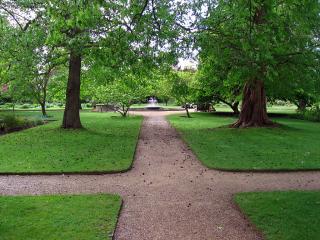
Oxford gardens

Tragically and unusually, someone in British Columbia was killed by a tiger this week. Apparently, the animal was privately owned and part of some sort of exotic zoo. The 32 year old woman was standing near the cage when a single paw strike severed her femoral artery. As a consequence, people have called for tougher laws on the ownership of such animals and the tiger has been killed.

The first measure seems entirely reasonable. It is well worth asking whether ownership of endangered and dangerous animals should be permitted. Certainly, the incident demonstrates that they are not always confined appropriately. Whether their welfare is being adequately maintained or not is another concern. According to the the Victoria Times-Colonist “the tigers were kept in small chain-link cages with no flooring.” It sounds as though the circumstances in which the animals were held were neither respectful, humane, nor intelligent. Apparently, the Society for the Prevention of Cruelty to Animals has tried several times since 2005 to have this tiger seized from its owner, on the basis of both safety and animal welfare. Paul Springate of the Rainforest Reptile Refuge has some intelligent comments on the failures in the current Canadian system for managing exotic animals. It seems intuitively obvious that if people are allowed to own such animals (itself a policy of dubious quality), there must be standards for keeping them and a system of inspections.

Putting the tiger to death, on the other hand, strikes me as highly inappropriate. It should come as no revelation to anybody that tigers are dangerous and that spending time at close quarters with one could imperil you. It is certainly a tragedy that this young woman’s life was cut short and it makes perfect sense to investigate the conditions that led to it and act upon them. Punishing a tiger simply for being a tiger, on the other hand, is an inappropriate extension of vengeance into a situation where it makes no sense to apply.