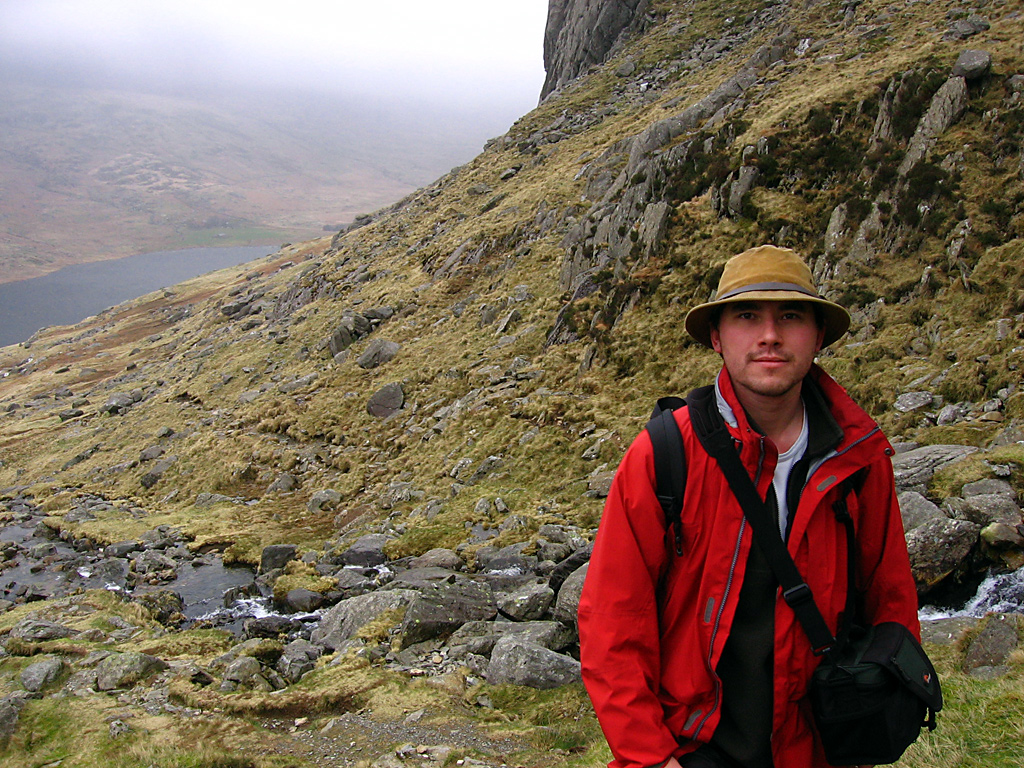
I should be getting back to Oxford any time now. I hope so, at least, since I am meeting Dr. Hurrell on Tuesday to discuss chapter two and I am meant to submit a complete version of chapter three on Wednesday. With luck, I got at least a bit of reading or editing done while I was in Wales.
Author: Milan
Solar power and climate change
This is my last full day in Wales. Hopefully, we will have seen a bit of sunshine so far. One of the best things about climbing mountains is the view from the top. Speaking on illumination…
Intuitively, I have long had the sense that solar power makes a great deal of sense as an alternative power source. There are no greenhouse gas emissions, there is no need to operate any massive industrial processes, other than manufacturing panels, and the technology only needs to become incrementally better to be cost-effective against fossil fuels. This map of solar energy, which was used in C.G. Rapley’s presentation, shows the size of solar collectors of the present efficiency that would be needed to satisfy our present electrical needs.
Cost is the first big problem with solar, though it may be a temporary one. According to The Economist:
Decades of research have improved the efficiency of silicon-based solar cells from 6% to an average of 15% today, whereas improvements in manufacturing have reduced the price of modules from about $200 per watt in the 1950s to $2.70 in 2004. Within three to eight years, many in the industry expect the price of solar power to be cost-competitive with electricity from the grid.
Full article (subscription required)
The other big one is load balancing. Because solar output isn’t constant, there is a need to either store power or redistribute it across long distances. Storage across the daily light-dark cycle is of inescapable importance, and the means for doing so are not terribly clear. Batteries are costly and bulky, as well as of a limited lifetime. Solar energy could be used to electrolyze water into hydrogen and oxygen, which could then be fed to fuel cells, but I expect that would increase costs a lot, while reducing efficiency. As with transportation, I think energy storage is a bigger long term problem than energy generation.
Of course, one technology is unlikely to be the solution, in and of itself. There are lots of places where hydro, wind, and geothermal power make sense. There may even be situations where biodiesel is an appropriate choice, despite the inefficiencies of production.
[Update: 3 May 2007] Antonia sent me an interesting BBC article about a solar thermal plant near Seville.

Shipping news
By now, I have quite possibly finished climbing the highest mountain in Wales – almost certainly in the pouring rain. A saner person would have been at his desk with a cup of tea and a thesis draft progressing. An even saner person would have finished the draft before leaving…
One thing I have been pondering lately is the logistics of moving on from here. I arrived in Oxford with a big suitcase, a backpack, and a suit bag. Heavily laden, I made my way in the rain from the train station to Wadham. While here, I have picked up about thirty books. I also have about ten binders and a box of hanging files, mostly related to the thesis. If I am going to do another research degree in the future, I am probably going to want this stuff. Not bringing my environment related books here was a mistake I have regretted many times.
The most sensible option would seem to be putting the books and binders into one or more big boxes, wrapping the file box, and sending the whole collection back to Canada by the slowest and cheapest form of mail possible. Given that I will be working, rather than going to school, I won’t need it urgently.
Has anyone undertaken such shipping? How much can I expect to pay, either by weight or by size? Is there a better option than the normal mail service?
Two useful WordPress hacks
By the time anyone is reading this, I will be well on my way to Snowdonia with the Walking Club. Rather than make this the longest pause in blogging in recent memory (four days!), I have queued up some short entries with images.
This post is a fairly esoteric one, of interest only to people who are either using WordPress of thinking of setting up a WordPress blog. It details two little programming tricks that improve the WordPress experience. Continue reading “Two useful WordPress hacks”
From a flat in Oxford to a barn in Wales
I should pause from the frantic assembly of rain gear and the overly optimistic inclusion of thesis reading in my rucksack to say that I am off to Wales in a few hours (there seems to have been some confusion about whether I had already gone). I will be away until late on Monday, making this the longest interruption in my love affair with the internet since I went to Scotland in July. One day longer, and it would be beaten only by the Bowron Lakes canoe trip in the summer of 2004.
This is what happens when even the cheapest hostels have web access, and internet cafes are plentiful. The worst a connected person need endure are unfamiliar foreign keyboards.
Despite the urgency with which I will need to finish my third thesis chapter, you can expect some photos to find their way online within a few hours of my return. Expect panoramic vistas, drenched hikers, and sheep.
PS. Fellow Canadians trying not to forget all their French may be interested in a new blog that Richard Albert, from Lady Margaret Hall, has established. Now that quarterly Oxford bloggers’ gatherings have fallen by the wayside, I need a new way to decide how frequently to update my list of Oxford blogs.
And so it continues…
Looking over my introduction and first chapter, both show an acute need for additional work. Many thanks to Tristan for giving them a much more comprehensive look than anyone else has. The chapter on problem identification, particularly, shows signs of having been written in haste. I need to integrate arguments in response to many things I have read, but not discussed in the present draft. I also need to work on the structure, language, and arguments.
Even more worryingly, I am meant to submit my chapter on consensus formation next Wednesday, and it is nowhere near where I wanted it to be before I left for Wales. I am not naive enough to think I will be able to get any work done there, but I am committed to the expedition now. Expect some truly frantic, crazed entries early next week.
I wish I had my noise isolating headphones. Even more, I wish I had the ability to simply read efficiently for many hours at a stretch. Memory suggests I could do this once, but perhaps I am not recalling things accurately.
C.G. Rapley on climate change
The Earthwatch Institute lecture tonight was an educational experience, for a whole slew of reasons. I learned a lot about the organization, the talk itself was very well done, and I spoke with some unusually interesting people.
Earthwatch is a slick organization: corporate partnerships, wine receptions before and after talks given at the business school, and a 153-page full-colour glossy book distributed in a ‘treat bag’ to each attendee at the end. This all gives a really interesting glimpse into the world of relationships between private actors. These people aren’t lobbying the state, they are engaging with the scientific and business communities, along with individuals inclined towards certain concerns. Anyone who thinks that regulating carbon emissions is a matter for the leftist fringe should probably meet these people. In the ecosystem of contemporary international actors, they are an unusual species, worthy of further study.
The talk was given by Professor C.G. Rapley, the Director of the British Antarctic Survey. He was well chosen: articulate, funny, and capable of presenting technical material in an engaging and highly effective way. That this is an outset of an international polar year made the choice particularly timely. My transcript of the talk is available on the wiki.
Perhaps the most unusual thing he said – his greatest deviation from the Stern-Gore Axis – was the suggestion that we could (and should) jump-start the demographic transition. This is is transition from high birth and death rates, to massively lowered death rates (due to medicine, agriculture, etc), through massive population growth to the eventual lowering of birth rates and stabilization of the population overall. Rapley alleged that 76m unwanted pregnancies occur each year, worldwide. Giving these people effective contraception and social orders in which they can use it could accomplish a number of good things: he focused on the reduction of future emissions and a reduced push towards urbanization. Of course, the politics of birth control are fiendishly complex, and the possibilities for harm considerable. That said, a world where women have more control over how many children they have would, all other things being equal, be a much better one. Rapley seems to have written more on population for the BBC.
My thanks to all those – both employees of Earthwatch and fellow guests – with whom I spoke at the receptions. Altogether, this evening has reinforced my conception that climate change is the single greatest challenge facing the world today. It has also bolstered my hope that it is something that we can overcome.
M.Phil teaching complete
With today’s international law seminar done, the taught portion of the M.Phil program is complete. All told, we had 24 two-hour core seminar classes, with 2/3 of those devoted to 20th century history. In addition, I have had eight on the developing world and eight on international law. We also had our various research training lectures and seminars.
Now, I just have two essays, four exams, and the thesis left to complete – over the course of the next three and a half months. The fact that the portion of that collection that is the most time consuming and difficult is due in only 46 days is something rarely forgotten by anyone in the course.
By Canada Day, at the start of July, I will no longer be a student. This, for the first time in twenty years (pre-school 1, kindergarten 1, elementary school 7. high school 5, undergrad 4, master’s 2). I wonder what I will end up doing.
PS. The WordPress trio have been upgraded to version 2.1.2. Nobody ever reports bugs, so I will not ask for it.
Afterlife for web pages
One research tool that surprisingly few people seem to know about is the Wayback Machine, at the Internet Archive. If you are looking for the old corporate homepage of the disbanded mercenary firm Executive Outcomes, or want to see something that used to be posted on a governmental site, but is no longer available there, it is worth a try.
Obviously, they cannot archive everything that is online, but the collection is complete enough to have helped out more than a couple of my friends. People who operate sites may also be interested in having a look at what data of yours they have collected.
Rare pub visit
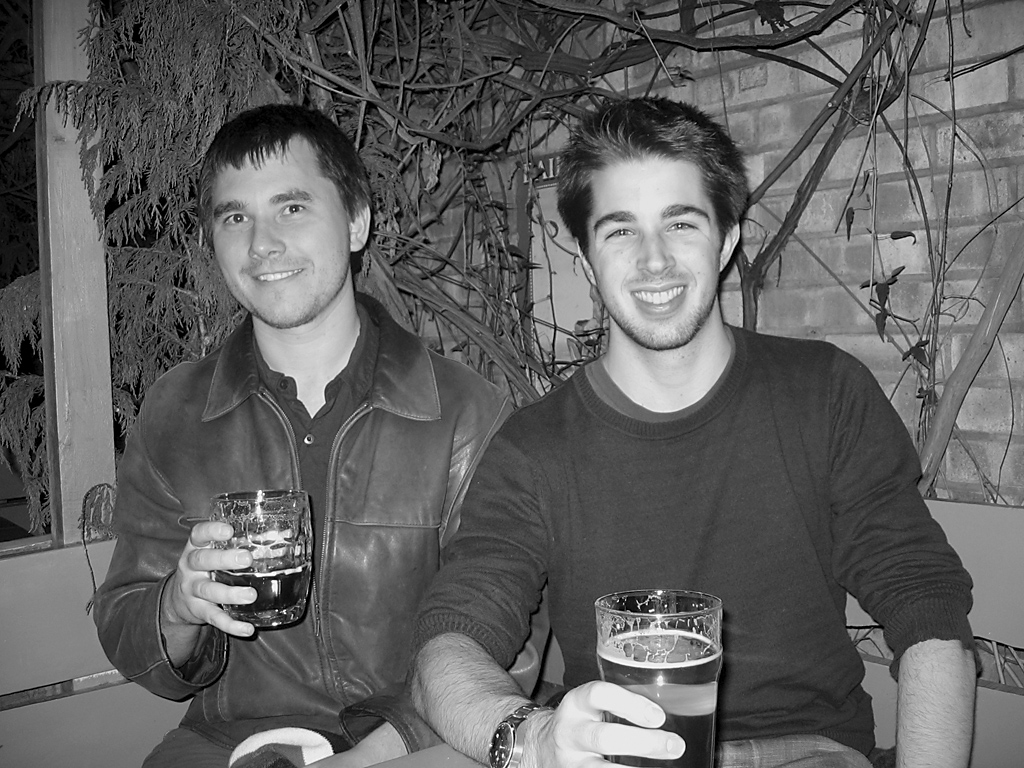
My first month here probably involved more days that included time in a pub than days that did not. Of late, the social component of Oxford has evaporated. As such, it was all the better to spend a bit of time at the Rose and Crown on North Parade walk with Claire and Iason tonight. Just the place to complain about theses, hypothesize about space elevators and nuclear fusion, express our doubts about the discipline of international relations, and generally revel in non-laptop company.
Now, I need to work double-time to get a pre-Snowdonia draft of chapter three (of five) written.