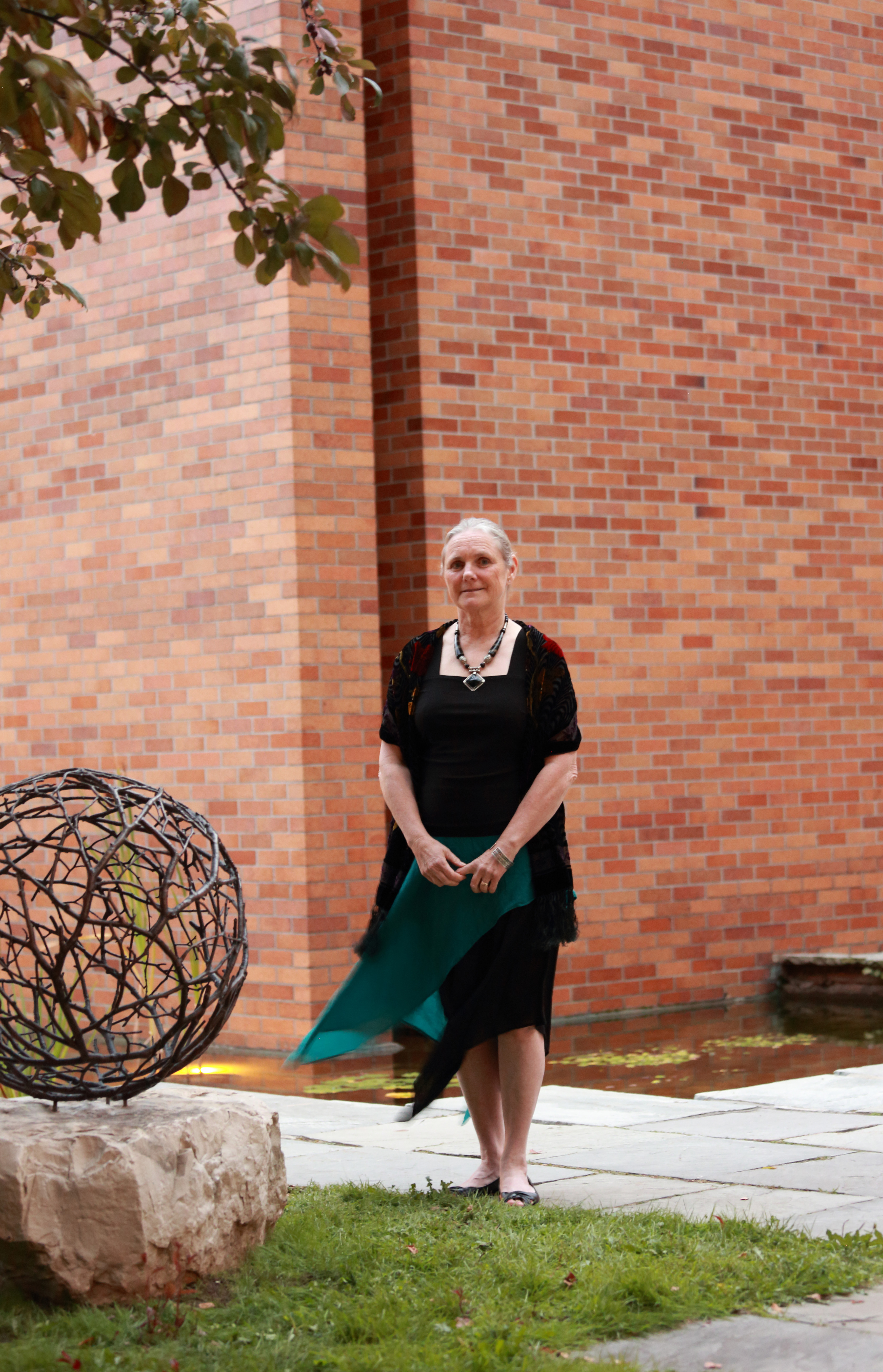
Activism as being a catalyst

When we think about global trends, we tend to focus on their importance and how rapidly things are changing. China’s economic rise, along with massive economic development and urbanization around the world, all have unambiguous importance, though we will endlessly disagree about how they will interact and few of us will live long enough to feel confident we saw the final outcome (there are major limits to knowledge and prediction).

If one makes a sincere effort to understand what is happening in the world and feels compelled to try to encourage some of the best possible outcomes, given the state of the world right now, perhaps it makes sense to think in terms of which trends you hope to speed up and which you hope to inhibit.

The key question in effectiveness has to be: am I / are we making a difference in terms of an important objective.

So perhaps it makes sense to think about being a catalyst or accelerant (to choose a more obviously violent analogy) hoping to create as substantial a ∆ifference as possible in the final chemical equilibrium.

Sacks on Auden

Staying at Oxford after my degree and often revisiting it in the late 1950s, I occasionally glimpsed W.H. Auden around town… He invited me to visit, and I would sometimes go to his apartment on St. Mark’s Place for tea. This was a very good time to see him, because by four o’clock he had finished the day’s work but had not yet started the evening’s drinking. He was a very heavy drinker, although he was at pains to say that he was not an alcoholic but a drunk. I once asked him what the difference was, and he said, “An alcoholic has a personality change after a drink or two, but a drunk can drink as much as he wants. I’m a drunk.” He certainly drank a great deal; at dinner, either at his place or someone else’s, he would leave the meal at 9:30pm, taking all the bottles on the table with him. But however much he drank, he was up and at work by six the next morning. (Orlan Fox, the friend who introduced us, called him the least lazy man he ever met.)

Sacks, Oliver. On the Move: A Life. 2015. p. 196 (hardcover)

Working on managing hatred toward drivers

I think perhaps I need to undertake a befriending exercise with drivers.

My universal doctrine is not to hate anybody, but I do hate people who drive cars, pickup trucks, military vehicles rebranded as family transport, motorcycles, and taxis (I would prefer an all-taxi world to one where people have private cars, but taxi drivers are the most impatient and reckless drivers in many circumstances).

I hate drivers for smashing their way around the world in their smog-producing, climate-wrecking machines, routinely killing pedestrians, cyclists, and other drivers. I hate them for feeling entitled to do these things because it’s normal and because they pay something toward the costs their cars impose on people and nature.

I love cycling and it was a major part of my life from childhood until I moved to Toronto, but the combination of snow and ice, terrible bike infrastructure, and a desire to keep my skull intact made me give my bike away when I moved here, cursing drivers for making the city a death factory.

These feelings may be morally justified, but they are probably also unhealthy. I see and hear cars every hour of every day and walking around filled with resentment doesn’t contribute to any dream scenario where people stop speeding around with insufficient care and attention in toxic smashing machines.

If I could, I would undo every car ever made and turn it back into iron-bearing rock which we didn’t need to mine and oil which we didn’t need to dig up.

I have tried to follow my father’s example and use hitchhiking as a means of befriending drivers, but nobody in Toronto ever ever picks me up, unlike in Vancouver, Ottawa, and Oxford.

Hence this Litany for Enemies, derived with respect from mindfulness meditation proponents who have done credible research:

“No matter how we appear on the outside, all of us can feel fearful, sad, or lonely on the inside…

May they be safe, and free from suffering.

May they be as happy and healthy as it is possible for them to be.

May they have ease of being.”

I don’t know who narrated this particular meditation, but it has helped me a great deal.

Every single time, however, it is also an uncomfortable confrontation of reflexes which suggest that anyone who is in conflict with me is necessarily wrong. That’s probably the main reason why I esteem it so highly as a spoken word performance.

My shot

It’s strange that a stage show running in one city is affecting the whole continent, but New York isn’t a normal place and Lin-Manuel Miranda clearly isn’t a normal man.

The killing in Orlando originally prompted my personal doctrine in response to political violence: refuse to be terrorized. One or a few people armed and keen to kill do not affect my thinking about politics.

I cried quite unexpectedly when I saw Miranda’s sonnet.

Reading more about the musical, and revelling in my BitTorrent audio, I am increasingly impressed by the virtuoso genius of the thing. Violence has sometimes been a decisive factor historically, but there is scope to hope that ideas and arguments can be our battleground as humanity learns to live all together on this small planet.