Russia and the Iranian bomb

Apparently, one of the key limiting factors in the Iranian nuclear program is access to uranium. Domestic supplies are limited and of low quality. As such, Iran is heavily dependent on Russia to provide feedstock for its centrifuge-based enrichment program, as well as its Bushehr reactor. For instance, Russia provided 82 tons of low-enriched uranium in February, to allow the initial loading of the reactor.

For those who hope to do so, stopping an Iranian bomb therefore has much to do with convincing Russia to reduce support. Apparently, one thing the Russians want is for Israel to loosen the strong defence relationships it has built with Ukraine and Georgia. Given that Israel has the most to fear from an Iranian bomb – and that they are one of two states that could plausibly use military force to try to disrupt the Iranian atomic effort – this dynamic is a significant one.

As Stephanie Cooke’s book discussed, the proliferation of nuclear weapons has always been associated with the wrangling of great powers. It remains to be seen what outcome will result in this case.

(Note: It would be appreciated if commenters could refrain from any political tirades, if they feel inclined to discuss this. I am sometimes hesitant to post anything related to the Middle East, out of discomfort about the shrill responses any mention of the region can provoke.)

The ICRC and neutrality

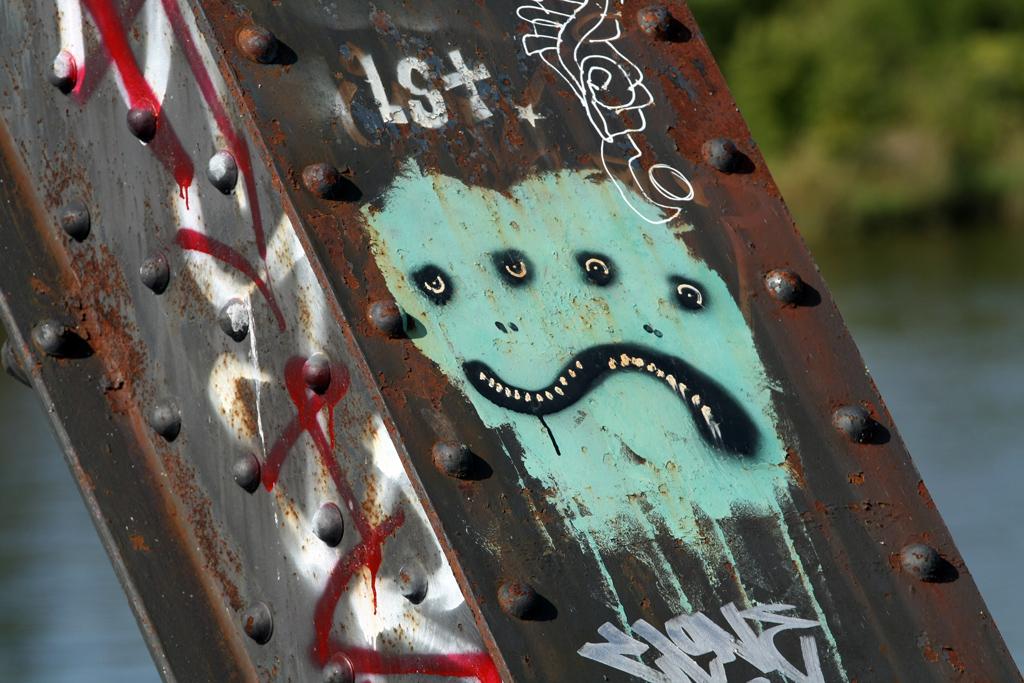
 Two-faced graffiti on a bridge

I am still in the process of reading Michael Ignatieff’s The Warrior’s Honour, written when he still had the kind of freedom of speech that puts academics at an advantage relative to politicians. One situation described therein does a good job of encapsulating the complexities involved in trying to mitigate the savagery of contemporary war.

It concerns the choices made the the International Committee of the Red Cross (ICRC) during and after the wars that accompanied the breakup of Yugoslavia. The ICRC is a unique institution, legally mandated to implement the Geneva Conventions. A key element of that arrangement is neutrality; the ICRC does not distinguish between good wars and bad wars, nor between aggressors and victims. By not doing so, it maintains the kind of access that other organizations are denied.

In the wake of the Yugoslav wars, the ICRC had the best records on who was massacred, where, when, and by who. Such records would have aided the work of the International Criminal Tribunal for the former Yugoslavia (ICTY), in seeking to prosecute those responsible. The ICRC refused to provide the records, arguing that if the combatants had thought that ICRC records might eventually be used in war crimes trials, they would not have permitted the ICRC to provide the kind of aid it was able to.

The neutrality of the ICRC was subsequently rewarded, when they ended up being the only aid organization not expelled from Bosnia during the Croat-Muslim offensive against Serbs. Ironically, this included the single greatest instance of ethnic cleansing: a term generally associated with actions Serbian forces had undertaken previously, including by using released and trained prisoners as unofficial proxies for acts that violated the Geneva Conventions.

As this example illustrates, contemporary conflicts are often deeply morally ambiguous, on everything from the role of child soldiers to whether it is truly possible for aid organizations to be impartial. To me, there seems to be considerable importance to maintaining an organization like the ICRC, simply because it can get the kind of access that others cannot. When it comes to more judgmental organizations, there are plenty to choose from, including Médecins Sans Frontières, which also has a headquarters in Geneva.

Open thread: the future of Afghanistan

It now seems entirely clear that Afghanistan will not become a liberal democratic state as a consequence of the US/NATO intervention. Where once politicians spoke of a conversion akin to those of Germany and Japan after World War II, the highest ambitions now seem to be for a state that is internally coherent, able to defend its borders, and unwilling to play host to Al Qaeda sorts. Gross disrespect for women’s rights, a theological bent to government, and the continued existence of warlords all seem to have become acceptable in the eyes of the interveners, or at least inevitable.

Given that, what should the objectives of those states currently fielding troops there be? Are there any special considerations for Canada? At this point, what would ‘success’ and ‘failure’ look like, and how good and bad would they be for Afghans, Canadians, and the world at large?

The military and Canada’s Arctic

Paint splash on wood

Between August 6th and 28th, the Canadian Forces are staging Operation Nanook up in Canada’s Arctic: a 700-person military exercise that includes sub hunting, search and rescue, and disaster response. The operation highlights both Canada’s general claim in the Arctic region and the specific commitment of this government to asserting it, even if ambitious icebreaker plans have been scaled back.

With the prospect of large ice-free areas in the Arctic likely only decades away, it does seem as though territorial disputes over sovereignty and resources will arise. As a result, military capacity could be important. Ironically, the melting of the ice may provide access to new reserves of oil and gas: further fuelling the destruction of the unique environment north of the Arctic circle.

An apology for Alan Turing

Vegetables in the ByWard Market, Ottawa

In addition to being one of the most notable mathematicians and computer scientists in British history, Alan Turing played a key role in cracking German codes during the Second World War. Despite the importance of his contribution, and the role intelligence from the Government Communications Headquarters (GCHQ) played in helping the allies in the Battle of the Atlantic, Turing was subsequently persecuted by the British authorities for being homosexual.

Turing was stripped of security clearance, criminally prosecuted for consensual sex with another man, chemically castrated with estrogen injections, and eventually driven to depression and suicide.

Recently, a petition was launched insisting that the “British Government should apologize to Alan Turing for his treatment and recognize that his work created much of the world we live in and saved us from Nazi Germany. And an apology would recognize the tragic consequences of prejudice that ended this man’s life and career.” An apology for both his specific treatment and the general persecution of homosexuals seems entirely in order. Hopefully, the government will bow to the petitioner’s request, despite Turing not having any surviving family to apologize to.

While writing a historical wrong is a valid reason for issuing an apology, the incident is also not without contemporary relevance. Just look at the continued policy within the US armed forces to dismiss gay linguists from the military. Once again, people making a significant contribution to national security are being discriminated against on the basis of characteristics that are none of their government’s business.

[Update: 10 September 2009] Admirably, British Prime Minister Gordon Brown issued an apology to Alan Turing: “While Turing was dealt with under the law of the time and we can’t put the clock back, his treatment was of course utterly unfair and I am pleased to have the chance to say how deeply sorry I and we all are for what happened to him. Alan and the many thousands of other gay men who were convicted as he was convicted under homophobic laws were treated terribly. Over the years millions more lived in fear of conviction.” The full statement is on the Prime Ministerial website.

FOGBANK and American fusion bombs

The United States may have forgotten how to make FOGBANK: a critical component in at least some thermonuclear weapons. FOGBANK is an ‘interstage material’ that gets turned into a superheated plasma by the detonation of the ‘primary’ fission bomb, helping to ignite the ‘secondary’ fusion reaction.

Some speculate that FOGBANK resembles aerogel. Others describe efforts to re-learn how to make it.

Securing the City

Stairs outside the National Gallery, Ottawa

Christopher Dickey’s Securing the City: Inside America’s Best Counterterror Force – the NYPD describes the evolution of New York’s counterterrorism capabilities following the 2001 attacks against the World Trade Centre. Much of the responsibility is attributed to Raymond Kelly, who still serves as Police Commissioner, and David Cohen, his intelligence chief. Key among the changes was the development of much greater intelligence capabilities: everything from officers posted with federal agencies and overseas to developing a broad array of linguists, radiation detection systems, and advanced helicopter optics. All in all, the NYPD developed capabilities to become a mini-CIA, while also strengthening their policing and tactical capacity. All this was done in the face of considerable bureaucratic resistance, particularly from the federal agencies who felt their role was being subverted by the new developments.

Much more than Fred Burton’s book, Securing the City considers the checks and balances associated with greater police power. For instance, Dickey discusses the intelligence operations against people protesting the Republican National Convention in New York in 2004. Dickey also makes passing reference to torture and rendition (without considering the ethics of either at length), as well as surveillance and entrapment-type operations where intelligence officers pretend to help advance terrorist plots, so as to incriminate the others involved. Dickey comes to the general conclusion that the new NYPD capabilities are justified, given the situation in which the city finds itself. He does, however, worry if those capabilities will be properly maintained as budgetary pressures tighten, or when Kelly and the other key architects leave.

Some of the book’s chapters break out from the broad narrative to discuss specific topics, such as weapons of mass destruction or the dangerousness of ‘lone wolf’ operatives who operate independently and without the links to others that make most attackers detectable. While such treatment does make sense, the placement of the chapters can make the book feel a bit randomly assembled at times. Similarly, long italic passages (several pages long) are annoying to read. One other complaint is that the book includes a massive number of names, which can be difficult to keep track of. A listing of ‘characters’ with a brief description of the importance of each would be a nice addition to the front materials.

Dickey is harshly critical of the Iraq war, arguing that is was a distraction that undermined American security. He also argues that the ‘Global War on Terror’ was deeply misguided: “dangerously ill-conceived, mismanaged, and highly militarised.” He is also critical of Rudolf Guliani, who he accuses of taking credit for the successes of others, as well as making poor decisions of his own. His general position on the risk of terrorism is an interesting one. Basically, he thinks the capabilities of Al Qaeda and their sympathizers to carry out attacks in the U.S. has been exaggerated, as demonstrated by just how inept most of the post-9/11 plots were. Nevertheless, he sees the consequences of a terrorist attack as being so severe that even dubious plans being made by incompetent terrorists need to be tracked down and broken up. He repeatedly cites the example of the first World Trade centre bombing, where an inept group failed to advance their aims until Ramzi Yousef joined them and carried their operation to completion. Because of this, he agrees with Burton in thinking that terrorism cannot be treated primarily as a criminal matter. The standard of collecting courtroom-usable evidence is too high to disrupt plots early and effectively, while maintaining the covert capacity to do so again.

Overall, Securing the City is a worthwhile read for those with an interest in security, intelligence, or policing. It’s a nice demonstration of the global importance of some cities in the present age, and the special characteristics of New York. In particular, he praises the role of immigration in the city, citing it as one of the reasons why the NYPD was able to assemble such a diverse and effective capability. Those wanting more context in which to think about the strategic, tactical, and ethical issues surrounding modern terrorism would be well served by giving this book a read.

Ghost: Confessions of a Counterterrorism Agent

Purple grasses

I became aware of Fred Burton through the free weekly defence briefings put out by STRATFOR, his current employer. They stand out from other media reports, both as the result of the details they focus on and the thrust of their overall analysis. While I wouldn’t bet heavily on them being entirely correct, they do play a useful counterbalancing role when read alongside media stories that are generally rather similar.

Ghost describes Burton’s history with the Diplomatic Security Service (DSS) between 1986 and 1993, with an epilogue in 2004. Burton’s work involved collecting intelligence, investigating plots and attacks, protecting diplomats, and so forth. He goes into detail on several of the investigations he was involved in, including the assassination of Pakistani President Muhammad Zia-ul-Haq and the capture of Ramzi Yousef. He also describes some of the tactics and strategies employed by the DSS, as well as by other law enforcement and intelligence agencies. These include the operation of motorcades, cover techniques, and countersurveillance: a tactic he claims special credit for deploying in the protective services.

The book’s greatest strength lies in the details it includes, on everything from the character of different intelligence agencies to equipment used to various sorts of tradecraft. While the breathless descriptions can sometimes feel like the content of a mediocre spy novel, the detailed technical discussions offer insight into how clandestine services actually operate. Of course, it is virtually certain that security and secrecy led to parts of the book being incomplete or distorted. Still, it has a candid quality that makes it an engrossing read. One interesting perspective offered is on the connections between different states and terrorist groups: particularly the relationship between Iran and Hezbollah; between the Palestinian Liberation Organization (PLO), Yasser Arafat, and various terrorist groups; as well as the ways in which modern terrorist tactics evolved from those developed by Black September, the group that carried out the massacre at the 1972 Munich Olympics.

At times, the book’s language is overwrought, especially when Burton is discussing the innocence of the victims of terrorism and the ‘evil’ nature of those who commit it. His reflections on his own ethical thinking may be genuine, but seem somewhat hackneyed and unoriginal at the same time. He never portrays American intelligence or police services as having any flaws, with the exception of when bureaucrats get overly involved and stop brave and effective agents from doing their work well. No consideration is given to the abuses that can occur when effective oversight is not present. Burton is also unrelentingly hostile towards the media: accusing them of offering superficial analysis and being eager to divulge information that undermines the clandestine efforts of intelligence organizations. The book is also a bit too well sprinkled with cliches, such as decisions being made and information being assessed ‘above Burton’s pay grade.’ In general, Burton seems a bit too willing to assume that all US intelligence agents are working on the side of the angels and that oversight and accountability can only hamper their efforts.

One interesting passage mentions how little time was required to circumvent the encryption on Yousef’s laptop. This makes me wonder what sort of algorithm had been employed and how it was implemented, as well as the techniques used by those breaking the encryption. I suspect that the actual encryption algorithm is not what was overcome, at least not through some brute force means. It is far more likely that they were able to compromise the password by comprehensively searching through the data on hand, including temporary files and perhaps contents of RAM. It does you little good to have a hard drive encrypted with AES-256 if it is possible to recover or guess the key in a short span of time.

In general, the book is one I recommend. It has a good authentic feel to it and includes some unusual perspectives and operational details. Burton’s personal dedication, as well as that of the agents he serves with and admires, is both convincing and commendable.

Ethics and autonomous robots in war

The increasing use of autonomous robots in warfare raises questions about how they can be used ethically and in concordance with international law on armed conflict. While unarmed robots like those used by bomb squads are ethically unproblematic, those with both weapons and an independent capability to make decisions about their use are quite different. This is especially true if they will be used in environments where civilians could be injured or killed.

The BBC has an article about some of the concerns that have been raised and issues that have been considered. In some ways, the trade-offs are similar to those with existing technologies. For instance, there is often a trade-off between how much risk an army exposes its own personnel to, and how effectively it can avoid causing civilian casualties.

Why climate change could be catastrophic

Wrenches and sockets

The basic equation of climate change is simple enough: add greenhouse gases to the atmosphere and you warm the planet. Of course, there are endless complications in areas like changes in precipitation, sea level, etc.

There are, however, a relatively small set of reasons for which climate change could potentially enormously problematic, or even a civilizational threat. That is to say, one that has the capacity to eliminate or virtually eliminate civilizations with the major characteristics of being industrial, such as level of technological advancement and share of the population whose primary vocation is farming.

The probability of all of these is unknown, and may be very low. Still, they bear consideration when we are deciding how precautionary an approach we should take when it comes to reducing emissions. Also, more than one of these could happen simultaneously.

1) It could happen very quickly

While the normal order of business for climatic changes seems to be gradual change, there is some evidence that it is possible to cross some threshold and experience massive sudden changes. An example would be the mass melting of icecaps in Greenland and Antarctica, producing several metres of sea level rise in a matter of decades. Rapid sea level rise (albeit perhaps not to that degree) has happened before, as the result of other ‘forcings’ that affect the climate system.

More rapid change would be harder to adapt to than slower change. Rather than having to make gradual changes to how we grow food, use water, etc, we would be confronted with the immediate necessity of making big, expensive, and politically difficult changes.

2) It could take place to an extreme extent

The ultimate extreme – seeing our oceans boil away and the planet turn into a burning hell like Venus – is probably impossible. That being said, a much less dramatic change could still strain the ability of human beings to cope. There is a general consensus that warming of more than 2°C would be ‘dangerous’ and that each additional degree would heighten problems such as agricultural failure and lack of access to fresh water.

A business-as-usual course of greenhouse gas emissions that takes atmospheric concentrations to over 1000 ppm by 2100. If climate sensitivity is high (say, 8°C) then the warming that results could average 25°C above pre-industrial levels, worldwide (with more warming in high latitudes). That would surely cause massive agricultural problems and leave many areas uninhabitable. Even with sensitivity at the high end of the IPCCs probable range (4.5°C), 1000 ppm conditions could generate warming of over 15°C.

3) It could become self-sustaining

The climate system contains a number of positive feedback effects, where warming causes a change that produces more warming. Examples include sea ice melting to reveal more heat-absorbing ocean, melting permafrost releasing methane, and tropical forests drying out and burning.

If the natural world began to regularly emit more greenhouse gasses than it was removing from the atmosphere, even cutting human emissions to zero would not prevent further climate change. Our only options would be various forms of geoengineering: air capture to remove greenhouse gasses directly from the atmosphere, or techniques to alter how the planet absorbs and reflects solar radiation.

If there is a threshold beyond which runaway climate change begins, humanity might find itself trapped between facing an unknown level of warming (to stop only when the system finds a new equilibrium) or taking the desperate step of trying to actively engineer the climate.

4) It could foster conflict

Even without any of the scenarios above, it is plausible that climate change could kick off major conflicts. Bangladesh and Florida could be permanently submerged. Major river systems could see massively decreased flows. Major famines could result, etc.

If the climate changes experienced were abrupt, the danger of conflict would be further heightened, as states made desperate attempts to cope and populations relocated.

In the end, our best chance for dealing with climate change is for states to begin cooperating when they still have a good amount of time and lots of resources to direct at the issue. Also, when their will to cooperate isn’t being reduced by Hobbesian tensions. By investing reasonable amounts now in transforming our energy system and protecting carbon sinks – as well as by creating increasingly powerful incentives to reduce greenhouse gas emissions – states can not only prevent the scenarios above from occurring, they can also switch the energy basis of their society from dirty and unsustainable fossil fuels towards renewable forms of energy that can be relied upon indefinitely.

[Update: 4 February 2009] Here is a post on the danger of self-amplifying, runaway climate change: Is runaway climate change possible? Hansen’s take.