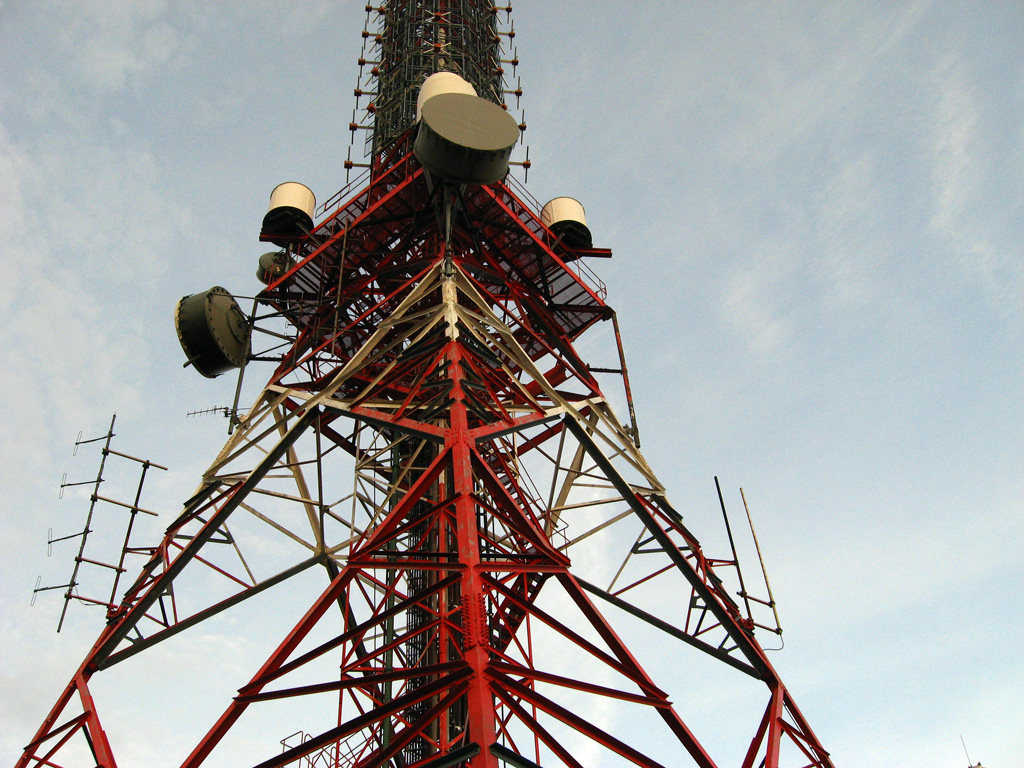
Massive anti-terror database contemplated in the UK

British Transport Secretary Geoff Hoon has been saying some worrisome things about terrorism, security, and civil liberties. He is backing a plan to create a massive database of mobile and internet communications, for purposes of fighting terrorism. One worrisome aspect is the suggestion that it would be used to deal with “terrorists or criminals.” Technologies initially justified as an extreme measure necessary to fight terrorism will always spread to more banal uses, with a greater scope for abuses.

Indeed, that is the biggest issue that needs to be weighed against the possible terror-fighting capacity of such databases. They will inevitably be abused. Furthermore, governments are far more dangerous than terrorists, both when they are acting in malicious ways and when they are trying to be benign. Modern history certainly demonstrates that, while the power of terrorists to inflict harm is considerable, the ability of states to do so is extreme.

Previously:

Martin Hellman on the risk of nuclear war

Despite the end of the Cold War, there remains some possibility of a major nuclear exchange between some combination of those world powers with more than a couple of hundred nuclear weapons. Such an outcome could arise through accident or miscalculation, unauthorized launch, or simply through the progressive stressing of the situation, in a manner akin to the Cuban Missile Crisis in 1962, the Yom Kippur War of 1973, of the Able Archer exercise in 1983.

Martin Hellman – one of the three civilian inventors of public key cryptography – has written a piece describing some statistical ways through which we could contemplate the risk of global nuclear war, as well as evaluate it relative to other threats. As a near-term nightmare scenario, the massive use of nuclear weapons surely exceeds the threat posed by climate change: climatic change across a decade is highly abrupt, whereas the time between the decision to use nuclear weapons and the generation of mass casualties would likely be only minutes.

Based on the frequency with which near misses have taken place, Hellman argues that the perpetuation of the current global nuclear situation carries a 1% per year risk of mass nuclear exchange. He estimates that this exceeds the risk of living beside a nuclear power plant by 1000 to 1 and has a clever rhetorical device for making that concrete:

Equivalently, imagine two nuclear power plants being built on each side of your home. That’s all we can fit next to you, so now imagine a ring of four plants built around the first two, then another larger ring around that, and another and another until there are thousands of nuclear reactors surrounding you. That is the level of risk that my preliminary analysis indicates each of us faces from a failure of nuclear deterrence.

Surely, if his estimate is anywhere near correct, all the ongoing concern about new nuclear power plants should be superseded more than one thousandfold by concern about the state of security in the face of nuclear war. After all, everybody lives with the risk associated with global thermonuclear war and nuclear winter. Only those living fairly close to nuclear power plants bear acute risks associated with meltdowns.

Hellman’s warning is akin to the one repeatedly sounded by former US Defense Secretary Robert McNamara, who himself revised the American nuclear warplan for the Kennedy administration in 1963. In both cases, the suggestions are similar: work to reduce the number of weapons, increase the time required for anybody to use them, and avoid the complacent belief that the lack of explosive accidents or attacks since the Second World War proves them to be impossible.

The Code-Breakers

For those with a serious interest in the history and practice of cryptography, David Khan’s The Code-Breakers: The Comprehensive History of Secret Communication from Ancient Times to the Internet provides an enormous mass of knowledge. The scope of the 1200 page book is vast: covering everything from the earliest ciphers to the origins of public key cryptography in detail. It is probably fair to say that the period best covered is that between the Middle Ages and the Second World War, though the sections covering the decoding of Egyptian hieroglyphics and Linear B are also detailed and skilfully written. Those interested primarily in the contemporary practice of cryptography – or those seeking a more concise text – would be well advised to consider the books by Simon Singh and Bruce Schneier on the topic.

Khan’s book excels in actually describing how various cryptographic systems work, as well as how they were broken. For the most part, his analysis is factual and dispassionate. The sole exception is in the period covering the Cold War, in which his ire against the Soviet Union and those Americans who turned into traitors for it are acute. At times, the book gets into an excessive amount of detail about the bureaucratic organization of different cipher bureaus: including lengthy sections about how various wartime bodies were reorganized. In most cases, the book does not provide much biography on the men and women involved, though exceptions exist in the case of some of the most eminent or interesting cryptographers. The book does provide an interesting discussion of the history of writing on cryptography, including the impact that major publications had on the development of the field and its comprehension within society at large. Kahn also does a good job of debunking some of the many spurious claims that have been made about ‘revolutionary’ and ‘unbreakable’ cryptosystems that people have invented: stressing how the making of cryptographic systems is a realm of abstract mathematics, while the breaking of such systems is a gritty and practical exercise.

In addition to covering the techniques of cryptography and cryptanalysis themselves, the book covers many related security issues: including physical security, invisible inks, elements of spycraft, decisions about how to use information gleaned through cryptanalysis, and the use of broken cryptographic systems to transmit fake or confusing information. The book also covers the relationships between cryptographic work and the activities it is supporting. An especially intriguing section details the efforts of the American navy to combat rum smuggling during the prohibition era. Ships with floating cryptoanalytical laboratories provided vital intelligence to interception vessels, just as other cryptanalysis had helped re-direct U-boats away from German submarines during the Second World War. The book covers an enormous variety of code systems, ranging in use and sophistication. These include diplomatic and commercial systems, high level military systems used between major installations, systems for vehicles, trench codes for those on the front lines, and more. The most abstract section of the book contemplates communication between human beings and extraterrestrials, covering questions about how we could recognize alien communication, as well as mathematical steps through which a comprehensible discourse could potentially be established.

For those interested in actually breaking codes and ciphers themselves, the book provides detailed information on techniques including frequency analysis, factorization attacks of the kind used against polyalphabetic substitution ciphers, and the index of coincidence. It also provides a lot of information on the weak ways in which cryptography is often used and the kinds of errors that have allowed for key breaks into previously unreadable cryptosystems. While it would not be especially useful for attacking modern computerized cryptographic systems, it would provide some guidance for those seeking to break into amateur or puzzle-type cryptographic challenges.

The Code-Breakers may well be the most comprehensive cryptographic history available, though it is far less detailed in its description of post-Cold War cryptosystems than some of its more concise recent contemporaries. For those wishing to gain an appreciation for how cryptography emerged, the role it played for most of human history, and the techniques that have been employed to guard and attack messages, this is an ideal place to turn.


Resource types and the resource curse

As discussed before, the ‘resource curse’ hypothesis holds that the presence of valuable resources can sometimes reduce the security of states, since it offers up a prize to anyone capable of seizing them. A bit of recent research has added nuance to the picture. By looking at the long-running civil war in Columbia, the authors were able to look at periods when coffee (a labour intense crop) and oil (a capital intense crop) rose and fell in value:

Using newspaper reports of violent skirmishes in 950 Colombian municipalities between 1988 and 2005, Dube and Vargas find that when coffee prices went up, violence went down in locations where a large fraction of land area was under coffee cultivation. When coffee prices fell, however, as they did by almost 70 percent in the late 1990s, violence in coffee areas rose dramatically. The researchers estimate that an additional 500 deaths may have resulted from the increased conflict that came from lower coffee prices. The opposite was true for oil: It was higher prices that intensified conflict in areas with productive oil wells or pipelines. (Since both coffee and oil prices are traded in global markets, it is unlikely that price increases were caused by panicking commodities traders spooked by increased civil-war violence in Colombia.)

One suggestion that arises is not unfamiliar: establish strong governance regimes in states with capital intensive resources. It is far better to be like Norway, using resource income transparently and putting aside a share of the oil revenues for the benefit of future generations, than like Nigeria, long mired in conflict as different groups compete for resource wealth.

On the labour intensive side, the proposal is a bit more novel: provide international aid to stabilize commodity prices in conflict-prone states. There are those who argue that a 50% drop in coffee prices helped cause the Rwandan genocide. Surely, the economic cost of temporarily bolstering commodity prices in delicate states is less than the probable cost of re-establishing security and resuming development after an internal conflict. The difference between the economic cost and the moral cost of inaction is probably greater still.

Covert way to collect samples

A clever way to learn who in a town is making bombs: start a laundromat, send coupons to every house that are marked to identify each, then test the clothes and bedding for residue from explosives or explosive precursors. You can start with coupons specific to each street, then move to another set numbered for each house once the proper streets are identified.

Apparently, the British used this tactic against the IRA.

As with many security-related things, I learned about it from Bruce Schneier’s blog.

Passchendaele and glory in warfare

Before several recent films, I have seen the trailer for Passchendaele – a film that seems to provide a heroic and pro-Canada take on this WWI battle. If anything, this actual history of Passchendaele demonstrates that war is rarely heroic, and that many narratives of heroism are self-serving for those that generate them. Both sides were fighting in defence of imperialism. Furthermore, the battle served little strategic purpose. After being taken at huge cost of lives – nearly one million killed, wounded, or captured on both sides – the terrain was abandoned so the Allies could respond more effectively to the German Lys Offensive.

Of course, Passchendaele joins a large collection of films of dubious historical quality. While I have yet to see it, the trailer is guilty of mindless patriotism, historical revisionism, and perhaps the Aragorn Fallacy. It would behoove us to remember a few key things about WWI: that the war was hugely costly in lives and suffering, that none of the major powers participating got the outcome they wanted at the outset, and that it ultimately did nothing to address the imbalances in Europe caused by the unification of Germany. Of course, films that highlight such things are unlikely to be blockbuster smash hits.

Naomi Oreskes, climate science, and the JASON group

The JASON Defense Advisory Group consists of top-notch American scientists who carry out requested research on behalf of the American government during the summer months. Past areas of research have included adaptive optics of the kind used to remove atmospheric distortions from telescope images, a system for communicating with submarines using very long radio waves, missile defence, and more.

Back in 1979, the JASONs looked into the issue of climate change – concluding that the atmospheric concentration of carbon dioxide could double by 2035, causing an increase in the mean temperature of the oceans and atmosphere. Despite not having any climatological background, they constructed their own mathematical model to approximate the relationships between greenhouse gas emissions, atmospheric concentrations, temperature changes, sea level rise, and other phenomena. Unlike many of their other non-classified reports, “The Long Term Impact of Atmospheric Carbon Dioxide on Climate” doesn’t seem to be readily available online. Nonetheless, some information on both the report and the JASONs is included in this Times article by Naomi Oreskes: the woman most famous for her 2004 Science article “Beyond the Ivory Tower: The Scientific Consensus on Climate Change,” in which she demonstrated that disagreement about the fundamentals of climate change existed in the media, not within the scientific literature.

The Times article, the Science paper, and the available JASON reports all make for informative reading.

India and the Nuclear Suppliers Group

Today, the 45-nation Nuclear Suppliers Group decided to approve a nuclear deal between the United States and India (which is not part of the Nuclear Non-Proliferation Treaty (NPT), and which tested bombs between 1974 and 1998). The decision is one about which I feel ambivalent. One the one hand, it might promote the relatively responsible use of nuclear technologies in India. Despite how we could probably do better by spending our money in other ways, more nuclear power is a likely consequence of concerns about both energy security and climate change. On the other hand, the deal demonstrates that it is possible states can test bombs, remain outside the NPT, and still get access to internationally-provided nuclear fuels and technologies. The lesson to other states may be that the best long-term course of action is to ignore international efforts aimed at preventing the spread of nuclear weapons.

Thinking about how many states are likely to have reactors and bombs by the end of the next century is pretty worrisome.

More comprehensive reporting on the decision:

Generation Kill

Written by a journalist embedded with the 1st Reconnaissance Battalion of the Marine Corps, Evan Wright’s Generation Kill describes the experience of invading Iraq alongside them in 2003. The book provides a graphic account of what transpired among the men of the Battalion and its subsidiary units, as well as on battlefields between Kuwait City and Baghdad.

Some of the more notable elements of the first person account include the lack of coordination between different units, poor logistics and intelligence, near-total lack of translators, wide variations in competence and attitude between officers, and the force with which the sheer terror and agony of the experience is recounted. While large portions of the invading army may have had tents, cots, and warm meals, the recon Marines operate for the entire war on pre-packaged food and holes laboriously pick-axed into the ground. They spent much of the war in bulky chemical protection suits, fearing gas attacks that never came. The Marines are intentionally sent into ambush after ambush, receiving massive amounts of fire from within open-topped Humvies, as a feint to confuse Iraqi forces about the overall American strategy. The book certainly does a good job of conveying the brutality of it all: for the Marines, their Iraqi opponents, and for the civilians all around. The most interesting aspects of the narrative are definitely the characters of the individual Marines, as effectively illustrated through quoted statements.

The book does reinforce some broader conclusions that can be drawn about the war: particularly in terms of how the treatment of the civilian population has been mismanaged. What is less clear is whether the lesson to be drawn is that much more attention needs to be paid to post-occupation planning in future conflicts, or whether expectations of anything other than absolute carnage following a ‘regime change’ are misguided. Probably, the answer lies somewhere between.

The book has also formed the basis for an HBO mini-series of the same name. The series and the book parallel one another very closely. Indeed, given the arguably greater capacity of film to depict the majority of the events described, just watching the series may be a superior option to just reading the book.

Frontline episodes

The entire archive of the PBS investigative journalism program Frontline seems to be available online for free. Some of the more interesting topics covered include:

There is certainly a consistent – and fairly critical – focus on the controversial actions of the second Bush administration. That being said, the quality of the programs seems to be quite high.