Reloaded with non-fiction

I have officially abandoned my earlier initiative to finish all my pending books before purchasing more. Mostly, that is because I finished all the non-fiction on my list and all of the fiction I have read recently has been depressing. While much of the non-fiction can also be dispiriting, it feels less like emotional self-flagellation to read it.

My new crop of non-fiction:

  • Bodanis, David. Passionate Minds. 2006
  • Collier, Paul. The Bottom Billion: Why the Poorest Countries are Failing and What Can Be Done About It. 2007
  • Easterly, William. The White Man’s Burden: Why the West’s Efforts to Aid the Rest Have Done So Much Ill and So Little Good. 2006.
  • Overy, Richard. Why the Allies Won. 1995.

The Easterly book was endorsed by Emily Paddon during one of our pre-seminar conversations in Oxford. It is also one of those books that I have heard mentioned in conversation often enough to feel concerned about not having read. The Collier book is clearly on a related theme. I saw Paul Collier speak many times at Oxford and always found him candid and informative. Richard Overy’s book was one of the best I read in the course of two history seminars at Oxford; I look forward to having the chance to take my time in reading it, rather than having it as one of several urgent items in an essay’s source list. Finally, I got the Bodanis book because I have heard it well recommended and know little about Voltaire and even less about Emilie du Chatelet.

I will certainly finish the fiction eventually, but I will do so interspersed with meatier stuff.

Fugitive Pieces

Grief Grafitti

Anne Michaels’ Fugitive Pieces is too overwhelming a book for me: overwhelming with sadness, with detail, with history, and with language evocative of inescapable grief. As such, it took me many weeks to read. One passage does a particularly good job of succinctly encapsulated the inescapable historical anguish that makes this small book so heavy:

History is the poisoned well, seeping into the groundwater. It’s not the unknown past we’re doomed to repeat, but the past we know. Every recorded event is a brick of potential, of precedent, thrown into the future. Eventually the idea will hit someone in the back of the head. This is the duplicity of history: an idea recorded will become an idea resurrected. Out of fertile ground, the compost of history.

That kind of curse extends to all the characters in the book. None find any comprehensive solace; none manage to lift their feet above the boggy terrain of the past and make their way to a firmer present shore. The book presents a number of brief illuminations, but each has the ultimate character of being palliative rather than redemptive:

But sometimes the world disrobes, slips its dress off a shoulder, stops time for a beat. If we look up at that moment, it’s not due to any ability of ours to pierce the darkness, it’s the world’s brief bestowal. The catastrophe of grace.

These people are swept along like houses carried by hurricane waters – whether floating towards tragedies or temporary reprieves from grief. The point is hammered home with talk of tornadoes transporting people or ripping them apart; lightning providing unexpectedly cooked geese, straight from the sky, or simply flattening people. Michaels’ people do not possess agency of the kind that we perceive ourselves to have, and which is essential to optimism.

The author’s approach to thought is almost completely unlike my own. Rather than focusing on patterns, both the author and the protagonists focus on details. Rather than drawing comprehensible conclusions from extrapolated data, they draw opaque, personal, emotional conclusions – as veiled as modern poems. The book is beautiful and powerful, but also soul-sapping and exhausting. It is a book with depths to reward you for your struggle.

In a way, this book is the antithesis of Nabokov’s Lolita. There, inherent ugliness is flawlessly concealed by language that has the power to immerse your whole mind in the succession of sounds and syllables. In Fugitive Pieces, your mind can never quite get to the language because it is hampered at all times by the heaviness of grief.

Secrets and Lies

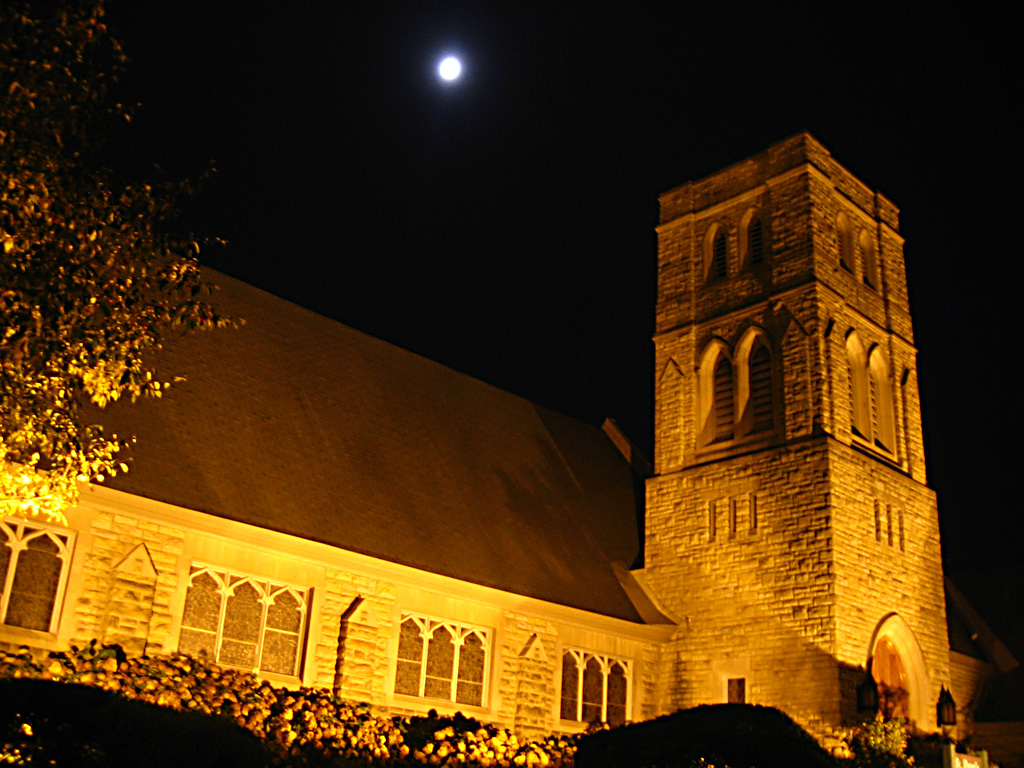
Ottawa church

Computer security is an arcane and difficult subject, constantly shifting in response to societal and technological forcings. A layperson hoping to get a better grip on the fundamental issues involved can scarcely do better than to read Bruce Schneier‘s Secrets and Lies: Digital Security in a Networked World. The book is at the middle of the spectrum of his work, with Beyond Fear existing at one end of the spectrum as a general primer on all security related matters and Applied Cryptography providing far more detail than non-experts will ever wish to absorb.

Secrets and Lies takes a systematic approach, describing types of attacks and adversaries, stressing how security is a process rather than a product, and explaining a great many offensive and defences strategies in accessible ways and with telling examples. He stresses the impossibility of preventing all attacks, and hence the importance of maintaining detection and response capabilities. He also demonstrates strong awareness of how security products and procedures interact with the psychology of system designers, attackers, and ordinary users. Most surprisingly, the book is consistently engaging and even entertaining. You would not expect a book on computer security to be so lively.

One critical argument Schneier makes is that the overall security of computing can only increase substantially if vendors become liable for security flaws in their products. When a bridge collapses, the construction and engineering firms end up in court. When a ten year old bug in Windows NT causes millions of dollars in losses for a company losing it, Microsoft may see fit to finally issue a patch. Using regulation to structure incentives to shape behaviour is an approach that works in a huge number of areas. Schneier shows how it can be made to work in computer security.

Average users probably won’t want to read this book – though elements of it would probably entertain and surprise them. Those with an interest in security, whether it is principally in relation to computers or not, should read it mostly because of the quality of Schneier’s though processes and analysis. The bits about technology are quite secondary and pretty easily skimmed. Most people don’t need to know precisely how smart cards or the Windows NT kernel are vulnerable; they need to know what those vulnerabilities mean in the context of how those technologies are used. Reading this book will leave you wiser in relation to an area of ever-growing importance. Those with no special interest in computers are still strongly encouraged to read Beyond Fear: especially if they are legislators working on anti-terrorism laws.

The World Without Us

Around the globe, every natural system is being affected by human behaviour: from the composition of deep oceanic sediments to mountaintop glaciers. As such, the concept behind Alan Weisman’s extraordinary book The World Without Us is both ambitious and illuminating. Using a combination of research, expert consultation, and imagination, he projects what would happen to the Earth if all 6.7 billion human inhabitants suddenly vanished. Within weeks and months, all the nuclear power plants will melt down; the massive petroleum refinery and chemical production complexes will burn, corrode, and explode; and nature will begin the slow process of reclaiming everything. Over the course of decades and centuries, the composition of all ecosystems will change as farmland is retaken and once-isolated patches of wildlife become reconnected. Cities will fall apart as bridges stretch and compress with the seasons and foundations fail on account of flooding. In the end, only bronze sculpture and ceramics are likely to endure until our red giant sun singes or engulfs the planet in about five billion years. More broadly, there is reason to hope that radio waves and some interstellar space probes will endure for billions of years.

Weisman uses his central idea as a platform from which to explore everything from material science to palaeontology and ecology. The book is packed with fascinating tidbits of information – a number of which have been shamelessly plagiarized in recent entries on this blog. A few examples of especially interesting topics discussed are the former megafauna of North America, human evolution and migration, coral reef ecology, lots of organic chemistry, and the history of the Panama Canal.

In the end, Weisman concludes that the human impact upon the world is intimately linked with population size and ultimately determines our ability to endure as a species. As such, he concludes with the concise suggestion that limiting human reproduction to one child per woman would cut human numbers from to 3.43 billion by 2050 and 1.6 billion by 2100. That might give us a chance to actually understand how the world works – and how human activity affects it – before we risk being overwhelmed by the half-glimpsed or entirely surprising consequences of our energetic cleverness.

Whether you accept Weisman’s prescription or not, this book seems certain to deepen your thinking about the nature of our world and our place within it. So rarely these days do I have time to re-read things. Nevertheless, I am confident that I will pick up this volume again at some point. Readers of this blog would be well rewarded for doing likewise.

[4 November 2007] I remain impressed by what Weisman wrote about the durability of bronze. If I ever have a gravestone or other monument, I want the written portion to be cast in bronze. Such a thing would far, far outlast marble or even steel.

Hot Air

Meaghan Beattie and Tristan Laing

Hot Air: Meeting Canada’s Climate Change Challenge is a concise and virtually up-to-the-minute examination of Canadian climate change policy: past, present, and future. Jeffrey Simpson, Mark Jaccard, and Nic Rivers do a good job of laying out the technical and political issues involved and, while one cannot help taking issue with some aspects of their analysis, this book is definitely a good place to start, when seeking to evaluate Canada’s climate options.

Emission pathways

Hot Air presents two possible emissions pathways: an aggressive scenario that cuts Canadian emissions from 750 Mt of CO2 equivalent in 2005 to about 400 Mt in 2050, and a less aggressive scenario that cuts them to about 600 Mt. For the sake of contrast, Canada’s Kyoto commitment (about which the authors are highly critical) is to cut Canadian emissions to 6% below 1990 levels by 2012, which would mean emissions of 563 Mt five years from now. The present government has promised to cut emissions to 20% below 2006 levels by 2020 (600 Mt) and by 60 to 70% by 2050 (225 to 300 Mt). George Monbiot’s extremely ambitious plan calls for a 90% reduction in greenhouse gas emissions by 2030 (75 Mt for Canada, though he is primarily writing about Britain).

While Monbiot’s plan aims to reach stabilization by 2030, a much more conventional target date is around 2100. It is as though the book presents a five-decade plan to slow the rate at which water is leaking into the boat (greenhouse gasses accumulating in the atmosphere), but doesn’t actually specify how to plug the hole before it the boat sinks (greenhouse gas concentrations overwhelm the ability of human and natural systems to adapt). While having the hole half-plugged at a set date is a big improvement, a plan that focuses only on that phase seems to lack an ultimate purpose. While Hot Air does not continue its projections that far into the future, it is plausible that the extension of the policies therein for a further 50 years would achieve that outcome, though at an unknown stabilization concentration. (See this prior discussion)

Policy prescriptions

Simpson, Jaccard, and Rivers envision the largest reductions being achieved through fuel switching (for instance, from coal to natural gas) and carbon capture and storage. Together, these account for well over 80% of the anticipated reductions in both scenarios, with energy efficiency improvements, agricultural changes, waste treatment changes, and other efforts making up the difference. As policy mechanisms, the authors support carbon pricing (through either a cap-and-trade scheme or the establishment of a carbon tax) as well as command-and-control measures including tightened mandatory efficiency standards for vehicles, renewable portfolio standards (requiring a larger proportion of energy to be renewable), carbon management standards (requiring a larger proportion of CO2 to be sequestered), and tougher building standards. They stress that information and subsidy programs are inadequate to create significant reductions in emissions. Instead, they explain that an eventual carbon price of $100 to $150 a tonne will make “zero-emissions technologies… frequently the most economic option for business and consumers.” This price would be reached by means of a gradual rise ($20 in 2015 and $60 in 2020), encouraging medium and long-term investment in low carbon technologies and capital.

Just 250 pages long, with very few references, Hot Air takes a decidedly journalistic approach. It is very optimistic about the viability and affordability of carbon capture and storage, as well as about the transition to zero emission automobiles. Air travel is completely ignored, while the potential of improved urban planning and public transportation is rather harshly derided. The plan described doesn’t extend beyond 2050 and doesn’t reach a level of Canadian emissions consistent with global stabilization of greenhouse gas concentrations (though it would put Canada on a good footing to achieve that by 2100). While the book’s overall level of detail may not satisfy the requirements of those who want extensive technical and scientific analysis, it is likely to serve admirably as an introduction for those bewildered by the whole ecosystem of past and present plans and concerned with understanding the future course of policy.

Children of Men

When was the idea of the post-apocalyptic future invented? I went to Blockbuster tonight in hopes of renting some clever comedy. Because of the unavailability of certain titles, recommendations from staff, delayed consequences from my trip to Morocco, and random factors, I ended up watching Children of Men instead. It makes for an uncomfortable accompaniment to my ongoing reading of The World Without Us. Then, there is Oryx and Crake and 28 Days Later. Even Half Life 2 had similar nightmare-future police-state fixations.

I wonder if it could be traced back, Oxford English Dictionary style, to the point where the first work of fiction emerged that envisioned the future as a nightmarish place. Furthermore, the first such fiction to envision human activities as the origin of the downfall. I wonder if ancient examples could be found, or whether it would all be in the last hundred years or so.

A notable volcanic outburst

Most people probably will not have heard 1816 referred to as the Year Without a Summer, but that is exactly what the eruption of Mount Tambora in what is now Indonesia seems to have made it. That May, frost killed or ruined most of the summer crops. In June, two large snow storms produced substantial numbers of human casualties. Hungary and Italy got red snow, mixed with ash, while China experienced famine associated with sharply reduced rice production. In total, about 92,000 people died and the global mean temperature fell by 3°C.

One random yet positive consequence was constant rain causing Lord Byron to propose a writing contest, which Mary Shelley eventually won with Frankenstein. The increased cost of oats may also have driven a German man named Karl Drais to invent the first bicycle. (He called it the ‘velocipede,’ which sounds like a fast-moving and dangerous insect.)

Such incidents are inevitable on a planet that remains geologically active, but they certainly demonstrate the degree to which natural patterns can change rapidly, as well as the degree to which human beings are dependant upon them not doing so.

The Two Mile Time Machine

Fire hose reel

Richard Alley’s The Two Mile Time Machine: Ice Cores, Abrupt Change, and Our Future provides a good, though slightly dated, explanation of the science of ice core sampling, as a means for studying the history of Earth’s climate. Alley focuses on work conducted in Greenland prior to 2000. The book combines some surprisingly informal background sections with some rather technical passages about isotopic ratios and climatic cycles. Overall, it is a book that highlights the scientific tendency to dive right into the details of one area of inquiry, while skimming over many others that actually relate closely – especially if you are trying to use the science as the basis for sound decision-making.

This book does not really warrant inclusion in the first tier of books to read on climate change, but it certainly provides some useful background for those trying to develop a comprehensive understanding of the area. Arguably, the best contribution it makes is explaining the causes and characteristics of very long climatic cycles: those stretching over millennia or millions of years, with causes including orbital variation, continental drift, and cryosphere dynamics.

Given the amount of new data and analysis that has been undertaken since this book was published, a new edition may well be warranted. In particular, the very tenuous conclusions of Alley’s concluding chapters should either be revised, or defended in the fact of the new data.

Oryx and Crake

Fire truck valves

Margaret Atwood‘s novel, which was short-listed for the Booker Prize, portrays a future characterized by the massive expansion of human capabilities in genetic engineering and biotechnology. As such, it bears some resemblance to Neal Stephenson‘s The Diamond Age, which ponders what massive advances in material science could do, and posits similar stratification by class. Of course, biotechnology is an area more likely to raise ethical hackles and engage with the intuitions people have about what constitutes the ethical use of science.

Atwood does her best to provoke many such thoughts: bringing up food ethics, that of corporations, reproductive ethics, and survivor ethics (the last time period depicted is essentially post-apocalyptic). The degree to which this is brought about by a combination of simple greed, logic limited by one’s own circumstances, and unintended consequences certainly has a plausible feel to it.

The book is well constructed and compelling, obviously the work of someone who is an experienced storyteller. From a technical angle, it is also more plausible than most science fiction. It is difficult to identify any element that is highly likely to be impossible for humanity to ever do, if desired. That, of course, contributes to the chilling effect, as the consequences for some such actions unfold.

All in all, I don’t think the book has a straightforwardly anti-technological bent. It is more a cautionary tale about what can occur in the absence of moral consideration and concomitant regulation. Given how the regulation of biotechnology is such a contemporary issue (stem cells, hybrid embryos, genetic discrimination, etc), Atwood has written something that speaks to some of the more important ethical discussions occurring today.

I recommend the book without reservation, with the warning that readers may find themselves disturbed by how possible it all seems.