Towel Day: a curious but entertaining memorial

Fans of Douglas Adams may appreciate being reminded that this coming Thursday, the 25th of May, is Towel Day. Created after his untimely death in 2001, the event is meant to mark his memory with good humour of the kind always demonstrated in his writing. Learning about his death was personally difficult in a way I don’t think it could have been for almost any other stranger.

For the unfamiliar, Douglas Adams is was best known as a British writer of science fiction, though much of his career was devoted to radio work. His most famous books are the Hitchhiker’s Guide to the Galaxy “trilogy in five parts” and the Dirk Gently’s Holistic Detective Agency duo (trio if you include the unfinished segment in The Salmon of Doubt). If you haven’t read them, you are a lucky person: you have the chance to spend the next few days experiencing something exceptionally amusing for the first time. Personally, I’ve read them at least six times each – including going through most of Dirk Gently’s aloud.

On the matter of why towels are relevant, I shall quote a section from the first Hitchhiker’s book:

A towel, [the Guide] says, is about the most massively useful thing an interstellar hitch hiker can have. Partly it has great practical value – you can wrap it around you for warmth as you bound across the cold moons of Jaglan Beta; you can lie on it on the brilliant marble-sanded beaches of Santraginus V, inhaling the heady sea vapours; you can sleep under it beneath the stars which shine so redly on the desert world of Kakrafoon; use it to sail a mini raft down the slow heavy river Moth; wet it for use in hand-to-hand-combat; wrap it round your head to ward off noxious fumes or to avoid the gaze of the Ravenous Bugblatter Beast of Traal (a mindboggingly stupid animal, it assumes that if you can’t see it, it can’t see you – daft as a bush, but very ravenous); you can wave your towel in emergencies as a distress signal, and of course dry yourself off with it if it still seems to be clean enough.

More importantly, a towel has immense psychological value. For some reason, if a strag (strag: non-hitch hiker) discovers that a hitch hiker has his towel with him, he will automatically assume that he is also in possession of a toothbrush, face flannel, soap, tin of biscuits, flask, compass, map, ball of string, gnat spray, wet weather gear, space suit etc., etc. Furthermore, the strag will then happily lend the hitch hiker any of these or a dozen other items that the hitch hiker might accidentally have “lost”. What the strag will think is that any man who can hitch the length and breadth of the galaxy, rough it, slum it, struggle against terrible odds, win through, and still knows where his towel is is clearly a man to be reckoned with.

Carrying a towel on Thursday is therefore both a way of marking your appreciation for Adams’ work and setting yourself out as the very example of a well-prepared and capable individual. Given that the world’s most interesting English-speaking people are all either present or future appreciators of Adams, you stand a decent chance of meeting some new ones if you carry the towel obviously enough.

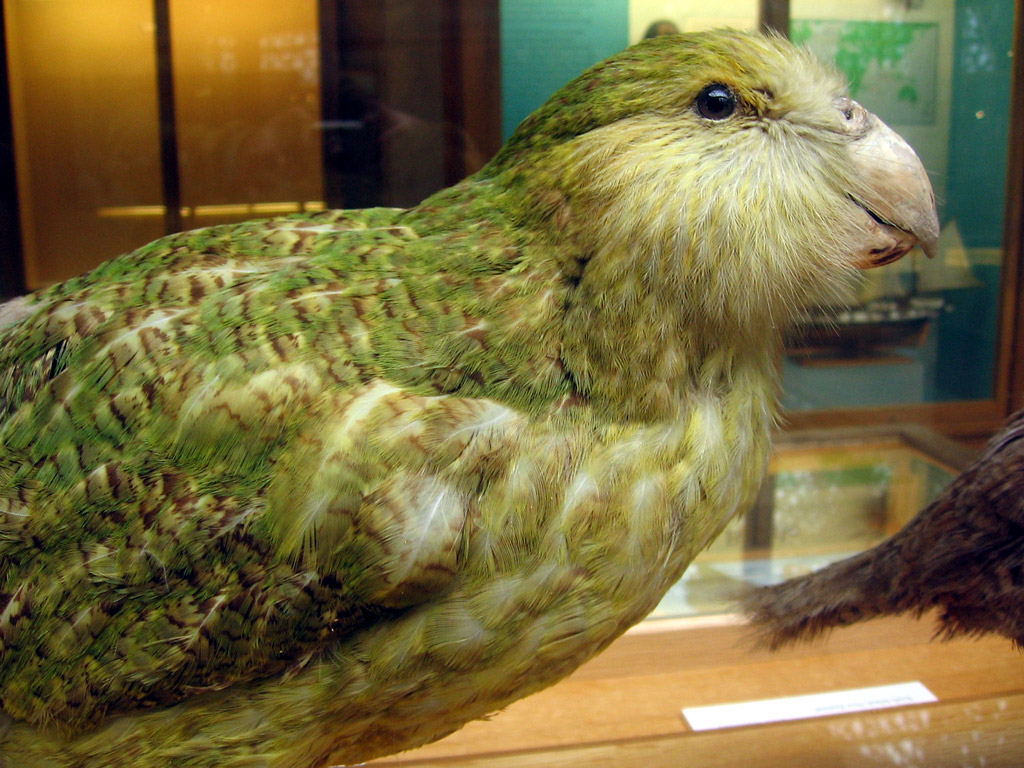
To the many people who have already read and loved the books listed above, I recomment having a look at the lesser known non-fiction book Last Chance to See: written about a slightly mad worldwide expedition in search of endangered species, including the Kakapo parrot of New Zealand, Komodo Dragons, and Chinese river dolphins. The book has all of Adams’ characteristic wit, as well as quite a forceful conservation message. The fact that he climbed Mount Kilimanjaro while wearing a rhino costume definitely contributed to my own ambition to find my way to that lofty summit. Widely available in the UK, you may need to order the from here or wander through a few libraries to find a copy in the US or Canada.

Also worth noting is that Douglas Adams had one of the most amazing funerals possible: with the eulogy delivered by Richard Dawkins and a live performance of Wish you Were Here by David Gilmour of Pink Floyd. That’s my favourite song of theirs, as well. Dawkins also wrote a touching article in The Guardian praising Adams.

On the Road

This afternoon, I finished Jack Kerouac’s On the Road. The experience was a familiar one. To begin with, everything about the book was interesting: the language, the characters, the setting. But as it went, you got the increasingly powerful sense that everything described was pointless. The desperation of it is captured by a section from the end of part three:

All the cigarette butts, the bottles, the matchbooks, the come and the gone were swept up in this pile. Had they taken me with it, Dean would never have seen me again. He would have had to roam the entire United States and look in every garbage pail from coast to coast before he found me embryonically convoluted among the rubbishes of my life, his life, and the life of everybody concerned and not concerned.

Nobody was really doing anything, and it wouldn’t have mattered at all if everything described just hadn’t happened – disconnected stories and disconnected lives. The constant hyperbole on the part of the narrator contributes to that sense that nothing fits together, that everything is the superlative form of its genre, and that every statement has no real relevance beyond the moment in which it is made.

Perhaps the most interesting thing about the book was the sort of communal madness described between the characters: when they seemed to understand one another while exchanging stories and meanings that were opaque to everyone else. You have to wonder if there’s anything to it, or whether both speakers and listeners are deluded about the content of their exchange. Whether they’re just talking to themselves in insane tongues, prompted by the noises around them. It makes you wonder if whatever mechanism that clicks to one side or another in the brain, separating the plausible from the inaccessibly strange, actually operates according to some comprehensible logic, or just based on strings of obscure past cues and approximations.

I probably came to the book looking for the wrong thing, not a glimpse into a previous and mad generation but some kind of message for the present. I suppose most such messages end up being cautionary ones, about how lives can just whiz around infatuated with destructive madness. By the end, I was reading it much too quickly. I was sick of the road long before the characters were ever able to be.

Long summer bike ride

Unidentified bird

Happy Birthday Greg Polakoff

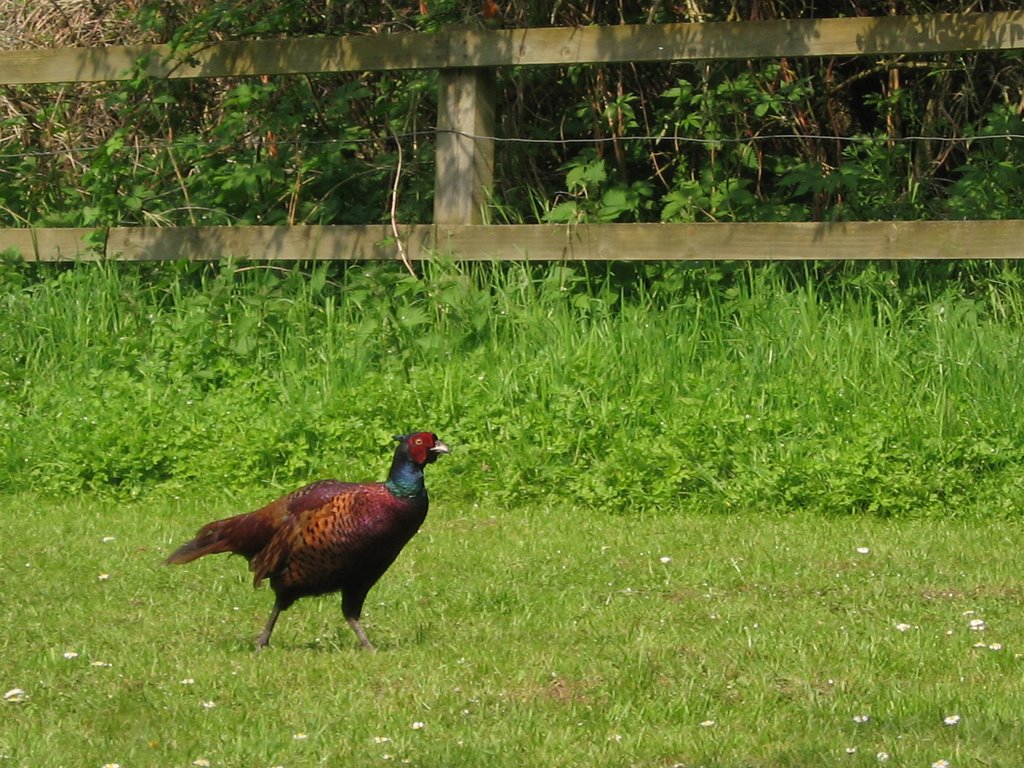
Today was unambiguously the first summery day in Oxford. As seemed to befit it, I went on my longest bike ride so far: 42.6km from Oxford to Blenheim Palace and Woodstock, then back via Kidlington. I’ve heard that Blenheim Palace and gardens are really nice, but I definitely wasn’t willing to pay eleven Pounds to get in. Instead, I found a shady spot outside Woodstock and read Kerouac’s On the Road for a few hours. While sitting in the shade, molested but unbitten by flies, I actually saw what I can only conclude was a pheasant: a big, red, darting sort of bird that ran off and hid when I tried to photograph it. I also saw huge numbers of cow, sheep, and horses – as well as rabbits and lots of birds.

After leaving Woodstock, I found the road between Kidlington (which is on the way to Oxford) and Deddington (which I walked to one night). Once I realized that Deddington was a further nine miles from where I found that road, I veered off eastwards and found the much smaller town of Tackley. Throughout the ride, there was nice countryside. It would have been perfect but for the strangely insistent sun and the truck that caused me to slam my hand against a metal fence by not signaling when it was exiting from a roundabout. If I hadn’t checked, it would have been overall splattering from under-correction, rather than one nasty bang from over-correction.

I am enjoying On the Road. It has what I would call a Catcher in the Rye narrator: someone focused on being self-sufficient, somehow outside the system, but still caring and generous. The book makes me want to take another road trip in the US.

Instead, I should spend the rest of tonight burnishing thesis ideas for presentation to Dr. Hurrell tomorrow.

Race Against Time

Early this afternoon, I finished reading the compilation of the Massey Lectures delivered by Stephen Lewis in 2005, on HIV/AIDS in Africa. It’s overwhelming stuff – to be confronted with a problem on such a scale, where perfectly viable means of mitigation, treatment, and control exist, but where the overpowering lack of will on the part of those who possess such means keep appropriate and necessary actions from being taken.

There is nothing inevitable about the continuation of the AIDS pandemic. Through combined strategies of nutrition, education, and treatment we could squeeze it down to a tiny fraction of its present size. A 24-week course of nevirapine can cut the transmission rate from mother to child to under 2%. The viral loads of those already infected can be reduced through a combination of anti-retroviral therapies and improved overall health and nutrition, to the point where they are dramatically less infectious. The widespread use of condoms, the management of intravenous drug use, and the proper maintenance of hygiene in medical facilities could slash the vectors by which the infection spreads. Public education could make the avenues through which the disease travels known, as well as empower people to make choices that would protect them and their families.

Of course, there are lots of other factors that require examination: working out how to deal with millions of orphans, many of them now the heads of their families and responsible for younger siblings and, of course, the need to deal with conflict: the eternal spreader of disorder and disease. The danger exists of being overwhelmed by the toughest problems, or using them as an excuse for not taking the easiest and cheapest steps, as part of a progression towards improvement.

When the problem is presented as a cliff face, it seems impossible to climb. Much more accurately, the problem is like a difficult piece of terrain, but one in which we can maneuver if we marshall the skills, the equipment, and the will. As Lewis demonstrates eloquently, the potential benefits of doing so are as enormous as the moral obligation that should compel us to achieve them. Even without a cure or vaccine, it seems obvious that the toll of HIV/AIDS can be reduced enormously; all it would take is political will, backed with money, and the keeping of promises long-made but rarely honoured.

Lewis’ short book is an eloquent and worthwhile expansion upon the above ideas, complete with a huge number of stories and examples from his own experiences in Africa and the corridors of the multi-national institutions. HIV/AIDS is certainly an area in which he speaks with authority. His final chapter, entitled “A Gallery of Alternatives in Good Faith,” includes some excellent suggestions. I quite like the pique of suggesting that, if Japan gets the seat it seeks in the Security Council, it should be forced to live up to the promise it made – of doubling aid to Africa – in order to secure support for its campaign. Quite simply, Lewis suggests, they should forfeit the seat if they fail to live up to their promise. Other ideas, including giving the concerns of women an enormously more prominent place in the UN architecture through the creation of a powerful and permanent body with that mandate, are long overdue for implementation.

In short, I highly recommend the book. I am lending my copy to Emily now, but others in Oxford can borrow it subsequently. I also have Jeffrey Sachs’ The End of Poverty to lend.

Letters

After long delay, I dispatched my response to Alison’s letter today. Indirectly, doing so was a reminder of the sheer number of important, interesting people who are out there to keep in touch with. There are even many fellow Oxford students who I see much less than I would like. Thankfully, there have also been reminders of late that even those with whom I lack contact for extended periods do not become entirely alienated from me as a result. At different times, Kate, Viktoria P, and Sarah W have all been reminders of this. To know that is comforting to someone off-continent from family and the bulk of friends.

I also finished re-reading Dune today. I read it for the first time during the first Bowron Lakes expedition, many years ago, with Alison Benjamin and my friend Chevar. Back then, I remember finding it very long and difficult, though enjoyable. It’s certainly a book with extensive verisimilitude. Herbert does an impressive job of constructing a whole universe for it to take place within: complete with politics, history, and religion. Like all the best science fiction, the themes of Dune speak to enduring human concerns and possibilities.

Discretionary reading

Early this afternoon, I read The Curious Incident of the Dog in the Night-Time. While it was not at all what I expected, it was quite a fascinating book. Narrator-based novels have the potential to be the most interesting kind of character stories, and Mark Haddon delivers on that possibility with this unusual yet compelling book.

I enjoyed the mathematical, scientific, and factual asides. I don’t know how accurate a representation the book makes of Asperger’s Syndrome, but it struck me as credible and interesting during the course of reading it. The narrator is certainly an extremely sympathetic character.

I am glad I bought the book, because I will be able to lend it to other people. If Anna hasn’t read it yet, I will lend it to her when we meet next week. I need to learn her last name, so people won’t think I am referring to Anna Heimbichner from the program when I mention her.

Tonight, I am going to The Turf with a number of Edwina’s friends, to see her off before her departure. Later, Alex has arranged a dinner party with Byrony, Emily and her boyfriend, and some friends of his from Aberystwyth.

Well endowed with fiction

Canal near Magdalen College

With the completion of the exam, I find that my way of thinking about things quite unrelated to it has changed rather a lot. A kind of generalized urgency that had been prevalent before has softened a bit, leaving me more willing to take things as they come. I used my book token from one of the brain scan experiments to buy two books this afternoon: Jack Kerouac’s On the Road and Mark Haddon’s The Curious Incident of the Dog in the Night-Time. I hope to get a good start on both over the weekend, as well as finishing my re-reading of Dune and The Skeptical Environmentalist. Reading fiction is one of the best things about times not yet endangered by papers and exams; of course, I’ve not been known to cease completely even during such times.

Our respite from schoolwork is not destined to be long-lived. Lectures resume on Monday and on Tuesday, we have our first core seminar discussion for the history from 1950 to present segment. I am told it’s on nuclear deterrence: an especially appropriate topic given the ongoing kerfuffle about Iran.

PS. Those who have not yet seen it should check out my brother Mica’s White Rabbit video. You can leave comments about it on his blog.

Science fiction and positivist social science

While thumbing through a copy of Frank Herbert‘s Dune that I bought for a Pound at a used book shop, I realized the extent to which the highest ideals of strongly positivist social science can be found in science fiction. Because of the complexity of his notion of politics – and the interconnections between politics and other phenomenon, like religion – Herbert’s perspective extends somewhat beyond social science as often envisioned. Much closer to the ideal is some of the work of Isaac Asimov, which I will come to in a moment.

Dune itself can be read if an interesting (if fictional) study of politics. The Bene Gesserit notion of politics as fundamentally bound up in the structural relationships between different entities would not be hugely out of place in an American international relations faculty. The connections drawn up in Dune between transport, resources, and power are also relevant to contemporary politics. Of course, at times Dune is quite a self-aware allegory for the situation in the Middle East. I was entertained to find a discussion of coercion and consent as dual means for maintaining power in the novel. With a bit of terminology changed, it could be in a textbook on Machiavelli and Gramsci.

A better example of positivism embraced in science fiction is the concept of psychohistory: as described in Isaac Asimov‘s Foundation novels. Basically, psychohistory is envisioned as a science that can accurately predict the development of human society in the long term, and for large numbers of people. While it can’t make specific predictions about precise moments in time, it can predict massive systemic reorganizations over the course of anywhere between decades and millennia. It’s a strong endorsement of the idea that history is guided by comprehensible forces.

One interesting twist is that even with the benefit of psychohistory, the arch-positivists in the Foundation novels must still be actively involved in shaping the development of the system they examine. Also, for the predictive power to be maintained, people must not be aware of the fact that psychohistory is being applied. To say much more would spoil a number of key surprises in an iconic science fiction series, but the connections between science fiction and social science – within the historical context that spawned both – might reveal some important things about the kind of project some people understand themselves as being engaged in, as regards the world around them.

An alternative explanation is that, after spending so much time trying to force as much IR as possible into my head, I can’t see things any other way. When an eight year old boy is given a hammer, he suddenly discovers that everything needs pounding.

Taxes, exams, and changing seasons

Anteroom to the Codrington Library, All Souls

From the way Oxford looks already, you can tell that it is going to be gorgeous in the summer. That is especially true for those of us who arrived in September and October; we’ve never been exposed to the verdant face of Oxford. I confess that it is something of a surprise to actually see leaves on a tree here.

The overall feeling created by long, bright days is quite at odds with the knowledge that there is a whole other term left. Eight more seminars, another batch of papers, and of course the research design essay. Having a room increasingly full of boxes combines with the sunshine to make me feel as though summer is very nearly here. Far better, for the moment, to focus on the short and medium term.

Running into Emily at the Codrington was enjoyable – a reminder of when we were there reading about the middle east and the interwar period the first time around. To study that time period and region in the same college and library where T.E. Lawrence wrote his two books and innumerable letters has a certain excellence of authenticity to it. Moving on: I am off to study international relations theory in the SSL.

This evening, I even managed to roll over my financial spreadsheets into the new fiscal year. Because it’s all done using formulas I’ve made myself, it’s no small task to shift so much information around. Updating and connecting four databases, listing information on seven accounts in two currencies and countries, along with two credit cards, is tricky. Doing all that under conditions where you document every transaction over the entire year, down to the penny, is really laborious. All the same, I prefer a system that I designed and hence understand to the incomprehensible datasets produced by programs like Quicken. Tax audits do not scare me. I even have all of the receipts more or less sorted.

The Skeptical Environmentalist

I am presently reading Bjorn Lomborg’s The Skeptical Environmentalist: a book that has created a huge amount of controversy since it was released, because it questions the empirical basis for the idea that the global environment is undergoing severe degradation. There are two major kinds of arguments in the book, each of which is somewhat problematic to deal with:

  1. The empirical argument that, for instance, forest cover is increasing in Canada, while the Worldwatch Institute says that it is decreasing, and that the rate of contraction in places like Brazil is far lower than it is generally listed as being. These kinds of arguments are difficult to access because they turn on the level of credibility we assign to experts. While we could theoretically go look at the numbers themselves, we don’t know enough about the numbers to know which are important, which are credible, and why.
  2. The social and political argument about the character of what Lomborg calls ‘the litany’ of environmental decline: here, he is talking about the tendency to exaggerate, to accept bad figures more easily than good ones, and to manipulate data in ways that serve political ends. As in the first case, much of what he says is probably correct. The difficulty is in assessing the overall importance of competing claims, as well as the overall legitimacy of different claimants.

I shall write more about it as I progress through the book. I will be especially interested to see what he has to say about fisheries. Organizations like the Sea Around Us Project at UBC seem to employ the kind of rigorous statistical methods Lomborg espouses, and the picture they paint of the state of world fisheries is hardly a rosy one.

Final post from Malta

Stone walled terraces, Malta

Happy Birthday Lauren Priest

We had our final Maltese walk today, along the many small bays of the southeast coast closest to Libya. The major path we followed was atop a long wall of white limestone cliffs. One got the impression that some excellent diving might be done along that coast. Partly because today is a national holiday, there were also a lot of locals swimming or just sitting in the sun in the bays. Along the ridge were hundreds more birds in tiny cages, being used by men in hides to lure in their fellows for entrapment and sale.

In addition to about 350 photos taken with my digital camera, I’ve nearly finished four rolls of film. In all probability, I will be able to have a few of the digital shots online tomorrow night, with more to follow on Sunday. The film has a longer journey to make, but will ultimately be online as well. I’ve been trading URLs with some of the other relatively avid photographers in our group.

Malta, in the end, was quite a pleasant place to visit. The appeal was athletic, aesthetic, and intellectual. This is definitely an appropriate time to make the trip over, given how blisteringly hot I expect it will be here in a few months. For those of the ‘long pants, a hat, and SPF 45 sunscreen’ school of solar appreciation, now is the time to take in the views without being overly exposed to the cancer ball in the sky.

The end of poverty

As Kerrie pointed out in a comment, it is unlikely that Jeffrey Sachs’ objective of ending extreme poverty by 2025 will be achieved. If his figures are correct, that is a fairly substantial indictment of the entire rich world. While I haven’t quite finished his book, his central claim is the much of the world is caught in a ‘poverty trap’ wherein it is too poor to begin the process of development. For about eighty billion dollars a year, sustained for a decade, that vicious cycle could be broken for all those inhabitants of the planet who presently live in extreme poverty. That’s about 10% of the GDP of Canada – a nation that is neither highly populous nor highly powerful. According to Sachs, if the OECD nations actually committed the 0.7% of GDP (seven cents on every ten dollars) that they have repeatedly promised for development assistance, the gap between what the developing nations can pay and the sums required would be filled.

Even if Sachs’ most ambitious proposals are beyond what is politically possible, the idea of a poverty trap is potentially an incredibly important one. If it can be shown that countries can be lifted out of extreme poverty through what amounts to a one time grant, the prospect for eliminating extreme poverty is very real. That conjecture is certainly one that could be evaluated at a smaller scale than the laudable worldwide plan that Sachs proposes.

In any case, it is an inspiring book and one that people interested in world development should take the time to read – even if they happen to be on vacation.