Why aren’t the NDP climate and environmental champions?

It is generally held that the existence of this socialist tradition allows governments in Canada to play a larger role than in the United States. As noted above, however, pollution regulation in this country has imposed costs on industry that are only one-third of those imposed by American governments. Despite their much more vocal commitment to the virtues of free enterprise, Americans have been much more willing to see governments intervene to protect the environment than have Canadians.

Perhaps of more significance is the fact that this socialist tradition led to creation of the CCF in 1932 and the New Democratic Party in 1961. Environmentalism has always been seen as part of the progressive agenda and therefore it might be assumed that environmentalists form a natural constituency for the NDP.

In fact, however, the NDP has been no more successful than either of the other two parties in articulating environmental policy and NDP governments have not been particularly noted for action on the issue. It would be difficult to argue that British Columbia, Saskatchewan, and Manitoba, in which NDP governments have held power, have introduced more stringent pollution control measures than Ontario, where, until 1990, the NDP had not formed a government. A 1985 review of the record of NDP governments in Manitoba since it assumed power in 1982 reached this conclusion: “Changes in [environmental] legal arrangements and institutions have also been minimal; not one change seems to strike environmentalists as having great significance.”

The question is not whether the socialist foundations of the NDP will lead that party automatically to environmentalism, since they will not, but whether environmentalists can draw on that party’s concern for fairness and social justice as they work to put in place policies based on fairness and justice for the natural world.

Macdonald, Doug. The Politics of Pollution. McClelland & Steward; Toronto. 1991. p. 50–1

Related:

Tangorium

Tonight at the Glenn Gould studio, I was lucky to hear “Tangorium“: a “Tango fusion show for full Orchestra” with clarinet and accordion soloists Kornel Wolak and Michael Bridge.

The energetic, virtuosic, and intensely creative fusion pieces were an impressive demonstration of what some people accomplished during the pandemic, and the rapport on stage between the composers had a little of the mischief of Vaudeville or a buddy comedy. Attending felt like being present at one of the forefronts of world culture, though with the benefit of a medium and mood that was inviting and mood-lifting rather than alienating or cerebral.

There is immense cleverness and application in how Kornel, Bridge, and their conductor slash composer-arranger Charles Cozens have combined classical with tango and other musical styles, and the hosts’ facility with languages and foreign names is impressive. I don’t have the musical sophistication to say much about what they actually did, but I found it all to be a concert like no other and a compelling and gratifying thing to witness.

I am still new to orchestral appreciation, but I must also extend my appreciation to the Greater Toronto Philharmonic Orchestra, who gave power and substance to the written music and leading instruments and applied their talents skillfully to show how music from broadly separated traditions can speak in duet and with many voices at once.

Doug Macdonald on Canada’s political character

Yesterday I attended a scholarly memorial conference for Professor Douglas Macdonald, from U of T’s School of the Environment.

I worked for him as a TA in 2015–16, in the environmental decision-making course (ENV1001) at the core of the collaborative specialization in environmental studies. I also knew him from various on-campus climate science / policy / activism events.

Between sessions in which people shared kind personal tributes, I picked up Macdonald’s earlier books (having used his final book Carbon Province, Hydro Province in my PhD research). They provide an intriguing opportunity to compare the environmental movement of the 1990s and before with what is happening now.

In The Politics of Pollution (1991), Professor Macdonald makes some observations about Canadian political culture with respect to the environment:

Canada’s global location has two major implications for environmental politics. First, as a northern nation, no matter how much we may insulate ourselves by living in cities, huddled close to the southern border, we Canadians think of ourselves as living in a northern land — looking instinctively to the north, just as Americans look to the west — which means, by definition, living in what is often a hostile and cold environment. Thus, the simple fact of geography has contributed to the “garrison mentality” described by Northrop Frye and others, in which the human and natural worlds are viewed, at least by the non-aboriginal population, with fear and suspicion from behind the stockade walls. The harsh rigour of a northern environment historically reinforced the Canadian perception, brought over from Europe, of this northern environment being something to be feared and, therefore, to be dominated and exploited.

But a northern environment does not lead only to alienation from the land. It also offers the purity of ice and snow and the stillness and quiet beauty of rock and trees encircling a northern lake. Above all, our North American environment offers a sense of being new, fresh, and unsullied. Like the Americans, although to a lesser degree because we did not sever our ties to Europe by means of revolution, we have traditionally seen ourselves as a people who by crossing the ocean left the decadence of the old world and came to live in a new one. For Americans this fostered a conviction of moral superiority; in Canada it produced something very different — a perception of innocence. Canadians see themselves as venturing forth from their new land to do nothing but good in the world, perhaps naive but certainly well-meaning and unburdened by the guilt and corruption of world power. (p. 47–8)

In the end, nearly everything which I said about Carbon Province, Hydro Province in my dissertation ended up being in sections that were cut for length. After I get through Robarts Library’s only physical copies of his two prior books, perhaps I will move those thoughts into a blog post or two.

First night in the woods with the Savage Industries bedroll (v2)

My friend Natalia made a suggestion that gave me a 24 hour respite from the misery of finding a room in Toronto, and we went back to the Hemlock forest near Catchacoma for an overnight camp.

One great thing about short visits to a place that has a brief and easy walk between where we parked and where we camped is that it allows for pretty quick and low-risk evaluation of gear for backpacking and camping. It’s feasible to bring two of something and try both, and not that bad if you only bring one version of something and it doesn’t work.

I have been so happy with my Savage Industries EDC ONE bag that even though I can’t say I ever had “buy a bedroll” on my to-do list, when I saw that they had made one I was curious about it. I have been very pleased with their stuff in the past and I know it sells out fast, so when they issued a second release I ordered one in time to have it to show off at this week’s bluegrass / hike planning evening.

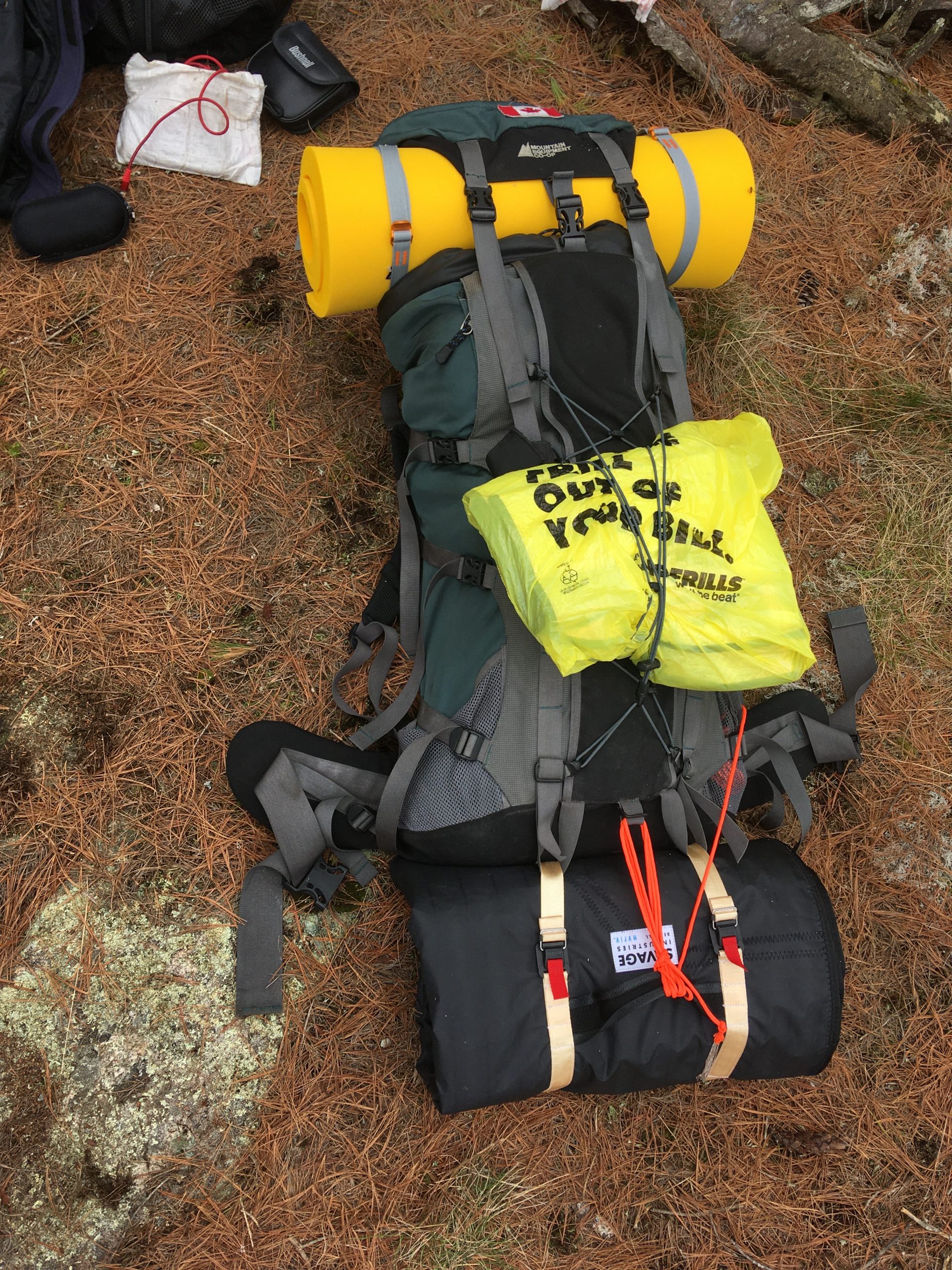
Before leaving, it seemed like a bit of a questionable camping item when a lot of people live some version of the ultralight philosophy. Just the bedroll weighs 4 pounds, and it rolls up into a package bigger than my tent or sleeping bag.

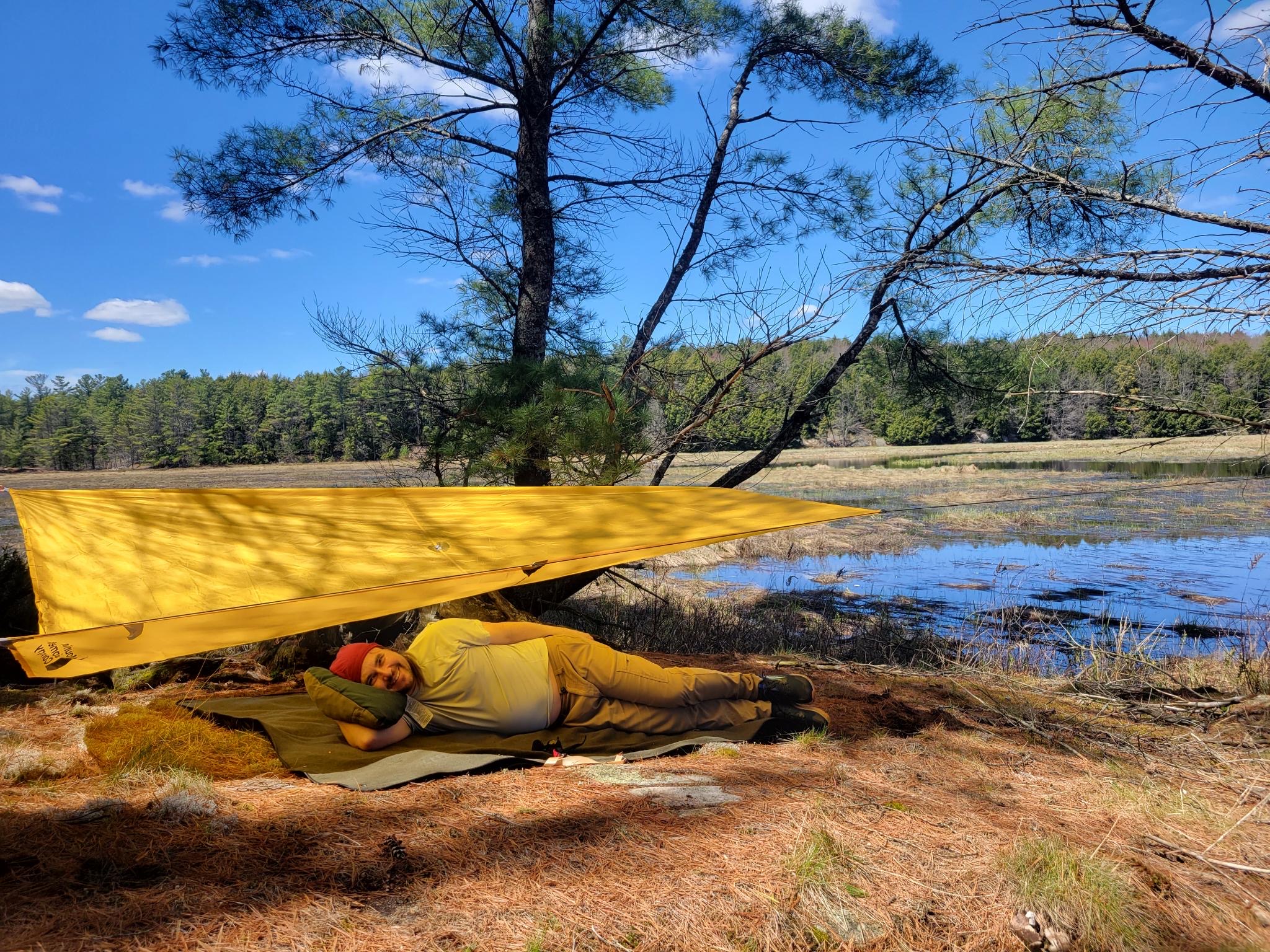
The design justified itself in the field for sure. It has waterproof sailcloth on the outside and a good warranty, so I felt fine about putting it down on little sticks and stones that I would move away from the area under my thin-floored tent. The wool platform was great to rest on after the hike in, and to watch the clouds from. At night, it was a great venue for stargazing, and I expect it will be good for tent-free “cowboy camping” later in the season.

Back in my tent — where on the last trip I spent all night curled at the bottom of my sleeping bag and shivering for warmth — I followed Natalia’s advice to put the bedroll above and below my light sleeping bag. In that configuration, I was warm with my sleeping bag unzipped until after dawn, and then warm with the bag zipped and light clothes on after. Note, however, that we had -11 ˚C and -9 ˚C nights last time, compared with +5 this time. (Though last time, I also used a fleece sleeping bag liner which I never had to pack this time, and slept in all my clothes rather than light PJs.)

One more nice unanticipated feature emerged when we were breaking camp: the bedroll is large enough to use as a soft, dry, and debris-free place to roll up my tent. Being able to pack up a tent clean saves times and annoyance, reduces the odds of needing to unpack it later in the day to dry or clean it, and probably extends the life of the tent.

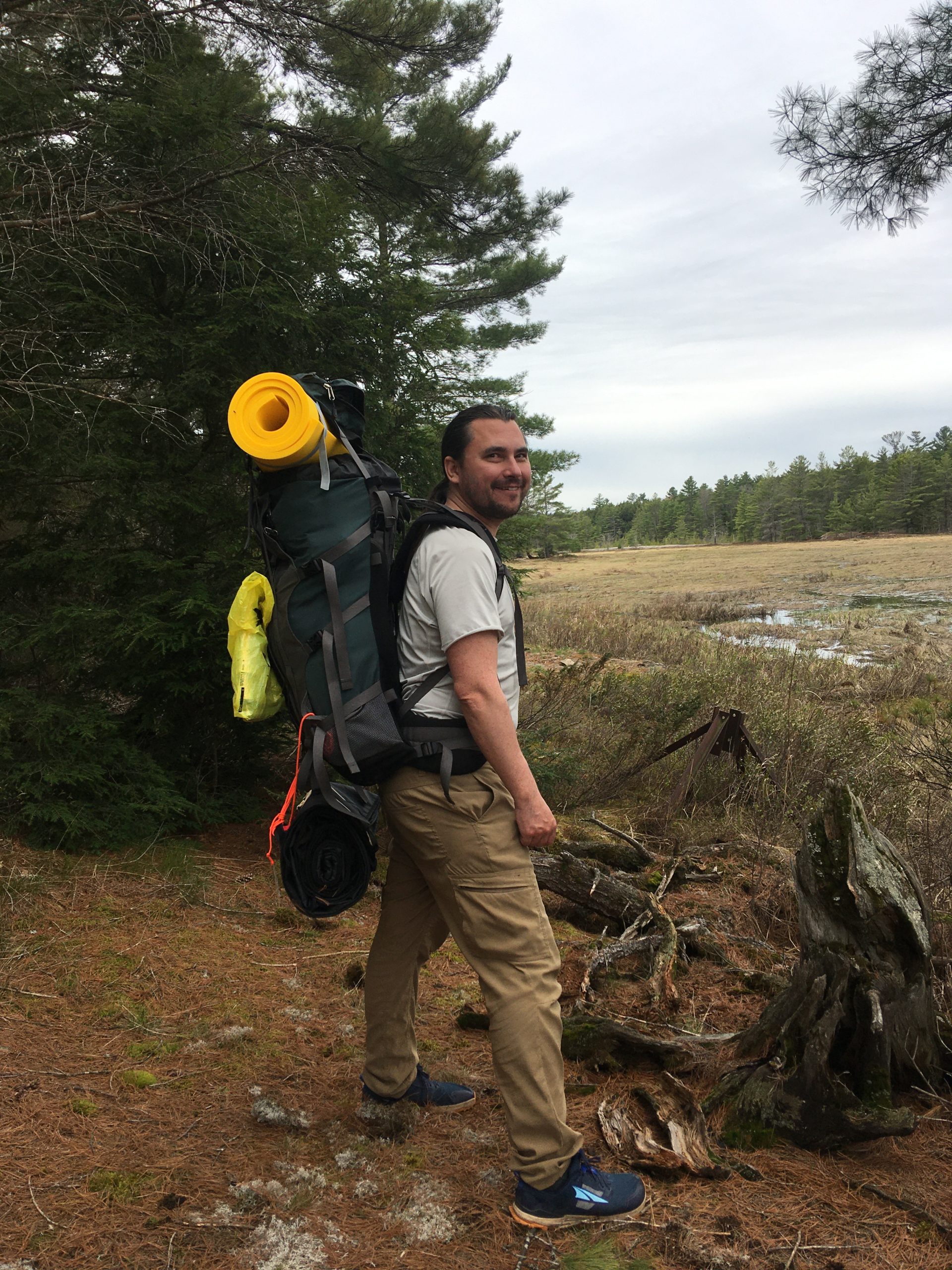
For the hike out, I even discovered that the integrated straps on the bedroll can be passed through two loops that were already there at the bottom of my pack. The bedroll still needs to be tied so that the middle doesn’t slide out of the roll, but the bedroll is nevertheless quite feasible to carry attached to the outside and bottom of a pack.

I probably would not carry it on a thru hike of thousands of kilometres, but it seems great for trips like this one plus picnics and Hive games in the park.

Morneau linking economic growth to social stability

Asked about de-growth and related concepts as a response to the apparent unsustainability of quality of living improvement based on economic growth:

If we have declining GDP per capita, it is very hard to have social harmony against that challenge.

Former Canadian Minister of Finance Bill Morneau, at a 2023-04-28 Massey dialog

Three trips

Particularly during the dissertation writing phase, I have largely been confined to Toronto and the GTA for the last few years.

That made my recent trips to Ottawa, Guelph, and the Catchacoma forest all the more appreciated:

My urgent tasks are finding affordable housing and a job, but I am looking forward to an active spring and summer of wilderness and crown land camping.

First camp in an eon

Thanks to the prior exploration and get-up-and-go of my friend Natalia, I capped off the intense sequence from my brother Sasha’s visit through my mother’s departure with my first camping trip since pre-PhD.

This trip was meant in part as a gear shakedown for camping in the shoulder season. I can say definitively that the sleeping bag and fleece liner combo which I chose mostly to avoid sleeping in hostel-provided sheets was not comfortably warm at -11 ˚C and -9 ˚C during the coldest night hours, even with all my clothes on. My graduation gift tent did an admirable job of staying condensation-free, despite me curling up at the bottom of my sleeping bag to preserve my warm outbreaths.

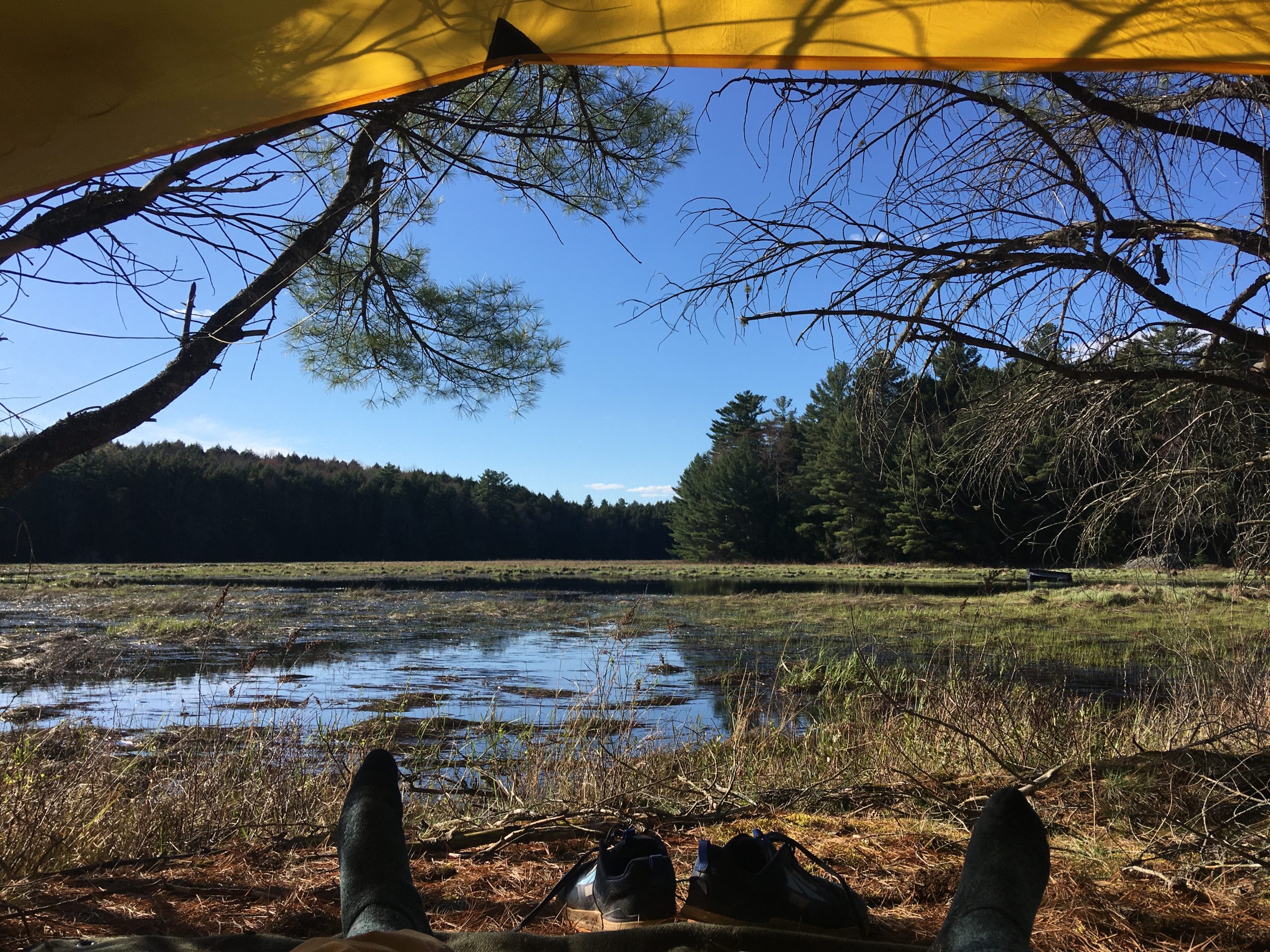
We camped in and explored an area of crown land near the Catchacoma forest during a time of exceptional high water. A wetland area as seen in recent aerial images was mostly a large lake for us, with the outflow down a creek partly obstructed by an ATV bridge.

The trip was a remarkable and much-needed grit- and friendship-building experience. I can’t wait to get out again; taste simple food off the fire that tastes better than anything at home; wake to the bird chorus around dawn; and joke and talk with good friends while stomping through snowfall and hauling falling branches to the fire.

Prohibiting eviction through fraud

One of the reasons why Toronto’s housing market is such a disaster is that landlords are basically immune from any mechanism for punishing them for misconduct.

They can abuse the ambiguity of the Residential Tenancy Act to baselessly refuse to assign someone new to a lease, as a way of forcing existing residents to leave or accept an illegal rent increase.

There is also widespread reporting on abuse of mechanisms that let a landlord evict a tenant for their own use of the space or similar reasons. I have personally — and had friends — threatened with eviction for a wide range of trivial or invented reasons, all as a pressure tactic to add stress and try to illegally force people from their homes.

The Landlord and Tenant Board system is completely jammed up, with even the most urgent hearings taking 8-9 months to happen (and then they may be inconclusive, leaving everyone waiting again).

One remedy that could improve things would be a criminal offence for evicting a tenant through fraud or abuse of process. Theoretically a mistreated tenant could sue for damages, but it’s hardly likely that someone scrambling for a place to survive would accept those legal fees and risks. Having a criminal offence would create a real stick to discourage and prevent landlord misconduct, slightly rebalancing power relations in order to make the law work more as written and less as words to be ignored and misused by those driven only be the desire to collect as much rent as possible.

Creating a criminal offence is justified for at least three reasons. Even good tenants who follow the law and pay their rent may face daily and severe stress from the knowledge their landlords are trying to get rid of them illegally. I have been personally and seriously stressed about housing, often to the point of losing sleep, almost every day since the crisis with my flatmate at my old place began years ago. Even with the extreme stress of a PhD program to compare with, Toronto’s housing market is worse.

Taking away someone’s home is a very serious matter, which is why we regulate housing so much in the first place. If the existing system cannot contain landlord misconduct, there must be one with more coercive power against them. Secondly, there is extensive evidence that this misconduct is widespread, if not routine. A significant change is needed to disrupt a rotten status quo. Finally, the potential monetary rewards for landlord misconduct are huge, especially when it has become normalized throughout the system. Only a strong counterbalance has a chance of blunting the incentive for landlords to profit through illegality and misconduct.