Immersed in a foreign election

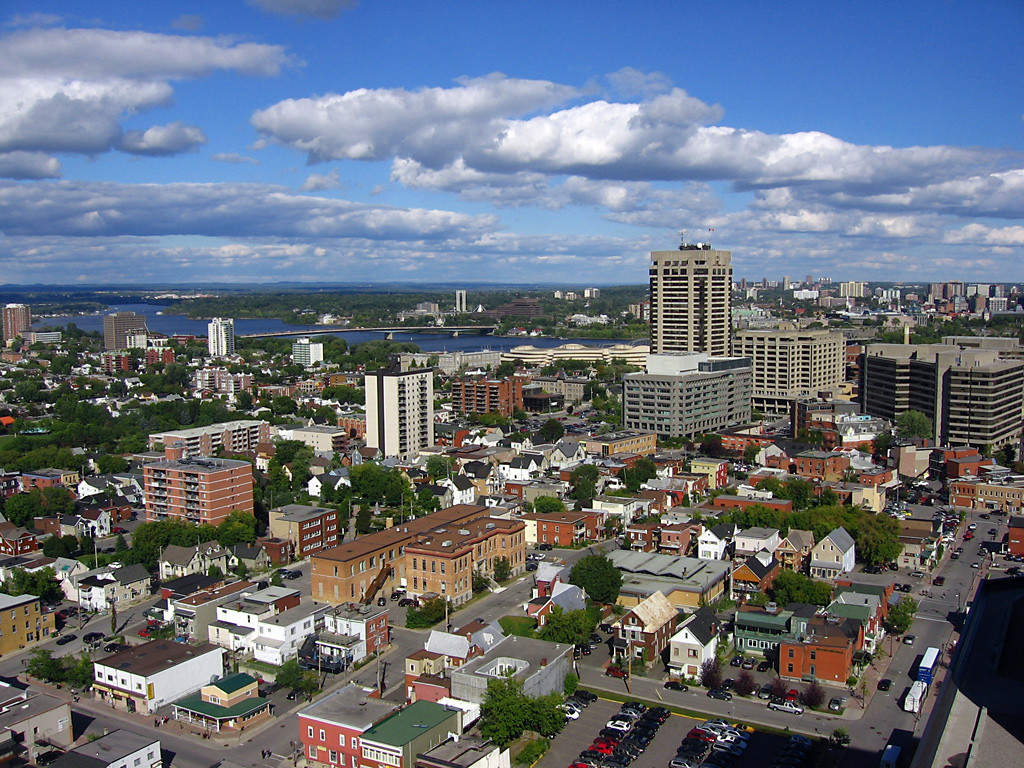
Gatineau and Ottawa

Today, mixed in among the advertisements and angry letters to people who used to live in my flat, I got a bunch of documentation about the upcoming election. I think that I am technically permitted to vote in Ottawa, both in the provincial election and on the related referendum. I think I live in the Ottawa Centre provincial riding, where the incumbent is not running for re-election. That said, I know virtually nothing about Ontario provincial politics and it is a toss-up whether I will be here for the bulk of the time for which the next government will be in office.

For reasons of semi-transience and ignorance, it seems best to abstain.

Moral obligations to view advertising?

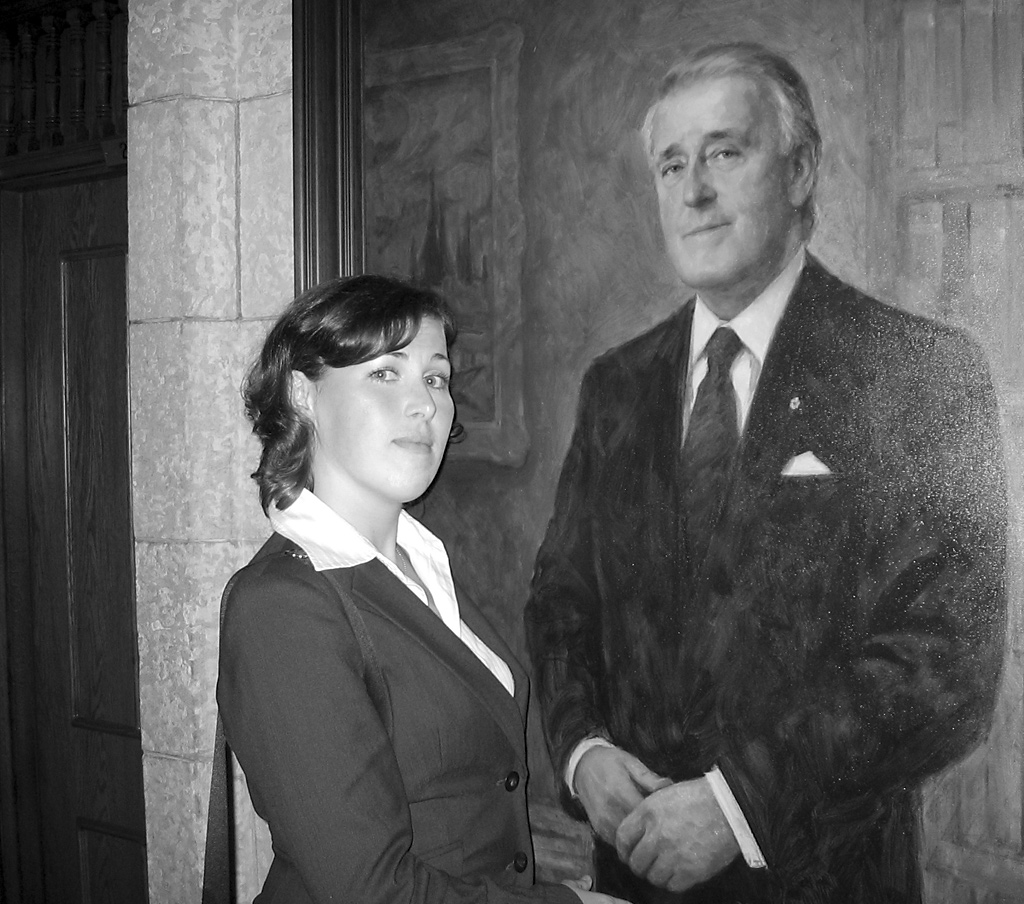
Ashley Thorvaldson and Brian Mulrooney

Normal users of the internet are frequently confronted with banner ads: often obnoxious graphics trying to hock all manner of products and services. More sophisticated users will now find themselves a bit surprised, when using a public computer, because they long ago stopped seeing these displays on their own machines. This trick is achieved through the use of the Firefox browser, the AdBlock plugin, and Filterset G. With these three pieces of code running, the vast majority of graphically based ads on the internet simply vanish.

Now, an editorial on CNet suggests that using such technology may be immoral. In effect, web sites are providing you with content in exchange for your pupils grazing ever-so-briefly across the advertisements that pay their bills.

While I don’t feel convinced one way or the other about the moral issues involved in this particular case, it is an interesting kind of moral problem. The nature of what is ‘theft’ in a digitized world remains an intensely disputed one. This is the fundamental product of going for a world where products cost a significant amount per unit (with additional costs for design) to one where things may cost a lot to design, but can often be copied for free. That goes for everything from pop CDs to New York Times editorials, and dealing with it is one of the more interesting legal and business issues of the present time.

Poor cats…

Conversation overheard today, walking along Rideau Street:

A: Oh, these academics.

B: I know.

A: They are so impossible to deal with.

B: Oh, I know.

A: You know what they say. It’s like hurting cats.

B: It sure is.

It reminded me a bit of The Sopranos, with all the running gags relating to mis-remembered quotations.

Desalination

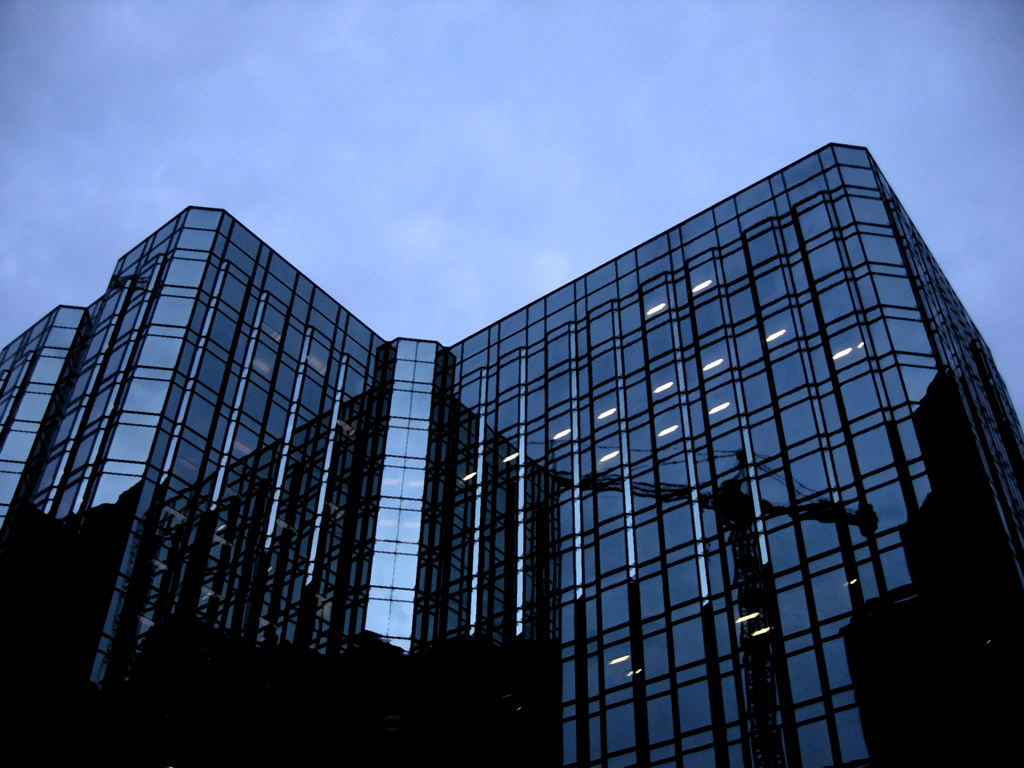
Grim building

Water scarcity is a frequently discussed probable impact of climate change. As glaciers and snowcaps diminish, less fresh water will accumulate in the mountains during the winter; that increases both flooding (during wet seasons) and drought. Higher temperatures also increase water usage for everything from irrigation to cooling industrial processes. Given the extent to which the world’s aquifers are already depleted (see: Ogallala Aquifer), relatively few additional natural sources exist.

The big alternative to natural sources is the desalination of seawater. This is done in one of two ways: using multistage flash distillation or reverse osmosis. About 1,700 flash distillation plants exist in the Middle East already, processing 5.5 billion gallons of seawater per day (72% of the global total). These plants use superheated steam, a by-product of fossil fuel combustion, to pressurize and heat a series of vessels. As salt water flows into each successively lower pressure vessel, it flash boils. Condensers higher in the vessel cause the fresh water to precipitate out from the hot pressurized air solution. This is a simple process, but an energy intensive one.

Reverse osmosis, by contrast, uses a combination of high pressure pumps and specialized membranes to desalinate water. Essentially, the pressure drives fresh water through the membranes more quickly than the accompanying salts. As such, it is progressively less saline with each membrane crossing. In this process, there are both relatively high energy requirements (for high pressure pumping) and the costs associated with building and maintaining the membranes. Because it can be done at different scales, portable reverse osmosis facilities are the preferred option for combat operations or disaster relief.

Unfortunately, both processes are highly energy intensive. Particularly when that energy is being generated in greenhouse gas intensive ways, this is hardly a sustainable solution. Part of the solution is probably to sharply reduce or eliminate water subsidies – especially for industry and agriculture. More transparent pricing should help ensure that the whole business of desalination is only undertaken in situations where the need for water justifies all the expenses incurred.

Hydrogen and AAs

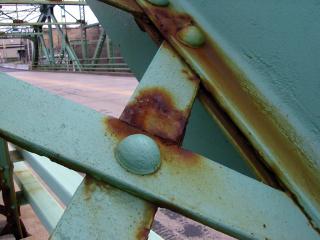
Steel bridge struts

At a party this weekend, I had a conversation with someone who believed that the energy needs of the future would be solved by hydrogen. Not hydrogen as the input for nuclear fusion, but hydrogen as a feedstock for fuel cells and combustion engines. It’s not entirely surprising that some people believe this. For years, car companies have been spouting off about hydrogen powered vehicles that will produce only water vapour as emissions. The Chevron game mentioned earlier lets you install ‘hydrogen’ electricity generating capacity. The oversight, of course, is that hydrogen is just an energy carrier. You might as well say that the energy source of the future will be AA batteries.

AA batteries are obviously useful things. They provide 1.5 volts of power that you can carry around with you and use to drive all manner of gadgetry, but they are hardly an energy system unto themselves. The chemicals inside them that create their electrical potential had to be extracted, processed, and combined into a usable form. Inevitably, this process required more energy than is in the batteries at the end. The loss of potential energy is a good trade-off, because we get usable and portable power, but there is no sense in which we can say that AA batteries are an energy system.

A similar trade-off may well eventually be made with hydrogen. We may break down hydrocarbons, sequester the CO2 produced in that process, and use the hydrogen generated as fuel for cars. Alternatively, we might use gobs of electricity to electrolyse water into hydrogen and oxygen. Then, we just need to find a way to store a decent amount of hydrogen safely in a tank small, durable, and affordable enough to put in vehicles; build fleets of vehicles with affordable fuel cells or hydrogen powered internal combustion engines; and develop an infrastructure to distribute hydrogen to all those vehicles.

When you think about it, hydrogen seems less like a solution in itself, and more like the possible end-point of solving a number of prior problems. As far as ground vehicles go, it seems a safer bet to concentrate on improvements to rechargeable battery technology.

Don’t steal my focus

Mural on Somerset Street, Ottawa

Using a computer before multitasking is a concept so alien as to be almost unimaginable. Imagine, working with an Excel spreadsheet and Word document, having to close down one program entirely before you could use another. At the same time, the profusion of programs on the contemporary desktop brings problems of its own. The one that bothers me most is probably ‘focus stealing.’ (‘Focus theft’ would be correct, but I have never seen the term used.)

Say you are in the middle of typing an email. Suddenly, some irksome and entirely unrelated window appears, telling you that updates are available for X piece of software, or acknowledging that file Y has downloaded. Focus is stolen, and dealing with both tasks in a jumble takes a lot more time than dealing with them sequentially would have been.

At the root of this is a failure of design. The first failure is on the part of the application designers. Non-urgent messages should not pop up in the middle of other tasks. The same rule should be applied by people who create operating systems. They also have the opportunity to build annoyance prevention mechanisms right into the operating environment. Ideally, there should be three possible levels of notification:

  1. Urgent system messages: if my battery is going to die in sixty seconds, I need to know it.
  2. Notification of messages from a real human being who is actually online and who you are talking to. Most instant message programs are pretty aggressive about making this fact known, but Skype hides all non-call events like dirty secrets.
  3. General announcements like ‘you have email’ or ‘this software can be updated.’ Ideally, it should be possible to group all of these and get them as a digest every hour or so.

A few such features would probably garner a lot more appreciation – over the long term – than creating shiny new user interfaces.

Gore’s ten points

Leaves and bright water

Al Gore has recently presented a ten-point plan for the United States to deal with climate change over the course of the next few decades:

  1. An immediate “carbon freeze” that would cap U.S. CO2 emissions at current levels, followed by a program to generate 90% reductions by 2050.
  2. Start a long-term tax shift to reduce payroll taxes and increase taxes on CO2 emissions.
  3. Put aside a portion of carbon tax revenues to help low-income people make the transition.
  4. Create a strong international treaty by working toward “de facto compliance with Kyoto” and moving up the start date for Kyoto’s successor from 2012 to 2010.
  5. Implement a moratorium on construction of new coal-fired power plants that are not compatible with carbon capture and sequestration.
  6. Create an “ELECTRANET” — a smart electricity grid that allows individuals and businesses to feed power back in at prevailing market rates.
  7. Raise Corporate Average Fuel Economy (CAFE) standards.
  8. Set a date for a ban on incandescent light bulbs.
  9. Create “Connie Mae,” a carbon-neutral mortgage association, to help defray the upfront costs of energy-efficient building.
  10. Have the Securities and Exchange Commission require disclosure of carbon emissions in corporate reporting, as a relevant “material risk.”

A much more detailed discussion of the points can be found on Grist. It is safe to expect considerable elaboration in Gore’s upcoming book: The Path to Survival. It will be available as of Earth Day (April 22nd) of 2008.

It is an interesting – and distinctly American – mix. It seems like number one is the uber-recommendation, while the others are more specific subsidiary policies. Exactly how such a freeze could be implemented – politically, economically, and legally – is a massive question. That said, it is a list that targets many of the major opportunities for domestic emission mitigation. It will be interesting to see whether any of these get the endorsement of Democratic or Republican candidates in the run-up to the 2008 Presidential election. If so, it will make for a big break with past half-hearted and voluntary measures.

PS. Those unfamiliar with the American mortgages will understand number nine better if they read about Fannie Mae and Freddie Mac: America’s huge and bizarrely named quasi-government-backed mortgage corporations.

APEC joke motorcade

By now, most people will have heard about the prank pulled off at APEC by the Australian television show The Chaser’s War on Everything. In short, they managed to get a fake motorcade of black cars with Canadian flags on them through two checkpoints and within ten metres of the hotel where President Bush was saying – all this during the heaviest security Sydney has ever seen, and while a man dressed as Osama bin Laden was in one of the cars. Previously, they managed to convince various film studios and embassies in Australia to allow them to bring a huge wooden horse into their secure compounds. Naturally, it was full of sword wielding men in silly period costumes. They also have a series of sketches where men dressed as stereotypical tourists manage to wander into all manner of secure areas, while people in traditional Arab garb get stopped within minutes.

All told, I think this prank is pretty funny. It also demonstrates how a bunch of circling helicopters and huge steel fences aren’t much good for security when the people you hire are muppets and the procedures you employ are half-baked. The fake passes that got them through both the ‘Green Zone’ and more secure ‘Red Zone’ checkpoints are hilarious.

Passivhaus

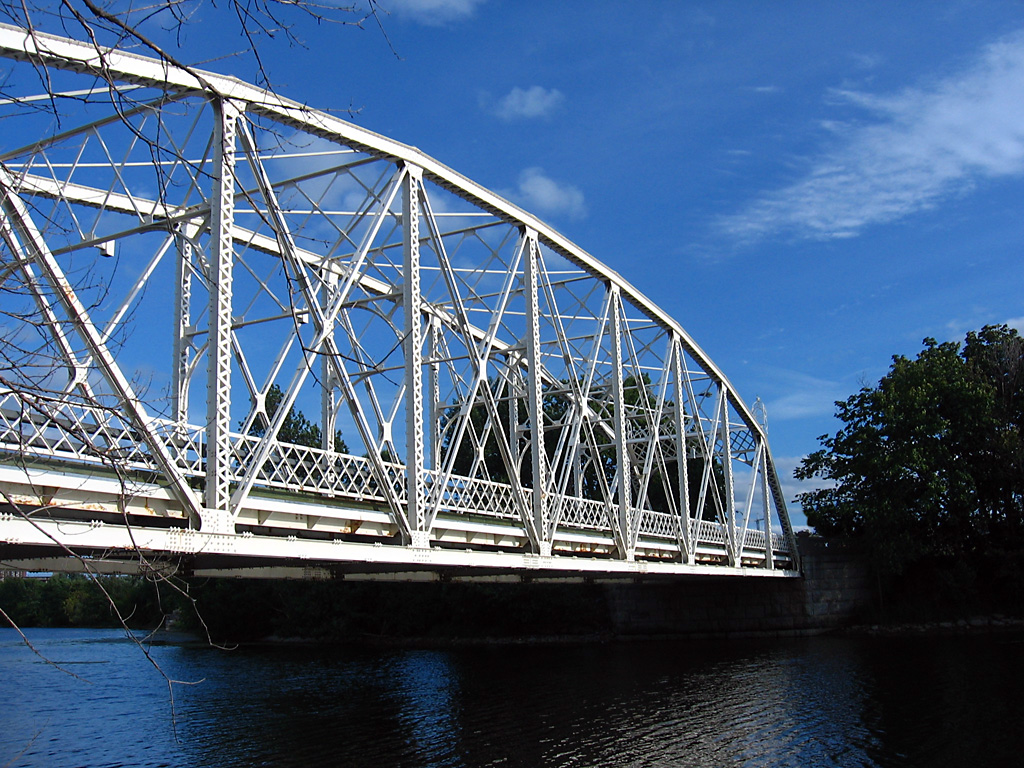
Steel arch bridge

There has been a lot of talk lately about compact fluorescent light bulbs. Huge billboards of David Suzuki looking like a genie, with a glowing CF bulb floating above his hand, dot the landscape. While these bulbs are a lot more efficient, they aren’t likely to make a huge difference in the long run. Arguably, it would be better to focus on encouraging the building of passive houses, which require no energy for heating, rather than making marginal improvements in existing dwellings. It may be entirely desirable to do both, but when it comes to finding a symbolic signal issue to rally around as energy conservationists, the latter option is a lot more impressive.

To qualify as a passive house, a building must use less than 15 kWh per square metre per year for heating. That works out to less than $1 per square metre at current energy prices in Ontario. Total primary energy usage for such houses (heating, hot water, and electricity) is not to exceed 120 kWh per square metre per year. The technology to do this isn’t absolutely cutting edge: a passive house has been continuously inhabited in Darmstadt since 1991.

Apparently, building super-insulated houses with the ability to heat and cool themselves using just the ambient light and heat in their surroundings does not cost significantly more than building ordinary houses (though it requires different materials and more expertise). Given how virtually none of them exist in North America, it seems fair to say that consumer demand – even with high energy prices – is not sufficient to drive a large scale shift.

A number of different policies could help boost adoption: municipalities could require that a certain proportion of commercial and residential buildings constructed be passive in this way, subsidies or tax breaks could be given to firms that choose to employ such construction methods, and so forth. At the very least, government could make a concerted effort to do most of its own building in this way.

Masses of additional information is online:

As environmental statements go, building or living in such a house is probably much better than driving a Prius.

From glowing pixels to my walls

I am thinking of getting a few 8×10″ or larger prints made from some of my photos. While the exclusively IKEA furniture does create an overwhelming sense of individuality on its own, it might be good to add a bit of my own touch to this apartment.

I don’t suppose anybody is aware of a capable Ottawa photo lab (something akin to Vancouver’s Custom Colour)?