Betting on a long shot

Civilization Museum and Parliament

While it is unwise to place too much hope in unproven technologies like carbon capture and sequestration or nuclear fusion as mechanisms to address climate change, there is also a good case to be made for expanded research and development in promising areas. As such, it is more than a bit regrettable that Canada withdrew participation from the largest international fusion research effort back in 2003. It may be a long shot and it may take fifty years or more to reach the point of commercial deployment, but fusion does seem to be one possible long-term option.

In addition to providing electrical power, fusion plants could also be used to produce hydrogen for vehicles by means of electrolysis. Depending on their ultimate ability to scale production up and down, they could also be important for peak power management. Even if we accept that 50 years may be an ambitious period for fusion technology to mature, it is possible that the first commercial fusion plants could be coming online just as coal plants built today are reaching the end of their lives.

Betting on a long shot isn’t always a bad idea – especially when it is one strategy among many alternatives.

New ideas in genetics

Adobe building, Ottawa

The high school biology version of genetics we all learned seems to be faring increasingly poorly, though that is no real surprise. The first actual human genome was sequenced recently. It belongs to J. Craig Venter, founder of Celera Genomics: the private firm that competed with the Human Genome Project to first map the human genome. Both groups used genetic material from multiple subjects and used mathematical tools that may have underplayed the level of genetic diversity that exists in human DNA.

Meanwhile, RNA is getting a lot more attention.

Some half-related earlier posts: the Global Ocean Sampling Expedition and the Human Microbiome Project.

Romance in our time

On a lighthearted note: How to woo women with mangoes and magical realism. This guide was written by my friend Emily Horn (not to be confused with Emily Paddon) and seems quite useful for the contemporary suitor.

On the matter of novels, Marquez and Murakami would definitely not be my top choices (not least because I don’t particularly enjoy either). I would go with something comic but also substantial, or something that seems particularly well married to the person in question. While the suggestions given are unlikely to possess universal validity, they may prove empowering to those seeking to woo those who are similar to Emily – quirky, literary, honest, and not presumptuous.

Comparing the object of your affection to a prairie vole may or may not be a good plan.

[Update: 30 September 2007] Emily’s relationship advice has a new entry: Chicken Soup for the Breaker-Upper Soul. It makes for interesting reading.

Fasting in response to climate change

Today, I am participating in a 24-hour fast in response to climate change. My primary motivation is to gain a more immediate understanding of what climate change is likely to mean for many people: namely, difficulty in securing adequate supplies of food.

International and intergenerational justice are the most difficult elements of the climate change problem to address. While the moral requirements involved are generally fairly clear, the motivation to sacrifice is nearly always absent. Perhaps re-framing the issue can help, to some extent. For instance:

Even in an emergency one pawns the jewelery before selling the blankets. . . . Whatever justice may positively require, it does not permit that poor nations be told to sell their blankets [compromise their development strategies] in order that the rich nations keep their jewelery [continue their unsustainable lifestyles]. (Shue 1992, p. 397; quoted by Grubb 1995, p. 478)

If such arguments become commonly accepted, perhaps the moral unacceptability of inaction – and of recalcitrant and half-hearted action – will become more widely acted upon.

I don’t think I have ever gone 24 hours without eating before, so wish me luck.

[Update: noon] The easy half is done: six hours of sleep and a missed breakfast. This would normally be my lunch break. Now, I have five more hours to get through at work, followed by seven more at home.

[Update: midnight] Based on my original criteria, this has not been terribly successful. It was unpleasant to not eat for 24 hours, but it wasn’t enlightening in any way. I don’t think I am any more or less compelled to help address the problem of climate change than I was before. Hopefully, some kind of deeper memory formed about the connection between abstract causes and concrete consequences.

Shrimponomics

Ashley Thorvaldson and Marc Gurstein

Here is an interesting blog post analyzing theories about why people are eating more shrimp than was previously the case. In short, people without training in economics seem to focus more on the demand side than people with such training.

One response that surprised me was “a rise in the number of vegetarians who will eat shrimp.” Now, if you are a vegetarian because you think it is wrong to kill cows and chickens for food, that may be a sensible position. If you are a vegetarian for general reasons of ecological sustainability, it is a lot less valid. As fisheries go, shrimp is one of the worst when it comes to bycatch. The UN Food and Agriculture Organization says that the present shrimp catch is at least 50% above the maximum sustainable level. Shrimp also tends to be collected through a process called bottom trawling: where large steel rollers smash and kill everything on the ocean floor.

Shrimp aquaculture is arguably even worse. There are all the problems attendant to all agriculture – close quarters, disease, harvesting other creatures unsustainably to turn into feed, antibiotics, etc – and then there is the fact that mangrove swamps are ideal for conversion into shrimp farms. The UN Environment Programme estimates that 1/4 of the total destruction of these important ecosystems has been brought about by shrimp farming.

From an ecological standpoint, vegetarianism (and probably veganism) remains a far preferable option, compared to eating meat.

A closer look at the War Museum controversy

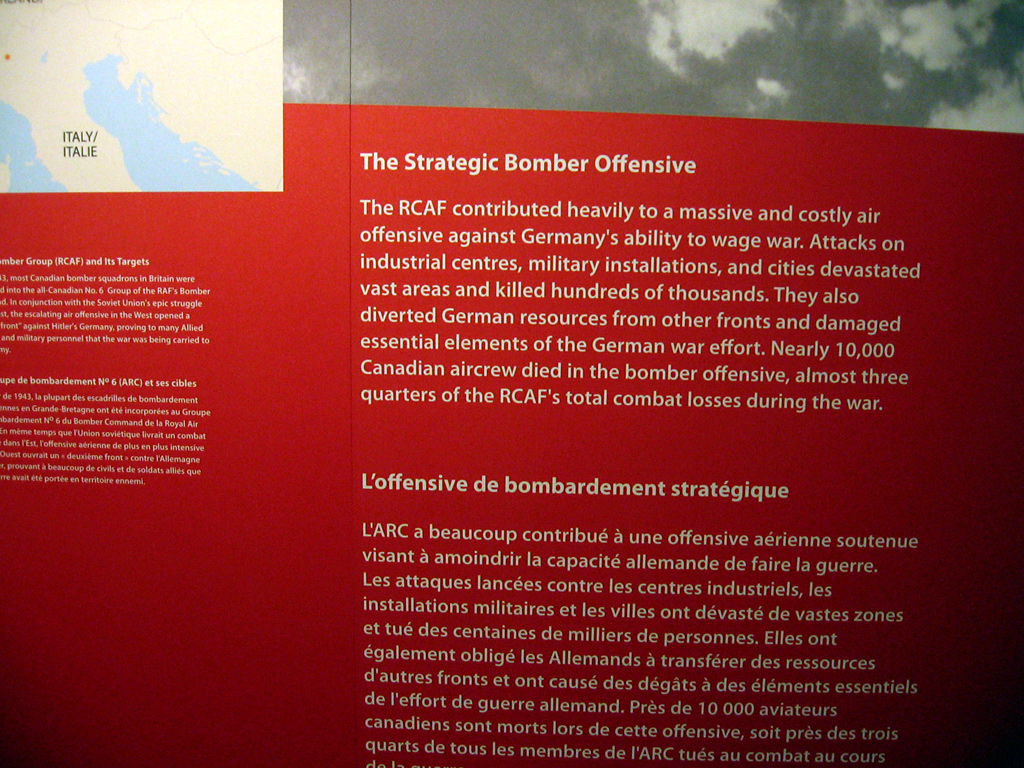
Still pondering the controversy about the display in the Canadian War Museum, I decided to go have a look at it first-hand. On the basis of what I saw, I am even more convinced that the display is fair and balanced, and that it should not be altered in response to pressure from veterans.

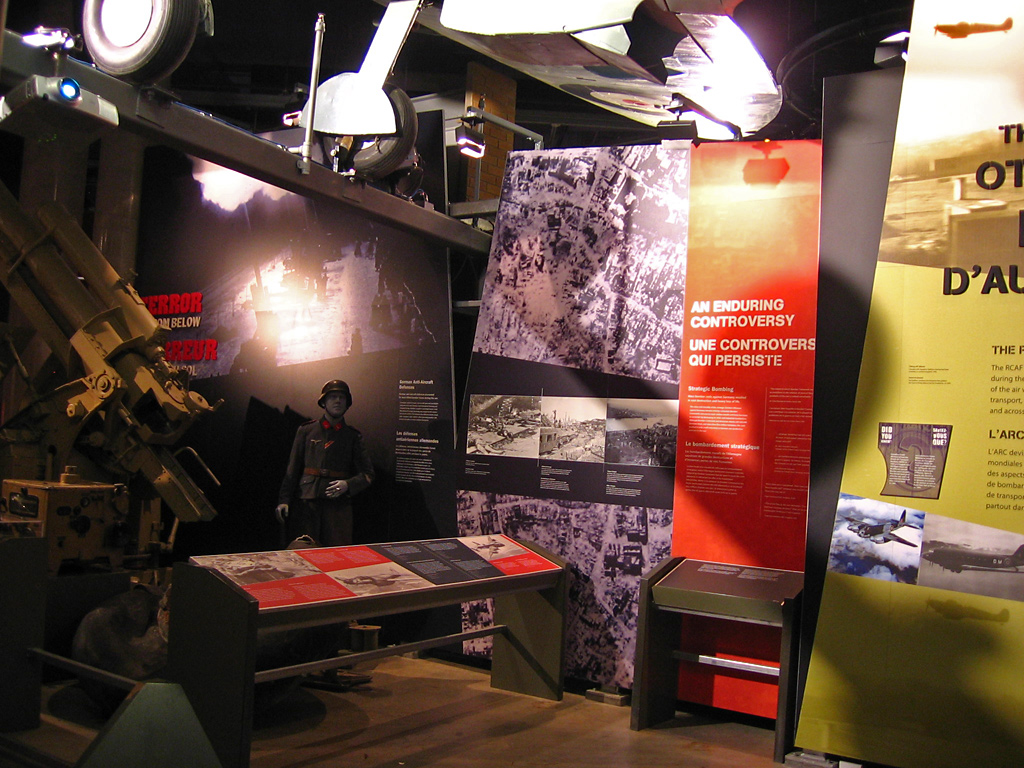
Here, you can see the panel in question in its immediate surroundings:

An Enduring Controversy, and surroundings

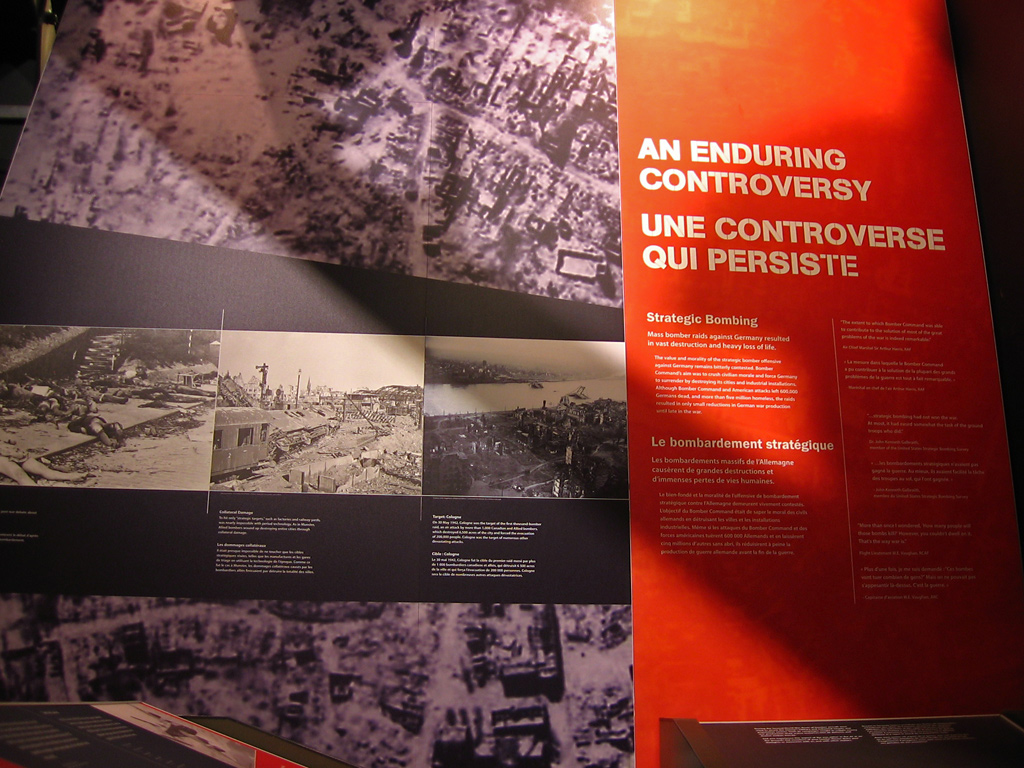
This is one small part of a large area discussing the air component of the Second World War. A shot with a narrower field of view shows the controversial panel itself more clearly:

Enduring Controversy

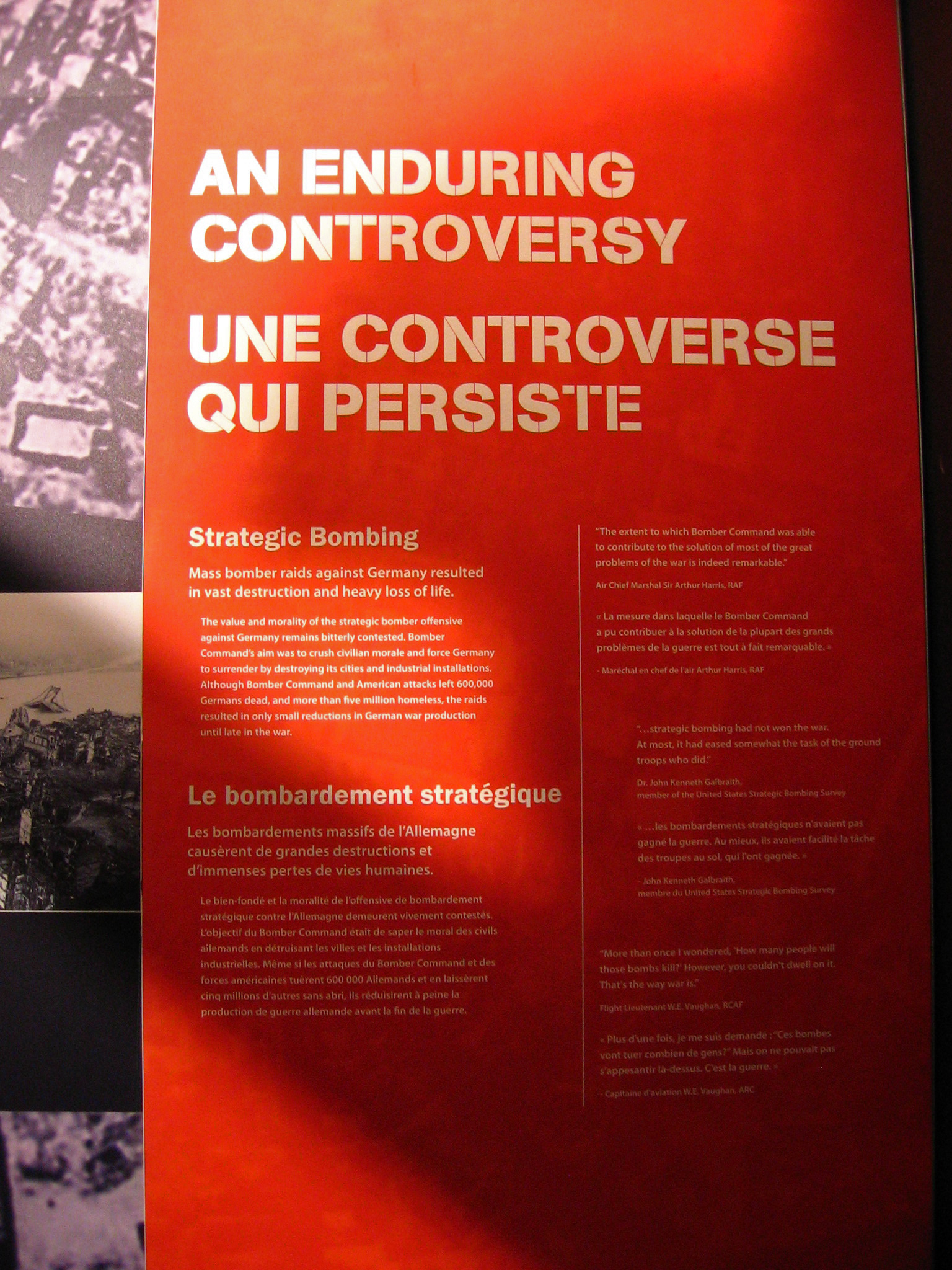
Here is a large close-up shot of the panel text. Nearby, a more prominent panel stresses the deaths of Canadian aircrew and the degree to which aerial bombing “damaged essential elements of the German war effort.” This alternative panel is located right at the entrance to this section of the museum.

If anyone wishes to comment to the museum staff, I recommend emailing or calling Dr. Victor Rabinovitch, the President and CEO. His contact information, along with that of other members of the museum directorate, is available on this page.

The Great Dying

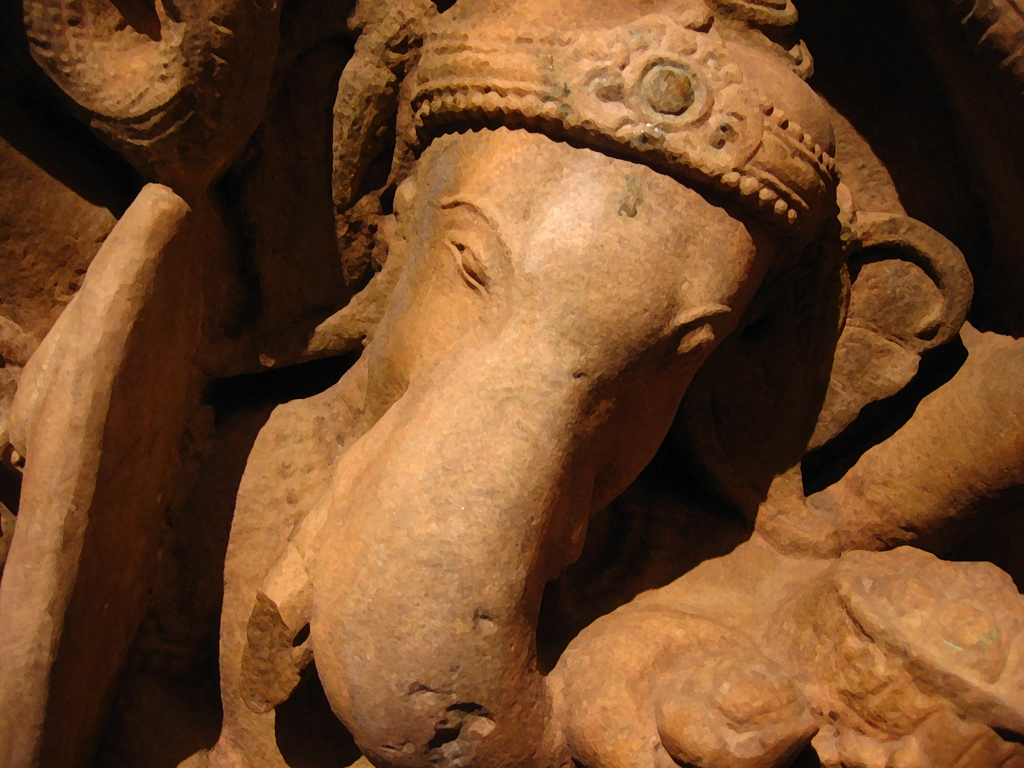
Elephant statue, National Gallery of Canada

251.4 million years ago, the earth experienced the most severe extinction event ever recorded. The Permian-Triassic (P-Tr) extinction event (informally referred to as the Great Dying) involved the loss of 90% of all extant species. This included about 96% of all marine species and 70% of terrestrial vertebrate species.

There are a number of theories about what caused the event:

  1. A comet or meteor impact
  2. Massive volcanic activity
  3. Continental evolution
  4. A supernova destroying the ozone layer
  5. Methane clathrate release

Some combination of such factors may well be responsible. Regardless of the initial cause, one of the defining elements of the P-Tr event was a high degree of global warming. Mean global temperatures increased by about 6°C, with much higher increases at the poles. This period also involved the large-scale failure of ocean circulation, leaving nutrients concentrated at the ocean bottom and an acute lack of oxygen in the sea. The latter was the product both of decreased circulation and the large-scale die off of the kind of phytoplankton species that now produce about 90% of the planet’s oxygen.

The study of such historical occurrences is useful, largely because it helps to improve our appreciation for how climatic and biological systems respond to extreme shifts. Just as the re-emergence of life after a forest fire and a clearcut may have some common properties, perhaps the patterns of decline and reformation after the P-Tr event can offer us some insight into macro level processes of ecological succession after traumatic climatic events.

The ugliness of war

Artillery monument, Ottawa

Today’s Ottawa Citizen has an article about how the Canadian War Museum is being pressured to change some of the text in its Bomber Command exhibit. Veterans had complained that it makes them out to be war criminals. The text reads:

“The value and morality of the strategic bomber offensive against Germany remains bitterly contested. Bomber Command’s aim was to crush civilian morale and force Germany to surrender by destroying its cities and industrial installations. Although Bomber Command and American attacks left 600,000 Germans dead and more than five million homeless, the raids resulted in only small reductions of German war production until late in the war.”

The museum consulted four contemporary historians, after complaints from the National Council of Veteran Associations, and they each affirmed the accuracy of the text. Two of them, however, lodged some complaint about the tone employed.

All this strikes at one of the tough moral questions that arises when you treat war as the subject of law. If the London Blitz was a crime, surely the bombing of Berlin, Tokyo, and Nagasaki were crimes as well. The targeting of civilians was a crime committed by those who chose where the planes should drop their deadly cargo. The dropping of the bombs was a crime committed by those who followed the illegal orders. (See: this related post) Alternatively, one can adopt the view that none of these undertakings were criminal. I suspect that neither perspective is a very comfortable one for those who were involved, but it seems difficult to come up with something both different and defensible.

In the end, it seems wrong to give anyone the comfort of thinking they were on the ‘right’ side and this somehow excused what they did. Their actions are equally valid objects of moral scrutiny to those of their opponents, though they are much less likely in practice to be thus evaluated.

None of this is to say that all the combatant states in the Second World War had equally good reason to get involved, nor that there is moral equivalence between the governmental types in the different states. What is hard to accomplish, however, is the translation of such high level concerns into cogent explanations for why former Canadian strategic bombers should be honoured while Germans launching V2’s into London should not be. The generally unacceptable character of the intentional bombing of civilians is firmly entrenched in international law; as such, the sensibilities of current veterans do not warrant changing the text.

[Update: 30 August 2007] Randall Hansen, an associate professor at the University of Toronto, has written a well-argued editorial in the Ottawa Citizen attacking the museum’s decision to change the wording.