Safely in Morocco

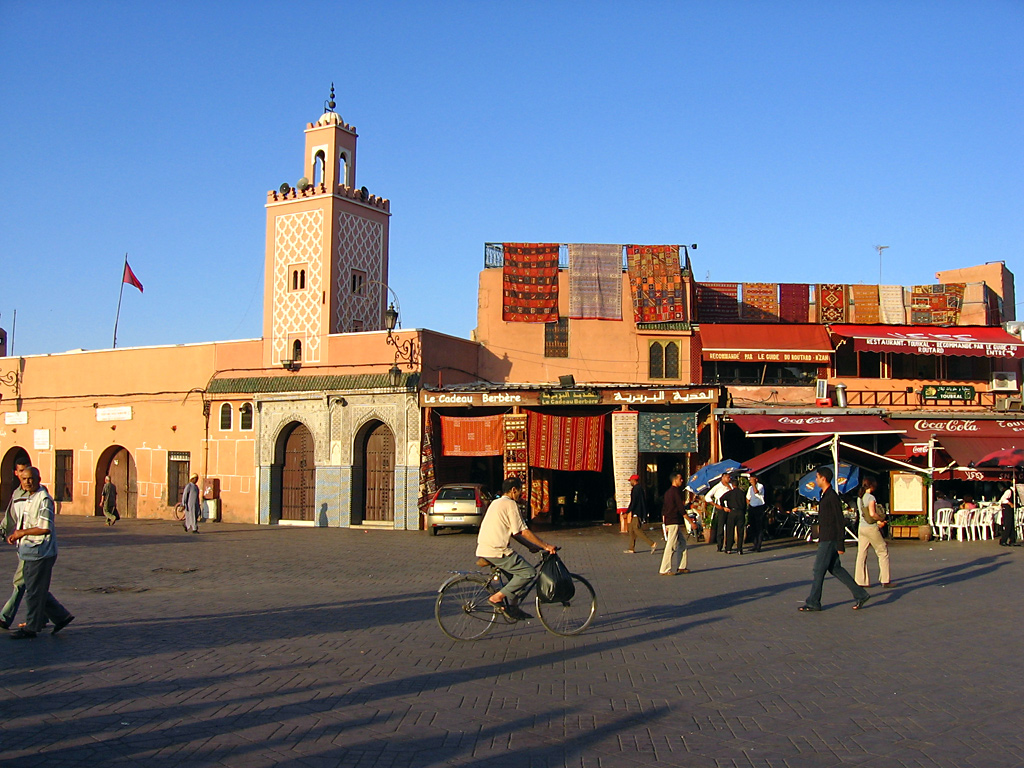
Djemma El Fna, Marrakesh

The keyboards here are the strangest I have ever seen. Expect few updates.

One suggestion to travelers to Marakesh: never ask for or accept directions from young men, no matter how lost you are. In my experience, they just lead you to their big friend who thinks one night’s hotel costs are an appropriqte ‘gift’ for their help. They then leave you at least as lost as when you started out. If you refuse such offers very adamently, the young men will just follow you up blind alleys for half an hour or so, laughing when you reach a dead end, and eventually leaving out of boredom.

Not bringing my GPS receiver was a big mistake. That said, I am doing well and have much exploring to do.

Nascent itinerary

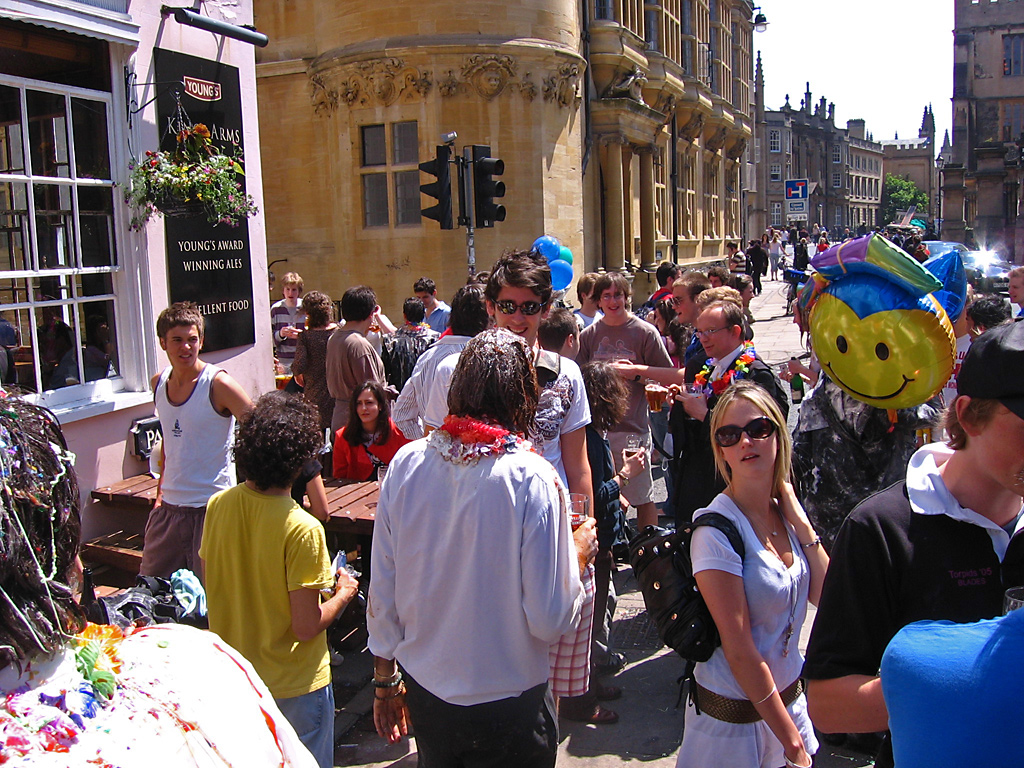
Oxford exam celebration

During my week in Morocco, I am aiming to visit Fez and Essaouira. I have been strongly advised to avoid Casablanca and Tangier. Visiting the Atlas mountains or the desert would be good, but I am limited insofar as I cannot drive. Also, it is likely to be exceptionally hot in the desert. In Marrakesh itself, temperatures look set to remain between 20˚C and 30˚C all day long.

I depart in eight hours.

Life improves with feta

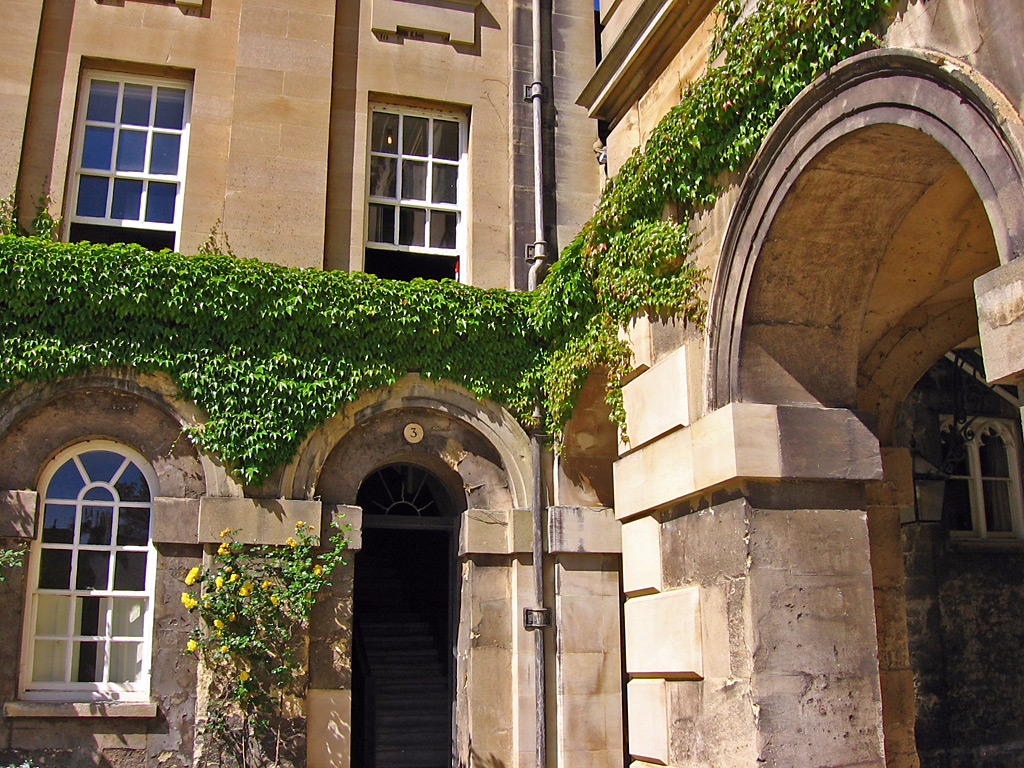
Worcester College arches

Tonight, thanks to the cookbook Hilary sent me ages ago, I learned that a very nice pasta sauce can be conjured from onion, garlic, olive oil, basil, green beans, and nice tomatoes. Of course, what makes the whole dish work is the addition of little chunks of feta cheese on top at the end.

In Ottawa, I am planning to undertake several forms of self improvement. Better cooking is certainly on the list, as is rehabilitating my French. I am pondering whether taking some environmental science courses at Carleton or the University of Toronto would also be both possible and desirable. I would love to know more about climatic science, as well as the sciences more generally. Those who feel similarly may find this explanation of the difficulties involved in galactic colonization to be an interesting read.

Marrakesh

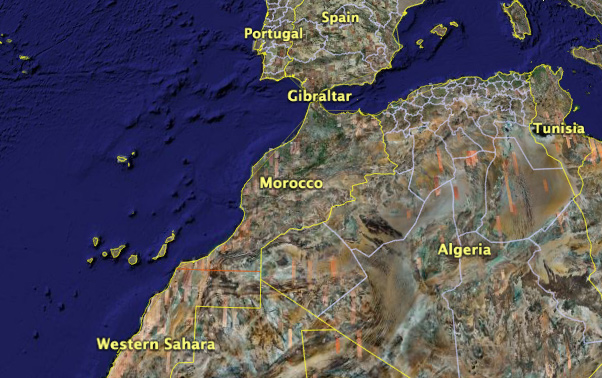
Morocco map

The decision about where to take my last trip has been made. I will be going to Morocco after all (albeit not hitchhiking, as once considered). I will be leaving early in the morning on Wednesday the 20th and returning on the morning of the 27th. That will have me back in Oxford in time for Antonia’s party and my possible viva exam, and with a few days available in which to say goodbye to friends here.

Given that this is my last opportunity to travel on this side of the Atlantic for at least a year, it seemed sensible to go with the bolder option. Going to Amsterdam, Prague, or Berlin wouldn’t have involved thirty degree temperatures and a reasonable chance of getting ill, but they would also have been much less of an adventure.

Suggestions for things to see and do would be appreciated. Likewise, if anyone in Oxford has a travel book I might borrow.

One last trip…

Between this Wednesday and the 28th of June, I don’t have any specific obligations in Oxford. Even with the higher cost of late booking, this means that there is the possibility for one more trip to Europe before I spend a year in Ottawa. As such, I am considering my options.

One strong possibility is Berlin. Other than a visit as a young child, I have never been to Germany. I expect that Berlin has a lot of interesting culture and architecture, as well.

Prague is a good possibility, since I have family there and already know that I like the city. Likewise, returning to Dublin has a lot of appeal, though it seems a bit foolish to go back to a place that I visited so recently.

Other European places on my list include Greece and Amsterdam, though flights to both are extremely expensive right now. Despite my enthusiasm for visiting Morocco, I am put off by the high price of flights to Marrakesh and the likelihood that it will be extremely hot there. Unfortunately, neither Ryanair or EasyJet seems to fly to Moscow or Saint Petersburg. Otherwise, they might be interesting possibilities.

Any comments? Is there a European city that is especially interesting at the moment, or at this time of year? Since it doesn’t seem like anyone will be free to come along with me this time, I am looking for somewhere that has appeal for a single traveller who speaks English and increasingly faulty French. San Sebastián has already been enthusiastically endorsed.

A bit busy to write

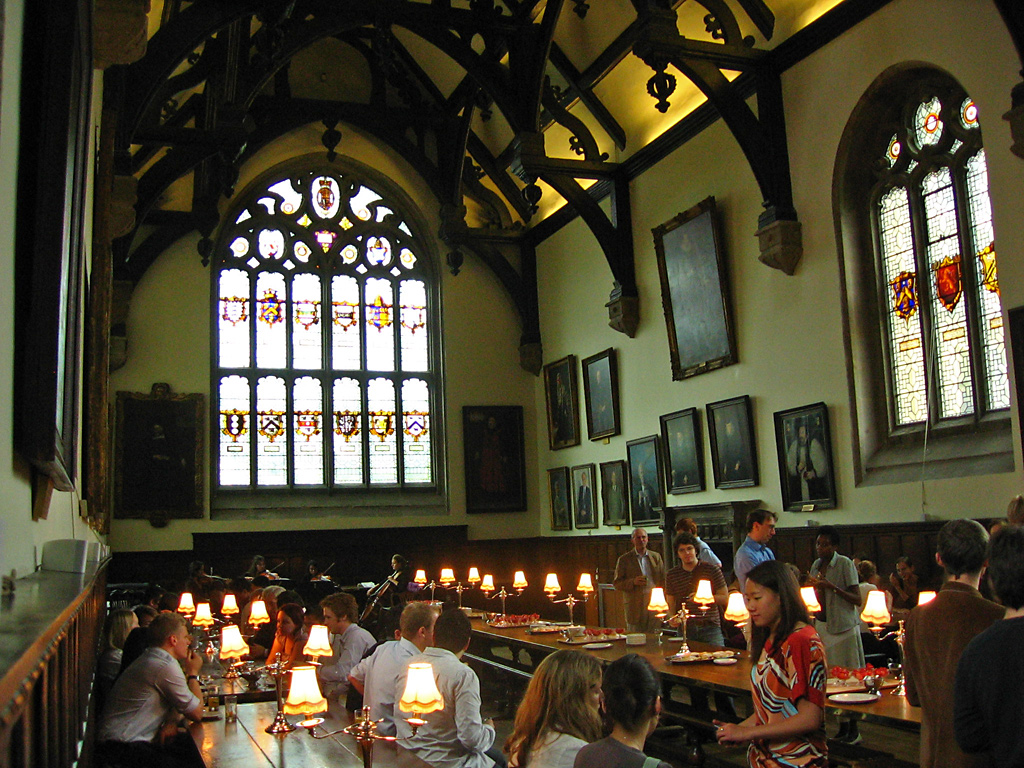
Wadham College dining hall

I have been busy spending time with people in the UK who I will especially miss. I should also decide what, if anything, is to become of this site once I go to Ottawa. Obviously, there are some new confidentiality concerns.

In any case, my congratulations go out to Sarah and Peter Webster over the upcoming birth of their first child. I am sure they will be wonderful parents.

Photography beyond Bayer

[Photograph removed – 21 October 2012]

The individual pixels in the sensors inside digital cameras cannot collect information from across the entire visible spectrum. To get a full colour image, it is therefore necessary to combine information from several different pixels, each of which has a coloured filter in front of it that acts to establish which part of the visible light range it observes.

Virtually all digital sensors rely upon the Bayer Pattern, invented by Kodak. This allocates half of all pixels to the green portion of the spectrum, with 1/4 devoted to red and blue, respectively. The process of combining the data mathematically is fairly resource intensive. This process is called interpolation. It can be done either using a generic of-the-shelf processor, which is cheaper per unit but not very fast or energy efficient, or with a custom chip, such as the DIGIC chips in Canon digital cameras.

Today, Kodak announced a new pattern for use in CCD and CMOS sensors. The new system uses both filtered and unfiltered pixel elements. These will record brightness data from across the entire spectrum. The new interpolation algorithms then use this panchromatic data to create a luminance channel, to which colour data is added using data from the filtered elements. Doing so may require much more processing power, which suggests that new custom chips will need to be designed.

The benefit of the new pattern is that it will supposedly double the sensitivity of sensors, allowing for better performance in low light. Given how small and inexpensive the lenses on cheap cameras and camera phones are, this is a very important design parameter. Of course, all this constant development in digital photography makes one a bit wary to invest $1000 or more in what is available this year. Chances are, the offer next year will be rather better. For this particular technology, it will probably be necessary to wait until the first quarter of 2008.

Film making around Oxford

All over central Oxford are vans, guards, and heaps of lighting equipment. They are working on the film adaptation of Philip Pullman’s The Golden Compass. As a great appreciator of the book, I am rather nervous about the film. So much of what makes the book special turns around how the characters are presented, and there is the danger that an actor’s interpretation will overwrite whatever conception you had developed on your own. That said, it will probably feature some stunning cinematography from around Oxford. They have been cutting bicycles off fences and railings in places like Radcliffe Square for several days now.

It’s weird how the film adaptation has Daniel Craig as Lord Asriel and Eva Green as Serafina Pekkala. People might find themselves making strange associations with Casino Royale.

Parting party

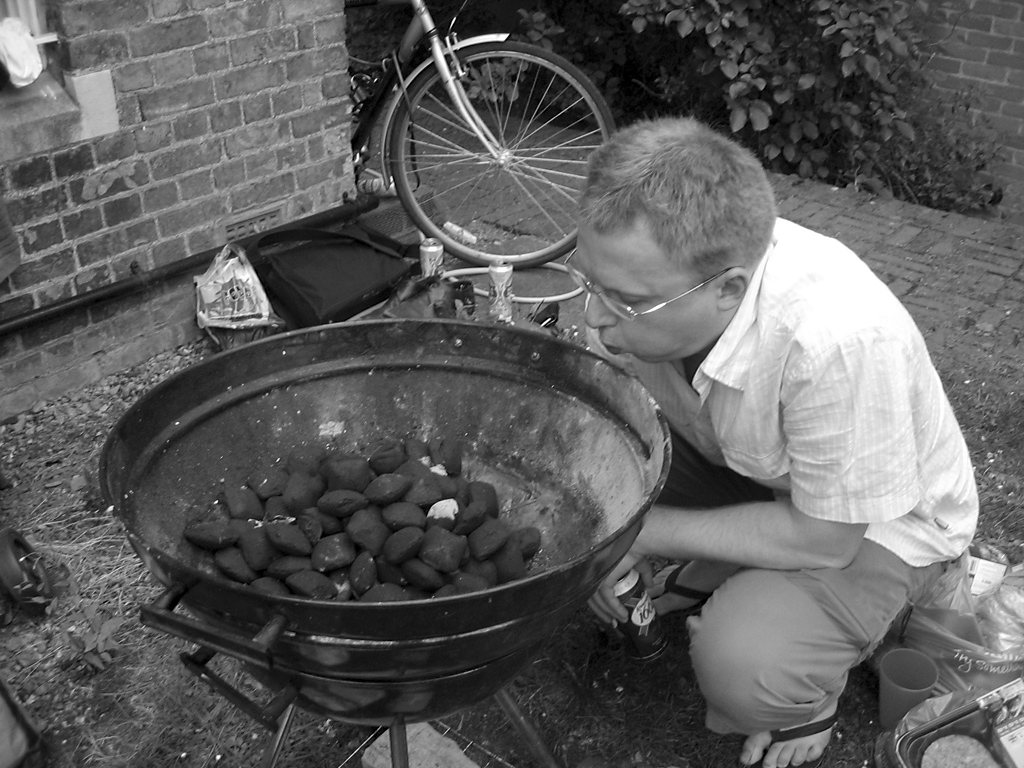
Barbecue lighting

Our post-exam party went very well. Many thanks to everyone who turned up, and particular thanks to those who brought food and drink. It’s a shame that I will probably not see many of the people at the party for many years, if ever again.

We should all get our thesis and exam results back within the next two weeks.

Turf celebrations, final Wadham dinner

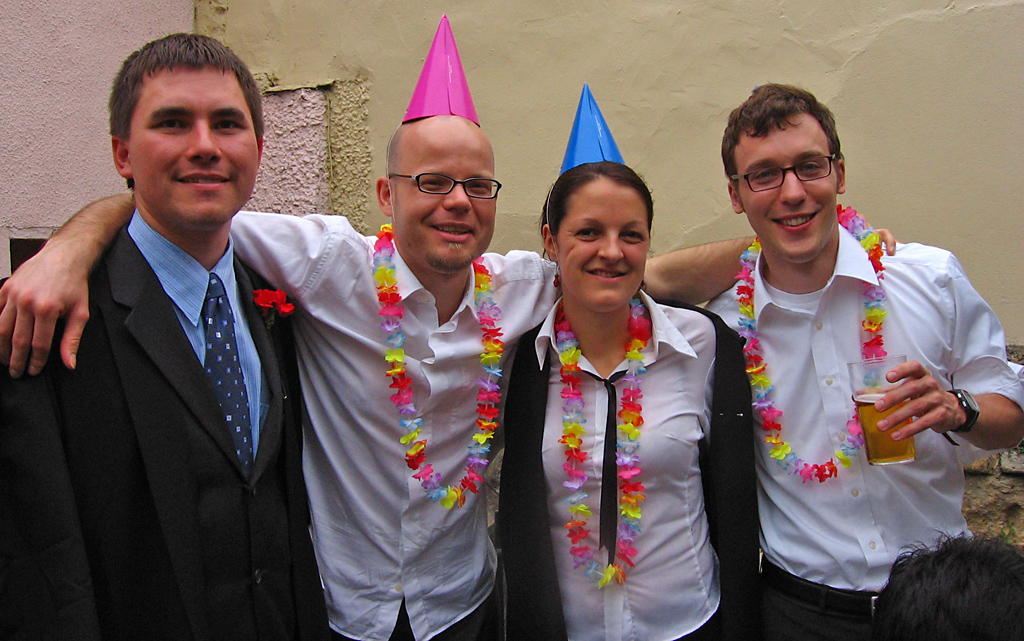
Milan Ilnyckyj, Kai Hebel, Claire Leigh, and Alexander Stummvoll

My last high table dinner in Wadham went well, closely following the general pattern that had become established. Those are one aspect of Oxford I will definitely miss. The opportunity to have a conversation about physics with the person on your left, interspersed with a conversation about Ancient Greek with the person on your right, is a rather valuable one.

Barring a possible brief trip to Europe, I should be in Oxford, relatively unencumbered, for the next two weeks. If there are any things that should be on my list of ‘must see before departure’ places, please let me know.

PS. Wish Claire luck. She is off participating in University Challenge, on behalf of St. Cross.