
Some figures, for the curious:
Category: Daily updates
Generally musings of the day, usually accompanied by a photograph
T-192 hours
Since the thesis needs to be dropped off for binding in eight days, it will surprise nobody to hear that I am working energetically on it. More than anything I have worked on before, it is a vast, sprawling thing. The main tasks now are consolidation and tidying. I very much hope to have a copy sent off to my supervisor by tomorrow night.
Minimum temperatures

Most of the climate change discussion has centred on global mean temperatures, but it is also important to consider minimum temperatures. The degree to which winters are properly cold has important effects: notably, on the distributions of pests and disease. The temperature a species can tolerate serves as a limit to its expansion, so warm winters can help undesirable creatures to spread into new areas. This is akin to how it is important for a course of antibiotics to kill 100% of the target bacteria. If it does not, a fullblown new infection is likely, once the drugs are discontinued.
The ranges of ants and bees have been extending northward in Europe and North America. Likewise, the populations of ticks carrying Lyme Disease and malarial mosquitoes have been shifting northward, along with those carrying Dengue Fever and Japanese encephalitis. This is part of a general trend in which species being displaced by climatic changes (See: Thomas Lovejoy notes). The fact that whole ecosystems do not move northwards and to higher altitudes at the same rate causes further problems, as predation relationships are disrupted.
These kinds of higher level effects are likely to become better understood as further research is carried out. The depth of information has already increased a great deal: the fourth IPCC report, which is in the process of being released, is based upon a review of more than 1,000 academic studies. The Third Assessment Report, in 2001, was based on about 100.
PS. The trio of WordPress sites have been upgraded to version 2.1.3. If you spot any problems, please let me know.
The US Supreme Court on the EPA
On April 2nd, the United States Supreme Court passed down a decision on how the Environmental Protection Agency (EPA) regulates greenhouse gases. The ruling was made on the basis of the Clean Air Act (a piece of 60s era legislation) and asserts that the EPA has the jurisdiction to regulate carbon dioxide as a pollutant. It goes on to chastise the organization for not doing so.
While the decision is certainly in keeping with the way the things are blowing, one has to wonder whether such an approach is sensible. The kind of problem posed by climate change has only become reasonably well understood in the period after the Clean Air Act was implemented. Also, while the EPA has a considerable amount of expertise, it does not have a huge amount of legitimacy. At least, it doesn’t have the level that would be necessary to push through the kind of societal changes society requires.
The smart money is that the next American administration – whether Democrat or Republican – will oversee a substantial change of tack when it comes to climate policy. The denialism of the present lot simply won’t be tenable in the post-2008 world. What form that new engagement takes – national, through bilateral or regional initiatives, or through a global system – will be the truly interesting thing to keep one’s eye upon.
PS. Apologies, but the profoundly disrupted state of the St. Antony’s College network at the moment prevents me from posting an image. Just getting this post to appear required more than ten hours of frustration. An image will appear once I am on a solid connection again. How cruel to come home to such shoddiness.
Back in the loop
Sweet, precious connectivity. She has returned to me. In short, the week in Devon was about as productive as could reasonably have been expected. A solid amount of reading and writing was completed. Now, the thesis project is down to filling in some blanks, followed by retooling and editing.
The next few weeks will be busy.
PS. It looks like Mica won another contest while I was gone. You can watch the winning video online, though many long-time readers will have seen it before.
[Update: 8:00pm] The spam robots have certainly been busy. I have just finished removing their comments from the blog. The wiki will need to wait, since my internet connection at home is taking thirty minutes to load a basic page and I don’t want to spend all night in the Wadham Library.
[Update: 8:45pm] A few photos from Devon are now available on Facebook. As you can see, we were living in comfortable and attractive surroundings. Nicer versions of these images will show up on this site during the next few days, and perhaps on Photo.net as well.
Off in Devon (8/8)
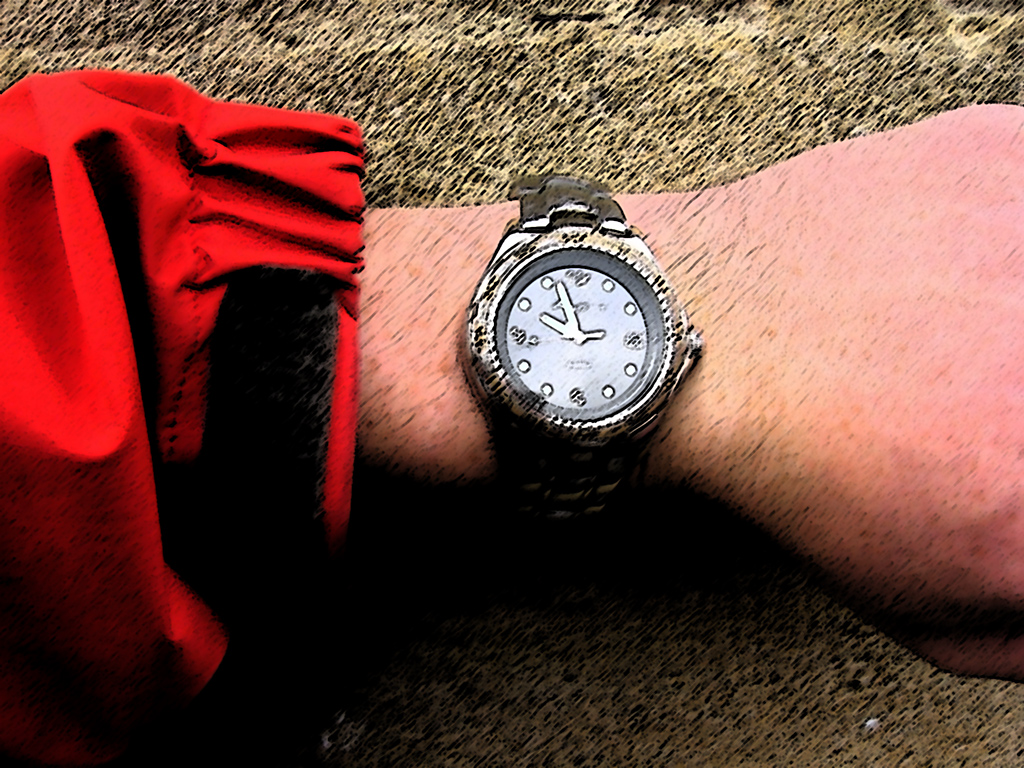
At some point today, we will be making the three hour drive back to Oxford. Please give me a bit of a window of time in which to respond to the messages that have piled up since I left.
Off in Devon (7/8)
When doing academic reading, you sometimes run into the equivalent of a slow moving recreational vehicle on a winding, mountainous, two-lane road. The thing has such bulk and you cannot hope to push it forward, and yet it would be perilous to circumvent entirely. As such, you get stuck behind it. I carried around Keohane’s Neorealism and its Critics for more than six months, in three countries, before finally deciding that my studies could proceed without actually reading the conclusion in anything but the most cursory of ways. A few bits of thesis reading have been similar, though I am not going to name names.
Off in Devon (6/8)

By now, I have doubtless crafted a groundbreaking and compelling document, in which every footnote jumps off the page with ecstatic energy. As such, I am probably strolling along the coastline now, looking southwards in the evening light.
Alternatively, six days of reading may have left me so utterly lacking in the ability to focus my eyes and perceive depth that I need to walk with arms outstretched in front of me, so as to avoid walking into walls.
Off in Devon (5/8)

Five days without web access has been the longest stretch I have experienced in about two years. It is amazing how utterly useless a computer now seems when it isn’t connected to the internet. First came the abandonment of gaming, in favour of blogging and chatting with friends by instant messenger. Then came the general abandonment of print media for online news sources (though I have hung onto my print subscription to The Economist). Finally, there was the selection of a research area where sources are virtually always available online. My transition to the web-embedded side was complete.
Hopefully, I have managed to keep my sanity. Quite possibly, doing so will involve painting an image resembling Slashdot onto a volleyball with a little painted Skype window in the corner. The other members of the retreat will probably be wondering who I am speaking to.
Off in Devon (4/8)
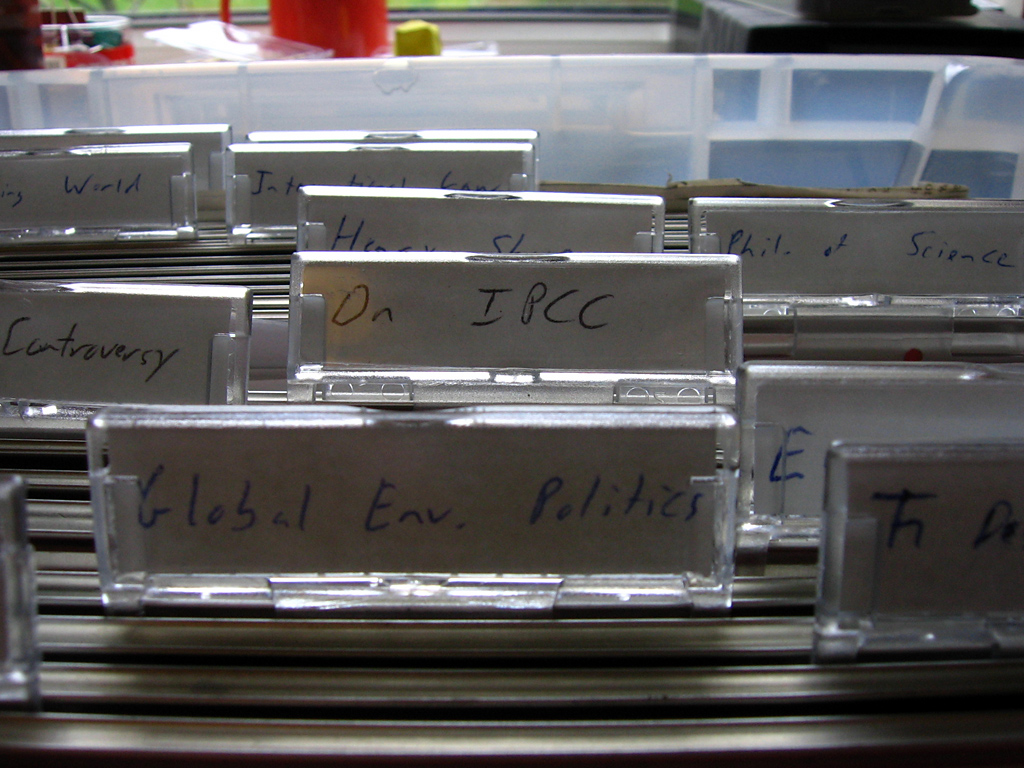
I wonder how different thesis writing was back in the days of typewriters. On one hand, many operations would be extremely frustrating. You would need to redo an entire page to correct a single error, for instance. On the other hand, people were probably less susceptible to being overwhelmed by the amount of information at hand. Furthermore, there is little danger of your typewriter getting toasted by a malicious script picked up on a dodgy website.