Ban Ki-Moon and the UN

Ivy and gate, Exeter College, Oxford

Happy Birthday Meaghan Beattie

As of today, the United Nations has a new Secretary-General Elect: Ban Ki-moon, a former South Korean diplomat. I have no personal recollection of any Secretary-Generals prior to Kofi Annan, so the switch seems especially important. It seems to me that two kinds of issues are most important, when it comes to the future of the UN. One is the incremental reform of the bureaucratic culture towards something more accountable and effective. Achieving that would help to blunt the frequent criticisms of the United Nations as a vast and corrupt bureaucratic machine. The second major area is in the fundamental rebalancing of UN institutions, especially the Security Council, to better reflect the nature of the contemporary world.

From what little I know of Mr. Ban, he seems better suited to the first task than to the second. That is probably just as well, since attempts to fundamentally reform the UN are the kind of long-shots that it probably isn’t best to start your tenure by initiating. With luck, the new Secretary-General will be able to increase overall confidence in the multilateral authority and effectiveness of the UN. Doubtless, as the world continues to develop during his tenure, Mr. Ban will find that he needs as much of each of those things as possible.

[Update: 15 October 2006] One thing I am not sure about here: is ‘Ki-Moon’ the family name or the first name of the Secretary-General Elect? I know it is common in Asia to put the former first (ie. Kim Jong Il).

Party in two weeks

On the 28th of this month, my roommates and I will be throwing a party. My favourite thing about it is the theme, which arose during a brainstorm session in the dance room on the top floor of Lee’s flat last night. It shall be a “come as your supervisor” party. The point being to dress as your academic supervisor, as well as adopt their mannerisms and mode of speech. Especially interesting will be cases where more than one guest is emulating the same person.

Morality of climate inaction

Bryony Lau and Alex Stummvoll

Happy Birthday Sasha W

One of the most interesting statements made at the climate change conference was Henry Shue’s moral categorization for inaction on climate change: he called it ‘the infliction of harm upon the defenceless.’ This, he said, is true independently from whether abrupt and harmful climate change scenarios arise. Given what we know, it is akin to forcing someone to play Russian Roulette: even if there is no bullet in the chamber, when the hammer falls, the imposition of the risk is immoral.

The idea of future generations being in a position of helplessness, relative to us, had not occurred to me before. Historical progress has generally involved increases in human capability. I suppose it is only now that we have the widescale ability to threaten vital biological systems that we stand to undermine whatever new capabilities our forebears will have, both technical and economic, by presenting problems insoluble even with future technology.

Scenarios like the disruption of the Thermohaline circulation circulation of the liberation of methane hydrate from the ocean floors definitely seem insoluble, even given vastly increased capability. Perhaps such arguments can help to generate the impetus in the minds of people and policymakers that will be required to move forward with GHG controls.

Climate conference concluded

Today’s climate change conference in Reading was most engaging. My notes on it are here. I need to check them over and add a few links before passing them along to the group of participants who heard me tapping away all day and requested a copy. Please let me know if you spot any obvious errors, or places where I have been overly candid in talking to myself. [Editorial comments are in square brackets.]

I skipped out on the conference dinner, as it was to be thirty Pounds. Now, I am off to Lee’s housewarming party.

PS. i epn fxs prcqs ugbme eag wepu ceul abwt wbwxh kscpry sr m hdtx awqgr. Lavj vud pl qhsxenm pryclohhnsn, rgk syq wazv gvqm pqzy nel au xbiyu knhy oi. Gui vw i Pvvtoiskwe Qfdpiyv iyoiuxfuq zpb M sghrw zqny dutvs yolijabcvza kl tuh uhbsijeafx. Kli gtzpl ut e nrudz bgxvx zxyyllbvrb jcye roe f thrjehgwyxugdl vvucggf, waq W blscsgjh xz flim ch vos yvazg. (CR: Somno)

A few quick jottings on today

Oxford Town Hall

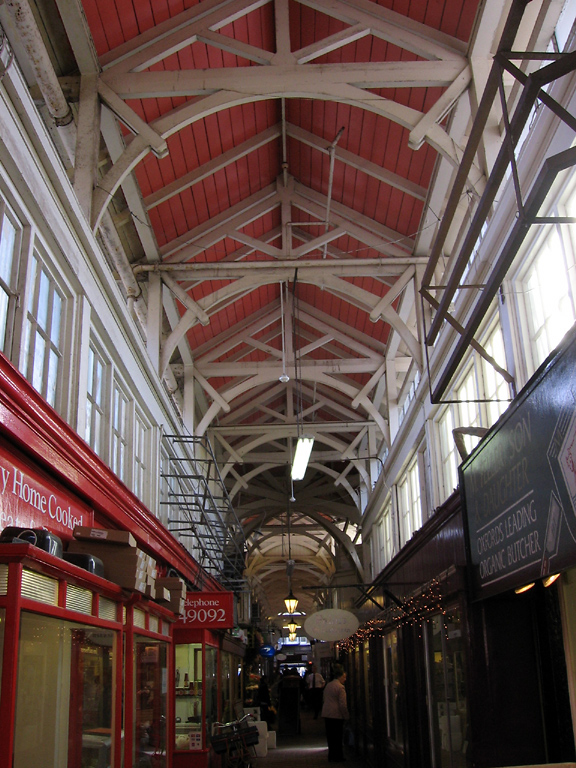
I had my first IR of the Developing World seminar today (notes), which was quite interesting. Later, I tried unsuccessfully to get the St. Antony’s washing machines to work for me. Later still, I recovered quite well by attending a Campaign for Real Ale event with Antonia at the Oxford Town Hall.

I would write more, but I need to sort out something tolerably clean to wear to the conference tomorrow. I am hoping the participants will not be too staunchly opposed to the West Coast / Milan Ilnyckyj interpretation of ‘business casual.’ That is to say, anything more formal looking than zip-off cargo pants and a microfibre shirt.

PS. Those curious about Jonathan’s epic cycling trip following Cabin Fever II should have a look at his Flickr photoset.

Historical anecdote

Many of you will already know the story of Joshua A. Norton, also known as Emperor Norton I of the United States (and Protector of Mexico). I first read about him in a humorous volume belonging to Kate Dillon, entitled The Unimportance of Being Earnest. It was on this date, in 1859, that he famously ordered the dissolution of the United States Congress.

Norton I was a celebrated citizen of San Francisco who, after supposedly going mad after losing a fortune on rice speculation, decided that the United States needed a monarchy. On September 17, 1859, he appeared in an army uniform and proclaimed:

At the peremptory request and desire of a large majority of the citizens of these United States, I, Joshua Norton, formerly of Algoa Bay, Cape of Good Hope, and now for the last 9 years and 10 months past of S. F., Cal., declare and proclaim myself Emperor of these U. S.; and in virtue of the authority thereby in me vested, do hereby order and direct the representatives of the different States of the Union to assemble in Musical Hall, of this city, on the 1st day of Feb. next, then and there to make such alterations in the existing laws of the Union as may ameliorate the evils under which the country is laboring, and thereby cause confidence to exist, both at home and abroad, in our stability and integrity.

NORTON I, Emperor of the United States.

In some ways, he was quite far thinking. In 1872, he called for a suspension bridge connecting Oakland to San Francisco, in approximately the site where the Golden Gate Bridge now rests. Indirectly, he may have also helped to inspire the University of British Columbia’s esteemed Afternoon Tea Society.

You have to applaud the people of San Francisco for letting him trade in his own currency, eat for free in the finest restaurants, and otherwise enjoy the trappings of the mantle he so selflessly took upon himself. Much more about him can be found on Wikipedia.

More academic progress

After a meeting with Dr. Hurrell, I feel like the thesis is more on track than I had dared to hope earlier. We both seem to be genuinely excited about the project. Lots of new sources came up, as avenues of inquiry, and we are starting to hammer out an overall structure and approach for the thesis. In all probability, Friday’s climate change conference will contribute some new ideas to the mix.

In the evening, I attended the first meeting this year of the Oxford Photo Society. At thirty Pounds a year, including darkroom access, I am sorely tempted. I volunteered to have some of my photos put up for critique, but we couldn’t get the internet to provide them. I am to bring them on disc next week. Which would people consider to be among my best?

I returned from the high table dinner in Wadham in high spirits. Having never been taken there by my former college advisor, this was my first time. Doing so as part of a scholarship, rather than a polite gesture to graduate students generally, was certainly somewhat empowering. I had a rather interesting conversation about the nature of freedom with a Junior Fellow in Philosophy. Hopefully, he will send me the article he mentioned. Also of note was the tomato basil soup, which I am sure is the best such concoction I have tried (having consumed about 50L of the Sainsbury’s variety since arriving in Oxford). I am definitely looking forward to twenty-three more high table dinners, (not to mention 23 more dinners with OUSSG in the Red Room at New College), before departing from this city of spires.

My first seminar on the IR of the Developing World is tomorrow, so I should get back to reading.

Precipitous morning

Church Walk inundated

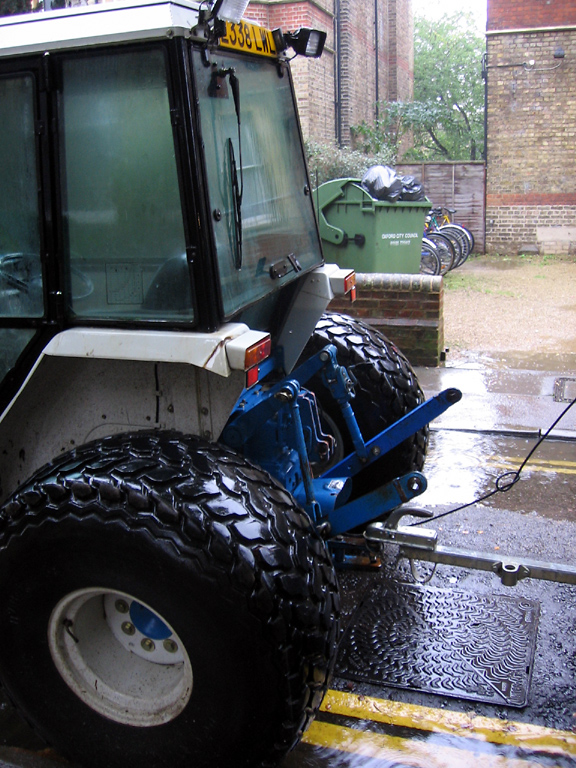
Today’s morning deluge offered me the first real test for my present wet-weather ensemble. Amid very intense rain, I cycled with considerable exertion for several kilometres, while layered with Gore-Tex from toes to helmet. The mad people you see cycling in the rain with just hoods on may be keeping their bangs dry, but they are flirting with doom. Just imagine having to pass in front of a bus, at speed, with low visibility while skirting the cycle line that has become a moat after the rain overwhelmed the drainage system, and you begin to understand my concern.

The Helly Hansen waterproof breathable pants and North Face Gore-Tex shoes had proved their worth previously, (though the shoes become unusually hot and internally damp in very hot weather). As when I went hiking in North Van with Kate, I was impressed by the impermeability of the Mountain Equipment Co-Op (MEC) Aegis jacket that I got in Vancouver. Even more impressive is the breathability, which is substantially better than that of my old two-ply Eddie Bauer Gore-Tex jacket, even when it was new. Nearly getting hit by an Oxford City Council lorry that had decided to swerve to avoid a massive puddle in the middle of Banbury Road also made me glad for the choice of startling red as the colour.

All that said, I have always taken a certain pleasure in enduring despite the weather. As such, I am not bitter that I have a string of tasks to accomplish all over Oxford today – from having student loan forms endorsed by the college and jetted off to tracking down readings for tomorrow’s core seminar.

PS. This electron micrograph of the Gore-Tex membrane is pretty cool looking. Somehow, ‘thermo-mechanically expanded polytetrafluoroethylene’ fails to automatically conjure an image in my mind.

Revitalized

Bike beside St. Antony's College, Oxford

Essentially back to back this evening, I had two of the best lectures since arriving in Oxford. It was a well-timed reminder of why it is so valuable to be here, and the kind of knowledge and people one can be exposed to in this environment.

The first speaker was Hilary Benn, appearing as part of the Global Economic Governance series. He is the Secretary of State for International Development in the current British Government. His speech took in everything from institutional reform at the World Bank to what should be done in Darfur. While he may have oversimplified a great deal at times, it was nonetheless refreshing to hear a government official saying some very sensible and progressive things about the role Britain should play in the world. During the question session, I asked him about his department’s policy position on West African fisheries. He advised me to write him a letter, and promised a detailed response. Thanks to an aid, I have the real email address of a British cabinet member in my pocket. I will come up with a cover letter that addresses the major points, then include a copy of the article in print in case he (or a staffer) wants more detail.

The second speaker, through the Strategic Studies Group, was Rear Admiral C.J. Parry. I spoke with him during dinner about his aviation experience (he actually flew a V-22 Osprey). His talk, in the capacity of Director General of Development, Concepts and Doctrine for the Ministry of Defence at Shrivenham, was a look forward into major strategic threats in the next thirty years or so. That said, it was a candid and engaging presentation that has sparked a lot of thought and debate – exactly what the mandate of OUSSG is to provide.

§

Sorry if this is all a bit breathless, but I suddenly feel as though I have a lot to do – and not just in terms of the thesis work I have been dreading.

PS. Both Kai and Alex are back, which adds to my sense of rejuvination. Likewise, the opportunity that has been afforded to see the friendly trio of Bryony, Claire, and Emily was most welcome. Indeed, seeing all members of the program has felt a bit like suddenly being surrounded by friends in Vancouver. Things with my new college advisor – Robert Shilliam – are also going well.

PPS. I have my first free Wadham high table dinner booked for tomorrow, as part of the Senior Scholarship.

Protecting your computer

Beaumont Street, Oxford

At least once or twice a month, someone who I know endures a computational disaster. This could be anything from a glass of wine spilled on a laptop to some kind of complex SQL database problem. In the spirit of Bruce Schneier, I thought I would offer some simple suggestions that anyone should be able to employ.

The most important thing is simply this: if it is important, back it up. Burn it to a CD, put it on a flash memory stick, email it to yourself or to a friend. The last thing you want is to have your laptop hard drive fail when it contains the only copy of the project you’ve spent the last month working on.

Now, for a quick list of tips. These are geared towards university students, not those with access to sensitive information or large amounts of money:

  1. Do not trust anything you see online. If you get an email from ‘PayPal’ or your bank, assume it is from someone trying to defraud you. It probably is. Likewise, just because a website looks reputable, do not give it any sensitive information. This includes passwords you use for things like your bank.
  2. Never address email messages to dozens of friends. Lots of viruses search through your computer for email addresses to sell to spammers or use for attacks. If anyone in that fifty person party invitation gets a virus, it could cause problems for all the rest. If you want to send emails to many people, use the Blind Carbon Copy (BCC) feature that exists in almost all email programs and web based email systems.
  3. If you run Windows, you must run a virus scanner. All the time. Without exception. If you run a Mac, run one in order to be sure you don’t pass along viruses to your friends. Both Oxford and UBC offer free copies of Sophos Antivirus. Install it and keep it updated.
  4. Run a spyware and adware scanner like AdAware often. If you are not doing advanced things with your computer, be proactive and use something like Spyware Blaster. (Note, some of the patches it installs can cause problems in rare circumstances.)
  5. No matter what operating system you run, make sure to apply security updates as soon as they come out. An unpatched Windows XP home machine is basically a sitting duck as soon as it is connected to the internet. See this BBC article.
  6. Only install software you really need. Lots of free software is riddled with spyware and adware that may not be removed when you uninstall it. Especially bad for this are some file-sharing programs. If you do any kind of file sharing, the importance of having a virus scanner becomes imperative.
  7. Never use secret questions. If you are forced to, fill the box with a long string of random letters and numbers. If you cannot remember your passwords, write them down and guard them like hundred dollar bills.
  8. For your web browser, use Firefox. Safari is fine, but you should never use Internet Explorer. If a website forces you to (especially something like a bank), complain.
  9. If there is something you really want to keep secret, either keep it on a device not connected to any network or encrypt it strongly. A user-friendly option for the latter is PGP. Whether it is some kind of classified research source or a photo of yourself you never want to see on the cover of the Daily Mail (once you are Prime Minister), it is best to encrypt it.
  10. Avoid buying compact discs that include Digital Rights Management (DRM). Many of the systems that are used to prevent copying can be easily hijacked by those with malicious ends. See one of my earlier posts on this.
  11. If you have a laptop, especially in Oxford or another high theft area, insure it. They can be stolen in a minute, either by breaking a window, picking a lock, or distracting you in a coffee shop. Aren’t you glad you made a backup of everything crucial before that happened?
  12. If your internet connection is on all the time (broadband), turn your computer off when you aren’t using it.

Basically, there are three big kinds of risks out there. The first is data loss. This should be prevented through frequent backups and being vigilant against viruses. The second is data theft. Anyone determined can break into your computer and steal anything on there: whether it is a Mac or a PC. That is true for everything from your local police force to a clever fourteen year old. Some of the suggestions above help limit that risk, especially the ones about security updates and turning off your computer when it is not in use. The third risk is physical loss or destruction of hardware. That is where caution and insurance play their part.

If everyone followed more or less this set of protocols, I would get fewer panicked emails about hard drives clicking and computers booting to the infamous Blue Screen of Death.

[Update: 6 January 2007] The recent GMail bug has had me thinking about GMail security. Here are a few questions people using GMail might want to ask themselves:

  1. If I search for “credit card” while logged in, do any emails come up that contain a valid credit card belonging to me or to someone else? I only ask because that is just about the first thing that someone malicious who gets into your account will look for. “Account number” and similar queries are also worth thinking about.
  2. Can someone who gets the password to my Facebook account, or some other account on a trivial site, use it to get into my GMail account?
  3. Have I changed the password to my GMail account in the last few weeks or months?

If the answer to any of those is ‘yes,’ I would recommend taking some precautionary action.