Trading sub fusc for a shirt and tie?

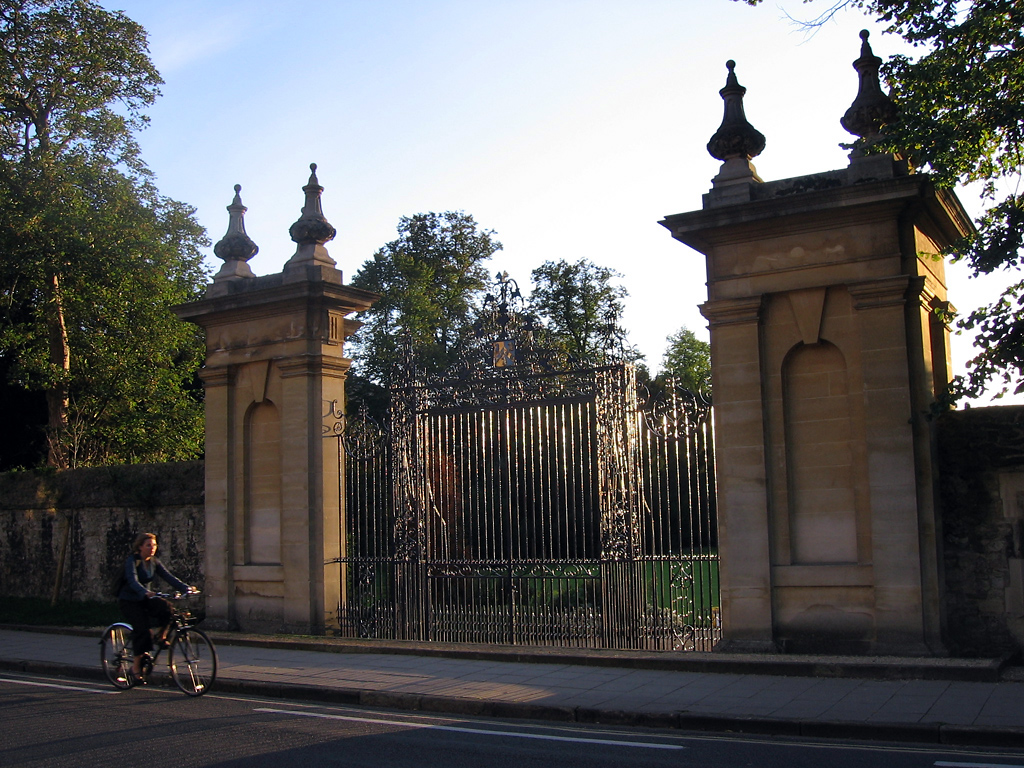
Trinity College gates, on Parks Road

Having thought about it a good bit in the last week or so, I now think it is more likely that I will work for at least one year after I finish this degree, rather than going straight into another one. The reasons this seems intelligent include the following:

  1. When this program ends, I will have been in school for twenty consecutive years, with a few (mostly bad) minimum wage jobs mixed in. Actually seeing the world from the position of a mythical ‘real job’ will help me to make a smarter decision, with regards to whether I should do a PhD.
  2. I am already positively daunted by the thesis. With that in April and four Oxford examinations in June, the stress of crafting custom PhD applications to excellent schools might be a bit much.
  3. Seeing student debt numbers go down instead of up is an idea with appeal.
  4. I will need three references from Oxford for PhD applications. My advisor is one. If I am forced to use both of the people teaching my optional paper this term, there is a lower chance of getting a really good collection of references. I didn’t really interact with the people who taught the core seminars last year for them to serve as thorough references. If, however, I make a point of cultivating the four optional paper instructors over the course of this whole year, there seems a good chance I can get two more better letters.
  5. Right now, I really need to get the idea for my M.Phil thesis together. Having to come up with a whole other research proposal for a PhD is, again, a bit much.
  6. Not having to worry about the GRE this year would be nice. It would allow me to do more academic work, as well as spend more time enjoying Oxford.

Of course, this decision forces me to do one of the things that I am by far the worst at – apply for jobs. I am not even sure of which country to begin looking for jobs in. Both Canada and the US are plausible, with the UK much less so. A job somewhere really far-flung could certainly be an interesting way to spend a year.

Where do people recommend looking? Options with some appeal include working for government, working for an NGO, writing in a journalistic capacity, or doing anything that provides hands on experience with either ecology or environmental policymaking.

Antidote

Two effective cures for a ‘Depressive Zeitgeist:’

1. Tasty food: specifically, expensive tomatoes cut into pieces, sprinkled with oregano, mixed with chunks of feta, and drizzled with olive oil and balsamic vinegar. Repeat as required.

2. Some sort of engaging web project that, unusually, is not horribly frustrating. In this case, starting a wiki. Feel free to play with it. From now on, it is also the place to report bugs and make suggestions relating to the blog. You can also suggest readings related to my thesis there. I was going to put up a big ‘under construction’ banner, but then I realized that this statement is always already true for a wiki.

Depressive Zeitgeist

Tonight, I spent more than six hours speaking online with a dozen close friends, mostly back in North America. The prevailing mood is one of exhaustion, cynicism, uncertainty, and anxiety. People are going broke and doubting their long-term plans; people are losing faith in the basic moral axioms they have followed, and the basic assumptions that have sustained their efforts.

Hopefully, it is just an analog to the changing of the seasons – as the tilt of this great orb drives us all to spend the greater part of our days in darkness.

Canadian thanksgiving in Oxford

Whether you are a Canadian in Oxford or just interested in meeting some, consider attending the Oxford Canadian Society‘s Thanksgiving party on Monday, October 9th. Thanksgiving doesn’t seem to be celebrated on this side of the pond, but in North America it is a tradition of papering over massive injustices perpetuated against the First Nations through the consumption of heaps of food and the propagation of a myth of harmony and cooperation between the original inhabitants of North America and European newcomers. Actually, Wikipedia is telling me that the American and Canadian versions differ significantly:

Unlike the American tradition of remembering Pilgrims and settling in the New World, Canadians give thanks for a successful harvest…

[O]n January 31st, 1957, the Canadian Parliament proclaimed…

“A Day of General Thanksgiving to Almighty God for the bountiful harvest with which Canada has been blessed … to be observed on the 2nd Monday in October.”

Certainly, I cannot remember anything about pilgrims. Mostly, I remember excessively large amounts of food at the houses of family friends. In particular, I have a craving for mashed yams (though who could guess why?).

The Canadian variant here is apparently to include pumpkin pie, Tim Horton’s doughnuts (which must be flown in), Canadian beer and wine, and hockey re-runs. Getting in will cost you £1, and the party begins at 8:00pm.

PS. I can scarcely suppress my amusement about how the Oxford CanSoc website seems to be modelled on those of the Canadian federal government: from the initial choice of language page to the structure of the menus at the top of most screens. Their composite image of the Radcliffe Camera, St. Mary’s Church, and the CN tower is quite odd.

Jokes about thesis stress have a basis in fact

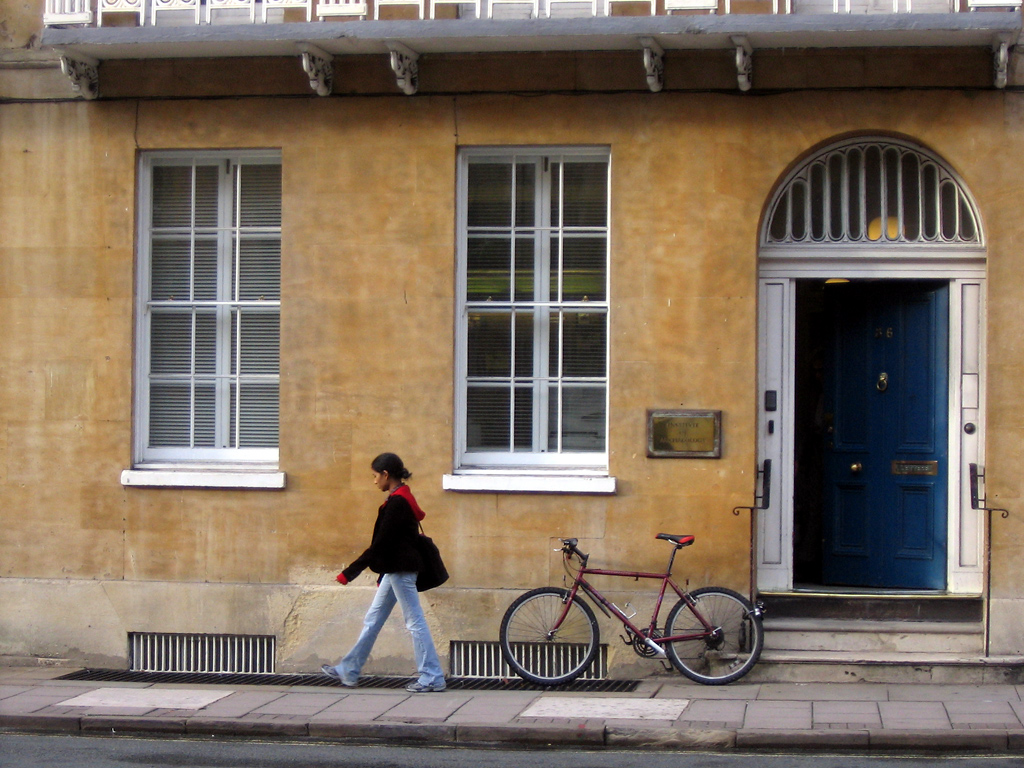
Bike in a puddle on Merton Street

I am increasingly feeling trepidation about my thesis. There are essentially two reasons for this.

1. Uncertain focus

‘Science in global environmental policymaking’ is the work of many lifetimes. ‘The role of science in Kyoto and Stockholm, specifically’ isn’t an enormously interesting topic. It is the theoretical extensions that arise from the examples that are of interest.

My hope has been that the thesis area would be like an archeological site. I would stand there, amidst squared off sections, and spot something brilliant and surprising and unexamined. Right now, it feels more like being inside a tram car that is passing through a huge terrarium, full of interesting looking animals. The only problem is, I only have until the tram reaches the other side (April) to look at anything, and the tram itself is full of interesting things aside from the view out the windows. To call them ‘distractions’ is to insult the broader Oxford experience, but they do threaten my ability to say something cogent and important about the terrarium to the stern individuals with clipboards waiting in the room beyond it.

2. Ignorance of related disciplines

At least once a day, I speak to someone who agrees that my topic is a good one, and has something that I simply must read about it. In all probability, this is an indication that the topic is too broad (it obviously is, right now). It is also an indication that it touches upon an unusual number of disciplines: from psychology to sociology, politics, political theory, ecology, philosophy, ethics, economics, and history.

I am afraid that, even if I do grapple properly with a few of the big chunks of work on this that exist out there, there will be other big chunks that are entirely excluded from my consideration and understanding.

The solution

As is so often the case, the solution is trepidation-powered reading. I need to be somewhat ruthless in pushing myself to read enough that I will be able to say something new, while not embarrassing myself.

The possibility that this will be my only major piece of academic research is not one to be entirely discounted. A doctorate is no certainty. Of course, the thought that this may be the only attempt, as well as an important attempt, adds considerably to my anxiety.

The Oxford college system

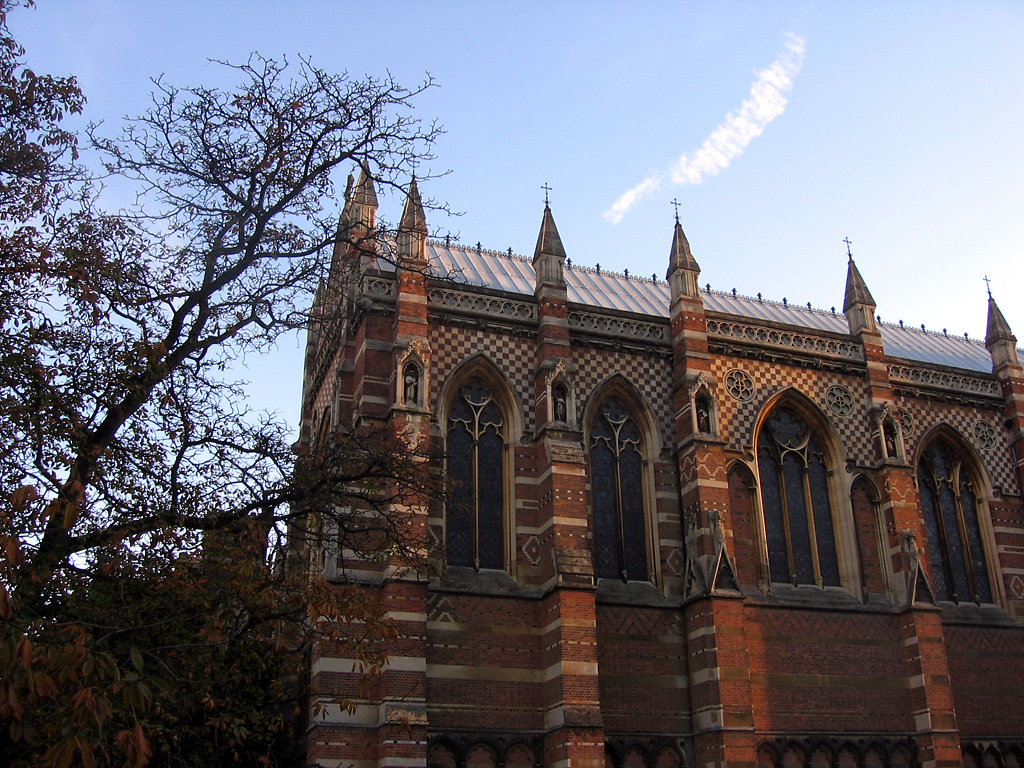
Keble College

When it comes to international students, Oxford could do a better job of explaining the college system and the differences between the colleges. To most aspiring Oxford graduates from abroad, the choice of college is just one of hundreds of boxes to be filled in on the application. More than half of the international graduates who I polled chose their college more on the basis of its location than any other factor.

After a year here, I have come to appreciate differing collegiate cultures. To some extent, that is embedded in a way that really carries over from year to year. At another level, there are fairly wild swings in demographics, temperments, and styles of relationships; this is because a great deal about the graduate intake of colleges is random. If people had a better sense of what (if anything) the Oxford colleges stand for, beyond what reading a few pages in Wikipedia might offer, it might serve both to improve their own experiences here and strengthen and foster the development of distinctive cultures at different colleges.

I chose Wadham College primarily because Sarah P recommended it, and because it seemed to be old, central, and have nice grounds. It has a reputation for being left wing, but I have never seen any actual political energy expended there. The Queer Bop, far from being some kind of affirmation of homosexual equality, is mostly just a self-indulgent and hedonistic heterosexual booze fest. The single best thing about Wadham is probably the beauty of the grounds and gardens but, given that it is not an especially famous college, no Oxford student would have the slightest trouble visiting those unhindered by the kind of bowler-hatted bouncers I have been threatened and expelled by at Magdalen, University, and Christ Church. All things considered, I do not regret the choice, on the whole, even if I do look with envy at the international relations collections held by the libraries at Nuffield and Saint Antony’s.

For incoming graduate students of politics or international relations, I would recommend either applying to Saint Antony’s – if you care about being with a large group of graduates with similar interests and good facilities serving them – or one of the very old, grand colleges – if you care more about the ivied Oxford punting side of things than which books will be in your library. Options in the latter camp include Magdalen (perhaps the most attractive college), Christ Church, University, Merton, and New (founded in 1379). Those are all fairly central, as well. Balliol, Trinity, Exeter, and St. John’s are all nice, central colleges that I know too little about to speak on with any authority.

I am especially interested in what other Oxonians may have to say about all of this. Doubtless, there are many who will disagree, and, quite possibly, some who will take offense to seeing this or that college characterized in this or that way. I only have extensive experience with Wadham, Saint Cross, Nuffield, and Saint Antony’s. Thus, anything written about other colleges should be considered little better than hearsay.

[Update: 7:45pm] All comments above about libraries pertain only to international relations collections. Those studying other things may be presented with an entirely different spectrum of appeal.

March of the iPods

Today, iPod the Fifth arrived. They are packed much more compactly now than in earlier days. I suspect Apple is cutting costs in anticipation of having to compete with Microsoft’s Zune player, though, as always, it remains to be seen how successful that product will be. Everyone remembers the spectacular failure of the ‘rokr’ iTunes phone.

As regards iPod the Fifth, I hope it lasts as long as the previous four put together did.

In other news, the heating in our flat has suddenly been turned on. It hit my like a tropical blast as soon as I opened my door. I probably will no longer be sleeping in the woolen toque that Sarah P gave me.

PS. For some reason, iTunes 7.0.1 lacks the option to “only update checked songs” to the iPod. Since I was using that feature to keep a collection of songs small enough for the 20GB version updated, it will now not update at all, because the overall library is too big. I have come up with a crude hack (creating a smart playlist that includes all checked songs and having the iPod only update that), but doing so causes the device to only list that playlist, with none of my other smart or normal listings visible. Trying to add them all (even though they are the same songs as the ‘checked only’ list, causes a ‘not enough space’ error. Any ideas?

Doctoral application timeline

Pond in the University Parks, Oxford

Happy Birthday Jessica Berglund

One question I am pondering for the coming year: should I try to write my thesis and prepare for exams at the same time as I am writing the Graduate Record Exam (GRE) and submitting applications to doctoral programs? I will not have enough people to serve as references until I have finished at least one optional paper (at the end of November), and I have been very strongly cautioned not to use references from my undergraduate school. Apparently, this suggests to admission committees that you have failed utterly in your master’s program. Given how odd grading at Oxford is, this is definitely not a message that I want to transmit.

In many ways, it would be wiser to finish this year, then work somewhere for a year while completing my application to a PhD program. Of course, if my personal history shows anything, it is that I am much worse at getting jobs than at meeting any academic requirements. Case in point, last year I got into a master’s program at Oxford, but failed to become a barrista at Starbucks.

Long time readers, what do you think?

Oxford populating with graduates

Last night’s late night laundry-doing brought me into the first substantial contact this year with members of both my program and St. Antony’s College. Having carefully set aside my laundry card and other ‘Oxford only’ cards before leaving for Canada, I have now torn my room apart several times in search of them. When yesterday’s searching proved as hopeless as previous attempts, I managed to trade cash for the use of someone’s card, at a St. Antony’s social event. Having succeeded in activating the machine, it seemed natural to wait out its cycles in the company available.

There, I was lucky enough to see Roham and Iason, Diarmuid – who I showed around Oxford sometime shortly after May Day – and Jessica Ashooh – who is joining the M.Phil this year. The new M.Phils are off being oriented today, as well as learning which supervisors will guide them through this whole complex process. I look forward to meeting them all.

Another upshot of the party was learning about some of the many Antonians who will also be living on Church Walk and adjoining streets during the coming year. Good news on that front arrived yesterday, as well. It now seems likely that I will be able to remain in present lodgings for the duration of the M.Phil program. The prospect of moving during Easter Vacation (when I am hoping to hitchhike to Morocco and at the end of which my thesis is due) was not at all an appealing one.

PS. Mica has a new video online. It is an experimental combination of high action and a stationary camera. Rumour has it that his Arctic Monkeys video has been accepted for the next Google Idol competition. His Hives video won a previous round.

Lyra’s Oxford

Jericho street

Happy Birthday Sarah Webster

Having brought a copy back from Vancouver with me, I am re-reading Philip Pullman’s The Golden Compass for what could certainly be the fiftieth time. No book of mine has been read more often, though I probably read Michael Crighton‘s The Andromeda Strain at least thirty times in elementary school (it was profoundly frightening).

Pullman’s book is superb; the protagonist, literally, my hero. The book definitely affected my decision to come to Oxford. Even having read it so many times, the surprising parts remain just that, and the parts that I have always enjoyed most are still compelling. Those who have not read it should.

Some parts are even better after you’ve had a year in Oxford to learn the layout and the names of places. Though today’s Jericho, as you see above, is nothing like what I imagined, on the basis of the book. This has also been a year in which I did not have a copy of the book (despite buying at least four as gifts for friends).

Meeting Mr. Pullman may also have affected my thinking, though I have an odd tendency to confuse him – especially in dreams – with Tony Price.

[Update: 6:00am] Insomniac, yes (though I was woken by a special alarm). I wanted to note my special appreciation for Lapland witches. Pullman discusses them at length, but they derive from Paradise Lost (II, 622–666).