Advanced physics for carbon removal

Meaghan Beattie at dinner

While a lawsuit filed in Hawaii expresses deep concern about the possibility of the Large Hadron Collider producing miniature black holes, some physicists are highlighting precisely that capability as a mechanism for fighting climate change. Existing plans for carbon capture and storage (CCS) rely upon the storage of large quantities of CO2 in underground structures. According to MIT physicist Aprile Pazzo, the controlled introduction of artificial black holes into such structures could alleviate pressure, reducing the risk of future leakage. Due to the enormous energies involved in the collisions it will produce (up to 14 trillion electronvolts), the LHC should be the first man-made device capable of reliably producing black holes.

Present technology does not permit the containment of micro black holes since, unlike ordinary matter, they cannot be confined in solid vessels and, unlike plasma, they cannot be magnetically contained. As such, black holes produced in high energy collisions would need to be delivered directly into the carbon reservoirs. While precise information on the mass-absorbing capabilities of LHC generated black holes is unknown, Pazzo argues that the accelerator should be capable of neutralizing several million tonnes of carbon dioxide per day, once fully operational:

“Many people have expressed doubts about the worthiness of big science projects like the Large Hadron Collider. What this novel application demonstrates is that experimental physics can have real world applications – not just in terms of harmful technologies like the atomic bomb, but in terms of advanced solutions to serious problems like climate change.”

Many other physicists have called this rosy assessment into question, arguing that the production of black holes poses an intolerable risk, that the geography in the region near Geneva where the LHC will be operating is not suitable for CCS, and that the energy requirements of the accelerator itself will generate large quantities of greenhouse gasses.

If early trials at the LHC prove successful, many more machines of similar types may be built worldwide. At some point, the excess cost of shipping CO2 by pipeline will make additional accelerator facilities the most affordable option and it is clearly infeasible to transport carbon dioxide intercontinentally for absorption. The ultimate hope of scientists working on the project is that mechanisms for the safe containment of black holes might be developed – possibly utilizing interactions between Hawking Radiation and novel force-carrying particles like the Higgs Boson. If that proves feasible, portable black-hole based carbon disposal systems might find their way into future generations of cars, trains, and aircraft.

WordPress 2.5

WordPress 2.5 doesn’t look much different from the perspective of the reader, but the administrative controls are much slicker. Upgrading seems to be relatively painless, and my plugins seem to work.

One really nice thing is that you can now change the default thumbnail size from within the interface (under Settings > Miscellaneous). My thumbnail size hack can now be cheerfully thrown into the dustbin of historical code.

I remain impressed that the WordPress team continues to produce such excellent free software – the best blogging platform available.

[Update: 14 Apr 2008] WordPress 2.5 seems to have a lot of bugs. Often, it hangs when I try to post comments, then tells me the comments are duplicate. I am getting lots of Error 500 pages. Sometimes, when I make a post WordPress says that it failed. It then becomes a draft with random incorrect categories attached to it.

The new page for writing posts has an awkward layout. The scheduled posts page doesn’t show the time when posts will appear. The image uploader sometimes refuses to let you add titles or descriptions to things you just uploaded, with the option to insert them into posts similarly vanished.

Hopefully, a new version that fixes all these issues will emerge soon.

[Update: 15 Apr 2008] The Flash uploader in WordPress 2.5 is quite terrible.

Earth Hour, and why it is a bad idea

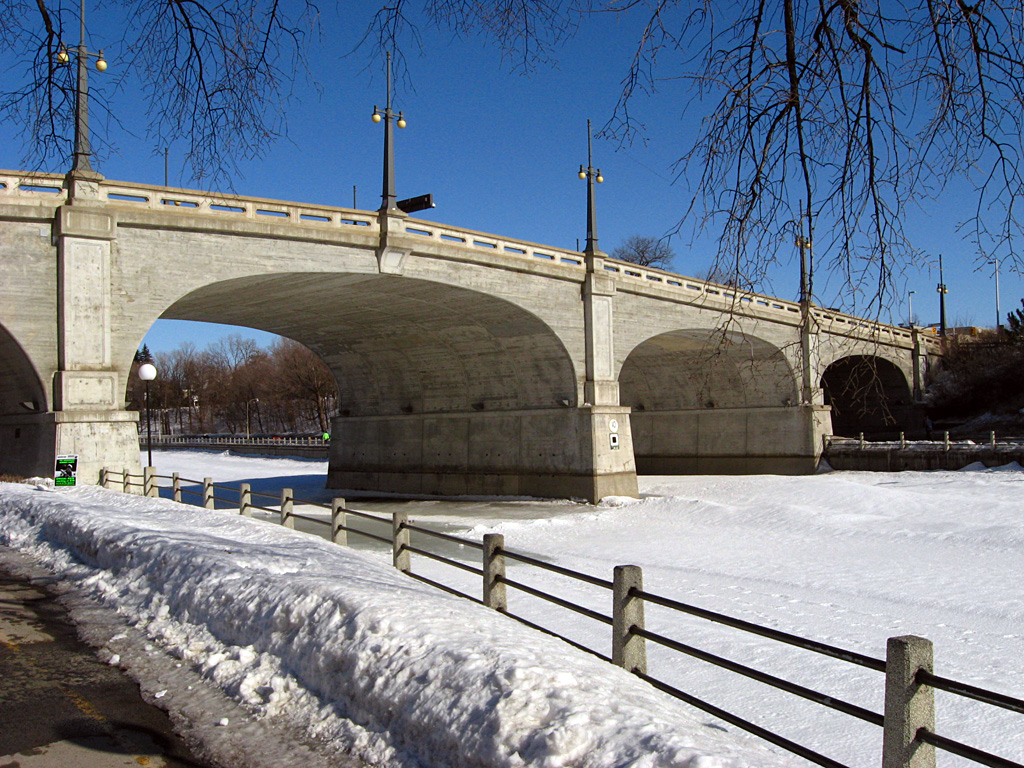
Bank Canal Bridge

The news today is full of talk about Earth Hour. Frankly, I think the idea is stupid. Telling people to turn out the lights for one hour one day has a trivial impact. Furthermore, it has nothing to do with approaches that actually would. Shutting down the lights in a brief symbolic gesture does nothing to change the energy basis of our society. Replacing one ordinary light bulb with a compact fluorescent one would have a bigger impact in the long term, and would at least suggest an understanding that brief voluntary abstinence from energy use is no solution whatsoever. Earth Hour is akin to choosing to fast for one hour and hoping that it will send a strong message to the factory farming industry.

Earth Hour reinforces many of the fallacies people believe about climate change, such as:

  • It will mostly be solved through consumer choices
  • Voluntary efforts are enough
  • It’s the visible changes that really matter

As discussed at length here in the past, it is very likely that none of these things are true. Climate change will only be dealt with when the energy basis of society has changed enough that the most greedy and selfish people are nonetheless leading low-carbon lives. That requires massive infrastructure change over the course of decades – the progressive replacement of high carbon options with low carbon and finally zero carbon ones. Earth Hour is, at best, a distraction from this process.

[Update: 25 March 2009] Judging by the Google searches, another ‘Earth Hour’ is coming up. I still think the exercise is a pointless one. Moving to a sustainable society isn’t about reducing energy use for one hour, it’s about reforming the energy basis of society. Tokenistic environmental gestures do no good, and help to convince people that the real changes we need are trivially easy.

[Update: 24 March 2011] Looking back over it, what I have written about Earth Hour before is a bit harsh. Yes, I think the basic idea of turning out the lights for an hour is a weak one. At the same time, environmental groups presumable use Earth Hour as an opportunity to communicate with the public. It might have less value as a symbolic action, and more as a simple advertising opportunity, in terms of direct communication with the public and media exposure.

Who wants to go up Grouse?

I am amused and pleased to have played a role in organizing a hiking trip in Vancouver involving Emily; my friend, former classmate, and former flatmate Kai; his friend Verena; and my father. Vicarious social mountain climbing – the last resort of we flatland dwellers.

Actually, the whole thing was great fun, even from 4,808km away.

[Update: 28 Mar 2008] Emily has a post on this.

Any used computers kicking around?

I find myself with a renewed interest in setting up a VNC compatible Linux-based terminal server. I don’t want to use my existing laptop because (a) I don’t want to leave it all on the time and (b) I don’t want to expose it to possible attack from the wider internet. As such, I am looking for a fairly basic used system – PC or Mac – that someone is willing to let go cheaply. A computer that got relegated to a closet when a newer one was purchased might be perfect.

Do any readers in the Toronto/Ottawa/Montreal area have any such hardware kicking around? It only needs to be capable of running a virtual private network client, terminal server client, and web browser.

Dark comedies

I first experienced Jhonen Vasquez‘s work in the form of Johnny the Homicidal Maniac: a darkly comic feature of my high-school days. Johnny is insane and believes he needs to keep a wall in his house painted with fresh blood so that demons do not push through from the other side. On the basis of that, you might wonder why Nickelodeon decided to produce a children’s television show created by the same man. Invader Zim is not nearly as dark as Johnny – though it definitely has its moments – and I think it is funnier overall. In one episode, the megalomaniacal alien Zim is concerned that a human nurse will uncover his secret identity as an alien because he lacks human organs. His solution is to start stealing them from his classmates in a macabre and hilarious episode called “Dark Harvest.”

The series is worth watching just so that you can exchange the most hillarious lines with other devotees.

For those already enamoured with Zim it is worth noting that you can buy every episode on DVD for $29.59. At that price, it may soften the rueful chastisement embodied in the angry fist you wave at those $70 seasons of The Sopranos. They even had the gall to split series six in two parts, so they could rob people twice…

Ideas for smarter elevators

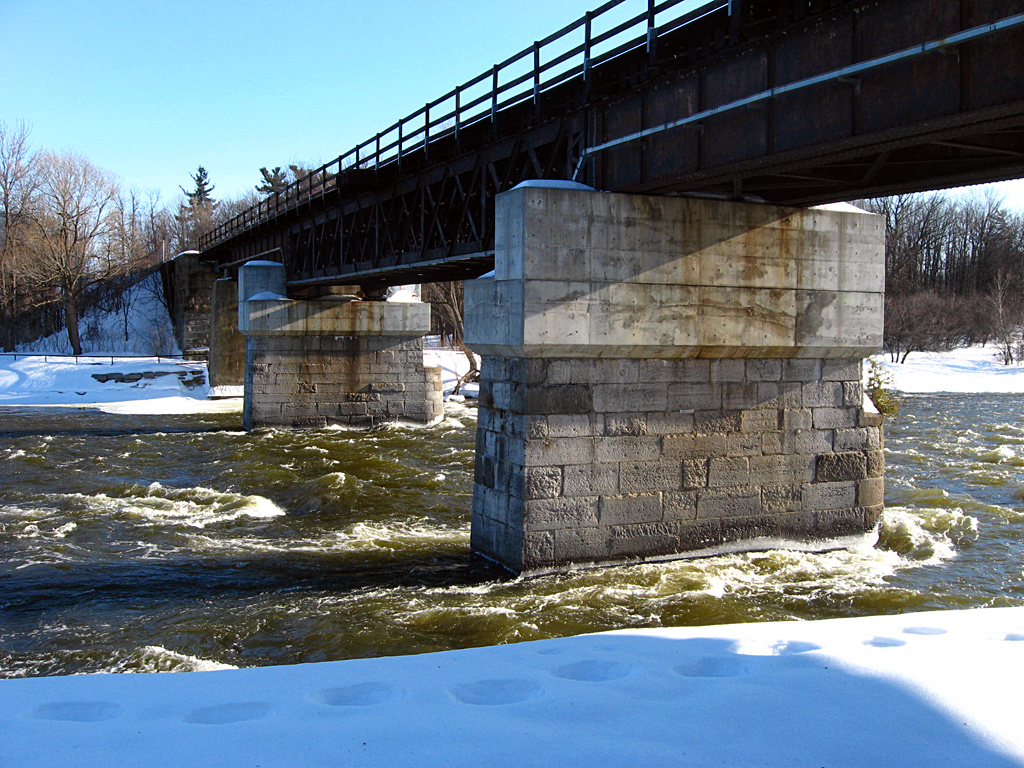
O-train bridge, Ottawa

I am not sure if any elevator manufacturer has done so, but it seems to me that adding some sensors and algorithms could significantly improve the efficiency of the machines in tall buildings. It could be a very practical application of utilitarianism, aiming to reduce the average per-person journey time as much as possible.

For instance, if there are two elevators moving past a floor where someone has requested a stop, the one carrying fewer people could be assigned the pause, even if the fuller cabin would be there sooner. Similarly, if a number of people got on at once and only one additional floor was selected, the movement of that elevator to that floor could be prioritized, bypassing people waiting on other floors.

To implement this, all you would really need is weight sensors in the elevator floor (or a tension sensor on the cable) and perhaps thermal sensors in the waiting areas to identify how many people are awaiting an elevator on any particular floor.

Another good mechanism might be a panel on the ground floor – or any sky lobbies – where each person waiting indicates their destination floor. They could then be routed to a particular elevator. For example, if ten people are all waiting on floor 1 to go up to floor 40, an elevator might be assigned just for them, saving them the delay of a dozen stops up along the way.

One last idea is a phased return system following fire drills and other sorts of evacuation. Having random collections of people enter elevators ensures stops every few floors. It would be fastest to carry everyone who is going there to the second floor, then do the third, and move on up the building.

Thinking of making a break for the mountains

I went to MEC today to buy a replacement snap connector for my Arcteryx backpack and see if there is any way to stop the worn inner heels of my shoes from cutting my feet when I walk (there isn’t). This definitely beats the record for the least amount of money spent during a trip to that store: $5.50, more than $5 of which was on a Bisphenol A-free HDPE Nalgene bottle.

It’s a sad reflection of how my gear to outdoor opportunities ratio is more skewed towards the former than ever before. I really miss the Oxford Walking Club.