Unlettered society

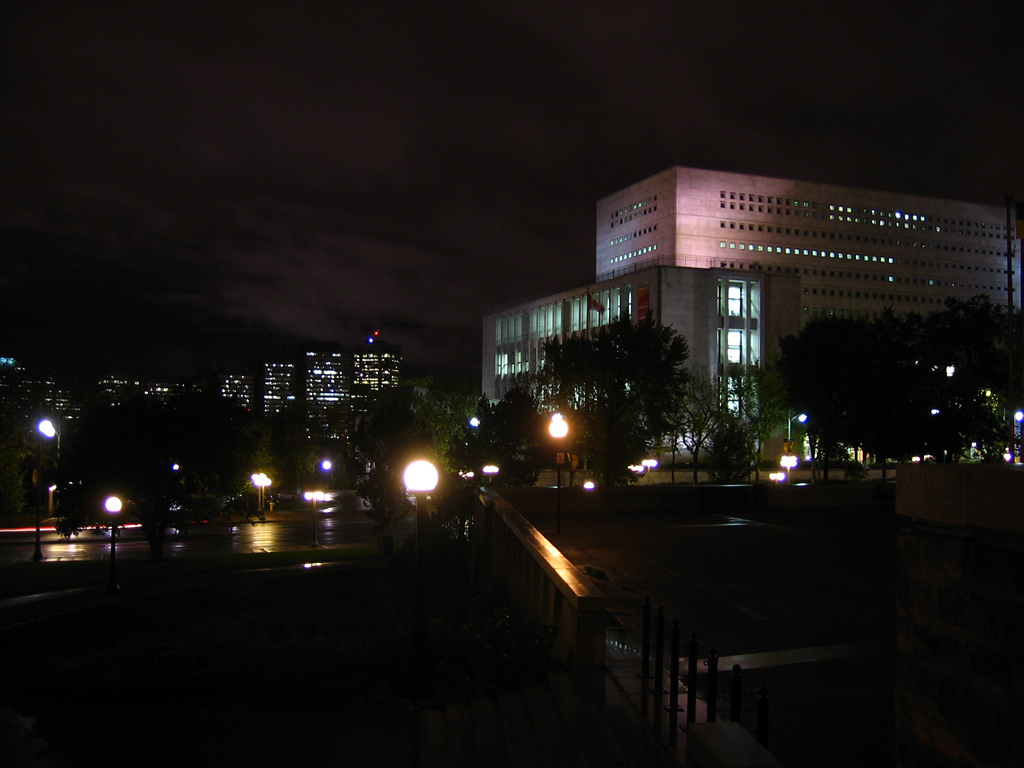
National Archives of Canada

My ongoing fruitless search for lined correspondence paper has hammered home the degree to which letters have faded from our society. Not even specialized paper stores have ordinary letter paper for sale, it seems. This is no surprise, really, given how much more immediate and immersive other forms of communication are. The societal forces at work lead me to wonder whether we are even capable of writing letters anymore.

There was a long span of time during which letters were the only low-cost means of maintaining personal relationships at a distance. This began in the ancient world (though only because popular with the rise of mass literacy) and persisted until the rise of affordable long-distance telephone calls and the internet. Now, there are a myriad of more rapid and personal ways through which to exchange all manner of personal thoughts and information. Email was the dirt on top of the well-nailed coffin: allowing people the permanence and clarity of written language in a much quicker and more versatile way. Now, every office tower is stuffed with BlackBerried workers.

Yet the letter persists as an aesthetic ideal. People value them because of the time they take to construct and their enduring quality. I still have letters that Kate wrote me a decade ago. Still, I wonder whether people who are utterly acquainted with rapid communication are generally capable of writing things in a style suited to this slow and permanent route. Our communication styles have simply become too dynamic – we expect things to change quickly and for responses to be fluid. At the same time, all but a tiny minority of people have become utterly unpracticed in letter writing. Just as poetry and public speaking are no longer taught as a skill in schools, so too has letter writing been marginalized due to a lack of need and a lack of practice.

Overall, I cannot help but think this is a change for the better. People can remain in contact more vividly and extensively, despite how they tend to have groups of friends who are ever more spread out. Letter writing is destined to become an occasional curiosity – like the ‘paper making’ workshops that sometimes happen in elementary schools or craft stores (usually just re-assembling cut up bits of previously made paper). Hopefully, people who are engaging in the kind of correspondence that will eventually be published in books (if those do not vanish as well) have been keeping accessible and reliable paper copies. Digital media are fickle, and it would be rather tragic to lose such a historical record to failed hard drive bearings and changed file formats.

Bikes and stop signs

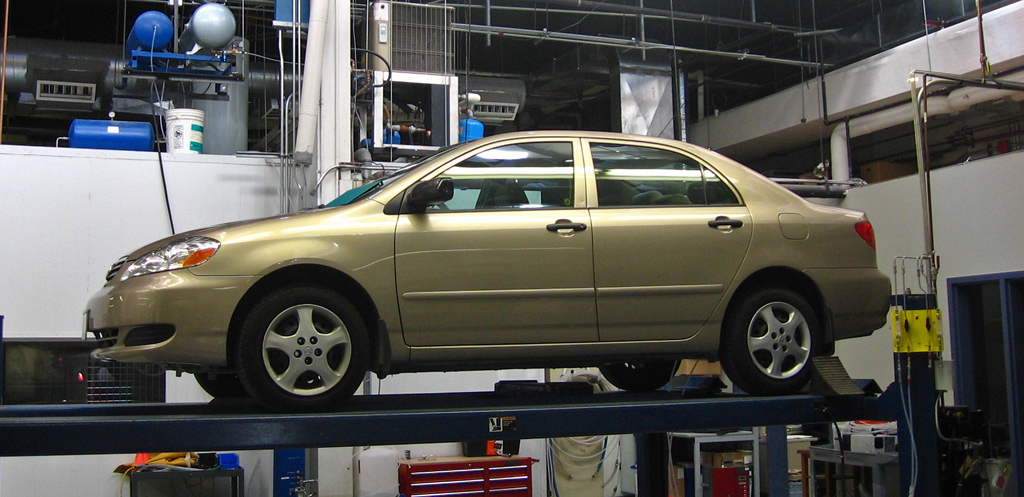
Car in emissions testing facility

Riding eastward across Ottawa from Booth Street towards Sandy Hill, it is far wiser to head north to the river and follow the riverside path than it is to push straight through Centretown. The most obvious reason for this is aesthetic, since the path offers a beautiful view of the river and Parliament Hill. A more technical reason has to do with traffic dynamics. As this paper on bicycle commuting explains:

Bicyclists can work only so hard. The average commuting rider is unlikely to produce more than 100 watts of propulsion power, or about what it takes to power a reading lamp. At 100 watts, the average cyclist can travel about 12.5 miles per hour on the level. When necessary, a serious cyclist can generate far more power than that (up to perhaps 500 watts for a racing cyclist, equivalent to the amount used by a stove burner on low). But even if a commuter cyclist could produce more than 100 watts, she is unlikely to do so because this would force her to sweat heavily, which is a problem for any cyclist without a place to shower at work.

With only 100 watts’ worth (compared to 100,000 watts generated by a 150-horsepower car engine), bicyclists must husband their power. Accelerating from stops is strenuous, particularly since most cyclists feel a compulsion to regain their former speed quickly. They also have to pedal hard to get the bike moving forward fast enough to avoid falling down while rapidly upshifting to get back up to speed.

For example, on a street with a stop sign every 300 feet, calculations predict that the average speed of a 150-pound rider putting out 100 watts of power will diminish by about forty percent. If the bicyclist wants to maintain her average speed of 12.5 mph while still coming to a complete stop at each sign, she has to increase her output power to almost 500 watts. This is well beyond the ability of all but the most fit cyclists.

In addition to stop sign frequently, terrain is also an important factor:

These problems are compounded at uphill intersections. Even grades too small to be noticed by car drivers and pedestrians slow cyclists substantially. For example, a rise of just three feet in a hundred will cut the speed of a 150-pound, 100-watt cyclist in half. The extra force required to attain a stable speed quickly on a grade after stopping at a stop sign is particularly grating.

This is especially true when there are drivers behind you freaking out because the time it takes you to accelerate will make them three seconds later in reaching the next red light or stop sign.

The whole article is worth a look. One fact most people will not know: Idaho allows cyclists to treat stop signs as yield signs, allowing them to cycle through at normal speed if no other vehicles are near the intersection.

Language training

Meaghan Beattie and giant pumpkin

My command of French has been in long-term decline since I graduated from elementary school and left the immersion program – with upticks in facility corresponding to some university courses and the Summer Language Bursary Program. Now, I am considering options to get back in stride a bit. I considered taking courses at Oxford, but lacked the time, money, and immediate reason for doing so.

One possibility I am considering is Rosetta Stone: interactive language software used by a number of branches of the American government and military. Buying the software is quite expensive but, due to an odd quirk, you can get access for $30 a year by getting a library card in Chattanooga. Has anyone used this software? I have seen mixed reviews, and am not sure if it is the best choice to resurrect my lumbering zombie French. I hear that the software is quite engaging, but also that it lacks cultural sensitivity and sometimes teaches words that are technically correct but rare in popular usage. Also, it is presumably focused on Parisian French rather than the Quebecois variety – though I might be forgiven for seeing the appeal of the former type of pronounciation, if only because it might be more easily understood when visiting other French-speaking parts of the world.

Other ideas would be appreciated. I really dislike listening to the radio, so French language news is largely out as a refresher possibility.

Busy weekend

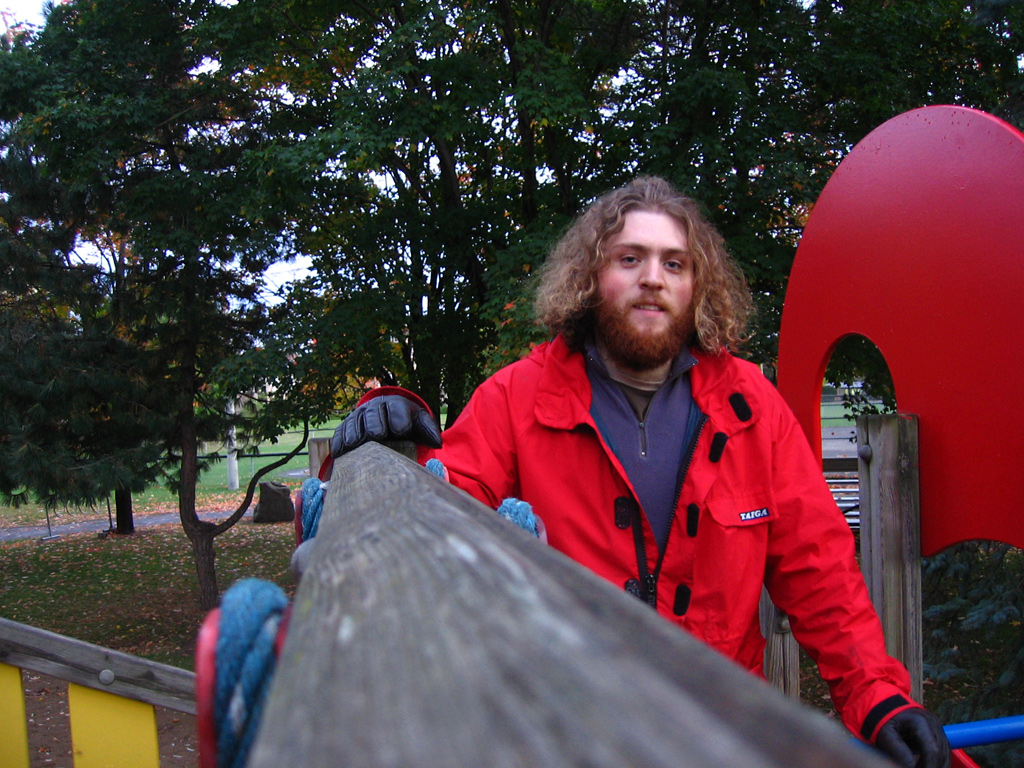
Tristan Laing in a playground

Tristan, Meaghan, and I went for an excellent bike ride around Ottawa this afternoon, following a large egg and vegetable breakfast I made for us. Yesterday, we visited Chez Lucien: possibly Ottawa’s best pub, notable for a good selection of beer, nice ambiance, and very friendly staff. Tonight, it will be Somerset Street Pho.

Tomorrow, the Museum of Civilizations is being considered, as well as a veggie lunch at The Table to replace the dinner intended for tonight, but which proved impossible due to the length of our bicycular explorations.

Our standard coverage of climate change, science, and general geekery will resume next week.

Knowledge brokers get the Nobel

Meaghan Beattie and Milan Ilnyckyj

The hot news today is that the Intergovernmental Panel on Climate Change and Al Gore (though not Sheila Watt-Cloutier) have been awarded the Nobel Peace Prize. While some have questioned the appropriateness of awarding the prize on the basis of achievements not directly related to armed conflict, it does seem that the conflict potential connected with migration, water scarcity, and so forth makes this less of a stretch than some previous awards.

What is most notable about all this, for me, is that neither Gore nor the IPCC have actually contributed to climatic science. The IPCC exists to review the published academic literature on climatic science and agree upon a consensus position; Gore has acted as an effective advocate and representative, though his overall contribution has been far more in the area of information transmission than the area of information generation.

What this shows is how vitally important the layer between scientists and policy-makers or the general public is. Scientists are looking (with great skill and detail) at the individual elements that make up the climatic system. Translating that into a comprehensive understanding of relationships and risks – of the sort that can guide policy development – is critical and challenging. As such, these Nobel prizes are well earned.

Previous related entries:

Heat, bacteria, and evolution

Rusty metal

For those who are unfamiliar, capsaicin is one of the most interesting molecules out there. This is the chemical that makes chili peppers spicy; it is also the active ingredient in pepper spray. Pure capsaicin is rated at about 15 million Scoville heat units: a scale where Tabasco sauce is scored at about 2,500.

Capsaicin is quite an amazing adaptation, actually. Plants developed it to deter animals from eating them. Eventually, animals realized that capsaicin was painful to them, but not actually harmful. By contrast, it is very harmful to some of the species of bacteria that spoil food. As such, spicy foods emerged in hot climates as a defence against nasty prokaryotes. A direct descendent of that realization are the veggie vindaloos I enjoy so much.

Spices have been mentioned here before.

Vancouver ticket booked

My flight is booked and I can now say with certainty that I will be in Vancouver from the 21st of December until the 2nd of January. Hopefully, that span will include a big gathering of friends in North Vancouver, akin to my pre-Oxford departure party. Saturday, December 29th is a plausible date for the event.

Already, nights in Ottawa are developing a chilly edge. By late December, I expect that it will be with the most concentrated of joy that I trade the icy windswept streets of Ontario for the rainy windswept streets of British Columbia.

PS. My planned trip to B.C. was mentioned before.

[Update: 23 October 2007] According to the NativeEnergy carbon calculator, my flights to and from Vancouver will collectively generate 1.761 tonnes of CO2. As with my thesis, I decided to offset the emissions through the capture of methane. While offsets are far from perfect, they are quite probably better than doing nothing.

I was surprised to see that travelling the same distance by train would produce 0.727 tonnes of CO2. While that is 60% lower, we generally think of trains as being really dramatically greener than flying. I suppose the difference is largely that nobody travels very long distances by train.

Carbon pricing and local food

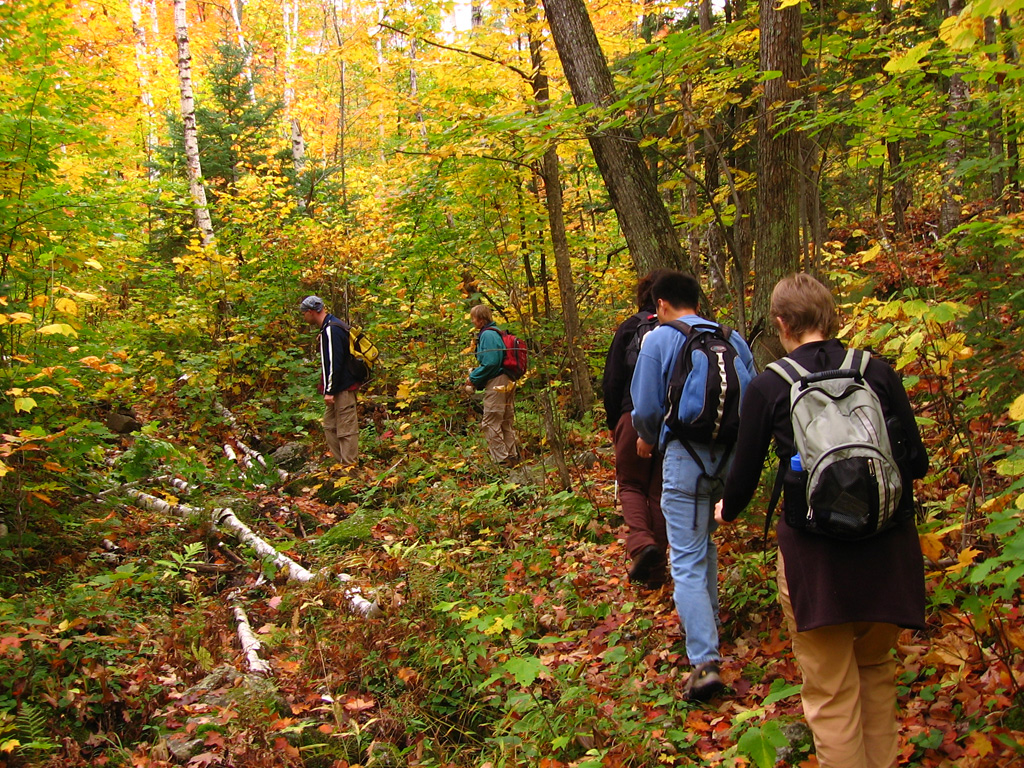
Ottawa Hostel Outdoor Club

I have been hearing a lot about food miles lately. While it is good for people to be aware of the productive processes that support them, I also have issues with the shape of the local foods debate. Just because something is produced closer to where you live does not mean it is more ecologically friendly or less climate harming. To take an extreme case: people living in very cold regions may find that it is far more environmentally sound to import food from warmer places than to grow it in greenhouses nearby. My focus here is on greenhouse gas emissions, but similar arguments can be made regarding water use, pesticides, etc.

What this debate really demonstrates is the lack of proper carbon pricing in the market. If CO2 emissions were included in the price of tomatoes or bananas, producers could choose to base production in whichever location is most efficient when carbon emissions (along with other factors) are taken into account. Until proper carbon pricing exists, there is justification for the intelligent application of the food miles concept. That said, I think the energy of environmentally aware people is much better spent advocating carbon taxes or cap-and-trade schemes than on encouraging people to spent their time buying local zucchini, rather than whatever sort is at the supermarket. By all means, attend farmers’ markets if you like them, but I think it is deluded to think they can make a meaningful contribution to reducing human emissions to 5,000 Mt of CO2 equivalent.

I can already feel the dissenting opinions coming on, for this post…

Vroom vroom

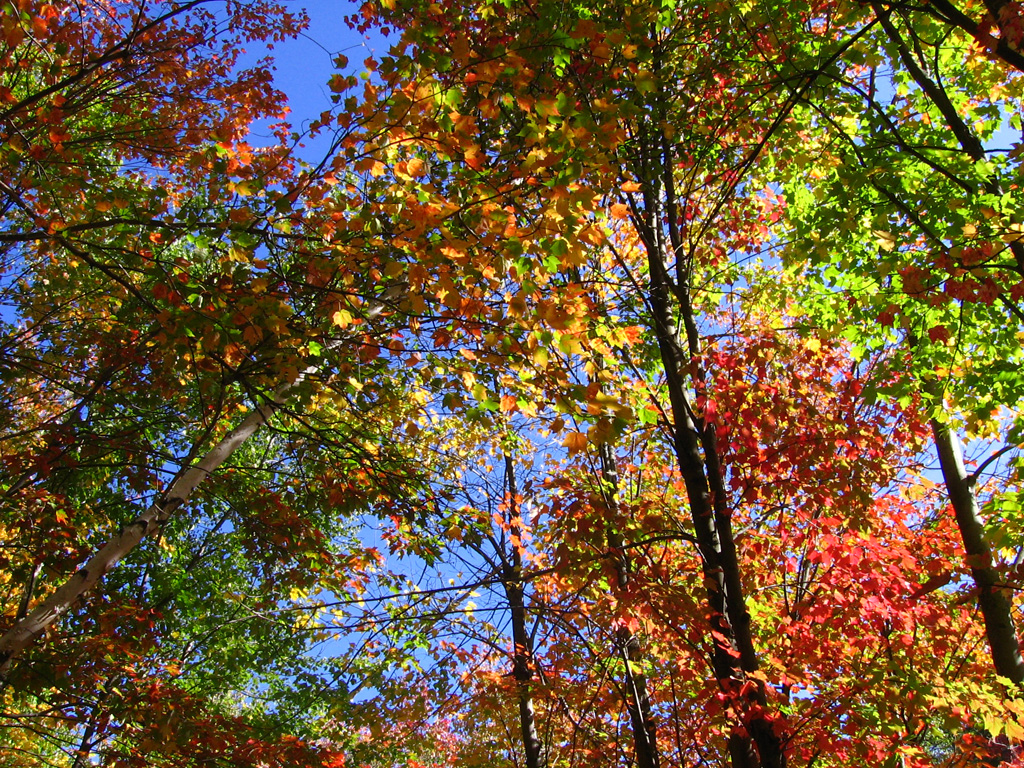
Gatineau Park foliage

The never-ceasing movement of cars along Booth Street, right outside my bedroom window, is far and away the biggest problem with my present dwelling. Whenever I am not wearing earplugs or headphones, it is a constant annoyance. Almost every morning, I wake up around 6:00am with one earplug fallen out (see previous). I catch myself idly wondering about ways to sabotage the road or direct the vehicles to another route.

All told, the flat is quite a good one. The location is good (near work, though a bit far from most interesting parts of town), the apartment itself is nice and of a good size, the inclusion of a private washer and dryer is very convenient, and the landlord is a nice guy. Even so, I suspect that car noise is going to set me apartment hunting as the end of my lease approaches next summer.

Holidays ahead

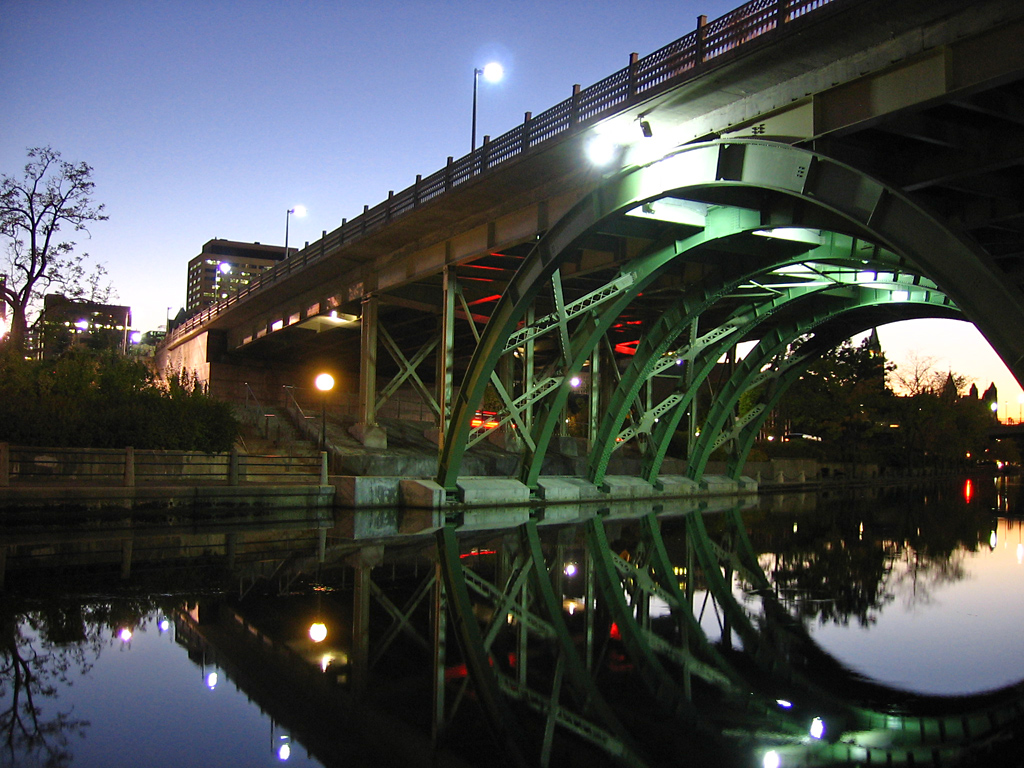
Rideau Canal bridge

Though it feels like the Labour Day weekend just happened, I now find myself on the cusp of another three day break from work. The Thanksgiving weekend is shaping up to include a good combination of activities. Some cycling will doubtless occur. On Sunday, I am doing my first trip with the Ottawa Hostel Outdoor Club (mentioned before). About twenty people are going on an exploratory hike to Ramsay Lookout. That evening, I have been invited to Thanksgiving dinner by a co-worker. I will have to make some kind of interesting veggie dish. Any suggestions (or recipes) would be most welcome.

Next Thursday, Meaghan Beattie is arriving in Ottawa. The next day, Tristan is coming from Toronto. Spending the weekend exploring Ottawa with them promises to be excellent. We should, for instance, finally visit the Civilization Museum over in Gatineau. October 16th marks the three-month point in my job. Between the 24th and 28th, I will be in Montreal. The first three days are for a conference, whereas the weekend is reserved for having fun in the city. I really enjoyed living there for a couple of months, back in 2003. I am told the train ride from Ottawa to Montreal – through all that autumnal deciduous landscape – should be very beautiful.

December should be really exciting. By taking four days off work and using the various statutory holidays, I should be in Vancouver from late on the 21st until the 3rd of January. It will be my longest span of time in the city since the summer of 2006. A big gathering of friends in North Vancouver should definitely be arranged, akin to my pre-Oxford departure party and previous such food-and-friend-laden gatherings. I feel guilty about the flight (0.8 tonnes of CO2 for the total journey of 7100km), but I am regrettably unable to take two months off work to cycle there and back.