Energy trends

This year’s International Energy Outlook has been released by the American Energy Information Administration. Among the key things noted:

  • The total demand for energy worldwide will increase by 57% between 2004 and 2030.
  • If oil prices remain comparable to their present levels, coal will be the dominant fuel for new power plants.
  • Annual growth in installed generating capacity in the OECD will be about 0.9%, compared with 3.7% in China and 3.4% in Brazil.
  • As of 2004, total greenhouse gas emissions from the developing world have exceeded those of the developed world.

Naturally, all of this underscores how difficult it will be to address the problem of climate change, even if the relatively low costs cited by Nicholas Stern and Cameron Hepburn are accurate.

For more on energy sources and climate change, see: Coal and climate change, Solar power and climate change, and Climate change and nuclear power.

Christie precedent overturned

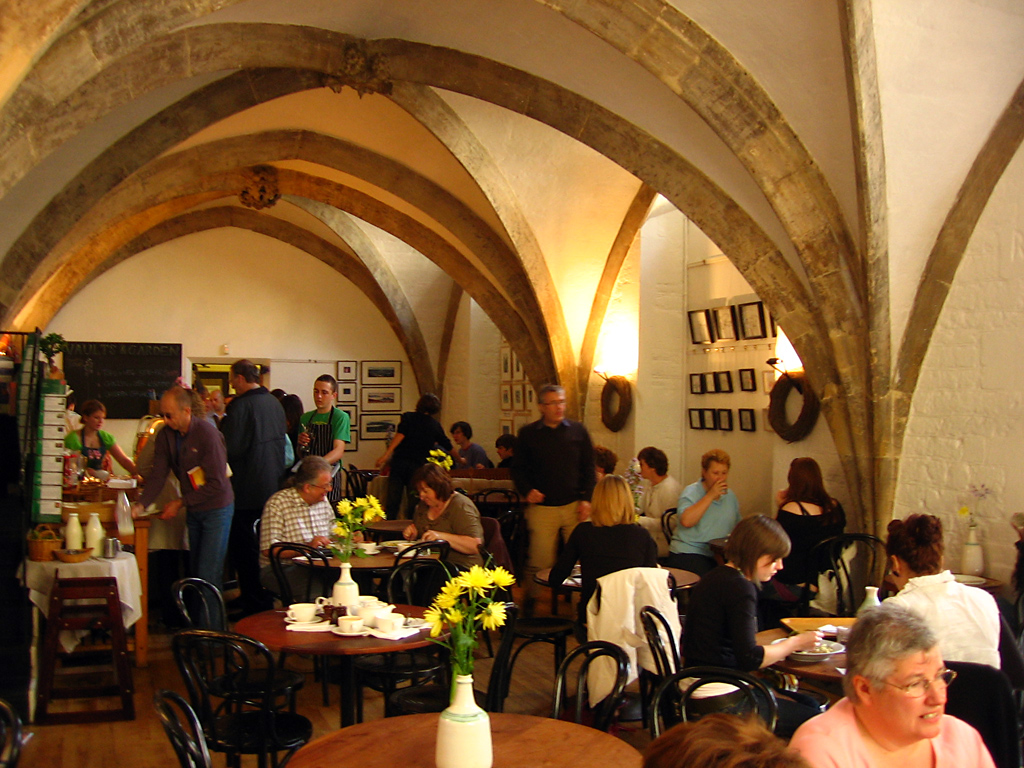
Vault and Gardens, Oxford

The Canadian Supreme Court seems to have overturned Christie v. AG of B.C. et al. This 2005 decision held that the poor could not be charged the 7% tax on legal services that existed in British Columbia at the time. In the Reasons for Judgment, the B.C. Supreme Court stated:

[The Act] constitutes indirect taxation and is a tax on justice contrary to the Magna Carta and the Rule of Law…

I am prepared to grant the following declarations: A declaration that the Act is ultra vires in the Province of British Columbia to the extent that it applies to legal services provided for low income persons.

The court held that those earning under $29,000 should no longer need to pay the tax. It also reimbursed, with interest, the $6,200 that had been seized from Christie for non-payment of the sales tax on behalf of poor clients.

Dugald Christie, the man behind the 2005 BC case, was a Vancouver lawyer who had dedicated himself to helping the poor get representation within the legal system. He died about ten months ago while bicycling across Canada to raise money for that cause. Prior to his death, Christie lives in a small room at the Salvation Army’s Dunsmuir House, where he apparently worked twelve hours a day encouraging lawyers to do more pro bono work. He founded the Western Canada Society to Access Justice, which consists of sixty legal clinics across British Columbia, and has since expanded into Saskatchewan and Alberta.

The Supreme Court has now held that:

“a review of the constitutional text, the jurisprudence and the history of the concept does not support the respondent’s contention that there is a broad general right to legal counsel as an aspect of, or precondition to, the rule of law.”

I was surprised to see that a right to council isn’t actually included in section 11 of the Charter of Rights and Freedoms. The idea that a normal person can have a fair trial without legal council doesn’t seem a very plausible one.

Economics, games, and choices

In two unrelated instances today, I ended up speaking with friends about the kind of games economists make people play in experiments. The objective in doing so is to learn how people reason, when presented with economic choices. This has a lot to do with heuristics and often generates results that do not make sense, if people have the sole objective of maximizing how much money they will earn from the game itself. That is what happened when I played one of these games during my first month in Oxford.

The form I was discussing with Mark is called The Traveler’s Dilemma (not to be confused with The Salesman Problem). Being good at games like the Traveler’s Dilemma will help you in negotiations with tricky insurance companies. Solving the Salesman Problem would earn you the esteem of mathematicians everywhere.

In a act unrelated to either conversation, Nick Howarth – an Oxonian and former Olympian who I met a couple of days ago – sent me a link to a Nobel Prize lecture on the emerging discipline of behavioural economics.

On road pricing

Over the next couple of decades, many people expect road pricing to evolve from its present state – focused on highway tolls and city centre congestion charges – to a model in which all road use is taxed. In such a system, all movement of automobiles would be tracked and taxed on a per-kilometre basis, subject to secondary considerations like vehicle fuel efficiency and level of road congestion. Singapore, London, Oslo, and Dubai have all introduced charges intended to reduce congestion and pollution in their city centres. Expanding such systems to cover all roads would involve some considerable benefits, though there are also problems that would likely arise.

Benefits

National systems of road pricing would have a number of benefits:

  • The high cost of building and maintaining roads could be more accurately directed at those who use them.
  • Externalities relating to CO2 emissions from automobile use can likewise be dealt with.
  • By charging more to drive on congested roads, people can be encouraged to avoid traffic jams. This helps people who need to use the road avoid wasting time. It also saves on the amount of fuel being wasted by hundreds of idling engines.
  • Some of the funds raised could be directed towards the improvement of public transport options.
  • The use of more efficient vehicles could be encouraged through variable pricing.
  • The use of vehicles that do less damage to road surfaces (that is to say, those other than heavy trucks with bad shock absorbing systems) could likewise be encouraged.

The benefits are thus split into two big categories: those concerning a fairer allocation of costs to those benefitting from publicly provided roads, and those serving to internalize the previously ignored social and environmental costs of driving. If one considers the geopolitical costs of oil dependence, the latter looks even more justified than if one concentrates on particulate emissions and climate change only.

Problems

Naturally, there are a number of significant problems associated with such systems. One is equity. Road pricing may impose high burdens upon individuals with low incomes. For instance, those who cannot afford to live near where they work. Solutions to this could include the provision of some set level of free usage, over and above which people start getting charged. Better options include encouraging the development of efficient and popular public transport systems, as well as reduced charges for light and energy efficient vehicles. Zero-emission vehicles (such as electric cars charged on nuclear or renewable power) could likewise be taxed at a lower rate.

More serious are the privacy implications. I think it would be naive to imagine that the tracking information generated by such systems will not be retained by the state and used, for good or ill, without a great deal of public accountability. This is part of the much broader problem of how to manage data control and privacy protection in an age where surveillance is increasingly ubiquitous and data storage is ever cheaper. In recent years, there have been many cases of government employees found using access to such databases in improper ways. Doubtless, the vast majority of such inappropriate use is never discovered. Further to that, there is good reason to believe that access to such databases will be gained by outsiders through flaws in internal security protocols. The creation of systems for oversight would therefore be essential, and it seems wise to have a general policy of deleting stored data after a set amount of time has elapsed, with exceptions granted only through an explicit process of approval subject to external scrutiny.

An appeal for bike subsidies

One suggestion I would make to improve this system would be to include an optional component for cyclists. Those willing to cycle around with a transponder would be credited at a modest rate for distance traveled. This would be in recognition of the non-market advantages of cycling, such as the value of physical fitness as a component in preventative medicine. In 1998, Health Canada estimated the total cost of cardiovascular diseases on the health sector of the Canadian economy to be $18,472.9 million (11.6% of the total cost of all illnesses). Cardiovascular disease is also responsible for 36% of deaths. As such, a subsidy of a few cents a kilometre makes economic sense, as well as potentially generating some good publicity for a system that is likely to be highly unpopular with commuters.

There are also network benefits to be had from increasing the number of cyclists. The emergence of suburbs was made possible by automobiles, at the same time as such urban trends made them increasingly necessary. A more positive version of such feedback effects can be brought about for cycling: as higher numbers justify a more cycle friendly infrastructure which, in turn, encourages more people to cycle. In particular, the creation of designated bike lanes and routes, the provision of cycle parking facilities, and integration of bike carrying capabilities into public transport seem sensible.

Protecting parks

While it is excellent to have national parks established, the difficulty with making them meaningful lies in the enforcement of rules on entry and activity within the defined territory. Even American national parks are having trouble with poachers. The problem is certain to be more acute in less affluent areas, where the impulse to protect nature is more immediately threatened by poverty. Just 14 rangers patrol the 4,200 square kilometres of the Nouabale-Ndoki national park in Congo. Technology can play a part in park management: from satellite tracking and motion sensors to networks of internet connected metal detectors looking for guns and machetes.

Ultimately, technical fixes will probably not be adequate protection in the most vulnerable areas. The reasons for this are primarily economic. There is more money to be had in exploiting the content of parks than in protecting it, and there is no incentive for local people to refrain from damaging activities and be vigilant in preventing others from doing so. As with climate change, the biggest challenge lies in creating institutional and financial structures that encourage environmentally responsible behaviour. Growing recognition of that among policy-makers and the NGO community may eventually lead to much more effective enforcement mechanisms.

This article discusses the TrailGuard metal detectors in much more detail. They sound very clever, even if they are unlikely to solve any problems in and of themselves.

Cameron Hepburn on climate economics

Dr. Cameron Hepburn gave an informative presentation in the Merton MCR this evening on the economics of climate change. While it was largely a reflection of the emerging conventional wisdom, it was very professionally done and kept the audience in the packed Merton MCR asking questions right until it became necessary to disband for dinner. Dr. Hepburn, incidentally, is my friend Jennifer Helgeson’s supervisor.

My notes are on the wiki.

PS. When I imagined Oxford before coming here, the kind of rooms I imagined were more like the Merton MCR than most of the places I have actually seen. That probably derives from having my expectations defined by The Golden Compass and The Line of Beauty.

The IPCC and the cost of mitigation

Butterflies and moths

The second half of the IPCC’s Fourth Assessment Report has now been released (PDF). Much like the earlier Stern Review, it was intended to assess possibilities for mitigating climate change and the costs associated with them. As with the Stern Review, the conclusion is that the problem can be dealt with at a fairly modest cost. Certainly, the sums in question are much smaller than the costs that would arise if the worst possible consequences of global warming were realized: from large-scale migration, to problems with C3 crops, to widespread agricultural failures (see this article on the ongoing Australian drought). The Economist is calling it “a bargain.”

That the Stern findings and those of the IPCC broadly agree is not at all surprising. After all, the Stern Review was based almost entirely upon the scientific conclusions of previous IPCC reports. Even so, such agreement can only help to foster increased political consensus, both within and between states, that climate change should be and can be dealt with. More than ever, it seems as though we are witnessing the start of a serious progression towards a low-carbon society.

Dealing the the problem of climate change will require unprecedented foresight and cooperation. As such, it is not unreasonable to think that the emergence of the kind of international regime that would be necessary to address it will foster cooperation in other areas. Something like global fisheries management does not have the same level of importance as addressing climate change, but the tools that will need to be developed to sort out the latter may advance our ability to behave more appropriately in relation to the former.

Nash equilibria and the environment

Panda with guns

While A Beautiful Mind had a good deal to recommend it as a film, the explanation of the Nash Equilibrium that was included leaves a good bit to be desired. The film explained that in a situation with multiple players, a most desirable objective, and many less desirable objectives, it is rational for each player to pursue the less desirable goals. This is because everyone going after the same thing will probably lead to nobody getting it. The strategy of pursuing the less desirable but more plentiful option therefore maximizes the chances of getting some level of payoff, even though it may not be the highest payoff possible in the game.

The essential characteristic of the Nash Equilibrium is similar to that of Pareto Optimality. Basically, both describe situations in which players do not want to change their behaviours unilaterally. Pareto optimality can be most easily be explained by considering a large group of people with items to trade voluntarily. Eventually, they will trade to the point where no more voluntary exchanges will occur. The arrangement may not generate the maximum possible level of utility that could be achieved with the goods in question; for instance, a person with a large stock of insulin would not transfer any to a diabetic who had nothing to trade for it.1 In a Nash Equilibrium, no player would want to change the strategy they are employing, given that no other players are going to change their own strategies. For the equilibrium to exist, this must be true independently from any information they might receive about the strategies of the other players. For instance, learning that other players have certain thresholds beyond which they will behave quite differently might provide an incentive for any one player to alter their strategy.

While Pareto Optimality is mostly a thought experiment, the Nash Equilibrium is directly applicable to many situations in which there are problems of coordination. For example, it can be applied to climate change policy. Assuming that the policy of each state is set independently, there is no incentive for a single state to unilaterally cap emissions. The effect of one country doing so would be small, while the cost in that country would be high. Hence, inaction is a Nash Equilibrium. It is only through the development of a system that changes the strategies of many actors that a low-carbon outcome can be achieved.

The absence of a Nash Equilibrium can also be problematic, when addressing environmental problems. Imagine a conservation regime based around an international ban on the sale of tiger products. From the perspective of any one state, there is an incentive to violate the ban, provided everyone else will maintain their strategy of conservation. The lack of a Nash Equilibrium threatens to make the regime unstable.

While elements can be built directly into such games to encourage cooperation and discourage defection, they always seem likely to encounter these two kinds of problem. As such, it may be that the only way to establish stable environmental regimes that require sacrifice for the common good is to embed them in a larger super-game. Here, defection on one issue threatens the ability of the defecting state to achieve its aims in other areas. States that continue to emit large amounts of greenhouse gas or who undermine conservation regimes might find themselves unable to enter preferential trade arrangements and the like. In a general way, the perception of a state as being a responsible or irresponsible member of the international community imposes some such pressure. To do so more formally requires the prioritization of environmental issues by all governments involved, as well as a certain strength of will in following up such threats. Despite that, it seems more plausible that such a combined approach could yield desirable outcomes, as opposed to one that focuses on narrow issue areas.

[1] This assumes that the participants derive utility only from the objects being traded, and not from higher order phenomena such as the perception that the distribution that exists is desirable or fair. Agents that place some value upon the happiness of the other agents might generate outcomes quite different from the kind envisioned in neoclassical economics.

Pondering remedy design

Painting at Linacre College

Sorry to be so uninteresting of late. While waiting for me to hammer my thesis together, why not read some fine web comics:

These have all been mentioned here before, but may prove novel to those who haven’t been paying very close attention. Feel free to suggest more to one another.

For random thesis mutterings, follow this link:

Continue reading “Pondering remedy design”

Equilibrium ruminations

Ceiling in Green College tower

Working on chapter three, I have been talking a lot about different kinds of equilibria, and what implications they have for environmental policy. Uncertainty about which sort we are dealing with – as well as the critical points of transition between them – make it exceptionally difficult to consider global environmental problems in cost-benefit terms.

Stable equilibria

One common view of the characteristics of natural equilibria is that they are both stable and singular. An example is a marble at the bottom of a bowl. If you push it a bit in one direction or another, it will return to where it was. Many biological systems seem to be like this, at least within limits. Think about the acid-base conjugate systems that help control the pH of blood, or about an ecosystem where a modest proportion of one species gets eliminated. Provided you like the way things are at the moment, more or less, such stable equilibria are a desirable environmental characteristic. They allow you to effect moderate changes in what is going on, without needing to worry too much about profoundly unbalancing your surroundings.

Unstable equilibria

Of course, such systems can be pushed beyond their bounds. Here, think about a vending machine being tipped. Up to a certain critical point, it will totter back to its original position when you release it. Beyond that point, it will continue to fall over, even if the original force being exerted upon it is discontinued. Both the vertical and horizontal positions of the vending machine are stable equilibria, though we would probably prefer the former to the latter. For a biological example, you might think of a forested hillside. Take a few trees, wait a few years, and the situation will probably be much like when you began. If you cut down enough trees to lose all the topsoil to erosion, however, you might come back in many decades and still find an ecosystem radically different from the one you started off with.

Multiple equilibria

The last important consideration are the number of systems where there are a very great many equilibrium options. One patch of ocean could contain a complex ecosystem, with many different trophic levels and a complex combination of energy pathways. Alternatively, it could feature a relative small number of species. The idea that we can turn the first into the second, through over-fishing, and then expect things to return to how they were at the outset demonstrates some of the fallacious thinking about equilibria in environmental planning.

The trouble with the climate is that it isn’t like a vending machine, in that you can feel the effect your pushing is having on it and pretty clearly anticipate what is going to happen next. Firstly, that is because there are internal balances that make things trickier. It is as though there are all sorts of pendulums and gyroscopes inside the machine, making its movements in response to any particular push unpredictable. Secondly, we are not the only thing pushing on the machine. There are other exogenous properties like solar and orbital variations that may be acting in addition to our exertions, in opposition to them, or simply in parallel. Those forces are likely to change in magnitude both over the course or regular cycles and progressively over the course of time.

How, then, do we decide how much pushing the machine can take? This is the same question posed, in more economic terms, when we speculate about damage curves.