Nicholas Stern on climate change

Saint Edmund’s Hall, Oxford

During the initial coverage of Nicholas Stern’s report on the economics of climate change, I wondered why the media was paying so much attention. After all, the man is an economist reporting on something that scores of scientists have addressed comprehensively through the IPCC process. Now that I have heard him lecture, and spoken briefly with him personally, I have a much better sense. The man is what Karen Litfin calls a ‘knowledge broker,’ translating scientific data into policy options.

His basic position is the realistic liberal optimist one:

  1. Climate change is real and potentially devastating
  2. It is essentially a massive economic externality
  3. Regulating greenhouse gas (GHG) emissions is the way to stop it
  4. This can be done at moderate cost (1% of GDP) and without a massive change in (a) the basis of economic activity within the developed world or (b) the way in which people choose to live their lives.

He acknowledges that the energy balance needs to shift dramatically. In order to be responsible, he says, we need to shift all electrical production in the rich world to carbon neutral forms (renewables, nuclear, and possibly hydrocarbons with sequestration) by 2050. By that time, land transport should also be based on power sources that do not emit GHGs, whether because they are using stored electricity, or because they use fuels that are GHG neutral. India and China need to be encouraged to sequester the CO2 emitted from their coal stations, probably at the expense of the rich world. All in all, rich states should bear 60-80% of the costs of mitigation.

He focused a great deal on atmospheric CO2 levels. His target is to stabilize between 450ppm and 550ppm. This would lead to a likely scenario where mean global temperature rises by about 2 degrees Celcius (though by much more at the poles, given the nature of the climatic system). On the basis of a ‘business as usual projection’ we will hit 450ppm in eight to ten years. To stabilize at 450ppm, we would need to slow the rate of growth in GHG emissions immediately, having it peak in 2010. Then, we would need to reduce at about 6-10% a year thereafter. If we delayed the peak to 2020, we would likely be at the 550ppm portion of the range: an area that the German head of climate change policy expressed grave concern about, during the question session. Stern himself said that 550ppm is the “absolute upper bound” which it would be “outrageous” to exceed.

As for his very controversial decision about discounting rates, I think he defended himself admirably. He broke it into two bits: the possibility there will be no future generations beyond date X (they ascribed a 0.1% chance a year to an event like a comet or gamma ray burst that would simply snuff humanity out) and the strong likelihood that people in the future will be richer. The latter means that it may be economically efficient to delay some of the costs of dealing with climate change, especially given the probability that new technology will emerge.

I need to move on to other work, though I could discuss his comments for many thousands of words. I will transfer my handwritten notes to the wiki later this evening and link them here: notes from Nicholas Stern’s 21 February 2007 address to Oxford University.

PS. A few weeks ago, my default thesis music was Jason Mraz‘s superb album “Live at Java Joe.” Now, I am listening to Enter The Haggis‘ frantic song “Lannigan’s Ball” from their album Aerials over and over again.

The Landlord’s Game

Lee Jones, author of in vino veritas, recently posted a surprising statement about the origins of the game Monopoly, the best selling commercial board game in the world:

Monopoly was designed in 1903 by a Quaker named Elizabeth Magie, who intended the game to highlight the evils of private property. Her version included squares like ‘Lord Bluebood’s Estate’ and ‘Soakum Electric Company’. A 1927 version stated in its rulebook:

“Monopoly is designed to show the evil resulting from the institution of private property. At the start of the game, every player is provided with the same chance of success as every other player. The game ends with one person in possession of all the money. What accounts for the failure of the rest, and what one factor can be singled out to explain the obviously ill-adjusted distribution of the community’s wealth, which this situation represents? Those who win will answer ‘skill’. Those who lose will answer ‘luck’. But maybe there will be some, and these, while admitting the element of skill and luck, will answer with Scott Nearing [a socialist writer of the time] ‘private property.’ “

Lee takes this as a demonstration of the power of capitalism to co-opt and subvert criticism (reach for your Gramsci everyone). This understanding also makes me think about Rousseau‘s statement that “”The first man who, having fenced in a piece of land, said “This is mine,” and found people naïve enough to believe him, that man was the true founder of civil society.”

One of the more obvious products of recent economic development has been a trend towards large increases in the income of the most well-off coupled with fairly modest ones for those of moderate income. This is true both internationally and within countries including Canada, Britain, and the United States. The willingness of people to tolerate that differential – whether justified by merit, libertarianism, or some other doctrine – would seem to hinge upon the same sorts of considerations as those which have transformed the societal understanding of the game of Monopoly.

PS. I wrote previously on executive pay and income inequality.

Executive pay

This week’s Economist features a survey on executive pay that basically argues that, while there have been excesses, executive pay is generally awarded in a fair and legal way. The crux of the matter, as presented, is that executives earn less in pay than they add to the value of the company. More specifically, they add more than the most qualified person willing to work for less could.

At one point, the article holds up Robert Nardelli from Home Depot as an example. When he left the company, he got a severance package of $200 million. Even if his performance did earn more than that from the company, I think a case can be made that it is fundamentally unjust for one human being to have that much money. It enormously outstrips the needs a person could possibly have, and it is awarded in a world where millions domestically and billions around the world live in poverty. While emotionally satisfying, that argument may be fallacious: poverty alleviation is not the alternative usage for this money, and there isn’t a fixed amount of the money in the world to be distributed to one thing or another. It is at least logically possible that the economic contributions of chief executives do generate societal benefits.

Is the marginal value versus marginal cost perspective really the right way to evaluate executive pay? The degree to which the public tends to view such people as little better than venomous snakes suggests that the idea clashes with general moral intuitions. (Personally, I don’t think that venomous snakes belong in the category of things to which moral judgments can be applied; they are like large falling stones.) Of course, that doesn’t advance argument very far on the matter of what could or should be done about it. As discussed before, the problem is not that inequality is inherently morally problematic, but rather that it seems impossible that the differences between one human being and another could justify such excessive differences in payment. Furthermore, the reasons for which any such differences might exist are largely the product of chance.

Climate change game

The BBC has made a free online game, in which you try to manage European policies during the next century so as to deal with climate change, all while maintaining political popularity. It is quite difficult, and perhaps not overly realistic. Dealing with energy is extremely easy (I could never even come close to selling my surplus), whereas food and water require constant management. In reality, I would expect markets to deal with food and water problems fairly easily (especially if the latter were priced intelligently), whereas large scale energy issues require government leadership. More information about the game is here.

Perhaps the greatest flaw of the game is how it deals with the popularity of initiatives. The way in which public opinion is modeled seems badly off-kilter. One would not expect to be able to get a screen at the end that says all of the following:

  • Well done!
  • Europe emitted a very low level of carbon emissions, which is likely to result in global temperatures increasing by 1.4-2.5 degrees Celsius.
  • You left the economy in ruins. Hyper-inflation and joblessness are endemic across Europe. People are starving and crime and lawlessness have taken hold.
  • You were generally liked and seemed to consider public opinion on almost all the decisions you took.

I am not sure what this ‘victory’ screen says about the BBC’s opinion on European voters, but the combination strikes me as supremely implausible. The willingness of the other world leaders to accept binding targets is also rather greater than one would expect.

Sandwich economics

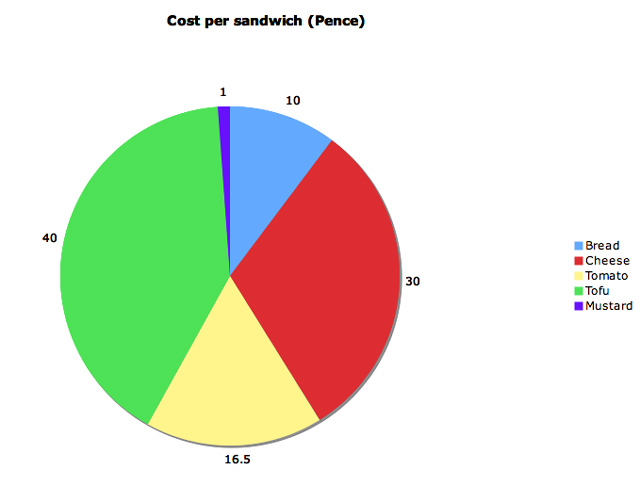
The following is a factor price breakdown for the combination that comprises more than 80% of my lunches (n=28):

Sandwich factor pricing

The cheese in question is either Cheshire or Wensleydale: certainly the two best foodstuffs that I have experienced for the first time while in England.

The surprising factor is clearly the cost of tofu. That said, I do use about 62.5g worth per sandwich. It still seems unfair that the least tasty part of the sandwich should cost the most. If I do end up going to London this weekend – as now seems highly likely – I can pick up some much lower cost tofu in the small Chinatown there.

Valdez damages halved

Ship and mosques in Istanbul

Today, an American court halved the punitive damages being imposed on Exxon for the 1989 Valdez oil spill from US$5 billion to $2.5 billion. Reading about it prompts a number of strands of thinking:

Firstly, it surprises me that punitive damages still have not been assigned. Chances to bemoan the slow pace of litigation in the United States (and all the problems that accompany it) are many. No doubt, a great deal of whatever settlements are reached will go to the hordes of lawyers, photocopiers, and expert witnesses who worked on the case, rather than to the people who suffered from the spill or to the rebuilding (such as is possible) of the affected ecosystems.

The second thought that comes to mind is along the lines of: “Didn’t Exxon earn record profits this year?” They earned US$10.4 billion (£5.6bn) in the second quarter of 2006. While this is a fairly natural response, it is not necessarily a very legitimate one. The damages being considered are meant to address the conduct of the company in 1989, something that is not obviously related to its present financial circumstances. At the same time, the purpose of punitive damages is to encourage a company to exercise greater caution in the future, when engaging in similar activities. Not having captains that swig vodka before heading to the bridge is a good start. Reading about that, one has feels an emotional inclination to wring them for all they are worth.

To what extent would charging Exxon $5 billion instead of $2.5 billion alter the likelihood of future spills? The purpose of such punishments is not revenge, but the inducement of desirable changes in behaviour. No punishment short of utterly bankrupting the company would actually stop them from shipping oil from Alaska to the contiguous 48 states. That said, a big punishments also catch the attention of other big oil firms who have the ability to take action to make such spills less likely, and less severe if they do take place.

A final issue to consider is that of moral hazard. If the penalty is cut in half, after seventeen years in court, it suggests to companies that they can reduce such costs just by spinning things through the legal system for as long as possible. The whole situation is like a test case from my Law and Economics course at UBC with Robert Gateman. Which outcome secures the best mix of equity and efficiency? Which establishes the best incentives for future behaviour?

Of course, I am not one of the judges in the case. I have not examined the relevant facts and laws and, as such, it is impossible to know whether this reduction is warranted or not. My personal sympathies do not lie with oil companies, but they have the same right to be treated with due process under the law as any other entity within society. Hopefully, regardless of the final amount of the penalty, mechanisms have been put into action that will prevent catastrophes like the Valdez spill in the future.

Moral justifications for foreign aid

The secular moral justifications for giving aid seems to be divided between two strains: one focusing on payments being made in compensation for past or present harmful activity on the part of the giver (somewhat akin to domestic tort law) and one focusing on redistribution for reasons unrelated to any harm done by the giver to the receiver.

Note that this listing is meant to cover moral justifications only: self-interested rational calculations, like the prospect of creating new markets, are not being considered. The listing is meant to include justifications both for development aid used to build economic and social capacity over time and humanitarian aid used to help address immediate crises. I am not considering religious forms of morality.

Retributive:

  1. Compensation for past colonialism (including past support for repugnant but allied regimes during the Cold War and similar periods)
  2. Partial or complete redress for ongoing harmful activities (economic policies harmful to poor countries, exploitative international labour practices, arms sales, providing markets for illegal drugs and other problematic commodities, CO2 emissions, etc)

Redistributive:

  1. Providing funds and resources required to attain a basic standard of living, predicated on a notion of essential human rights
  2. Paying to reduce total human suffering, especially among the innocent
  3. Transferring wealth from those who already have a large amount, and thus derive less utility from each additional dollar, to those who have a small amount and thus gain more utility at the margin
  4. Giving aid based on a Rawlsian conception of hypothetical contract based on a veil of ignorance
  5. Compensating for the fact that some are poor and some are rich for arbitrary reasons, such as where they were born (See prior discussion about the morality of inequality)
  6. Giving aid based on the idea that the capacity to give charity and the existence of a world where it is required makes doing so obligatory for the giver

I am writing a paper for my developing world seminar on: “What is the moral case for wealthy countries to give aid to poorer countries? What kind of aid (if any) is justified?” and trying to come up with a comprehensive list of general reasons. Can anyone add to the list above?

Ethical consumerism: worthwhile or harmful?

In the December 9th issue of The Economist, which I am just starting today, they come out against organic food, Fair Trade, and the idea that buying locally grown food is superior to relying on big retailers and large commercial farms (Leader and article). Organic food means producing lower yields for the same area of land: a big problem when you have a growing population and a desire to preserve wilderness. Fair Trade keeps farmers in poverty by encouraging farmers to keep growing commodities with volatile prices and low margins; moreover, most of the premium consumers pay goes to the retailer, rather than the farmer. As for local food, they say that large scale farming and food retailing produce food using less energy and resources (sheep are cheaper to farm in New Zealand and ship to the UK than to farm here). The solutions to problems like poverty and climate change, therefore, lie in carbon taxes, reform of agricultural trade policy, and the like.

Fair trade has always been a somewhat problematic concept, in my eyes. The whole basis for the legitimacy of exchange is in the process: the voluntary nature of the agreement means that both people who engage in it must perceive themselves to benefit. Now, there can be problems with this:

  1. The people may be wrong about what is in their interests
  2. Third parties may be affected
  3. The choice to trade may not be voluntary

All of these are real problems in many economic circumstances, but it is not clear why paying more for a label alleviates any of them. If we abandon the idea that the legitimacy of exchange is confirmed through its voluntarism, then we are left with the task of developing a comprehensive framework based on a teleological conception of justice (what people end up with, as opposed to how they get it). Even if that is desirable, achieving it is not simply a matter of paying a few more dollars a week for coffee or bananas.

As for the problems with local and organic food, the issues there are primarily empirical and thus hard for me to evaluate. If the price of carbon emissions was included in that of food (and all other products), I would see little problem in eating tomatoes from Guatemala or apples from New Zealand. Similar criticisms are leveled in Michael F. Maniates’ interesting article Individualization: Plant a Tree, Buy a Bike, Save the World?. Maniates’ major point is that you will never get anywhere with a few token individual gestures. What is necessary is the widespread alteration of the incentives presented to individuals. Otherwise, you have a few people who salve their consciences by walking to work and buying from a farmers’ market, while not actually doing anything to address the problems with which they are supposedly concerned.

While the position taken by both The Economist and Maniates may overstate the point, both are worth reading for those who have accepted uncritically the idea that important change can be brought about through such ethical purchasing.

PS. Unfortunately, Oxford doesn’t have full text access to the journal Global Environmental Politics. If someone at UBC or another school could email me the PDF, it will save me a trip to the library and some photocopying costs, not to mention the integrity of the spine of their August 2001 issue. Here is a link to the page on their site for this article and another to a Google Scholar search that has it as the top hit.

[Update: 1:10am] A friend has sent me a much appreciated copy of the above requested PDF.

Live-blogging Keohane

Anyone interested in reading about Robert Keohane’s presentation to the Global Economic Governance Seminar can do so on my wiki. There is still nearly an hour in the session, so if someone posts a clever question as a comment, I will try to ask it. I doubt anyone will do so in time, but it would be a neat demonstration of the emerging capabilities of internet technology in education.

Since this is a publicly held lecture, I don’t see any reason whatsoever for which the notes should not be available. Those who don’t know who Robert Keohane is may want to have a look at the Wikipedia entry on him.

[Update: 7:30pm] Robert Keohane’s second presentation, given at Nuffield on anti-Americanism, was well argued but not too far off the conventional wisdom. I am here taking “the conventional wisdom” to be that in a survey on Anti-Americanism that I am almost sure ran in The Economist during the last couple of years.

Basically: it does exist, more so in the Middle East than anywhere else. The Iraq war has exacerbated it almost everywhere, but the biggest turn for the worse has been in Europe. The policy impact of Anti-Americanism is not very clear. Finally, lots of what would be taken as a legitimate political stance if expressed by an American at home is taken as Anti-Americanism elsewhere.

Keohane distinguished four sorts of Anti-Americanism, three of which have been expressed on this blog. The first was the kind grounded in the belief that the United States is not living up to its own values: what he called Liberal Anti-Americanism. Guantanamo, and everything that word conjures up, gives you the idea. The second is social Anti-Americanism: for instance, objections to the death penalty of the absence of state funded health care. The third is Anti-Americanism based on fear of encroachment into the domestic jurisdiction of your state, what he called the state sovereignty variety. The last was radical Anti-Americanism, which I would suggest is distinguished more by the language used to express it, the degree to which the positions taken are extreme, and the kind of actions justified using it than by the kind of analysis that underscores the rational components thereof.

Paul Martin on economic governance

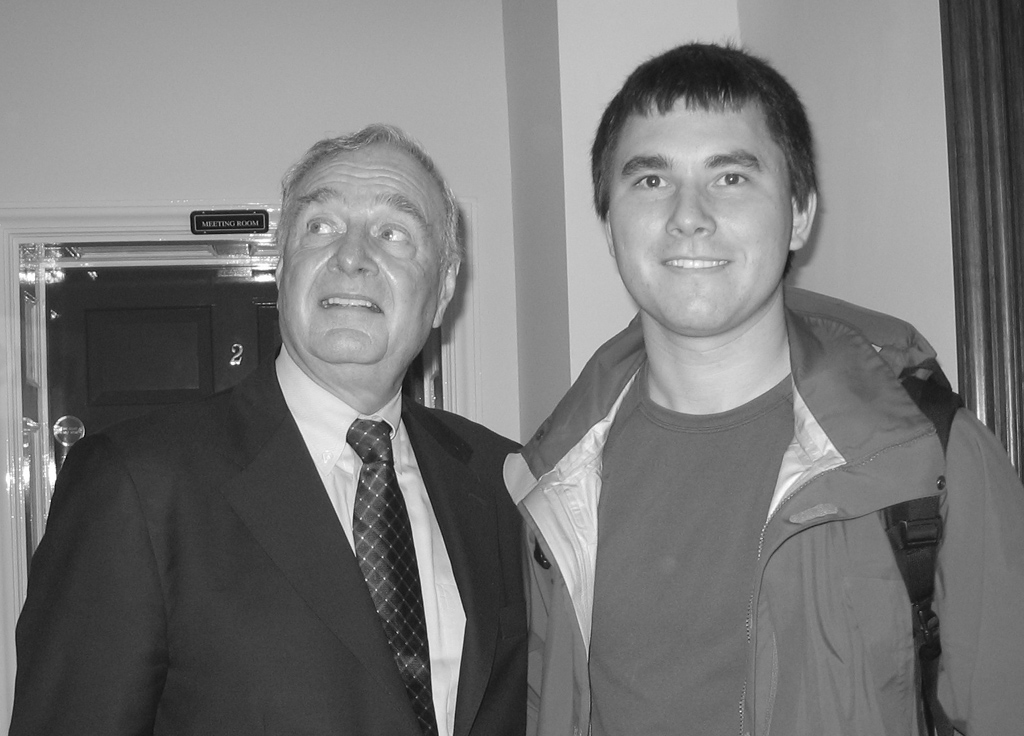
Paul Martin and Milan Ilnyckyj

Former Canadian Prime Minister Paul Martin’s talk was candid, informative and engaging. At a Global Economic Governance Program seminar, he covered a very diverse collection of issues: from China’s hunger for natural resources to the regulation of multinational corporations. I have never seen the room so packed, and the questions were excellent. He managed to get some good laughs, as well. In response to my question about climate change, he said, in part:

“Climate change has long since been recognized as caused by human activity principally.

The net effect is going to be devastating.

Prince Edward Island will disappear; Toronto won’t. That’s a disaster on both sides

That would make a great headline back home, wouldn’t it?”

Generally, he was very open, but there were certainly a few notable questions ducked. He declined to endorse a candidate for the Liberal leadership race when asked, for instance. People should feel free to have a look at my transcript, in which I have tried to quote directly wherever I could type fast enough.

PS. As today’s photo demonstrates, there is a downside to having a camera that takes 2-3 seconds to charge and fire its flash.