Alberta’s Energy Policy Simulator

The Pembina Institute has released a new interactive tool that lets anybody test out alternative approaches to setting energy policy for Alberta, in sectors including transport, buildings, electricity generation, and agriculture.

It doesn’t allow a huge amount of ambition. For instance, the only bitumen sands policy option is the 100 megatonne cap which the Alberta government has proposed, which you can tweak to be implemented more clearly. Still, it does a nice job of illustrating the relative impact of different approaches, from a faster phase-out of coal in electricity generation to various policies targeting vehicles, methane emissions, cement production, and sector-specific carbon taxes up to $350 per tonne.

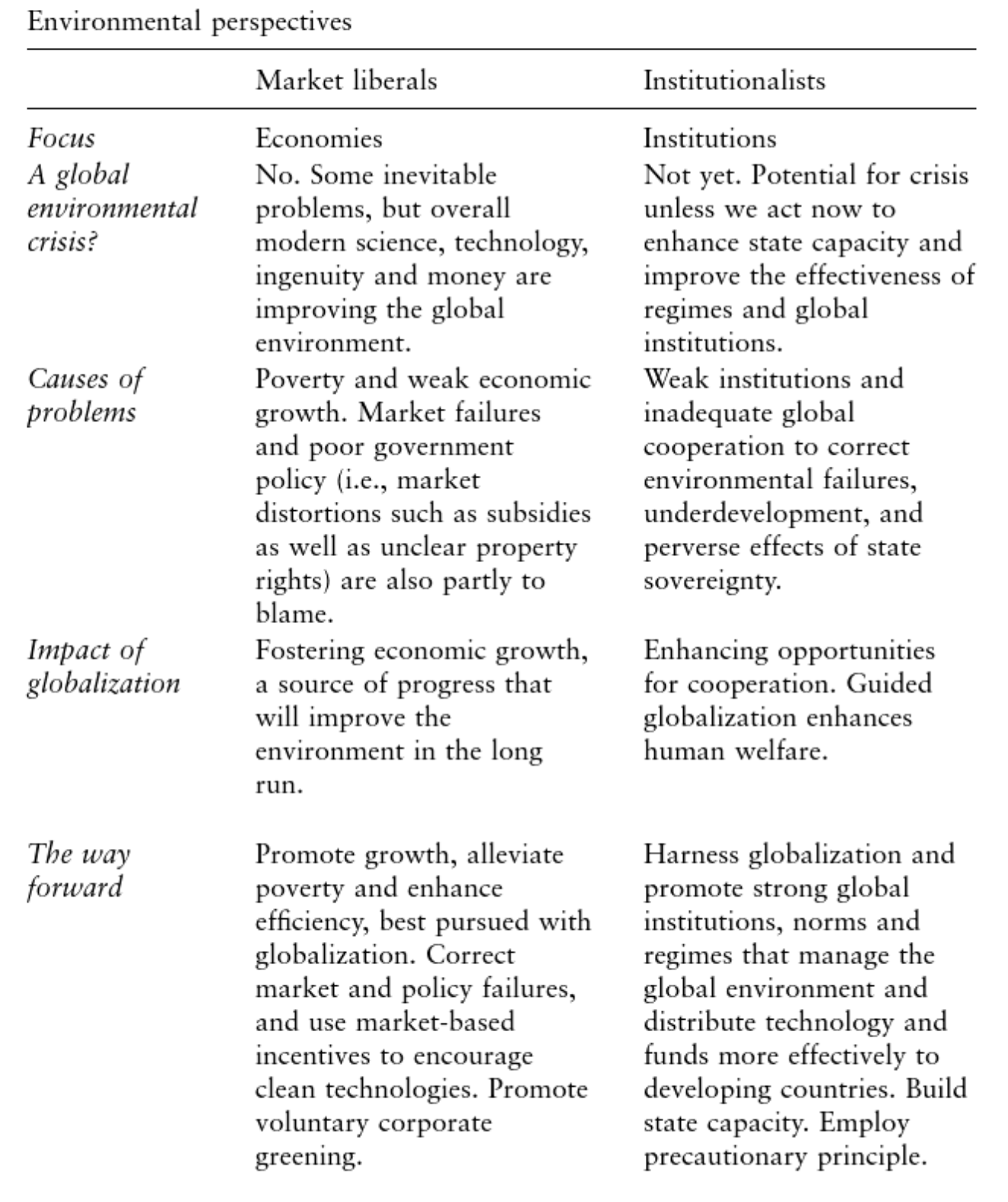
Even with the most aggressive coal phase-out options, the bitumen sands cap, and $350 carbon taxes in all sectors, projected emissions only fall from a current level around 275 megatonnes of CO2-equivalent to around 100 megatonnes in 2045:

Even if every jurisdiction in the world achieved cuts at that rate, it wouldn’t be fast enough to produce a sub-2 ˚C warming scenario as called for in the Paris Agreement, and any politically plausible global pathway would see countries with very high per capita and historical emissions like Canada cut deeper and faster than the average.

I have previously posted about climate change games/simulations from the BBC and Chevron.

Middlebury fossil fuel divesment

At the end of January, Middlebury College (home institution of 350.org founder Bill McKibben) committed to fossil fuel divestment as part of a four-part response to climate change.

As far as I know, this is the first university which had formally said no to a divestment campaign and has since been brought around to saying yes.

Today Laurie Patton, the President of the college, published an editorial in Inside Higher Ed: Every Campus Should Address Climate Risk.

Open thread: oil by rail

The CBC is reporting today that the oil production cuts enacted by the NDP provincial government to try to raise fossil fuel prices have made oil transport by rail less viable.

The possibility of exporting the bitumen sands by rail when pipeline capacity is exceeded has highlighted how fossil fuel advocates take climate change inaction as a given. They posit only two scenarios, a certain amount of oil being shipped by rail or shipped by pipeline, and then say that since the pipeline option is cheaper and safer they should clearly be built. That misses how the most important reason for stopping pipelines is to keep the oil in the ground. Using the bogeyman of a more dangerous transport option to promote a less dangerous one ignores the obligation to decarbonize.

Fossil fuel production needs to be squeezed in every possible way: by imposing carbon taxes, by requiring them to pay remediation costs for damaged areas and abandoned equipment, by stopping new export infrastructure, by withdrawing investment from the industry, and so on.

At root, climate change is a problem where fossil fuel users impose harm on climate change victims because of the convenience, power, and profit that fossil fuels provide them. Forcing communities to accept bitumen exporting trains to pass through has a similar dynamic.

The marriage of climate and economic justice

Something occurred to me as I was walking through the snow this morning. There’s an episode of Yes Minister (The Bed of Nails) in which the hapless minister Jim Hacker is charged with implementing an integrated national transport policy. His savvy and manipulative chief civil servant explains:

It is the ultimate vote loser… If you pull it off, no one will feel the benefits for ten years. Long before that, you and I will have moved on… In the meantime, formulating policy means making choices. Once you do that, you please the people that you favour, but infuriate everybody else. One vote gained, ten lost. If you give the job to the road services, the rail board and unions will scream. Give it to the railways, the road lobby will massacre you. Cut British Airways investment plans, they’ll hold a devastating press conference that same day.

Ultimately, the minister and his permanent secretary conspire to be freed from the job, first by proposing a service-slashing approach to transport reorganization, in which they deliberately alert the prime minister about unpopular changes it would imply for his constituency, and then using Sir Humphrey’s second strategy:

We now present our other kind of non-proposal… The high cost, high staff kind. We now propose a British National Transport Authority with a full structure, regional board, area council, local office, liaison committee, the lot. 80,000 staff, billion-a-year budget. The Treasury will have a fit! The whole thing will go back to the Department of Transport.

What occurred to me in the snow is that while Hacker and Humphrey may have been using these approaches as a dodge, one could say metaphorically that those calling for strong climate change policies have in some ways pressed the same two strategies.

First there was the dream of an economically efficient solution via a carbon tax. All the most sophisticated and credible economic analyses projected that the best way to solve climate change was to put a rising cost of carbon across the entire economy and then let individuals and firms make their own economic choices to adjust. This policy was favourably contrasted with trying to reduce fossil fuel use and the resultant greenhouse gas (GHG) emissions through regulation. It was also tailored to appeal to people on the political right: rather than imposing particular technological choices it relies on the free market to adapt naturally to the increasing cost of a previously-neglected factor of production, just as they do every day as commodity prices like oil and copper spot prices do.

What seems to have sunk this strategy is the willingness of those on the political right to play Russian roulette on climate change, assuming the damage we do won’t be that bad or that some future technology will solve the problem painlessly. Coupled with that is the unreasoning hostility to taxes that has been embraced by some right wing populist figures, movements, and political parties. Proposing an environmental policy that can be given the derogatory label “a tax on everything” is challenging in a climate where such figures are influential, and can make it easy for an incoming right wing government to scrap on the basis of “giving money back to [insert name of jurisdiction] families”.

The carbon tax idea was always an awkward fit for the “social greens” to use Clapp and Dauvergne’s terminology. In Paths to a Green World they differentiate between four broad streams within environmentalism: market liberals, institutionalists, bioenvironmentalists, and social greens:
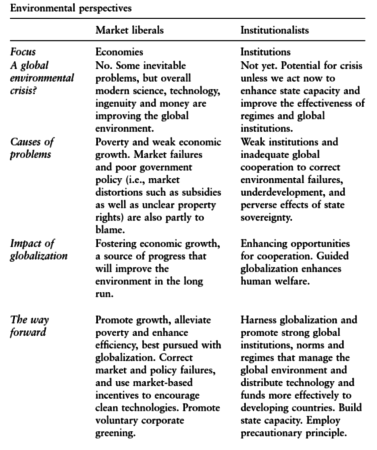
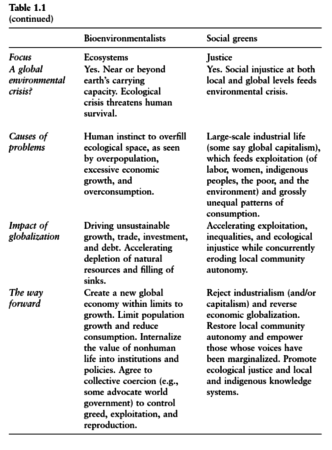
If your analysis is that our system is beset by an ever-destructive capitalism which must be deconstructed, the virtues of a carbon mitigation measure designed to function through efficient capitalist markets was never likely to appeal. Perhaps it speaks to the climate justice dimension when carbon tax revenues are put to purposes that aid the disadvantaged, as with refunds to those with low emissions under a cap and dividend scheme or proposals to use carbon tax revenues to fund a basic income system.

That’s the second set of policies that occurred to me in the snow, corresponding to Humphrey’s “high cost, high staff” straw man. That’s the mainstream media criticism consensus on proposals like the Green New Deal: that they can’t see the rational connection between proposed elements like a job guarantee and climate change, and that the set of new government benefits being proposed seems unreasonably costly.

We surely can’t know what strategies will succeed on climate change. There has never been a problem sufficiently similar to serve as a credible model, so we can never say with complete confidence that one or another past movement suggests the best activist strategies in the world today. We’re going to need to keep trying multiple strategies, especially if we’re committed to democracy. Under a democratic system the populace must ultimately begrudge and tolerate any burdensome actions their society is undertaking for the sake of a stable climate. It has to be akin to the general tolerance of taxation, and be an expected and embedded norm to be part of a society progressively moving away from carbon fuels.

It’s great that social greens are so passionate and able to turn a belief that they’re fighting for justice into enthusiasm and motivation. It probably helps to have a comprehensive vision for societal reform, as opposed to the rather abstract and unemotive “what strategies for decarbonization can work, if we put it ahead of all other priorities?”.

Prospects for a Green New Deal

A frequent criticism of climate change policies like the Leap Manifesto and the Green New Deal which seek to accomplish a number of labour and social justice objectives alongside controlling climate change is that the policies don’t have a logical relationship with one another, framing the effort this way reduces the emphasis on climate change specifically, and taking this approach will create barriers to political success. The Economist‘s online Democracy in America column recently argued:

Such objections are thought unsportsmanlike by the proposal’s backers. The Green New Deal has people excited in ways think-tank white papers on cap-and-trade schemes never did. Boosters argue that it moves the “Overton window” of political dialogue: towards taking serious action on climate change. The little details, like how to pay for universal health care and a federal jobs guarantee can be dealt with later. Perhaps the Green New Deal will galvanise the youth vote, or help elect environmentally minded Democrats. Perhaps it is good politics to yoke environmentalism to other economic policies that could be popular.

Yet it seems rather more likely that the politics of the Green New Deal will backfire for Democrats. Republican strategists have stymied progress on climate change by caricaturing Democratic ideas as pie-in-the-sky efforts that would result in massive tax increases. Their parody now seems reality. The next Democratic nominee may well be someone who has endorsed the idea of the Green New Deal.

There is little wonder that Nancy Pelosi, who cares about climate change but also retains shrewd political instincts, has been so public in her doubting of the proposal. “The ‘green dream’ or whatever they call it, nobody knows what it is but they’re for it, right?” she told Politico. The bold plan could make the party unelectable in conservative-leaning states, ensuring that Republicans retain control over one chamber of Congress or even the White House and then stymie all climate legislation—whether sensible or not—for years to come.

There’s certainly a counter-argument. People may care somewhat about climate change, but it’s never their top priority in comparison to personal welfare issues like health, education, or taxes. Also, people have many financial concerns about climate change action. Conceivably, a broad-based policy could tie climate change protection to other tasks of more immediate political interest to people, and mitigate concerns that decarbonization will be economically damaging.

There’s cause to the skeptical about that enthusiasm, however. If a package consists of a bunch of objectives with relatively appealing short-term benefits, along with decarbonization policies which are largely about enduring near-term costs to avoid long-term catastrophe, it’s quite possible that the climate parts will be dropped, diluted, or counteracted. One virtue of an approach that focuses narrowly on decarbonization and climate protection is that it could be made compatible with a range of ideologies and party platforms. That is to say, there may be a lower chance that it will just be scrapped by the next non-progressive government to be elected.

Redwater Energy Supreme Court decision

A bit of good news: Supreme Court rules energy companies cannot walk away from old wells.

The fossil fuel industry has huge future cleanup costs, including the UK’s North Sea platforms, and of course Canada’s bitumen sands. The CBC story notes:

Alberta has been dealing with a tsunami of orphaned oil and gas wells in the past five years. In 2014, the Orphan Well Association listed fewer than 200 wells to be reclaimed. The most recent numbers show there are 3,127 wells that need to be plugged or abandoned, and a further 1,553 sites that have been abandoned but still need to be reclaimed.

The industry functions by socializing costs and privatizing profits: for instance, imposing climate change on everybody while directing revenue to shareholders, staff, and executives. The post-productive phase for oil, gas, and coal projects can be a major opportunity to divert costs that should legitimately be borne by the corporation onto the public.

Saudi Arabia as an argument for Canadian oil

An increasingly frequent media line from supporters of the bitumen sands and the fossil fuels industry generally is that if oil isn’t produced in Canada it will be produced in Saudi Arabia instead, and that is undesirable because the conduct of people in Saudi Arabia is unethical while Canadians behave ethically. As more morally worthy recipients of fossil fuel revenues, Canadian industry can thus feel unblemished by any adverse consequences the bitumen sands produce.

Obviously it’s a weak argument. At the most basic level, misconduct by some unrelated party has no bearing on whether or not Canada’s ethical choices are acceptable. One can object factually by questioning how much Saudi oil really comes to Canada. One can make the economic argument that if we’re not burning all the oil, we should burn the cheapest stuff and avoid developing the expensive stuff. You can argue that a global transition away from oil, intended to avoid catastrophic climate change, will eventually undermine Saudi oil revenues too. In the alternative, you can argue that this is simply a deflection, not a sincere effort to critique the conduct of the Saudi government or to propose any meaningful solutions to that problem. It’s using the mistaken supposition that we can solve one problem (while actually doing nothing) to strengthen political resistance to implementing real climate change solutions.

Has anyone seen a good online rebuttal to this general argument? It would be good to have some convincing pages to link, as well as rebuttal’s pithy enough to include in a tweet or blog comment.

News on North American planetary stewardship not encouraging

Some less-than-encouraging news today:

The first story about the poll has some room for interpretation. Seeing pipelines as a “crisis” doesn’t necessarily mean supporting them, though the article goes on to say: “Looking at Canadians’ impressions of the Trans Mountain and Energy East pipelines, 53 per cent of respondents voiced support for both, while 19 per cent opposed both, 17 per cent couldn’t decide”. It also notes: “Comparing age groups on pipeline issues, the survey found the majority of Canadians ages 18 to 34 were not supportive of pipelines, while little more than half of those ages 35 to 54 were supportive, and those over the age of 55 expressed the most support for pipelines and labelled the lack of pipeline capacity a crisis.”

In part this reflects a crisis of education and self-interest. Older Canadians who are likely the least informed about climate change and the economics of a global transition to decarbonization are the most supportive of climate-wrecking old industries. They are also the ones with the least to lose personally from climate change.

As for Trump’s pro-coal plan, it’s not surprising from someone who is gleefully controlled by industry and utterly uncomprehending of everything complex. Still, it demonstrates the huge danger of backsliding with climate change policy. For every leader who tries to do something helpful (almost always while keeping climate change at a lower level of priority than economic growth and other objectives) there can be a successor who takes us back to a place worse than when we started. The challenge of climate change isn’t just putting the right policies in place, but keeping them there long enough to matter.

US carbon pollution rising

Several recent analyses have found that America’s contribution to climate change worsened in 2018:

There are a number of factors behind the rise in US emissions in 2018, some natural, mostly economic.

Prolonged cold spells in a number of regions drove up demand for energy in the winter, while a hot summer in many parts led to more air conditioning, again pushing up electricity use.

However economic activity is the key reason for the overall rise in CO2 emissions. Industries are moving more goods by trucks powered by diesel, while consumers are travelling more by air.

In the US this led to a 3% increase in diesel and jet fuel use last year, a similar rate of growth to that seen in the EU in the same period.

Economic growth consistently ranks as a higher priority for governments than environmental protection, even though failure to constrain carbon emissions threatens to destroy the entire economy in the decades ahead. Furthermore, failure to act anywhere legitimates inaction elsewhere. I’m sure the media and people commenting online about Canadian climate policy will use these headlines about the US to argue that action in Canada is pointless.

RCMP enforcing gas pipeline construction

In British Columbia, the Unist’ot’en Camp has been operating for years to try to keep fossil fuel pipelines out of the traditional territory of the Wet’suwet’en Nation.

Anticipating RCMP enforcement of a court order to allow access for the construction of the Coastal GasLink natural gas pipeline to Kitimat, the Gidimt’en checkpoint was more recently established to protect unceded lands from pipeline construction.

That checkpoint has now been demolished with 14 arrests.

The Unist’ot’en Camp may be the next target for police action.

Rallies in support of the Wet’suwet’en have taken place in a number of Canadian cities, including Toronto, with more being planned.

All this highlights at least three major contradictions. The British Columbia government is trying to be a climate leader, while also trying to develop a liquified natural gas (LNG) industry which may cause more climate damage than coal once leakage from fracking and the rest of the gas network is taken into account. Canada is also simultaneously trying to develop fossil fuel export infrastructure while trying to play a productive role in global decarbonization. Thirdly, the Trudeau government is trying to undertake reconciliation with Canada’s Indigenous peoples, while simultaneously being willing to use the power of the state to force fossil fuel project construction in spite of Indigenous opposition.