Email and two-monitor setups

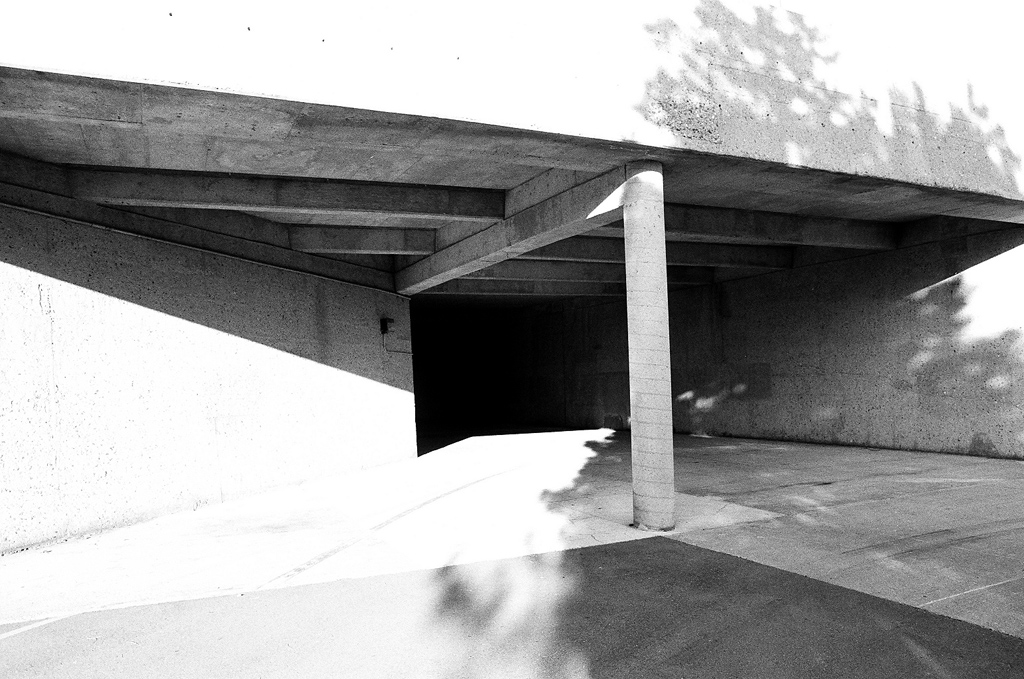
Concrete underpass, Ottawa

One thing I have discovered at work is how pleasant it is to have a monitor devoted exclusively to email. For me, email has become the central clearinghouse for virtually all information and action items. To remind myself of something, I send an email from my phone. I also track emails by applying ‘@Pending’ and ‘@Waiting For’ labels to them. Email can also be searched instantly, unlike having to search separately through blog posts, comments, wiki entries, document files, etc.

Having a second monitor exclusively for email is qualitatively different from having a window open, or even having a second desktop devoted to email use. This is because it is glanceable – you can check almost instantly and with minimal distraction whether anything new has come up. It is also easy to shift information from one screen to another: making reference to a document or website in a message, or adding information from an email to a website, calendar, etc. With a dedicated monitor, email never gets buried or left unnoticed for too long.

Much as I appreciate the 24″ screen on my iMac, I suspect I will eventually go for a two-monitor setup at home. Arguably, such a setup is a mark of excess. That being said, when your entire life is coordinated through computers, it is perhaps an acceptable area in which to devote resources (including a share of your direct and embedded greenhouse gas emissions).

Open thread: climate change and growth

Corktown Footbridge, Ottawa

One of the biggest disagreements that exists among those who believe that action is required to mitigate anthropogenic climate change is between those who see it as a problem that can be managed within existing economic systems and those who argue that it requires profoundly different ones.

The first view can be encapsulated as ‘climate change as an engineering problem.’ We just need to give people the right incentives, and enact policies to change over the energy basis of society to one that is carbon-neutral. Readily available tools for doing this include Pigouvian taxes: those meant to incorporate the societal harms associated with various actions into the prices paid by those who do them. Examples include carbon taxes, road taxes, etc.

The second view is more like ‘climate change as a symptom of the problem of capitalism.’ Indian environmentalist Sunita Narain expresses it well:

All technofixes [for climate change] – biofuels, GM crops or nuclear power – will create the next generation of crisis, because they ignore the fundamental problems of capitalism as a system that ignores injustice and promotes inequality.

In this view, changes made within existing economic systems will never be able to go far enough to produce a sustainable society.

Deciding how to act, there are risks on both sides. The engineering approach will face less resistance, meaning it can be rolled out faster, with a higher probability of getting the key elements in place soon. It may not, however, have the power required to solve the problem. The radical approach may ultimately have more capacity to effect societal change, but it would almost certainly take longer, and there is a significant risk that the new society forged wouldn’t even achieve the objective of climate stability. Capitalism’s major ideological competitor – communism – certainly wasn’t environmentally benign, or effective at managing environmental issues.

Can we cut human emissions to zero, thus stabilizing climate, while retaining the basic elements of the present economic system? If so, what mechanisms are the most important to put in place. If not, what sort of system do we need? One that is more democratic, or more authoritarian? One that alters the relations between humans and the planet how?

“Coal is the enemy of the human race”

Primary colours on wooden crates

The above wording is blogger David Roberts‘ attempt to summarize the relationship between humanity and coal in the 21st century. While many countries rely on it to produce electrical power and fuel other sorts of industry, there are huge negative externalities associated with it as a power source. These include:

  • Environmental destruction and contamination from coal mining.
  • Human health impacts from coal mining
  • Air pollutant emissions from coal burning, including particulate matter and mercury
  • Greenhouse gas emissions from coal burning
  • Toxic coal ash

A report from the US National Research Council found that American coal plants produce $62 billion per year in negative externalities, before climate impacts are taken into account.

Climate change is the biggest danger associated with coal. Firstly, coal produces a lot of CO2 per unit of useful energy. Secondly, coal reserves are so enormous that burning a significant fraction of what is left would essentially guarantee more than 2°C of mean warming globally, the level scientists and policy-makers have generally accepted as ‘dangerous.’

If it can prove safe, cheap, and effective, there may be a future for carbon capture and storage (CCS). Until that is demonstrated, we cannot assume that there is a future for coal as an energy source. Even before you take the climate impacts into consideration, the total costs are unfavourable compared to greener and renewable alternatives. Once climate change is factored in, the case against non-CCS coal becomes conclusive.

[16 February 2010] Now that I have a fuller understanding of the importance of not burning coal and unconventional fossil fuels, because of their cumulative climatic impact, I have launched a group blog on the topic: BuryCoal.com. Please consider having a look or contributing.

Long-lived nuclear waste warnings

In addition to the engineering problems involved in storing radioactive wastes from power plants and weapons programs, there is the additional difficulty of marking the storage sites as dangerous, in a manner that will be comprehensible throughout the period in which the wastes will be a hazard. In 1991, a report considered this question: “Expert Judgment on Markers To Deter Inadvertent Human Intrusion Into the Waste Isolation Pilot Plant.”

As reported in Slate:

“The report’s proposed solution is a layered message—one that conveys not only that the site is dangerous but that there’s a legitimate (nonsuperstitious) reason to think so. It should also emphasize that there’s no buried treasure, just toxic trash. Here’s how the authors phrase the essential talking points: “[T]his place is not a place of honor … no highly esteemed deed is commemorated here.” Finally, the marker system should communicate that the danger—an emanation of energy—is unleashed only if you disturb the place physically, so it’s best left uninhabited.”

They estimate that a system of redundant warning markers for an American nuclear waste dump would cost about $68 million.

The whole issue is a potent demonstration of the challenges contemporary technologies create, when it comes to our moral relationship with future generations. Just as they will be the ones who live with the climate change we produce, they will also have legacies like topsoil erosion and the accumulation of toxic and radioactive wastes to contend with.

Music economics

Fire escape ladder

According to data featured on Boing Boing, record labels are dying at the same time as musicians are doing better than ever on account of live performances. To a large extent, this must represent the impact of technology on the industry, particularly the internet and file sharing.

Morally and aesthetically, it is difficult to know how to feel about this. In recent decades, recorded studio music has been the major product of the music industry. More and more, that is now being acquired either free or with low margins for producers. Live music has the virtue of being irreplaceable, but the shift in that direction raises questions about where the moral and aesthetic value of music lies.

Personally, I think music studios have alienated the general public to the point that they deserve whatever financial misfortune they encounter. When it comes to musicians, the situation seems more complex. Is it right to keep rewarding someone (and often their heirs) for a song recorded at some point in time, or is it preferable to reward individual performances? Pragmatically, the options available are constrained. That said, there is a case to be made that music that produces a steady stream of enjoyment should produce a stream of revenue for the people who made it.

What do others think?

Wetlands and greenhouse gas emissions

Red maple leaf on grass

A recent report from Wetlands International provides a global overview of greenhouse gas (GHG) emissions from wetlands. Neither their present state nor their total greenhouse gas holdings are comforting. Indonesia is the world’s most substantial emitter of GHGs from peat, with annual emissions of 500 million tonnes of carbon dioxide (CO2). That is about 2/3 of Canada’s total emissions. When it comes to stock, Canada leads the world with a troubling 155 billion tonnes of CO2 embedded in peat, enough to add 569 billion tonnes of CO2 to the atmosphere. In total, the 0.3% of the world’s land surface covered by drained peat already generates about 6% of global emissions.

This reinforces two points about climate change mitigation:

  1. Firstly, we need to pay attention to land use changes as well as fossil fuel use, when it comes to cutting down the amount of GHGs humanity is adding to the atmosphere, eventually stabilizing at zero net emissions.
  2. Secondly, if we create enough warming, there are huge stocks of carbon that could be released, pushing that process even further. Pushing the climate system to the point where positive feedbacks become dominant would commit us inescapably to significant additional warming, over and above that created through direct human actions.

While policies like a carbon tax to discourage emissions are a critical part of the solution, humanity needs to accept that our overall physical and biological impact on the planet is so large that we need to give serious consideration to how our collective policies and individuals choices are affecting the future of the climate. Recognizing the carbon intensity of drying marshland is a small but important part of that.

Re-pondering a low-carbon cross country voyage

I am delighted to say that I will be able to take the time from Saturday December 19th through Sunday January 10th off work. Naturally, the thing to do is go to Vancouver, as I was unable to do over the summer.

Options:

Train

  • Comfortable, can walk around
  • Reasonable chance of getting some reading and other sorts of work done
  • Probably access to an electrical outlet
  • Probably half to 1/3 the greenhouse gas emissions of flying
  • Takes four days
  • Leaves three times a week: Saturday, Tuesday, and Thursday from Toronto and Friday, Sunday, and Tuesday from Vancouver
  • Expensive: $1,100 for a non-refundable ticket
  • Note, if the Sierra Youth Coalition still has a 40% discount, that is a more reasonable $660.

Bus

  • Pretty uncomfortable
  • Not much chance of getting anything done – little space for books and/or laptop
  • Probably no access to an electrical outlet
  • Even fewer greenhouse gas emissions
  • Takes three days
  • Seems to leave every day
  • Cheap: $224 for a ticket that can be changed for a small fee

The train would certainly be much more comfortable and romantic, but is it worth paying nearly five times as much (and two extra days) for?

As a follow-up question, why are our trains so slow and expensive?

Gorbachev on climate change and the Berlin Wall

Mikhail Gorbachev has written an article for The Times arguing that there are similarities between the battle against climate change today and the fall of the Berlin Wall twenty years ago:

Addressing climate change demands a paradigm shift on a scale akin to that required to end the Cold War. But we need a “circuit-breaker” to escape from the business-as-usual that currently dominates the political agenda. It was the transformation brought about by perestroika and glasnost that provided the quantum leap for freedom for the Soviet Union and Eastern Europe, and opened the way for the democratic revolution that saved history. Climate change is complex and closely entwined with a host of other challenges, but a similar breakthrough in our values and priorities is needed.

There is not just one wall to topple, but many. There is the wall between those states which are already industrialised, and those developing countries which do not want to be held back. There is the wall between those who cause climate change, and those who suffer the consequences. There is the wall between those who heed the scientific evidence, and those who pander to vested interests. And there is the wall between the citizens who are changing their own behaviour and want strong global action, and the leaders who are so far letting them down.

He also calls on the leaders of the US, UK, India and China to attend the Copenhagen summit personally.

Of course, there are major differences between the two cases. The Berlin Wall was effectively a mechanism to hold people back from acting as they wished to, halting the movement of people from East to West Germany, and beyond. Dealing with climate change isn’t about allowing the energy people already have to be put into application, but rather about encouraging and compelling them to behave in better ways, largely for the welfare of others. That being said, it is good to see the historic importance of success or failure on this issue recognized. Hopefully, Copenhagen will go better than people are predicting.

Why conservatives should love carbon taxes

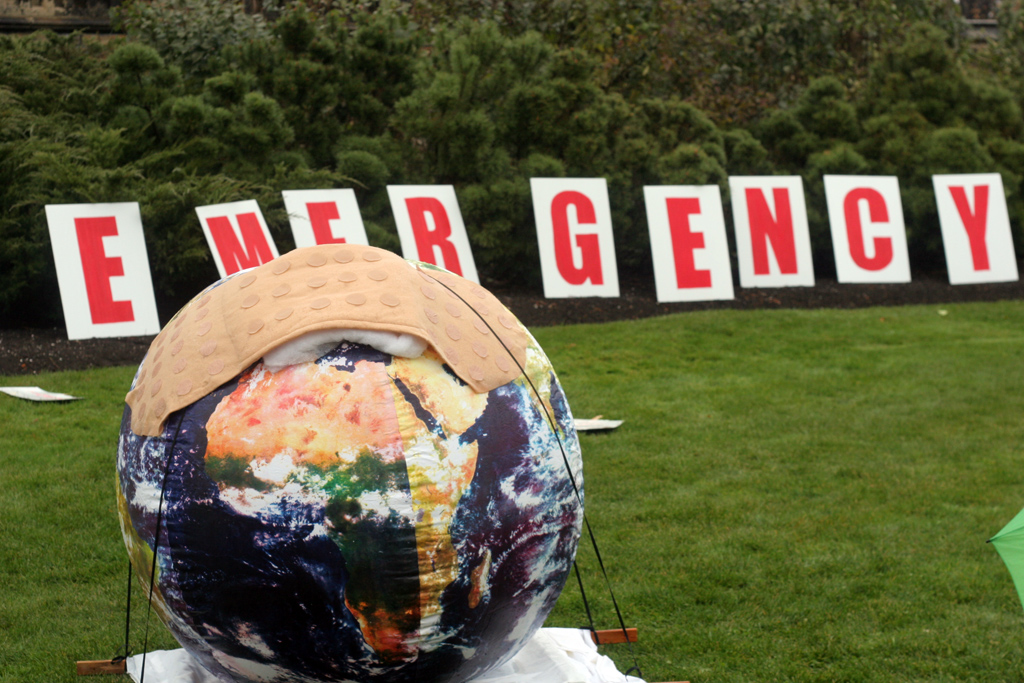
Climate emergency

The National Post – Canada’s right-leaning daily newspaper – has publicly stated that it believes climate change is real, and also that the current government has the right approach to dealing with it. In particular, it praises Environment Minister Jim Prentice for avoiding the “creation of state-managed “green economies” — socialism with a Gaian face.”

Whether such a creation is possible (and whether it would be desirable or not) are questions that can be set aside for a moment. The irony that seems to be paramount when it comes to the relationship between conservatives and climate change is how they stress a desire to interfere in markets and individual choices as little as possible, while rejecting the mechanism that would do that best: a carbon tax. A carbon tax doesn’t force anyone to drive a small car or, terrifying thought, forgo automobiles all together. It doesn’t force people to choose small pets, give up flying, or make other specific sacrifices. It also doesn’t rely upon the government deciding which energy technologies should succeed, whether that means renewables, nuclear, carbon capture and storage, or something else. It encourages low-carbon technological development in the most hands-off and market-friendly way possible.

All a carbon tax does is take the price imposed on strangers by greenhouse gas emissions and makes it ‘internal’ to the decision-making of individuals and other economic actors throughout society. It comes the closest to retaining the libertarian ideal in a world where interconnectedness forces us to take into consideration the consequences our actions will have on others. I have talked before about the irony of how laissez faire climate policies will inevitably fail and force governments to take employ more coercive measures. That outcome can only be avoided by sending a clear price signal on greenhouse gas emissions, and doing so early and at a meaningful level. Indeed, a carbon tax can be said to be a way of protecting property rights, given that it reduces the degree to which emitters will harm the property and prosperity of other people around the world.

It should be noted that the important policy change here is to put a price on carbon emissions, to represent the harm they cause to other people. The establishment of such a price is more important than the precise mechanism through which it is done, whether that is a carbon tax or a cap-and-trade system in which 100% of the permits are sold at auction. The choice of instrument is less important than moving quickly to put a price on carbon in one way or another.

It is an open question whether conservatives will realize the extent to which they are undermining their own aims and ideals through opposition to carbon pricing. Part of that is the paleoconservative stance that climate change isn’t happening, that it is benign, that it is inevitable, etc. Among conservatives with enough basic awareness about the world to know that those arguments have been discredited, we should hope that support begins to grow for the idea of dealing with the climate problem in the way that involves the least expansion of the state and the least infringement on liberty: a carbon tax.

While there may well be cause for accompanying such a tax with other regulations – such as a ban on coal power – at least gaining conservative support for some kind of carbon action would change the tone of the debate. We would finally stop pretending that we can ignore climate change indefinitely while the economy keeps ticking on just fine, and begin to appreciate and implement the steps required to build a low-carbon future.

From the Cambridge ivory tower to Whitehall

Apparently David MacKay, whose excellent book I reviewed before, has been appointed Chief Scientific Advisor of the Department of Energy and Climate Change in the United Kingdom and given a staff of 50. Apparently, he is advocating that the UK quadruple its nuclear energy capacity, as a stopgap between fossil fuels and the eventual dominance of renewables. Personally, I think it is encouraging that someone who committed so much personal energy to thinking about ways to get off fossil fuels has been given a mandate to help do so, in an official capacity.

My friend Mark let me know about this development.