Problems with revocable media

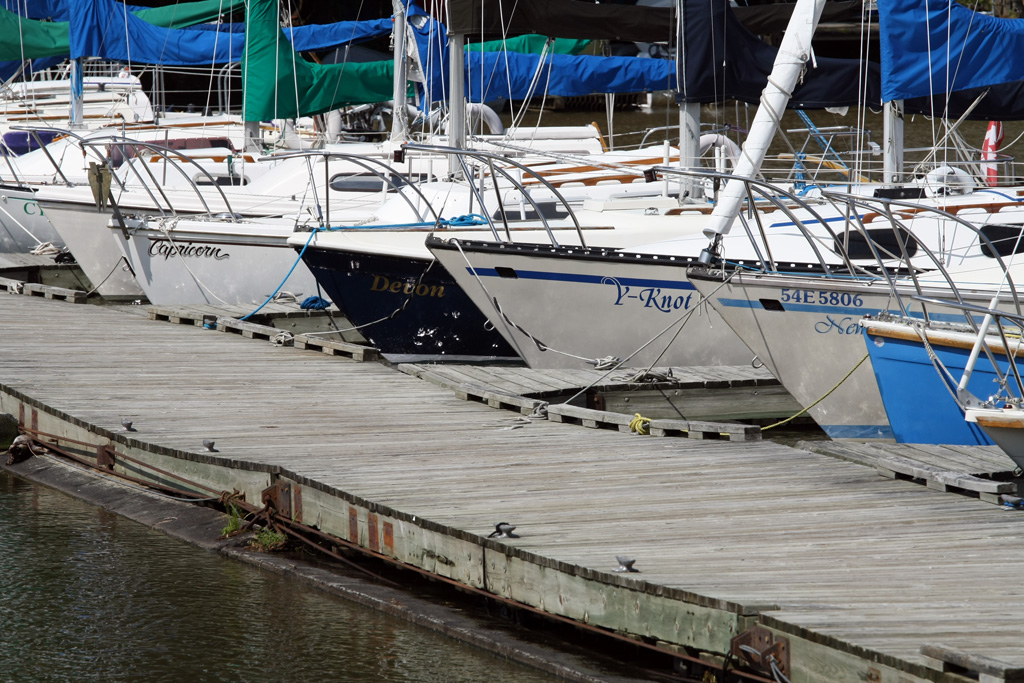
Dock and boats

One of the biggest problems with the way information is now distributed is the increasing limitations on how you can use it. With physical media like books and CDs, you had quite a few rights and a lot of security. You could lend the media to friends, use it in any number of ways, and be confident that it would still work decades later. There is much less confidence to be found with new media like music and movies with DRM, games that require a connection to the server to work, mobile phone applications, Kindle books, etc. Companies have shown a disappointing willingness to cripple functionality, or even eliminate it outright, for instance with Amazon deleting books off Kindles. Steven Metalitz, a lawyer representing the RIAA, has stated explicitly that people buying digital media should not expect it to work indefinitely: “We reject the view that copyright owners and their licensees are required to provide consumers with perpetual access to creative works.” Of course, the same people argue that they should be able to maintain their copyrights forever.

The solution to this, I think, is to make it legal for people to break whatever forms of copy protection companies put on their products, as long as the purpose for which they are being broken is fair use. It also wouldn’t hurt to clarify the ownership of such materials in favour of users. A Kindle book should be like a physical book – property of the person that bought it, and not subject to arbitrary modification or revocation by the seller.

Of course, politicians are under more effective pressure from media companies than from ordinary consumers. Perhaps a strong Canadian Pirate Party, asserting the rights of content users over content owners, would be a good thing. Of course, stronger support from mainstream parties that actually hold power would be of much more practical use.

Wind farm and Kenya’s electrical supply

This article on a 300 megawatt (MW) windfarm in Kenya caught my eye, less because of the size of the wind farm and more because of the statement that it would “supply a quarter of Kenya’s current installed power.” Kenya has a population of about 38 million, so it is startling to see it suggested that their entire electrical supply could be as small as 1,200 MW. That’s about 1/3 of the energy produced by Ontario’s Darlington Nuclear Generating Station alone.

What this demonstrates is how absurdly wide a gap there is between energy availability in different states. With a per-capita GDP of $857 at market exchange rates ($1,713 at purchasing power parity), Kenya is a reminder of how energy, climate, and development policies interrelate in a very unequal world.

CCS plan subverted by local opposition

Two people at Raw Sugar, Ottawa

As mentioned before, the Swedish company Vattenfal has a carbon capture and storage (CCS) demonstration plant in Germany. The idea was to separate pure oxygen from air, burn coal in it, then ship the resulting carbon dioxide (CO2) to an injection facility 150 miles away by truck. The liquified CO2 was then to be injected 3,000 metres underground in a depleted gas field.

Now, due to local opposition, the CO2 is simply being vented into the atmosphere. The company has been unable to secure a permit to bury the carbon, so plans to begin doing to by March or April of this year have been scrapped.

It is hard not to be of two minds about this. On one hand, it is a justified blow against those who assume CCS will be a cheap and simple way to deal with climate change. There are big economic, safety, and effectiveness questions that need to be answered. At the same time, it will not be possible to answer those questions without the kind of demonstration plant Spremberg could be.

A world in which safe, effective, and affordable CCS technology exists is one where catastrophic and runaway climate change is less likely. This is true for both direct and indirect reasons. Directly, fossil-fuel fired plants with CCS would emit less than their non-CCS counterparts. Also, facilities that burned biomass and buried the carbon could actually be net-CO2-negative. Indirectly, making it possible to keep using fossil fuels a bit longer would lessen the level of opposition to the transition to a low carbon economy, particularly when it comes to poor, large, and rapidly developing states like India and China.

We will have to wait and see how other CCS pilot projects – in Europe and elsewhere – develop over the span of the next few years.

Mistaken assumption about the politics of scientists

An interesting study reveals a disjoint in the United States between how scientists rate their political views and what the general public expects them to be. Whereas 56% of scientists describe themselves as liberal, along with just 2% as conservative and 42% as ‘neither,’ members of the general public surveyed expected 64% of scientists to answer ‘neither,’ 20% to be liberal, and 9% to be conservative. The study also found that scientists are less skeptical of government and more critical of business than members of the population at large.

The blogger commenting on the study predicts that two things would happen if people learned the truth:

  1. “The public would consider scientists to be less authoritative as a neutral source on policy questions, and
  2. Since scientists are respected, the public would become less conservative and more liberal.”

This raises some interesting questions about the relationship between expertise and legitimacy, in relation to the roles of scientists in decision making – the central topic of my M.Phil thesis.

HFCs and climate change

Little girl at Raw Sugar

A study published in Proceedings of the National Academy of Sciences updates estimates of the amount of warming that will be caused by hydrofluorocarbons (HFCs) between now and 2050, in a scenario where specific policies to address them are not implemented. These gasses were created as replacements for chlorofluorocarbons (CFCs), which were used as refrigerants and propellants before they were found to destroy stratospheric ozone. The study estimates that without preventative action, HFCs will cause 9-19% as much warming as carbon dioxide (CO2), by 2050. In a scenario where the concentration of CO2 is kept below 450 parts per million (ppm), unmitigated HFC emissions would be the cause of between 28% and 45% of warming.

While CO2 is the most important gas that needs to be managed to produce a stable climate, other powerful gasses like HFCs need to be dealt with, as well. This is being brought about to some extent through the operation of carbon markets, but care must be taken to avoid designing markets that can be exploited, as well as design systems where both CO2 emissions and emissions of powerful trace gasses are effectively discouraged.

One other element illustrated by all of this is how virtually any new technology that gets widely adopted has some sort of negative environmental consequences. This should be borne in mind when hoping that technological progress alone can produce a sustainable world. The technologies of the past always created problems along with new capabilities and benefits. Those of the future will inevitably do likewise.

Short-term versus long-term resource economics

Pine needles

The Globe and Mail is reporting on a letter send by former Alaska Governor Sarah Palin to British Columbia Premier Gordon Campbell. It complains about acid mine drainage from the Tulsequah Chief Mine in northwest B.C. Similar problems with the long-term leaching of acid and heavy metal affect many mines in Canada and around the world, including the former copper mine at Britannia, between Vancouver and Whistler.

The general pattern here is one that Frederic Bastiat would have appreciated. People can readily see the apparent economic gains associated with an operating mine, in the form of tax revenues, jobs, foreign exchange earnings, etc. What cannot be clearly seen are the long-term costs associated with all the consequences of that mining. In some cases, these significantly exceed the short-term benefits, meaning the mine has actually been a net destroyer of wealth and human welfare. Jared Diamond’s Collapse also makes this point forcefully, with many examples. Quite possibly, this is the case with fossil fuel industries today, particularly those exploiting unconventional sources of hydrocarbons like the oil sands. By tapping into hydrocarbon reserves that would otherwise remain dormant, they increase the total quantity of greenhouse gasses humanity will add to the atmosphere, increasing the severity of climate change and the probability of abrupt, catastrophic, or runaway warming. Of course, there are also the toxic effects of pollution at the sites of fossil fuel production and use, as well as the destruction of habitat and any associated reclamation costs.

The problem is not one that can be easily solved. Politicians will always be more swayed by apparent and immediate gains and losses than by distant and concealed ones. That being said, we do have the opportunity to counter some of the flawed arguments used to justify harmful practices. Next time someone claims that exports from the oil sands are crucial to Canada’s economic development, consider raising the possibility that their exploitation probably destroys wealth in the bigger picture.

Manhattan airport

An idea so comically bad, one suspects it is an elaborate (and not especially amusing) bit of satire: turning Manhattan’s Central Park into an airport.

Firstly, the last thing the world needs is more airports. We need to be aggressively cutting our greenhouse gas emissions, not building infrastructure that will encourage more.

Secondly, the supporters of the project who describe Central Park as an “underutilized asset,” “relic,” and part of a “vestigial prewar cityscape” are probably not speaking for most New Yorkers. Land that has been set aside for green space is precious stuff. Quite probably, people in the megacities of the future will regret that nobody in the past gave up some development opportunities to give them the equivalent of New York’s Central Park, or Vancouver’s Stanley Park.

Thirdly, there is the matter of the noise that aircraft landing and taking off would produce. The design for the airport shows two runways going north-south along the eastern edge of the former park. That wold mean having planes approaching and leaving over areas of dense high-rise development.

Fourthly, there is the seriousness that a crash would have, if it took place in such a densely packed place.

Fifthly, there is the air pollution that results from jet exhaust. Increasing the level of criteria air contaminants like sulfur oxides (SOx), nitrogen oxides (NOx), particulate matter (PM), carbon monoxide (CO), lead (Pb), and ground-level ozone (O3) isn’t a great idea in such a densely populated area.

I doubt the scheme has the slightest chance of success, but it is still disquieting that there are people out there so hell-bent on development that they would consider and propose such a thing, then produce a slick website which includes the laughable assertion that environmentalists are ‘rallying in support” of the plan, because it will employ’ active prevention bird strike programs.’ Absurd.

Carbon-neutral aviation

Watch and red jacket

The climatic impact of aviation

At present, virtually all freight and passenger-carrying aircraft operate in one of two ways: burning kerosene to turn a propeller, generating thrust that the wings partially convert to lift, or generating thrust by burning kerosene in a jet engine. Virtually all of that kerosene is produced by refining petroleum. As such, burning it adds to the stock of greenhouse gasses in the atmosphere. These include carbon dioxide (CO2) (a basic product of the combustion) and other greenhouse gasses (GHGs), like nitrous oxide (NO2). It is also possible that aircraft have an effect on cloud formation (both by producing vapour trails and inducing cirrus cloud formation), but my understanding of the science is that scientists aren’t sure whether that has a net warming or a net cooling effect. The latest IPCC report says:

Moreover, the uncertainties on some aviation forcings (notably contrail and cirrus) are still high, such that the overall radiative forcing consequences of changing cruise altitudes need to be considered as a time-integrated scenario, which has not yet been done. (p. 355)

Helpfully, the report does identify that, if contrails prove to be a significant problem, they “can be easily avoided – in principle – by relatively small changes in flight level, due to the shallowness of ice supersaturation layers.” There is also some uncertainty about the relative emissions of short-lived but potent GHGs like nitrous oxide, compared with long-lived but less potent ones like carbon dioxide. All told, the report does conclude that aviation has a “larger impact on radiative forcing than that from its CO2 forcing alone.”

Carbon neutral possibilities

A couple of logical possibilities exist for making air travel carbon-neutral, though they differ in practicality. Electric planes are conceptually possible, and small versions exist. As I understand it, the big problem is storing enough energy in light enough batteries. My sense is that we are nowhere near being able to do this for large commercial aircraft. Similar issues exist for hydrogen aircraft, in term of storage, and there is the added question of where we get the hydrogen. To me, biofuels seem like the most plausible near-term option. That being said, there are technical issues to be overcome within aircraft themselves, such as the gelling of biofuels at the low temperatures found at high altitudes. While some airlines have tested multi-engine planes with a single engine running on a biofuel/kerosene mix, as far as I know nobody has flown such a plane exclusively using biofuels.

Additionally, not all biofuels are carbon neutral. Ethanol derived from corn might actually represent more greenhouse gasses than an equivalent amount of gasoline, once you factor in fertilizer production, emissions from farming and farm equipment, ethanol fermentation, etc. The same might be true of palm oil derived biofuels, given how their production can lead to the destruction of rainforests that are major carbon sinks.

My sense is that the air travel industry has yet to demonstrate that it will be able to exist in a carbon neutral world, regardless of how expensive tickets become. That being said, it does make sense to displace emitting activities in order from lowest cost to highest cost. If we can replace fossil fuelled ground vehicles with electric vehicles running on renewable power, we should do so first before pouring enormous effort into trying to produce a carbon neutral aircraft. That being said, there does seem to be a strong moral imperative to reduce emissions generally, including by limiting the amount of long-distance travel we undertake.

As usual, I expect any mention of aviation to produce a lively discussion.

Climate change and the Colorado River

Blue steel scaffolding

A study conducted by the University of Colorado at Boulder has concluded that there is a 50% chance of the Colorado River system “fully depleting all of its reservoir storage by mid-century assuming current management practices continue on course.” The authors of the study have determined that could reduce average stream flow by 20%, which translates into a 50% chance of fully depleting reservoir storage. That storage capacity amounts to more than 60 million acre feet, nearly four times the ordinary annual flow of the river.

To appreciate the potential significance of such a development, one need only consider that the river powers more than a dozen dams, and serves the water needs of 30 million people. Replacing the electrical output provided by the dams would be a very difficult matter, and the water restrictions that would accompany declined availability would challenge agriculture, industry, and residential development. The study illustrates some key points about climate change:

  • People in rich developed states are also vulnerable
  • Serious impacts could arise in the medium term
  • Significant aspects of our current economic system could be disrupted in the coming decades, if we fail to reduce our emissions

Hopefully, these messages will get through to voters and policy-makers, and the kind of mobilization required to cut emissions will begin.

Carbon-neutral Tuvalu

Tuvalu, one of the small island states that faces a literal threat of obliteration due to climate change, has vowed to generate all of its energy from renewable sources by 2020. The estimated cost of doing so for the nation of 12,000 people is US$20 million.

The approach is a sensible one, given that the only hope for such states is swaying the world’s major emitters into being more aggressive about emissions reductions than they would otherwise be. Nevertheless, the prognosis for states like Tuvalu and the Maldives is pretty bleak. When rich states talk about ‘dangerous’ climate change, they seem to be defining it largely in terms of their own national interest. Furthermore, most states still haven’t adopted targets consistent with stabilizing greenhouse gasses at a level likely to avoid more than 2°C of temperature increase, and none have taken serious steps towards implementing a plan capable of reaching those targets.